South Luangwa National Park: Why South Luangwa Belongs on Every Safari Wish List
Ask seasoned safari guides to name the most authentic wildlife experience in Africa and South Luangwa National Park comes up again and again. Tucked into the Luangwa Valley of eastern Zambia, this is a park of oxbow lagoons, ebony and mahogany groves, sweeping floodplains and a slow-meandering river packed with hippos and crocodiles. It is wild, uncrowded and remarkably rich in predators.
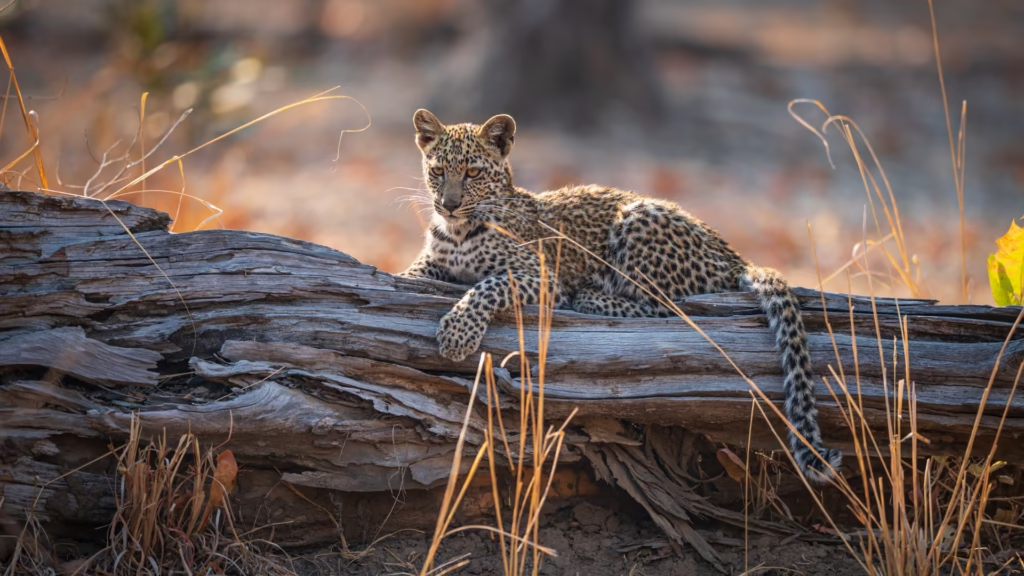
South Luangwa is often called “the Valley of the Leopard” because few places on the continent offer such reliable sightings of this elusive cat. It is also the birthplace of the walking safari, pioneered here by conservationist Norman Carr in the mid-twentieth century, and one of the few African parks where night drives are permitted, opening a window onto a nocturnal world most travelers never see.
This guide covers everything you need to plan a visit in 2026: the park’s history and geography, its wildlife and birdlife, the best time to go, how to get there, park fees, the top activities, where to stay at every budget, sample itineraries, health and packing advice, and answers to the questions travelers ask us most.
| At a Glance
Location: Luangwa Valley, Eastern Province, Zambia (southern tail of the Great Rift Valley) Size: Approximately 9,050 km² Status: Game reserve from 1938; national park since 1972 Famous for: Leopards, walking safaris, night drives, huge hippo pods, and three endemic subspecies Main access: Mfuwe Airport (flights from Lusaka) or the tarred road via Chipata Best time: June to October for game viewing; November to April for birds and the lush Emerald Season International entry fee: US$25 per person per day (US$30 for self-drivers) |
History and Geography of the Luangwa Valley
From Game Reserve to National Park
The area was first protected as a game reserve in 1938 and was formally declared a national park in 1972. Its reputation owes much to Norman Carr, who in the 1950s persuaded local chiefs that tourism could make wildlife more valuable alive than dead. He opened one of the first safari camps where revenue was shared with the community, and he began leading guests on foot. That legacy of walking safaris and community partnership still defines the park today.
Landscape and the Luangwa River
The Luangwa River is the lifeblood of the park. It is one of the least altered major rivers in Africa, with no dams along its length. Each rainy season it floods, changes course and carves new channels, leaving behind crescent-shaped oxbow lagoons that become magnets for wildlife as the dry season advances.
Away from the river, the park rises through mopane woodland, miombo forest and grassy dambos (seasonal wetlands) toward the steep Muchinga Escarpment that forms its western boundary. This mix of habitats supports an extraordinary density of animals in a relatively compact area that visitors can explore.
Sectors of the Park
| Area | Character | Best for |
| Mfuwe sector | The most accessible area near the main gate, with a good network of all-weather roads | First-time visitors, short stays, budget travellers |
| Nsefu sector | East of the river, open plains, salt pans and hot springs; one of the park’s oldest tourism areas | Large herds, crowned cranes, classic game drives |
| Luwi and Upper Lupande | Remote, seasonal sand rivers and dense woodland | Multi-day walking safaris and bush camps |
| Southern sector (Lusangazi, Kapamba) | Wilderness feel with few vehicles | Exclusive bush-camp safaris and photography |
Wildlife of South Luangwa
South Luangwa supports around 60 mammal species and more than 400 bird species. Concentrations of game along the river in the dry season can rival anything in Africa.
The Big Cats and Predators
- Leopard: The park’s headline species. Leopards are seen on day drives but especially on night drives, when spotlights pick them out hunting puku and impala.
- Lion: Several large prides roam the valley, and prides of 15 or more are not unusual. Buffalo hunts are a regular feature in the dry season.
- African wild dog: Endangered but present. Packs often den between June and August, raising chances of a sighting.
- Spotted hyena: Common and frequently encountered after dark.
- Smaller carnivores: Civet, genet, serval, honey badger, white-tailed mongoose and porcupine, best found on night drives.
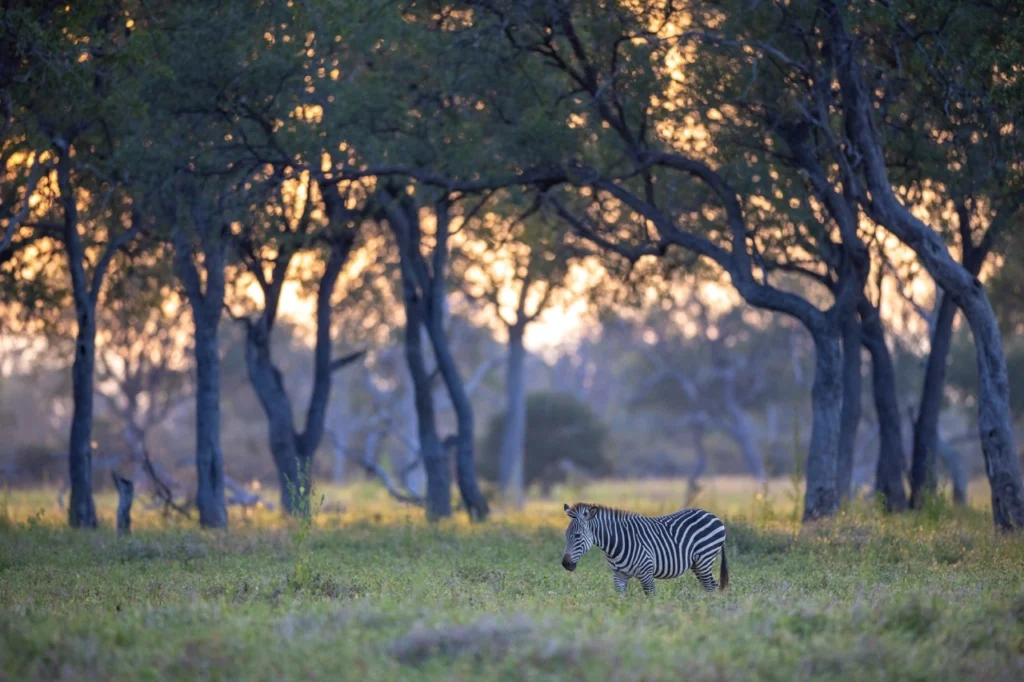
The Luangwa Endemics
Three subspecies are found here and almost nowhere else, which gives South Luangwa a special appeal for wildlife enthusiasts:
| Animal | What makes it special |
| Thornicroft’s giraffe | Found only in the Luangwa Valley; darker, star-shaped patches that do not reach below the knee |
| Cookson’s wildebeest | A lighter-coloured subspecies with faint bands; seen mainly in the Nsefu sector |
| Crawshay’s zebra | Narrow stripes that run down to the hooves with no brownish “shadow stripes” |
Herbivores and River Giants
- Hippo: The Luangwa River holds one of the highest hippo densities in Africa. In the late dry season, pods of dozens crowd into shrinking pools.
- Elephant: Herds are common and relaxed, often crossing the river in front of lodges.
- Buffalo: Large herds of several hundred move through the valley, drawing lions behind them.
- Antelope: Puku (the most abundant), impala, waterbuck, kudu, bushbuck, eland, roan and Lichtenstein’s hartebeest.
- Nile crocodile: Very large crocodiles bask along every sandbank.
Birdlife
With over 400 recorded species, South Luangwa is a major birding destination. Highlights include the spectacular nesting colonies of southern carmine bee-eaters on the riverbanks from around September to November, great flocks of storks, herons and spoonbills fishing in drying lagoons, and grey crowned cranes on the Nsefu plains. Raptors such as the African fish eagle, bateleur, martial eagle and Pel’s fishing owl add to the list. In the Emerald Season, migrants from Europe and northern Africa arrive and many residents breed in full colour.
| Did You Know?
At Mfuwe Lodge, a family of elephants famously walks through the reception area between roughly October and December to reach a wild mango tree in the grounds. It is one of the most photographed wildlife moments in Zambia. |
Best Time to Visit South Luangwa
South Luangwa has two main seasons, and both have strong appeal. Your choice depends on whether you prioritise big-game density or lush scenery, birdlife and lower prices.
| Period | Season | Conditions | What to expect |
| May – June | Early dry | Green bush drying out; cool nights | Bush camps reopen; fewer visitors; good value |
| July – August | Peak dry | Warm days, cold mornings; little rain | Excellent game viewing and walking; busiest months |
| September – October | Late dry | Hot (often above 35°C); very dry | Best predator action; animals crowd the river; carmine bee-eaters |
| November – December | Early rains | Heat breaks with storms | Baby animals; migrant birds; some camps close |
| January – March | Emerald Season | Lush green; heavy afternoon rain | Boat safaris in some areas; birding; big discounts |
| April | Late rains | Rains easing; tall grass | Quiet, green and great value |
| Our Recommendation
For first-time safari-goers: July to October, when wildlife is concentrated and all camps are open. For photographers and birders: November to March, for dramatic skies, green landscapes and breeding birds. For value: May, June and the Emerald Season, when many lodges offer reduced rates. Note: most walking-focused bush camps inside the park close from about November to April because the roads and seasonal rivers become impassable. |
How to Get to South Luangwa National Park
By Air
The quickest option is to fly into Mfuwe International Airport (MFU), roughly a 30 to 45-minute drive from the main gate. Scheduled flights operate from Lusaka (about 1 hour 15 minutes), and there are seasonal or charter connections from other Zambian hubs such as Livingstone and Lower Zambezi airstrips. Most lodges include road transfers from Mfuwe Airport in their rates.
By Road
Overland travellers follow the Great East Road from Lusaka to Chipata (about 570 km), then the tarred road from Chipata to Mfuwe (roughly 120 km). The full drive takes around 9 to 11 hours, so many travellers break the journey at Luangwa Bridge or Petauke. From Malawi, Mfuwe is reachable via the Mwami border near Chipata, making a combined Malawi and Zambia trip straightforward.
| Route | Distance (approx.) | Travel time | Notes |
| Lusaka – Mfuwe (flight) | — | 1 hr 15 min | Fastest; light baggage limits apply |
| Lusaka – Chipata – Mfuwe | 690 km | 9 – 11 hrs | Tarred; overnight stop recommended |
| Lilongwe (Malawi) – Mfuwe | 260 km | 5 – 6 hrs | Via Mwami border; popular combination route |
| Mfuwe Airport – Main Gate | 25 km | 30 – 45 min | Lodge transfers usually included |
Self-Drive Safaris
South Luangwa is one of Zambia’s most rewarding self-drive parks, with campsites and budget lodges along the river near Mfuwe. A high-clearance 4×4 is essential, especially away from the main loops and at the start or end of the rainy season. Self-drivers pay a higher daily entry fee, plus a vehicle fee for foreign-registered cars. Note that off-road driving is prohibited and that night drives are reserved for licensed operators, so self-drivers should book evening and walking activities through a lodge.
| Self-Drive Tip
If you are driving a rental vehicle in from Uganda, Tanzania or Malawi, carry the vehicle logbook, a rental authorisation letter, COMESA Yellow Card insurance and a Temporary Import Permit. Fill up at Chipata or Mfuwe, as fuel is limited inside the park area. |
South Luangwa National Park Entry Fees (2026)
Park fees are charged per person per day, where a day runs from 6 am to 6 pm. They are payable at the gate in US dollars or Zambian kwacha, and are usually not included in lodge rates unless stated. The latest published rates are below.
| Visitor category | Fee per person per day |
| International visitors (on a guided safari) | US$25 |
| Self-drivers (residents and non-residents) | US$30 |
| Residents and SADC nationals | US$20 |
| Zambian citizens | K55.60 |
| Children aged 5 – 13 | 50% of the adult fee |
| Children under 5 | Free |
| Other charges | Rate |
| Foreign-registered vehicle under 3 tonnes | US$15 per day |
| Foreign-registered vehicle over 3 tonnes | US$30 per day |
| Camping (non-residents) | US$5 per person per day |
| Important: Lodge Levies
Camps and lodges located inside the park boundary also charge a concession or conservation levy, often in the region of US$75 to US$110 per person per night, which includes park entry. Lodges outside the park only pass on the daily entry fee when you go on activities. Always check whether quoted rates include these charges. Fees are set by the Department of National Parks and Wildlife and can change, so confirm before travel. |
Top Things to Do in South Luangwa
1. Walking Safaris
This is the experience South Luangwa is famous for. Accompanied by a professional guide and an armed scout from the Department of National Parks and Wildlife, small groups set out on foot to read tracks, study plants and insects, and approach wildlife in a way that is impossible from a vehicle. Walks typically last three to four hours in the cool of the morning. For the ultimate adventure, multi-day walking safaris move guests from one remote bush camp to the next, or include fly-camping under mosquito nets beneath the stars.
2. Day Game Drives
Morning and afternoon drives in open 4×4 vehicles cover the riverbanks, lagoons and plains where elephants, buffalo, giraffe and lion congregate. Expert Zambian guides, among the best trained on the continent, interpret behavior and position the vehicle for the best views.
3. Night Drives
Afternoon drives usually continue after sunset with a spotlight, often after a sundowner stop beside the river. This is prime time for leopards on the hunt, as well as hyenas, genets, civets, bushbabies and, with luck, the shy aardvark or pangolin.
4. Birdwatching
Specialist birding walks and drives target species such as Lilian’s lovebird, Pel’s fishing owl and the carmine bee-eater colonies. Bring good binoculars and a field guide.
5. Photographic Safaris and Hides
Several camps operate specialist photographic vehicles and ground-level hides overlooking lagoons and bee-eater colonies, ideal for serious photographers.
6. Emerald Season Boat Safaris
When rivers are full in the rainy season, a few lodges run boat trips that offer a completely different perspective on the valley’s waterways and birdlife.
7. Cultural and Community Visits
Spend time in a local village such as Kawaza to learn about Kunda traditions, visit a school supported by community projects, or shop for hand-painted fabrics at Tribal Textiles and crafts from local artisans in Mfuwe. These visits directly support the communities living alongside the park.
Where to Stay in South Luangwa
Accommodation ranges from riverside campsites near Mfuwe to exclusive bush camps deep in the park. Lodges inside the park offer greater exclusivity, while those along the river outside the park are generally cheaper and still enjoy excellent game viewing, with animals moving freely across the river.
| Category | Example properties | Approx. rate (pp/night) | Style |
| Luxury | Time + Tide Chinzombo, Puku Ridge, Kaingo, Tena Tena, Chikoko Trails, The Bushcamp Company’s camps (e.g. Bilimungwe, Chindeni, Kuyenda) | US$700 – 1,500+ | All-inclusive, private villas or intimate bush camps, top guiding |
| Mid-range | Mfuwe Lodge, Nkwali, Kafunta River Lodge, Luangwa River Camp, Lion Camp | US$300 – 650 | Full board with activities; comfortable chalets |
| Budget | Croc Valley Camp, Flatdogs Camp, Marula Lodge, Track & Trail River Camp | US$15 – 150 | Camping, safari tents and simple chalets; activities booked separately |
Rates are indicative for the 2026 high season, vary by month and may exclude park levies. Many luxury camps are seasonal and open only from about May to October. Marriott Safaris Africa can match you with the right camp for your budget and interests.
Sample South Luangwa Itineraries
3-Day South Luangwa Highlights Safari
| Day | Plan |
| Day 1 | Fly Lusaka to Mfuwe; transfer to your lodge; lunch; afternoon game drive continuing into a night drive with sundowners. |
| Day 2 | Early-morning walking safari with guide and scout; brunch and rest in the heat of the day; afternoon and night drive in search of leopard. |
| Day 3 | Final morning game drive; breakfast; transfer to Mfuwe Airport for your onward flight. |
5-Day Walking and Wildlife Safari
| Day | Plan |
| Day 1 | Arrive Mfuwe; check in to a riverside lodge; afternoon and night drive. |
| Day 2 | Morning drive in the Mfuwe sector; afternoon cultural visit to Kawaza village and Tribal Textiles. |
| Day 3 | Transfer to a remote bush camp; afternoon walk along a sand river; night drive. |
| Day 4 | Full day of walking between camps or a fly-camp experience; dinner under the stars. |
| Day 5 | Sunrise walk; breakfast; return to Mfuwe Airport. |
9-Day Zambia Classic: South Luangwa, Lower Zambezi and Victoria Falls
| Days | Destination | Highlights |
| 1 – 4 | South Luangwa | Walking safaris, day and night drives, leopards and endemics |
| 5 – 7 | Lower Zambezi | Canoeing, boat safaris, tiger fishing and elephants on the river |
| 8 – 9 | Victoria Falls (Livingstone) | Falls tour, sunset Zambezi cruise, optional adventure activities |
Visas, Health and Safety
Entry Requirements
Zambia has waived visa requirements for visitors from many countries, including the UK, the US, EU member states and much of the Commonwealth, for stays of up to 90 days per year. Other nationalities can obtain an e-visa online or a visa on arrival. Travellers combining Zambia with Zimbabwe can use the KAZA Univisa. Passports should be valid for at least six months with blank pages. Requirements change, so check with official Zambian immigration sources before travel.
Health
- Malaria: The Luangwa Valley is a malaria area. Consult a travel clinic about prophylaxis, use repellent and sleep under nets.
- Yellow fever: A certificate is required if you arrive from, or have transited through, a country with yellow fever risk, including several East African countries.
- Tsetse flies: Present in some woodland areas. Wear neutral colours and avoid dark blue and black.
- Heat: October temperatures can exceed 40°C. Stay hydrated and plan activities for early morning and late afternoon.
- Insurance: Take travel insurance that covers medical evacuation, as the park is remote.
Safety in Camp and on Safari
Most camps are unfenced, so animals walk freely through them. Always follow your guide’s instructions, never walk alone after dark (ask for an escort), stay seated in vehicles, and never feed wildlife. South Luangwa is considered a safe and well-managed destination for tourists.
What to Pack for South Luangwa
| Category | Essentials |
| Clothing | Neutral khaki, green and brown layers; long sleeves and trousers for evenings; warm fleece for winter mornings (June – August); sturdy walking shoes |
| Sun protection | Wide-brimmed hat, sunglasses, high-SPF sunscreen, lip balm |
| Health | Antimalarials, insect repellent, personal medication, small first-aid kit, rehydration salts |
| Gear | Binoculars, camera with zoom lens, spare batteries and memory cards, headlamp, reusable water bottle |
| Documents | Passport, visa or e-visa (if required), yellow fever certificate, insurance details, US dollars in small notes |
| Luggage | Soft-sided bag (light aircraft limits are often 15 – 20 kg including hand luggage) |
Conservation and Community in the Luangwa Valley
South Luangwa’s wildlife success is the result of long-term partnerships between the Department of National Parks and Wildlife, conservation organisations, tourism operators and local communities. Groups such as Conservation South Luangwa support anti-poaching patrols, human-wildlife conflict mitigation and wildlife veterinary work, while the Zambian Carnivore Programme researches lions and wild dogs. Education initiatives fund schools and scholarships in surrounding villages.
Every visitor contributes through park fees and levies. Choosing lodges that employ local staff and support community projects, and shopping with local artisans, helps ensure that wildlife continues to benefit the people of the valley.
Plan Your South Luangwa Safari with Marriott Safaris Africa
Whether you dream of walking with expert guides, tracking leopards by spotlight or combining Zambia with Victoria Falls, Malawi or East Africa, our team designs safaris around your interests, dates and budget. We handle flights, transfers, lodge bookings, park fees and, for adventurous travellers, fully equipped 4×4 self-drive vehicles with cross-border documentation.
| Ready to Explore the Valley of the Leopard?
Contact Marriott Safaris Africa today for a tailor-made South Luangwa itinerary and an obligation-free quote. Perfection Anytime. |
Frequently Asked Questions
Is South Luangwa worth visiting?
Yes. It offers some of Africa’s best leopard viewing, superb walking safaris, permitted night drives, endemic wildlife and far fewer vehicles than better-known parks.
How many days should I spend in South Luangwa?
Three nights is the minimum for a rewarding visit; four to six nights let you combine a riverside lodge with a remote bush camp and a walking safari.
Can I see the Big Five in South Luangwa?
Four of the Big Five are present: lion, leopard, elephant and buffalo. Rhinos are no longer found in the park, though North Luangwa has a reintroduced black rhino population.
What is the best month to visit?
August to October is best for wildlife concentrations and predators. September is a favourite for many guides because of the action at drying lagoons.
How much does a South Luangwa safari cost?
Budget camping trips can cost under US$100 per day excluding transport, mid-range lodge stays typically run US$300 to US$650 per person per night, and luxury bush camps US$700 to US$1,500 or more, usually all-inclusive.
Are children allowed on walking safaris?
Most operators set a minimum age of 12 to 16 for walking safaris. Family-friendly lodges offer game drives and activities for younger children.
Can I self-drive in South Luangwa?
Yes, with a high-clearance 4×4. Self-drivers pay US$30 per person per day plus vehicle fees. Night drives and walks must be booked with licensed operators.
Is South Luangwa open all year?
The park is open year-round and lodges near Mfuwe operate throughout, but many in-park bush camps close from roughly November to April.
How do I combine South Luangwa with other destinations?
Popular combinations include Lower Zambezi, Victoria Falls, Lake Malawi, and the Okavango Delta in Botswana, connected by scheduled and charter flights.