Queen’s Pavilion
Nestled on the edge of the iconic Mweya Peninsula — where the mighty Kazinga Channel stretches its waters between Lake George and Lake Edward — stands one of Uganda’s most storied and historically resonant landmarks: the Queen’s Pavilion. This modest yet profoundly symbolic structure commemorates one of the most remarkable royal visits in East African history — the 1954 tour of Queen Elizabeth II and His Royal Highness Prince Philip, the Duke of Edinburgh. Perched just metres from the equator, the pavilion today serves as a cultural beacon, a wildlife observation point, and a living piece of colonial and conservation heritage, drawing thousands of visitors every year from across the globe.
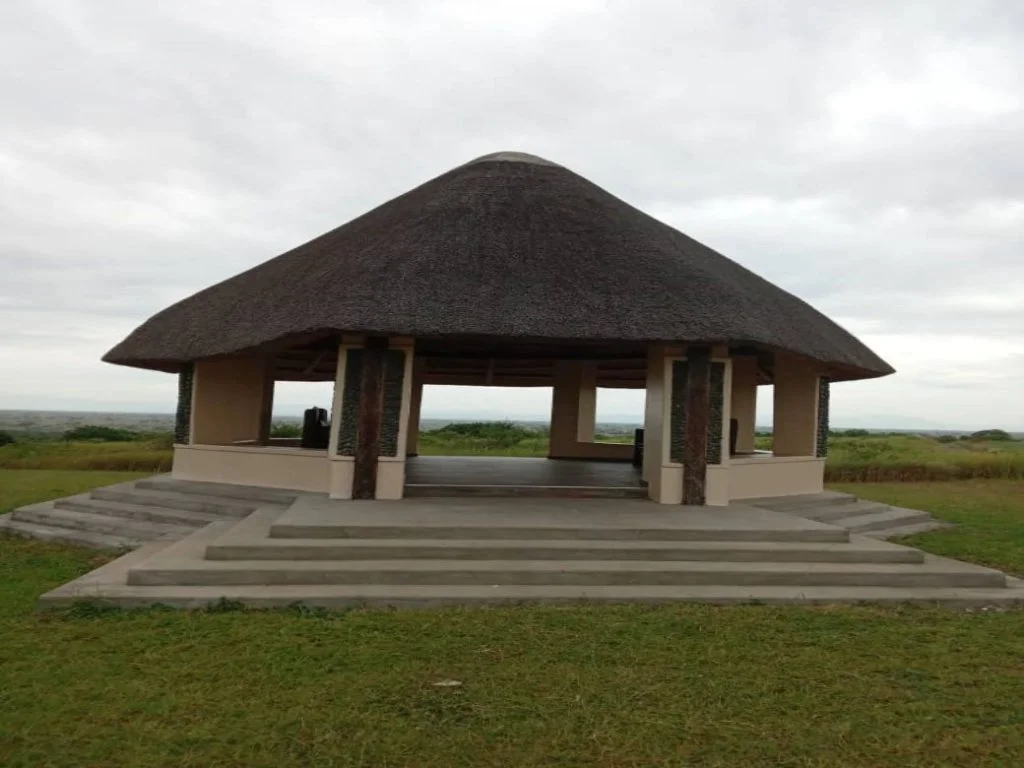
More than just a historic monument, the Queen’s Pavilion has evolved into a multifaceted visitor facility — offering interpretive displays, panoramic views of the African wilderness, guided services, and a welcoming stop for travellers journeying through Uganda’s most celebrated national park. Understanding the pavilion means understanding both the deep history of conservation in Uganda and the vibrant wildlife legacy that continues to unfold across this extraordinary landscape.
1. Historical Background and Origins
From Kazinga National Park to a Royal Legacy
The story of the Queen’s Pavilion begins with the founding of the park itself. In 1952, Uganda’s colonial administration established two new national parks simultaneously — Murchison Falls National Park in the north and what was then called Kazinga National Park in the west. The name derived from the Kazinga Channel, the remarkable 32-kilometre natural waterway that connects Lake George to the east and Lake Edward to the west, both of which lie within the Great Rift Valley system.
The young park gained international recognition just two years after its establishment. In 1954, Her Majesty Queen Elizabeth II and Prince Philip, the Duke of Edinburgh, undertook an extensive royal tour of East and Central Africa. As part of this visit, the royal couple travelled to Uganda — a British protectorate at the time — where they were received with tremendous ceremony and celebration. Among the many highlights of the royal tour was a visit to Kazinga National Park, where Queen Elizabeth II and Prince Philip experienced firsthand the extraordinary wildlife and scenic grandeur of the Mweya Peninsula.
To honour the royal visit, the park was officially renamed Queen Elizabeth National Park — a name it proudly carries to this day. The Queen’s Pavilion was erected on the Mweya Peninsula to commemorate the spot where the Queen and Prince Philip were hosted, forever anchoring the memory of their visit into the physical landscape of the park.
Queen Elizabeth II’s 1954 Uganda Visit
Queen Elizabeth II’s visit to Uganda in 1954 was a defining moment in the country’s colonial history. It formed part of a broader royal tour of the Commonwealth and coincided with a period of heightened international attention to wildlife conservation in Africa. The Queen’s programme in Uganda included several landmark engagements: she officially commissioned the Owen Falls Dam in Jinja — an engineering feat that harnessed the power of the Nile — met the various kings and traditional leaders of Uganda’s kingdoms, and toured the landscapes of the western rift region.
The visit to what was then Kazinga National Park was widely regarded as one of the most scenic portions of the royal itinerary. Prince Philip, in particular, was known for his deep interest in wildlife and conservation — interests that would later define his global environmental advocacy. The royal couple’s time on the Mweya Peninsula offered breathtaking vantage points over the Kazinga Channel, Lake Edward, and the snowcapped peaks of the Rwenzori Mountains shimmering in the distance. The site chosen for the commemorative pavilion lies approximately 500 metres from the equator itself, adding yet another layer of geographic significance to the location.
2. Location and Setting
The Mweya Peninsula
The Queen’s Pavilion occupies a privileged position on the Mweya Peninsula, the administrative and tourism heart of Queen Elizabeth National Park. The peninsula juts into the landscape on a high plateau where the Kazinga Channel meets Lake Edward, offering 360-degree panoramic views that are among the finest in all of East Africa.
Mweya is situated approximately 22 kilometres west of the main Kasese-Mbarara Road, accessible via a well-maintained tarmac route that runs directly past the pavilion. The peninsula serves as the park’s operational centre, hosting the main Uganda Wildlife Authority (UWA) offices, the Mweya Visitor Information Centre, the luxury Mweya Safari Lodge, budget accommodation and camping facilities, a boat marina for the famous Kazinga Channel launches, and of course, the Queen’s Pavilion itself.
Geographic Significance
Queen Elizabeth National Park straddles the equator, and the Queen’s Pavilion itself sits just approximately 500 metres from the equatorial line — meaning visitors can stand at this historic monument and know they are virtually at the midpoint between the North and South Poles. This geographic placement is both a curiosity and a conversation point, often used by guides to introduce visitors to the park’s location within the broader East African context.
The park itself covers approximately 1,978 square kilometres of diverse habitats — from open savanna grasslands and dense tropical forests to swamps, volcanic craters, and two major lakes within the Western Rift Valley. The Mweya Peninsula, where the pavilion sits, overlooks the full spectacle of the Kazinga Channel, whose banks teem with hippos, Nile crocodiles, cape buffaloes, elephants, and an extraordinary diversity of waterbirds.
3. The Queen’s Pavilion — Architecture and Design
The Queen’s Pavilion is a structure that embodies the mid-20th-century British colonial architectural aesthetic — practical, open, and designed to blend with its natural surroundings while providing shelter and viewing comfort. Its design is characteristically unassuming: an open-sided gazebo or bandstand-style structure that allows visitors to stand or sit within it while enjoying unobstructed views of the surrounding savanna, channel, and mountains.
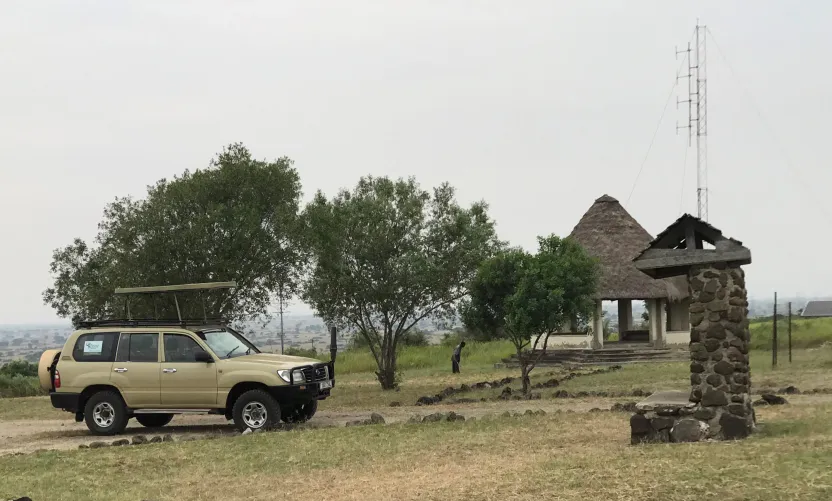
Unlike more elaborate colonial monuments found elsewhere in the British Commonwealth, the pavilion’s charm lies precisely in its restraint. It makes no grand architectural statement, but rather acts as a quiet frame through which visitors can appreciate the landscape that inspired its creation. Nearby interpretive signage, information boards, and a small visitor information centre provide context about the royal visit, the park’s history, and the remarkable biodiversity found within its borders.
Adjacent to the pavilion, visitors will find a small coffee shop and an internet facility — amenities that have been introduced to meet modern visitor expectations while maintaining the site’s heritage character. These facilities make the pavilion not just a photographic stop, but a genuine rest and refreshment point for safari-goers exploring the park.
4. Facilities and Visitor Amenities
Visitor Information Centre
The small visitor information centre near the pavilion is staffed by knowledgeable Uganda Wildlife Authority rangers and interpretive guides. It offers:
- Detailed displays on the history of Queen Elizabeth National Park and the 1954 royal visit
- Information about the park’s wildlife, including mammals, birds, and reptiles
- Maps of the park’s key zones, game drive circuits, and trail routes
- Booking services for park activities including game drives, boat cruises, and guided walks
- Brochures, guidebooks, and educational materials for purchase
- Displays of preserved wildlife specimens and taxidermy exhibits
Coffee Shop and Rest Area
A small café adjacent to the pavilion serves light refreshments, beverages, and snacks, making it a popular rest stop for visitors arriving on game drives or departing for the Kazinga Channel boat launch. The shaded seating area around the pavilion also allows visitors to pause, appreciate the landscape, and observe the wildlife that frequently passes near the Mweya Peninsula road.
Guided Services
Experienced UWA guides and park rangers are available at the pavilion area to assist visitors with interpretive tours, wildlife identification, historical context, and general orientation. These guides often begin their narratives with the story of the 1954 royal visit, using it as a compelling entry point into the broader conservation history of the park. Many visitors who served as UWA information clerks at the pavilion over the decades recall it as a transformative posting — one that brought them into contact with wildlife professionals, researchers, and tourists from every corner of the world.
5. Wildlife Around the Queen’s Pavilion
Resident Wildlife Near Mweya
One of the most delightful aspects of visiting the Queen’s Pavilion is that you do not need to embark on a game drive to encounter wildlife. The Mweya Peninsula teems with resident animals that have grown largely habituated to human presence. Visitors commonly observe:
- Banded mongoose (Mungos mungo) — troops of these social carnivores are frequently seen foraging around the visitor centre and pavilion area
- Warthogs (Phacochoerus africanus) — often seen grazing on the lawn, kneeling characteristically on their forelegs as they feed
- Waterbuck (Kobus ellipsiprymnus) — elegant antelopes with their distinctive white ring markings, often grazing close to the channel banks
- Uganda kob (Kobus kob thomasi) — the national animal of Uganda, abundant across the Kasenyi Plains visible from the peninsula
- African buffalo (Syncerus caffer) — frequently seen in large herds crossing between the channel banks and the grasslands
- Hippos (Hippopotamus amphibius) — clearly visible from the pavilion’s vantage point in and along the Kazinga Channel
Birdlife
Queen Elizabeth National Park is a globally renowned birding destination, with over 600 recorded bird species — one of the highest concentrations in any single African national park. The pavilion area and surrounding Mweya Peninsula are excellent spots for birdwatchers. Notable species regularly observed include:
- African fish eagle (Icthyophaga vocifer) — the iconic call of this species rings out regularly across the channel
- Malachite kingfisher (Corythornis cristatus) — brilliantly coloured, frequently seen perched along the waterway
- Black bee-eater (Merops gularis) — a sought-after species well-represented in the Mweya area
- Pied kingfisher (Ceryle rudis) — often hovering above the channel in impressive aerial displays
- African sacred ibis (Threskiornis aethiopicus) — common on the channel banks
- Goliath heron (Ardea goliath) — the world’s largest heron, regularly sighted at the channel edge
- Pink flamingos (Phoenicopterus roseus) — seasonally present at the northern crater lakes
- Shoebill stork (Balaeniceps rex) — one of Africa’s most sought-after birding targets, present in the Lake Edward flats and swampy fringes
6. Activities and Experiences Near the Pavilion
Kazinga Channel Boat Launch
Undoubtedly the single most popular activity in Queen Elizabeth National Park, the Kazinga Channel boat launch departs from the Mweya Marina — a short walk from the Queen’s Pavilion. The standard cruise runs for approximately two hours and covers a stretch of the channel between Mweya and the community villages to the east. Few wildlife experiences in Uganda rival the density and drama of this trip:
- Hippo pods numbering in the hundreds are found along the channel banks — Queen Elizabeth NP hosts one of the highest hippo concentrations in Africa
- Nile crocodiles bask on sandy shores, sometimes in groups of a dozen or more
- Elephants regularly cross the channel or drink at its banks, particularly in the late afternoon
- Cape buffaloes gather in massive herds near the water
- The birdlife along the channel shores is extraordinary — hundreds of waterbirds, kingfishers, herons, storks, cormorants and eagles visible on a single trip
The pavilion serves as a natural gathering point before and after these boat excursions, with visitors often enjoying coffee or refreshments while awaiting their departure time.
Game Drives
The pavilion sits along the main tarmac road that connects Mweya to the park’s key game drive circuits. Visitors typically depart from the Mweya area for the following drives:
- Kasenyi Plains Drive — the primary circuit for lion sightings, particularly in the northern sector of the park. Lions here prey on the abundant Uganda kob that congregate on these open grasslands
- Crater Drive — a 27-kilometre circuit past a series of spectacular volcanic crater lakes, some filled with freshwater, others with salt water or brine. The drive offers panoramic views, rare birds, and the unique geology of the rift valley
- Ishasha Sector Drive — in the southern part of the park, famous for the remarkable tree-climbing lions of Ishasha, who habitually rest in the branches of large fig trees — a behaviour unique in East Africa and exceptionally rare worldwide
- Kasenyi – Lake Edward Flats — excellent for large mammal aggregations and shoebill stork spotting near the lake edge
Crater Drive and Lakes Viewpoints
One of the most scenic experiences accessible from the pavilion area is the celebrated Crater Drive, which begins near the main Mweya road and winds through a landscape of extraordinary geological drama. Dozens of explosion craters formed during the rifting of the East African Rift Valley pockmark the land, each with its own microecology. Some craters hold alkaline lakes fringed with flamingos; others contain freshwater pools; still others are forested to their rims, harbouring olive baboons, vervet monkeys, and forest birds.
Kyambura Gorge and Chimpanzee Tracking
A short drive from the Mweya Peninsula leads to the remarkable Kyambura Gorge — a lush, forested ravine carved by the Kyambura River that cuts dramatically through the open savanna. Known as the “Valley of Apes,” Kyambura is home to a community of chimpanzees that have been habituated for tourism. Guided chimpanzee tracking walks descend into the gorge along forested trails, offering intimate encounters with these closest relatives of humans. The gorge also harbours a rich variety of other primates, forest birds, and vegetation.
Maramagambo Forest and Bat Cave
To the south of Mweya, the Maramagambo Forest covers a substantial area of tropical forest that provides critical habitat for red-tailed monkeys, l’Hoest’s monkeys, blue monkeys, bushbabies, forest elephants, and over 200 bird species. The forest’s most unusual attraction is the Python Cave — a remarkable cavern inhabited by thousands of Egyptian fruit bats, whose droppings in turn sustain a population of Burmese pythons that reside in the cave’s dark recesses. This extraordinary ecological interaction is a unique highlight of any visit to the park.
Katwe Salt Lake
Near the northern boundaries of the park, the Katwe Salt Lake has been a site of human industry for centuries. Local communities have extracted salt from this volcanic lake since at least the 14th century, using techniques that have changed little over the generations. Guided tours of Katwe offer visitors the opportunity to learn about this remarkable cultural and industrial heritage, witness the salt extraction process firsthand, and interact with the community workers who continue this ancient practice today.
7. Conservation Significance and Heritage Value
UNESCO Biosphere Reserve
Queen Elizabeth National Park holds the distinction of being a UNESCO-designated Biosphere Reserve — a recognition of its exceptional ecological value and its pioneering approach to integrating human communities within a conservation area. Twelve fishing villages are located within the park’s boundaries, and the management framework developed here — balancing subsistence livelihoods with wildlife protection — has influenced conservation policy across Africa and beyond.
The Queen’s Pavilion sits at the symbolic heart of this biosphere, representing both the colonial origins of formal conservation in Uganda and the ongoing commitment of successive generations to protect this extraordinary ecosystem.
Biodiversity Statistics
Queen Elizabeth National Park is home to some of the most impressive biodiversity concentrations found anywhere on the continent:
- 95 mammal species — more than any other national park in Uganda
- Over 600 bird species — one of the highest counts for any single protected area in Africa
- Large carnivores including lion, leopard, spotted hyena, and African wild dog
- Primates including chimpanzee, olive baboon, vervet monkey, red-tailed monkey, l’Hoest’s monkey, and black-and-white colobus monkey
- Notable large herbivores including African elephant, cape buffalo, hippopotamus, Uganda kob, topi, waterbuck, and defassa waterbuck
- Nile crocodile, monitor lizards, cobras, pythons, and a rich herpetofauna
The Pavilion as a Symbol of Conservation History
The Queen’s Pavilion carries significance beyond its immediate function as a visitor facility. It represents a critical moment in East African conservation history — the period in the 1950s when international attention, royal patronage, and scientific interest converged to establish the formal protected area network that remains the backbone of Uganda’s wildlife heritage today.
The park’s naming in honour of Queen Elizabeth II reflected the broader Commonwealth tradition of celebrating royal visits through lasting geographical and institutional markers. For decades, the pavilion was managed as an official Uganda National Parks facility, with UWA rangers and information clerks stationed there to assist visitors — a tradition that continues to the present day.
8. Practical Visitor Information
How to Get to Queen Elizabeth National Park
Queen Elizabeth National Park is located in western Uganda, approximately 400 kilometres from Kampala. Visitors can reach the park via several routes:
- By Road from Kampala: The most common route travels southwest via Mbarara, then continues west through Bushenyi to the park’s northern gate at Katunguru. The journey takes approximately 5–6 hours by private vehicle
- Via Kasese: Coming from the Fort Portal direction, visitors pass through Kasese town and enter via the Kasese gate on the park’s eastern side
- By Air: Uganda Airlines and several charter operators fly into Kasese Airstrip, the nearest airstrip to Mweya, with connections to Entebbe International Airport
- Fly-In Safari: Charter flights directly to Mweya Airstrip are available for fly-in safari packages, offering the most convenient access to the Mweya Peninsula and the pavilion
Park Entry Fees
Entry to Queen Elizabeth National Park is managed by the Uganda Wildlife Authority. Standard entry fees apply for all visitors, with separate charges for specific activities such as boat cruises, chimpanzee tracking, and guided forest walks. Visitors are advised to confirm current fee schedules directly with UWA or through accredited tour operators, as rates are subject to periodic revision.
Accommodation Near the Queen’s Pavilion
The Mweya Peninsula offers a range of accommodation options to suit different budgets and travel styles:
- Mweya Safari Lodge — the flagship luxury lodge on the peninsula, offering classic safari-style rooms and cottages with stunning views over the Kazinga Channel and Lake Edward
- UWA Hostels and Bandas — budget accommodation managed by Uganda Wildlife Authority, offering simple but comfortable rooms at accessible price points
- UWA Camping Sites — three camping sites on the peninsula for self-catering travellers, offering a more immersive experience within the park environment
- Nearby Lodges — several mid-range and community lodges are located along the park boundaries, particularly near the Kasese and Katunguru gates
Best Time to Visit
Queen Elizabeth National Park can be visited year-round, but certain seasons offer distinct advantages:
- Dry Season (June–July and December–February): Generally considered the best time for game viewing, as vegetation thins and animals concentrate around water sources. Road conditions are also better for game drives
- Wet Season (March–May and August–November): The landscape transforms into lush greenery, birdlife reaches peak diversity (including migratory species), and the park is less crowded. Some roads may become challenging but the scenery is spectacular
- Year-Round Activities: The Kazinga Channel boat launch, chimpanzee tracking, and the Queen’s Pavilion visit are rewarding at any time of year
Panoramic Views from the Pavilion
Among the most compelling reasons to visit the Queen’s Pavilion is the extraordinary visual panorama it commands. Standing at the pavilion on a clear day, visitors are treated to one of the finest views in all of East Africa:
- The Kazinga Channel — the 32-kilometre waterway spreads out below the peninsula, its banks alive with hippos, crocodiles, buffaloes, and birds. The channel’s waters reflect the sky and the surrounding savanna in a constantly changing display of colour and light
- Lake Edward — stretching to the southwest, this large rift valley lake forms the border between Uganda and the Democratic Republic of Congo. Its vast expanse, dotted with fishing boats and waterbirds, extends to a distant shoreline on the Congolese side
- The Rwenzori Mountains — on exceptionally clear days, the snowcapped peaks of the Mountains of the Moon (Rwenzori Range) are visible to the north — a dramatic backdrop of permanent ice and cloud at the equator
- Lake George — though not directly visible from the pavilion, the distant shimmer of Lake George can be glimpsed to the east, where the channel begins its journey westward
- The volcanic craters — to the north of Mweya, the distinctive depressions of the explosion craters punctuate the landscape, their varied ecosystems visible as patches of forest, grassland, and water
Conclusion
The Queen’s Pavilion in Queen Elizabeth National Park is far more than a commemorative structure. It is a convergence point — where history and wilderness meet, where royal legacy intersects with biodiversity conservation, and where the extraordinary landscapes of Uganda’s western rift valley stretch out in every direction. For the visitor arriving at Mweya for the first time, the pavilion offers an immediate and powerful orientation: this is a special place, one that has captivated royalty, conservationists, researchers, and travelers from around the world for over seven decades.
Whether you pause here for a coffee between game drives, linger to absorb the view of the Kazinga Channel at golden hour, or sit with a guide who traces the story of Queen Elizabeth II’s 1954 visit, the pavilion rewards contemplation. It reminds us that the act of protecting wild places — begun in earnest in Uganda during the colonial era and carried forward by successive generations of Ugandan conservationists — has given the world an irreplaceable gift: a living, breathing ecosystem where lions still roam open plains, hippos still crowd ancient waterways, and the calls of hundreds of bird species still fill the equatorial air.
A visit to the Queen’s Pavilion is, in the truest sense, a visit to the heart of Uganda’s wildlife heritage. It is not to be missed.