Night Game Drive in Queen Elizabeth National Park
When the equatorial sun sinks behind the Rwenzori Mountains and the Kasenyi plains fade from gold to black, Queen Elizabeth National Park changes character completely. The grazers that dominated the day bunch together for safety, hippos haul themselves out of the Kazinga Channel to feed, and the park’s predators begin their working hours. A night game drive in Queen Elizabeth National Park puts you in the middle of that shift – with only a spotlight, a ranger guide and the sounds of the savannah for company.
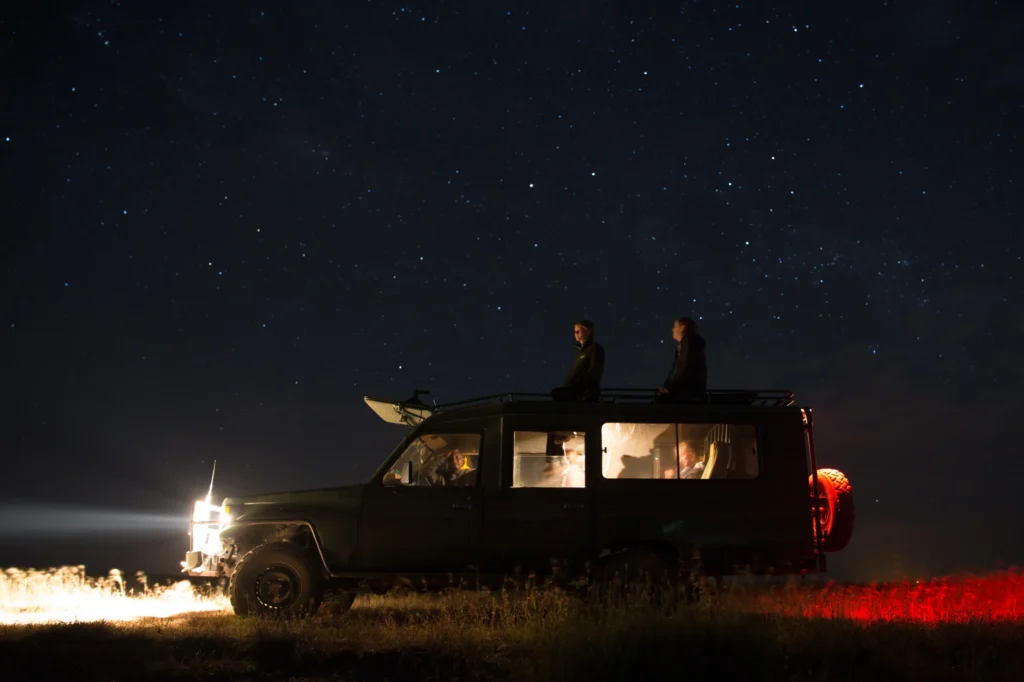
Most visitors to Uganda’s most popular savannah park come for the morning game drive, the Kazinga Channel boat cruise and the tree-climbing lions of Ishasha. Far fewer experience the park after dark, yet the night drive is often the activity travellers remember most vividly. This guide covers everything you need to plan one: how night drives work, what wildlife you can realistically expect, the current Uganda Wildlife Authority (UWA) fees, rules, the best time of year, what to pack, where to stay, and answers to the most common questions.
Quick Facts at a Glance
| Detail | Information |
| Location | Queen Elizabeth National Park, western Uganda (Kasese, Rubirizi, Kamwenge and Rukungiri districts) |
| Main night drive area | Kasenyi plains and the tracks around the Mweya Peninsula |
| Typical timing | Departs around 7:00–7:30 pm; lasts roughly 2–3 hours |
| Operated / regulated by | Uganda Wildlife Authority (UWA) |
| Guide | A UWA ranger guide is mandatory |
| Who can join | Guests staying overnight inside the park |
| Fee (foreign non-resident) | About US$30 per person in a private vehicle, or US$40 per person in a UWA vehicle (2024–2026 tariff – confirm current rates) |
| Booking | UWA offices at Mweya or Katunguru, UWA headquarters in Kampala, or through your tour operator/lodge |
| Top sightings | Leopard, lion, spotted hyena, hippos grazing on land, bush babies, genets, civets, owls and nightjars |
Why Do a Night Game Drive in Queen Elizabeth National Park?
Roughly half of Africa’s mammals are most active between dusk and dawn. On a daytime drive you see where they rest; on a night drive you see what they actually do. Here is why it is worth adding to your Uganda safari itinerary:
- A completely different cast of animals. Many species – bush babies, genets, civets, porcupines, white-tailed mongooses and several owls – are almost never seen in daylight.
- Predators in action. Lions, leopards and hyenas do most of their hunting at night. The chance of seeing a stalk, chase or kill is noticeably higher than on a morning drive.
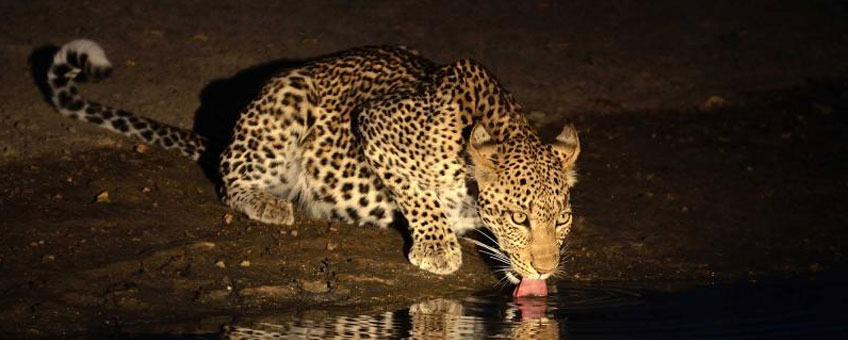
- Better leopard odds. Queen Elizabeth’s leopards are shy and well camouflaged by day. After dark, the spotlight picks up their eyeshine and they move more openly along the tracks.
- Whooping hyenas, grunting hippos and the alarm calls of Uganda kob make the experience feel raw and immersive in a way a daytime drive rarely does.
- Fewer vehicles. Only a small number of registered vehicles are allowed out at night, so sightings feel exclusive.
- It fills a gap in your day. The drive starts after dinner time, so it does not compete with the morning game drive or afternoon boat cruise.
How a Night Game Drive Works
Organisation and regulation
Night game drives in Queen Elizabeth National Park were introduced by the Uganda Wildlife Authority to diversify the park’s activities, and they remain tightly controlled. Only pre-registered vehicles may take part, a trained UWA ranger guide must accompany every vehicle, and the activity is restricted to visitors sleeping within the park. These rules protect wildlife from disturbance and keep visitors safe on unlit tracks.
What happens on the night
- Booking and briefing. You confirm the drive with UWA (or your operator/lodge) earlier in the day. Your guide meets you at your lodge or the agreed point, often near Mweya, and briefs you on safety rules.
- Vehicles typically leave around 7:00–7:30 pm, shortly after full dark.
- The ranger or a designated passenger sweeps a powerful spotlight across the grass and bush, looking for reflected eyeshine. Different species reflect different colours and sit at different heights, which helps the guide identify them before the animal is even visible.
- When an animal is found, the vehicle stops and the light is held to the side of the animal rather than directly in its eyes, to avoid dazzling it.
- Drives usually last two to three hours, getting you back to your lodge at around 9:30–10:00 pm.
Pro tip: Sit on the side of the vehicle opposite the spotlight operator. You will see more because the beam sweeps across your field of view rather than past your shoulder.
Where Night Game Drives Take Place
Kasenyi plains
The open grasslands of Kasenyi, in the north-east of the park, are the heart of night driving. The plains hold large herds of Uganda kob – the area includes important kob breeding grounds – along with buffalo, warthogs and waterbuck. Where prey concentrates, predators follow: Kasenyi is the most reliable area in the park for lions, and hyenas and leopards patrol its edges after dark.
Mweya Peninsula and the Kazinga Channel
The tracks around the Mweya Peninsula, between Lake Edward and the Kazinga Channel, are where many night drives start and finish. After dark, hippos leave the water to graze, and it is common to find them wandering the roads and even the lodge lawns. The thickets along the channel are good places to look for leopard, civet and genet.
What about Ishasha?
The southern Ishasha sector, famous for its tree-climbing lions, is far from Mweya and Kasenyi. Night drives are concentrated in the northern part of the park, so if spending time in Ishasha is a priority, plan to do your night drive while staying in the north.
Wildlife You Can See on a Night Game Drive
No sighting is ever guaranteed, but these are the species most often encountered after dark in Queen Elizabeth National Park.
Big cats and large predators
- Leopard – the prize of most night drives. Look for them along thicket edges and in trees near the Kazinga Channel.
- Lion – prides on the Kasenyi plains become active as temperatures drop, often moving out to hunt kob and buffalo.
- Spotted hyena – heard more often than seen, but frequently spotted trotting along the tracks or near kills.
Smaller nocturnal mammals
- Bush babies (galagos) – tiny primates with huge eyes, leaping between branches.
- Genets and African civets – spotted, cat-like hunters that are rarely seen in daylight.
- White-tailed mongoose – a solitary, nocturnal mongoose identified by its bushy white tail.
- Crested porcupine, serval and side-striped jackal – less frequent, but always a highlight when they appear.
Herbivores at night
- Hippos – almost guaranteed. They leave the water at dusk to graze for most of the night.
- Uganda kob, buffalo, waterbuck and elephants – watching how prey animals behave at night, bunched and alert, is fascinating in itself.
Nocturnal birds
Queen Elizabeth is one of Uganda’s top birding destinations, with over 600 recorded species. At night, look out for owls such as the large Verreaux’s eagle-owl and nightjars, which often sit on the warm tracks and flush up in the headlights.
Reading eyeshine
| Eyeshine clue | Likely animal |
| Large, greenish-yellow, low to the ground, moving steadily | Lion or leopard |
| Pale, bobbing, often in a group | Spotted hyena |
| Tiny, bright orange-red, high in trees | Bush baby |
| Many pairs at head height across the plain | Uganda kob or other antelope |
| Red-orange on the road surface | Nightjar |
These are general field tips; your guide will confirm identifications.
Night Game Drive Fees in Queen Elizabeth National Park
Night drive fees are set by the Uganda Wildlife Authority and are charged on top of the daily park entrance fee. The figures below come from the UWA conservation tariff for July 2024 to June 2026, which is the most recent published tariff.
| Activity | Foreign non-resident | Foreign resident | East African citizen |
| Guided night game drive in a private vehicle (per person) | US$30 | US$20 | UGX 30,000 |
| Night game drive in a UWA game drive vehicle (per person) | US$40 | US$35 | UGX 40,000 |
| Park entrance – adult (per 24 hours, for reference) | US$40 | — | — |
Some tour operators quote slightly different figures (for example UGX 50,000 for East African citizens), and UWA notes that tariffs may change without notice. Because the published tariff period ended in June 2026, always confirm current prices with UWA or your tour operator before travelling.
What is included
- The services of a UWA ranger guide for the duration of the drive
- Use of the UWA vehicle (if you book the UWA vehicle option)
What is not included
- Park entrance fees
- Your own vehicle, fuel and driver (for private-vehicle drives)
- Spotlight hire, if your vehicle does not carry one (check with UWA or your operator)
- Tips for the ranger guide and driver
Rules and Regulations
- A UWA ranger guide must accompany every night game drive.
- Only vehicles registered with UWA for the activity are allowed out after dark.
- Night drives are restricted to visitors staying overnight within the park.
- Stay inside the vehicle at all times – never get out, even briefly.
- Keep to designated tracks; off-road driving is not allowed.
- Do not shine the spotlight directly into animals’ eyes for long periods, and never use flash photography on wildlife.
- Keep voices low and do not play music.
- Follow the ranger’s instructions at all times.
Can I Do a Night Game Drive on a Self-Drive Safari?
Yes – self-drive travellers can take part, but not on their own. If you have rented a 4×4 in Uganda, you can use your own vehicle for a night drive provided it is registered for the activity with UWA and you take a UWA ranger guide on board. You pay the private-vehicle night drive fee per person and handle the driving yourself while the ranger spots and guides.
For self-drivers, a few practical points make a big difference:
- Book in person early. Visit the UWA office at Mweya or Katunguru in the morning to register your vehicle and confirm a ranger for the evening.
- Choose the right vehicle. A Toyota Land Cruiser, Prado or safari van with a pop-up roof gives far better visibility and handling on rough night tracks than a small SUV.
- Bring or arrange a spotlight. Ask your rental company whether a 12V spotlight is available, or confirm with UWA what the ranger will carry.
- Drive slowly. Hippos and buffalo on the road are a real hazard. Keep speeds low and let the ranger set the pace.
- Stay inside the park. Remember the rule – you need to be sleeping inside the park to join.
Pro tip: If you are not confident driving unfamiliar tracks at night, book the UWA vehicle option for the drive. You still enjoy your self-drive freedom by day, without the stress of night driving.
Best Time for a Night Game Drive
Time of year
Night drives run all year round. The dry seasons – roughly June to September and December to February – are generally best: grass is shorter, so eyeshine is easier to spot, tracks are firmer, and animals concentrate around water. During the wetter months (March to May and October to November), tracks can be muddy and some routes may be limited after heavy rain, but the park is greener, quieter and often cheaper to visit.
Moon phase
A dark, moonless night makes eyeshine stand out more clearly and predators often hunt more boldly. A bright full moon lets you see the landscape and animal silhouettes without the spotlight. Both have their appeal – check the moon calendar when choosing dates if you have a preference.
What to Wear and Pack
- Warm layers – nights on the open plains get surprisingly cool, especially in an open-roof vehicle. A fleece or light jacket is essential.
- Long sleeves and trousers – in neutral colours, for warmth and protection against insects.
- Insect repellent – mosquitoes are active after dark; Uganda is a malaria area.
- Binoculars – ideally with good low-light performance.
- A small headlamp with a red-light mode – for finding things in the vehicle without ruining night vision.
- Camera gear – a camera that handles high ISO, a fast lens, and a beanbag for stability.
- Water and a light snack – drives can run late.
- Cash for tips – in US dollars or Uganda shillings.
Photography Tips for Night Safaris
- Raise your ISO (1,600–6,400 on most modern cameras) and shoot with the widest aperture your lens allows.
- Use the spotlight as your light source; never use flash on wildlife.
- Ask the driver to switch off the engine when you are shooting, to reduce vibration.
- Brace your camera on a beanbag or the window frame rather than holding it freehand.
- Shoot in bursts – a few frames out of many will be sharp.
- Sometimes the best approach is to put the camera down and simply watch.
Where to Stay for a Night Game Drive
Because night drives are open to visitors staying inside the park, where you sleep matters. Accommodation on or near the Mweya Peninsula and close to Kasenyi is the most convenient.
| Category | Options (examples) | Why it works |
| Luxury | Mweya Safari Lodge; Kyambura Gorge Lodge | Excellent location and service; lodge can help arrange the drive |
| Mid-range | Enganzi Game Lodge; Ishasha Wilderness Camp (for the south) | Comfortable, good value, close to game-viewing areas |
| Budget | UWA Bandas and Student Camp at Mweya | Inside the park, right next to the UWA booking office |
Always confirm with your lodge whether its location qualifies for UWA night drives before you book.
How to Book a Night Game Drive
- Through a tour operator. The easiest option on a guided safari – your operator handles booking, payment and timing.
- At the park. Book at the UWA tourism offices at Mweya or Katunguru during office hours, ideally the morning of your drive or a day before.
- Through UWA headquarters. Reservations can also be made at the UWA head office in Kampala, which is useful for peak-season travel.
- Via your lodge. Many lodges inside the park will contact UWA on your behalf.
Night drives involve a limited number of vehicles, so booking early is strongly advised from June to September and over Christmas and New Year.
Safety on a Night Game Drive
Night drives in Queen Elizabeth National Park are safe when you follow the rules. UWA ranger guides are trained in animal behaviour and carry communication equipment. The main risks come from people leaving the vehicle, driving too fast or approaching animals too closely – all of which the regulations are designed to prevent. Stay seated, keep arms inside the vehicle, and treat hippos and buffalo on the road with particular respect.
Sample Itinerary: Where the Night Drive Fits
| Time | Activity |
| 6:30 am | Morning game drive on the Kasenyi plains |
| 12:30 pm | Lunch and rest at your lodge |
| 2:00 pm | Kazinga Channel boat cruise (hippos, buffalo, elephants, waterbirds) |
| 5:00 pm | Return to lodge, early dinner |
| 7:00 pm | Night game drive with UWA ranger guide |
| About 10:00 pm | Return to lodge |
Combine this with chimpanzee tracking in Kyambura Gorge and a visit to Ishasha for the tree-climbing lions for a well-rounded two- to three-night stay.
Frequently Asked Questions
How long does a night game drive in Queen Elizabeth National Park last?
Usually two to three hours, departing around 7:00–7:30 pm.
How much does a night game drive cost?
Under the July 2024–June 2026 UWA tariff, about US$30 per person for foreign non-residents in a private vehicle, or US$40 per person in a UWA vehicle, plus park entrance fees. Confirm current rates before travel.
Is a ranger guide compulsory?
Yes. A UWA ranger guide must accompany every night game drive.
Can I do a night drive if I am staying outside the park?
Night drives are restricted to visitors staying overnight within the park, so plan accommodation accordingly.
Will I see leopards?
Leopards are seen on many night drives, but no sighting can be guaranteed.
Are children allowed?
Children usually can join, but the drive runs late and requires sitting quietly. Check any age policy with UWA or your operator.
Can I use my rental car?
Yes, if it is registered with UWA for the activity and you take a UWA ranger guide. A 4×4 with good visibility is strongly recommended.
Is a night game drive worth it?
For most travellers, yes. It reveals a side of the park – predators hunting and nocturnal species – that you simply cannot see by day.
Final Thoughts
A night game drive in Queen Elizabeth National Park is one of the most memorable experiences on any Uganda safari. In two or three hours you can watch lions moving out to hunt, catch a leopard’s eyes glowing from a thicket, see hippos grazing beside the track and spot creatures most visitors never know exist. Stay inside the park, book with UWA early, pack a warm layer, and let the darkness show you a side of Queen Elizabeth the daytime never reveals.