Game Drive in Queen Elizabeth National Park
Game Drive in Queen Elizabeth National Park, Nestled in southwestern Uganda along the Albertine Rift Valley, Queen Elizabeth National Park is one of East Africa’s most biodiverse wildlife sanctuaries. Covering approximately 1,978 square kilometres of savanna, wetlands, rainforest, and crater lakes, the park is a mosaic of ecosystems that supports an astonishing variety of wildlife. For many visitors to Uganda, a game drive in Queen Elizabeth National Park is the centrepiece of their safari — an experience that rivals the celebrated plains of East Africa and yet retains a raw, untouched character all its own.
Unlike the open grassland vistas of the Serengeti or Masai Mara, Queen Elizabeth offers a layered landscape: volcanic craters, forest patches, the vast Kazinga Channel, and the endless Maramagambo Forest to the south. This diversity means that a single game drive can yield encounters with lions, elephants, buffaloes, leopards, Uganda kob, topi, warthogs, giant forest hogs, hippos, crocodiles, and over 600 bird species — a tally that makes QENP one of Africa’s top birding destinations. This comprehensive guide walks you through everything you need to know to plan the perfect game drive in Queen Elizabeth National Park, from the best areas to explore and optimal times to visit, to practical tips on vehicles, guides, and what to expect on the ground.
Overview of Queen Elizabeth National Park
Queen Elizabeth National Park was gazetted in 1952 and named after the British Queen on her visit to Uganda in 1954. It straddles the districts of Kasese, Kamwenge, Rubirizi, and Rukungiri, sharing borders with the Democratic Republic of Congo. The park is part of the larger Virunga Conservation Area, a cross-border ecosystem that links it with Virunga National Park in DRC and Rwenzori Mountains National Park in Uganda — creating one of Africa’s most significant biodiversity corridors.
Key facts at a glance:
- Location: Southwestern Uganda, Albertine Rift Valley
- Size: Approximately 1,978 km²
- Altitude: 910 m – 1,390 m above sea level
- Gazetted: 1952 (UNESCO Biosphere Reserve since 1979)
- Nearest major town: Kasese (northern sector); Mbarara (access from east)
- Headquarters: Mweya Peninsula
- Wildlife: 95+ mammal species, 606+ bird species
- Iconic features: Kazinga Channel, Ishasha tree-climbing lions, Mweya Peninsula, crater lakes
Best Areas for a Game Drive in Queen Elizabeth National Park
The park is divided into distinct sectors, each with its own terrain, wildlife concentrations, and game-viewing character. Understanding these zones will help you allocate your time wisely.
1. Kasenyi Plains — The Predator Heartland
The Kasenyi Plains, located in the northern sector between Mweya and the park’s northern boundary, are widely regarded as the best area for predator sightings in QENP. The rolling open grasslands host one of Uganda’s highest concentrations of lions, with several well-habituated prides that have grown accustomed to safari vehicles. Early morning drives here regularly yield prides of lions resting on termite mounds, stalking Uganda kob across the plains, or returning from a night hunt.
What to expect on a Kasenyi game drive:
- Lions: Multiple habituated prides; sightings are frequent year-round
- Uganda kob: Large herds congregate on the plains, often serving as a lion magnet
- Leopards: Rarer but sighted in the woodland patches at the plains’ edges
- Elephants: Family herds frequently move between the plains and the channel shores
- Buffaloes: Large bachelor herds and breeding herds common throughout
- Birds: Martial eagle, bateleur, secretary bird, and multiple kingfisher species
2. Mweya Peninsula — Game Viewing at Your Doorstep
The Mweya Peninsula juts into the junction of the Kazinga Channel and Lake Edward, forming a narrow promontory that is both the park’s tourism hub and one of its most reliable game-viewing zones. The peninsula’s lodges and Uganda Wildlife Authority (UWA) facilities sit surrounded by game, and it is not unusual to find warthogs grazing outside your banda or elephants walking through the camp at dusk.
Game drives departing from Mweya frequently access the channel-side tracks, where hippos wallow in enormous pods, water buffalo cool their feet in the shallows, and monitor lizards bask on the banks. The peninsula is also a superb birding base, with African fish eagles, pied kingfishers, yellow-billed storks, and pink-backed pelicans frequently visible from the shoreline.
3. Ishasha Sector — Home of the Tree-Climbing Lions
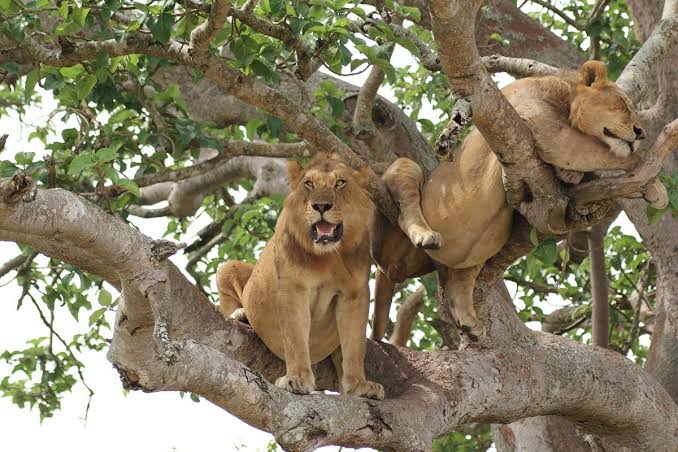
No guide to game drives in Queen Elizabeth National Park would be complete without an extended discussion of the Ishasha sector. Located in the southern reaches of the park near the Congo border, Ishasha is famous worldwide for its tree-climbing lions — a rare and extraordinary behaviour observed in only a handful of lion populations globally (the other well-known one being in Lake Manyara National Park, Tanzania). The lions here regularly scale large fig and sycamore trees, draping themselves lazily across the branches in scenes that feel almost surreal to witness.
Why do Ishasha’s lions climb trees? Several theories exist: relief from biting insects on the ground, better vantage points for spotting prey, or simply the cooler breeze experienced above the savanna floor. Whatever the reason, tracking these arboreal lions through the open woodland of the Ntungwe River valley is one of Uganda’s most memorable wildlife encounters. Reaching Ishasha requires an additional drive of approximately 2–3 hours south of Mweya, but the journey — through crater lake country and along the Congo border escarpment — is spectacular in its own right.
4. Kyambura Gorge — The Valley of Apes
Tucked into the eastern sector of the park, Kyambura Gorge (pronounced “Chamura”) is a dramatic 100-metre-deep river valley carved into the savanna, harbouring a lush riverine forest that acts as a refuge for a habituated community of chimpanzees. While the chimp trek inside the gorge itself is a walking activity (and one of QENP’s major attractions), the access road and the gorge rim offer excellent game-drive opportunities, particularly for colobus monkeys, red-tailed monkeys, forest hornbills, and the occasional leopard.
5. Explosion Crater Lakes Drive
The drive through the explosion crater area — particularly the route from Mweya towards Katwe and the Kyambura sector — traverses a landscape of extraordinary geological drama. Dozens of deep, circular craters dot the plateau, many filled with vivid emerald or turquoise lakes. This crater lakes circuit is not primarily a wildlife drive (though kob, warthog, and buffalo are frequently seen) but is instead celebrated for its scenic grandeur and birdlife. The flamingos that sometimes congregate at Lake Katwe add a splash of pink to an already stunning volcanic panorama.
Best Time for a Game Drive in Queen Elizabeth National Park
Queen Elizabeth National Park is a year-round destination, but the quality of game drives varies significantly across the seasons. Understanding the rainfall patterns and their effect on vegetation and animal behaviour will help you choose the best time to visit.
Dry Seasons (December–February and June–August)
The dry seasons are universally considered the best time for game drives. Vegetation thins as grasses dry back, making animals far easier to spot in the open. Water points concentrate game, roads are in their best condition, and the drier air offers superior photographic clarity. The June–August dry season is particularly popular, coinciding with the European summer and offering some of the most reliable lion sightings of the year on the Kasenyi Plains.
Wet Seasons (March–May and September–November)
The wet seasons bring lush green landscapes, dramatically fewer tourists, and significantly lower accommodation rates — making them an excellent choice for budget-conscious travellers or those who prefer a more solitary experience. The rains, however, can render some murram (gravel) tracks impassable, particularly in the Ishasha sector and parts of the Kasenyi Plains. A capable 4WD vehicle is essential during these months. Despite the challenges, wet-season birding is extraordinary, as migratory species arrive from Europe and Central Africa.
Optimal Daily Timing for Game Drives
The timing of your game drive within the day matters as much as the season. Queen Elizabeth’s wildlife follows the equatorial rhythm — early mornings and late afternoons are the golden windows.
Early Morning Drives (06:00 – 09:30)
Early morning is the premier game-driving slot. Predators are still active after their nocturnal hunts, often resting in the open where they can be easily viewed. The light is soft and golden — ideal for photography. Temperatures are cool and comfortable, and the bush is alive with birdsong. Leave camp by 06:00 to maximise this window. On the Kasenyi Plains, expect lion sightings to be most frequent in the first 90 minutes after dawn.
Late Afternoon Drives (15:30 – 19:00)
As the heat of midday fades, wildlife stirs again. Elephants head towards water, kob resume grazing, and predators begin to position for evening hunts. The late afternoon light, particularly in the last hour before sunset, creates spectacular photographic conditions. Sundowner drives along the Kazinga Channel — combining the late afternoon game drive with a boat launch — are among the park’s most beloved experiences.
Midday (10:00 – 15:00)
Activity slows considerably in the heat of the day. Most mammals seek shade, lions rest motionless in thickets, and even the birds fall silent. Midday is best used for returning to camp, resting, visiting the Mweya UWA Education Centre, or taking a boat cruise on the Kazinga Channel — which remains active throughout the day.
Wildlife You Can Expect to See
Queen Elizabeth National Park is a biodiversity hotspot by any measure. Here is what a well-planned game drive is likely to yield:
The Big Five and Key Mammals
QENP does not host all of the Big Five — rhinos have been absent for decades — but it offers compelling encounters with the others:
- African Lion: Multiple habituated prides; Kasenyi and Ishasha are the top sectors. The Ishasha tree-climbing lions are unmissable.
- African Elephant: Over 2,500 elephants inhabit the park. Herds frequently cross the main Mweya-Ishasha road and wade through the Kazinga Channel.
- African Buffalo: One of the most abundant large mammals in the park. Herds of several hundred are commonly encountered on early morning drives.
- Leopard: Present throughout but elusive. Wooded valleys, Kyambura Gorge edges, and Maramagambo Forest fringes offer the best chances.
- Hippopotamus: Enormous pods in the Kazinga Channel; also visible from game drive tracks along the channel shores.
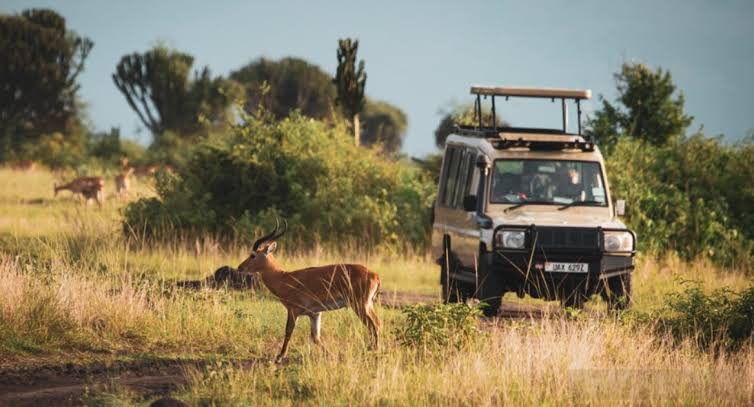
- Uganda Kob: The park’s most iconic antelope and emblem of Uganda’s coat of arms. Huge herds on Kasenyi and Mweya plains.
- Topi: Distinctive chestnut-and-blue antelope common on the Kasenyi plains.
- Common Warthog: Ubiquitous throughout the savanna zones; a constant and comical companion on game drives.
- Giant Forest Hog: Africa’s largest wild pig. Maramagambo Forest and forest edges are prime areas.
- Side-Striped Jackal: Often seen at dusk and dawn, particularly around the Mweya Peninsula.
- Nile Monitor Lizard: Regularly encountered along channel and lake shores, sometimes growing to impressive sizes.
Birding on a Game Drive
With over 606 recorded bird species, QENP is a Mecca for birdwatchers. Even non-birders tend to be astonished by the quantity and colour of birds encountered on a typical game drive. Notable species include:
- African Fish Eagle: The park’s signature sound — a haunting cry over the channel and lakes
- Martial Eagle: Africa’s largest eagle; regularly sighted soaring above the Kasenyi Plains
- Shoebill Stork: The prehistoric-looking prize of Ugandan birding; best found in Murchison Falls but sometimes in QENP’s papyrus swamps
- Pink-Backed Pelican: Nesting colonies near Mweya
- African Skimmer: Along the Kazinga Channel
- Great Blue Turaco: Maramagambo Forest and Kyambura Gorge
- Black-and-White Casqued Hornbill: Forest sectors
- African Jacana: Common on lake margins and channel edges
- Papyrus Gonolek and Papyrus Canary: Specialist papyrus swamp species
Vehicles and Self-Drive vs. Guided Game Drives
One of the most practical decisions when planning your game drive in Queen Elizabeth National Park is whether to self-drive or join a guided drive. Both options are viable and have distinct advantages.
Self-Drive Game Drive
Self-driving in QENP is entirely permitted and increasingly popular, particularly among repeat safari travellers who value flexibility and autonomy. The main tracks are reasonably well-signposted and a detailed park map is available from the UWA gate. That said, there are important considerations:
- Vehicle: A high-clearance 4WD is mandatory for the Ishasha sector and strongly recommended everywhere else, particularly after rain. A pop-up roof or open roof hatch greatly enhances game viewing and photography.
- Navigation: Download offline maps (Maps.Me or OsmAnd) before entering the park. Cellular coverage is limited outside Mweya.
- UWA regulations: Driving after dark (after 19:00 and before 06:00) is strictly prohibited. All vehicles must pay the park entrance fee and be registered at the gate.
- Fuel: Fill up in Kasese (northern sector) or Mbarara (eastern approach) before entering. No fuel is available inside the park.
- Recovery equipment: Carry a hi-lift jack, tow rope, shovel, and spare tyre — essential insurance in the wet season.
Guided Game Drive
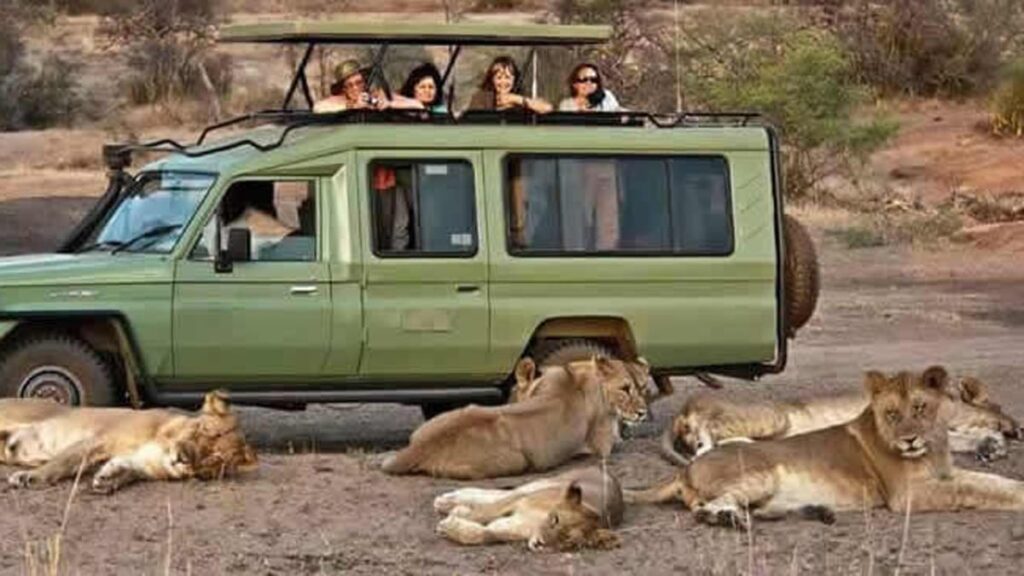
Guided game drives can be arranged through your lodge or directly through the Uganda Wildlife Authority at Mweya. A knowledgeable UWA ranger-guide makes an enormous difference — they know the territories of individual lion prides, the preferred routes of elephant herds, and the specific trees favoured by the Ishasha lions at different times of year. For first-time visitors and serious wildlife photographers, a guided drive is strongly recommended at least for the first outing.
Park Entry Fees and Costs (2027–2028)
All fees are set by the Uganda Wildlife Authority and are subject to revision. Always confirm current fees directly with UWA or your tour operator before travel.
- Non-East African foreign adult: USD 40 per person per day
- East African residents (foreigners): USD 25 per person per day
- East African citizens: UGX 20,000 per person per day
- Ranger guide fee: USD 20–30 per drive (negotiated at the gate or through lodge)
- Vehicle fee: UGX 30,000 per vehicle per entry
- Boat launch on Kazinga Channel (2-hour): USD 30 per adult (non-resident)
- Chimpanzee trekking permit (Kyambura Gorge): USD 50 per person
Where to Stay: Accommodation Near the Game Drive Areas
Staying inside or immediately adjacent to the park gives you first access to the gates at opening and allows spontaneous drives at golden hour. Options range from luxury to budget:
Luxury
- Mweya Safari Lodge: The park’s flagship property, perched on the Mweya Peninsula with sweeping views over the Kazinga Channel and Lake Edward. Direct access to Kasenyi drives.
- Kyambura Gorge Lodge: Beautifully restored eco-lodge on the gorge rim; superb for gorge walks and eastern sector game drives.
- Ishasha Wilderness Camp: The only permanent camp in the Ishasha sector; ideal base for tree-climbing lion drives.
Mid-Range
- Jacana Safari Lodge: Comfortable lodge near the channel with reliable wildlife viewing from the grounds.
- Pumba Safari Cottages: Self-catering and guided options on the park boundary; good value for self-drive visitors.
- Queen Elizabeth Bush Lodge: Well-positioned for Kasenyi and channel drives.
Budget
- UWA Mweya Hostel and Bandas: Basic but clean accommodation managed by Uganda Wildlife Authority, within walking distance of the channel.
- Simba Safari Camp: Budget tented camp near Mweya; popular with backpackers and budget-conscious safari-goers.
Practical Tips for Your Game Drive
- Start early: The 06:00 gate opening is not a suggestion — it is a golden opportunity. Have your breakfast packed the night before.
- Stay in the vehicle: UWA regulations require that you remain in your vehicle at all times outside of designated areas. This protects both you and the wildlife.
- Keep noise to a minimum: Turn off the engine when stationary near animals. Speak quietly. Leave your music at the lodge.
- Follow the guide’s or ranger’s instructions: If a ranger signals you to stop or reverse, do so immediately without question.
- Carry sufficient water: At least 2 litres per person per drive. The equatorial sun is intense even at altitude.
- Dress in neutral colours: Khaki, olive, brown, and grey blend into the bush. Avoid white, red, and bright colours that may startle wildlife.
- Binoculars are non-negotiable: A quality pair of 8×42 or 10×42 binoculars transforms distant sightings into memorable encounters.
- Manage camera expectations: A 300mm or longer lens is ideal for wildlife photography. Even a good smartphone with a telephoto clip lens will capture excellent images in the morning light.
- Respect the park’s no-off-road rule: Driving off established tracks is prohibited and causes serious erosion damage to the park. All game viewing is done from designated tracks.
- Check tyre pressure and fuel before entering: Breakdowns inside the park are time-consuming and can be dangerous.
Sample 3-Day Game Drive Itinerary
This sample itinerary is designed for travellers staying at Mweya and wishing to cover the northern and southern sectors of the park.
Day 1: Arrival and Afternoon Game Drive (Mweya / Kasenyi)
- Arrive at Mweya by midday; check in and have lunch at the lodge
- 15:30 — Afternoon game drive on the Kasenyi Plains (3 hours)
- Focus: Lions, Uganda kob, elephants, and savanna birds
- Return to lodge by 19:00; sundowner on the peninsula
- Evening briefing with your guide for the following day
Day 2: Full Day — Morning Drive + Boat + Afternoon Drive
- 06:00 — Early morning game drive, Kasenyi Plains (2.5 hours)
- Return to lodge for breakfast
- 09:00 — Kazinga Channel boat launch (2 hours); hippos, elephants, crocodiles, waterbirds
- Lunch and midday rest at lodge
- 15:30 — Afternoon drive through the crater lakes area and channel shores
- Sunset on the peninsula; dinner at lodge
Day 3: Drive to Ishasha — Tree-Climbing Lions
- 06:30 — Early morning Kasenyi drive before departing south
- 09:00 — Depart Mweya for Ishasha sector (allow 2.5–3 hours drive)
- 12:00 — Arrive Ishasha; lunch at Ishasha Wilderness Camp
- 14:30 — Afternoon game drive in the Ntungwe River valley hunting for tree-climbing lions
- Overnight at Ishasha or early-evening departure for Mbarara/Kampala
How to Get to Queen Elizabeth National Park
The park is accessible by road from Kampala (approximately 400 km, 5–6 hours drive) via the Mbarara–Kasese highway. The route passes through Masaka, Mbarara, and Bushenyi. The road is tarmacked to the park’s northern boundary at Katunguru and is driveable year-round in a standard saloon, though a 4WD is recommended for the final stretch to Mweya. The southern Ishasha entry is accessed via Kihihi (from Kampala via Kabale or Mbarara), adding approximately 2–3 hours to the journey from the northern gate.
There is also a small airstrip at Mweya served by scheduled light-aircraft services from Entebbe and Kihihi, operated by airlines such as Aerolink Uganda — an excellent option for those wishing to minimise overland travel time.
Conclusion
A game drive in Queen Elizabeth National Park is not simply a wildlife excursion — it is an immersion into one of Africa’s great ecological crossroads. From the lion-dotted Kasenyi Plains and the channel-side hippo pods to the impossible sight of lions draped through the branches of fig trees in Ishasha, QENP delivers a safari experience of genuine drama and biodiversity depth. Uganda’s gentle green landscapes, the warmth of its people, and the sheer wildness of its protected areas combine to make this one of the continent’s most rewarding and yet under visited destinations.
Whether you arrive in a self-drive 4WD rental or in the hands of an expert guide, the game drives here will stay with you long after the red dust of Uganda has washed from your boots. Book your park entry in advance during peak season, give yourself at least two to three days in the park, and let the rhythm of the equatorial morning — that crisp pre-dawn silence broken by the cry of a fish eagle — guide you into the bush.
Queen Elizabeth National Park is waiting. The lions are in the trees.