Gorilla Families in Nkuringo Sector
Gorilla Families in Nkuringo Sector, Perched on a dramatic ridge on the southern edge of Bwindi Impenetrable National Park, the Nkuringo sector is where gorilla trekking in Uganda feels most like a genuine expedition. Here, the forest drops away steeply into the Kashasha River valley, the Virunga volcanoes rise on the horizon, and a small number of habituated mountain gorilla families roam slopes that very few visitors ever see. If you are looking for fewer crowds, unforgettable scenery and a trek that truly earns its reward, Nkuringo deserves a place at the top of your list.
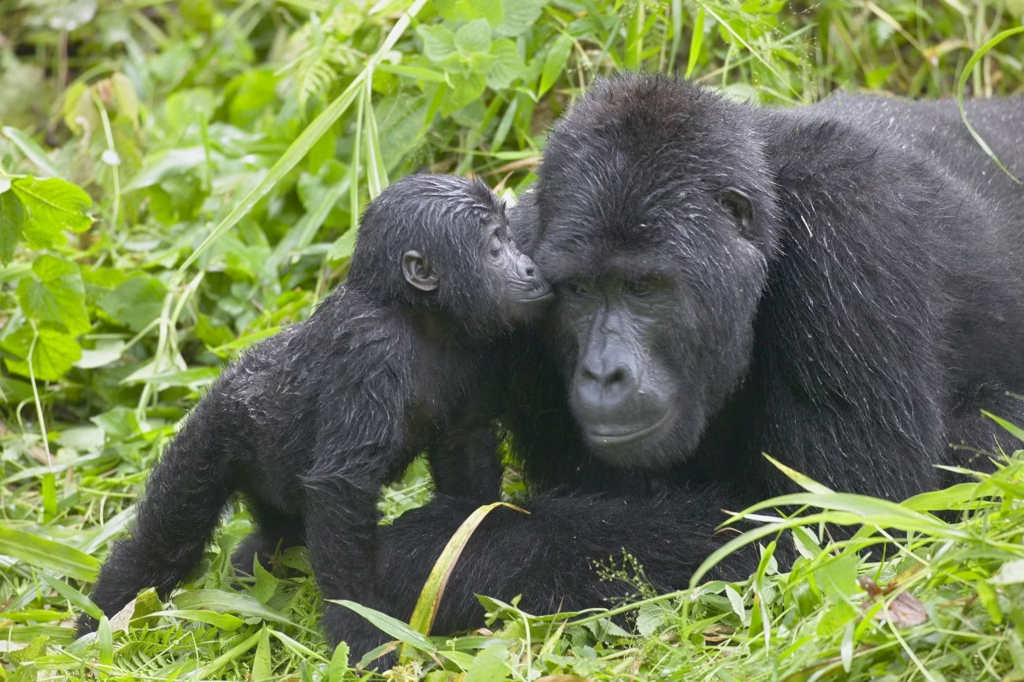
This guide introduces every gorilla family you can trek in the Nkuringo sector, tells the remarkable stories behind them — including the legendary silverback Rafiki — and covers everything you need to plan your visit: permit prices for 2026, how families are allocated, how hard the trek really is, the best time to go, how to get there, where to stay and what to pack.
| Nkuringo at a Glance
Location: Southern Bwindi Impenetrable National Park, Kisoro District, south-western Uganda Habituated gorilla families: 3 regularly trekked groups — Nkuringo, Bushaho and Christmas Daily permits: About 24 (a maximum of 8 visitors per family per day) Trek difficulty: Strenuous — steep descents and climbs on hilly terrain Standard permit (2026): USD 800 for foreign non-residents Best for: Fit, adventurous travellers who value solitude and scenery |
Where Is the Nkuringo Sector?
Bwindi Impenetrable National Park is divided into four gorilla trekking sectors: Buhoma in the north, Ruhija in the east, and Rushaga and Nkuringo in the south. Nkuringo sits on the park’s southern boundary in Kisoro District, close to the borders of both Rwanda and the Democratic Republic of Congo. Its name comes from the Rukiga word for “round hill”, a reference to the rounded crest where the first gorilla group in this area was spotted.
The sector is famous for its setting. The trailhead and lodges sit high on the Nkuringo ridge, which forms a natural boundary between the dense rainforest on one side and terraced farmland on the other. On a clear day you can see the volcanic cones of the Virunga Massif — including Muhabura, Gahinga and Sabyinyo — and, further west, the peaks of the Congolese Virungas. Few places in East Africa combine primate trekking with views this spectacular.
Because Nkuringo has fewer gorilla families than its neighbour Rushaga, it releases fewer permits and receives fewer visitors. That gives the sector a quieter, more remote character, but it also means permits can sell out quickly in the busy months.
How Many Gorilla Families Are in Nkuringo?
The Nkuringo sector has three habituated gorilla families that are regularly open to trekkers: the Nkuringo family, the Bushaho family and the Christmas family. Uganda Wildlife Authority (UWA) allows a maximum of eight visitors per family per day, so roughly 24 gorilla permits are issued for the sector daily.
Gorilla groups are dynamic. Members are born, die, emigrate and immigrate, and families sometimes split when a young silverback breaks away to form his own group. Some tour operators have recently begun referring to a newer group called the Posho family in the Nkuringo area. If this group matters to your plans, ask your operator to confirm its current status with UWA at the time of booking, because availability can change from season to season.
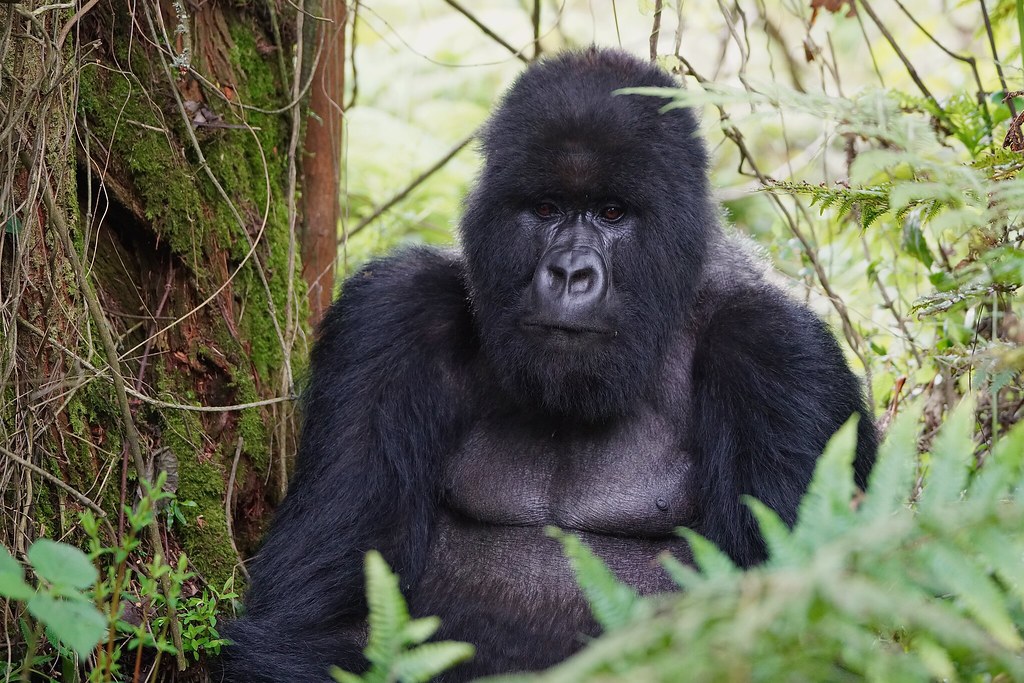
| Family | Lead Silverback | Approx. Size* | Origin | Trek Character |
| Nkuringo | Leadership passed to young males after 2020 | Roughly 11–17 | First group habituated in southern Bwindi (from 1997); opened to tourists in 2004 | Often steep; group frequently ranges near the park edge |
| Bushaho | Bahati | About 8–10 | Formed around 2012 when Bahati left the Nkuringo group | Wide home range towards the Rushaga boundary; variable trek length |
| Christmas | Christmas | About 8–9 | Newest of the three regularly trekked groups | Smaller, close-knit group; terrain still hilly |
*Family sizes change constantly and published figures differ between sources. Treat these as indicative ranges and ask your guide for the latest count on the day.
1. The Nkuringo Gorilla Family
The pioneer group of southern Bwindi
The Nkuringo family is the most famous gorilla group in the south of the park and the one that gave the whole sector its name. Habituation began in 1997, making it the first group habituated anywhere in southern Bwindi. Although habituation progressed well, the family was not opened to tourists until 2004, largely because the area lacked roads, lodges and other tourism infrastructure at the time.
The group was named after its founding silverback, Nkuringo. Shortly after opening, the family gained international attention when a female gave birth to twins — a rare event among mountain gorillas. Visitors who wanted to see mothers caring for infants often requested this group.
The story of Rafiki
In 2003, trackers noticed an unfamiliar young blackback living peacefully alongside the dominant silverback. Outside males rarely join an established group, and this one was so calm and unaggressive that the rangers named him Rafiki — Swahili for “friend”. When the old silverback Nkuringo died in 2008, Rafiki matured into a silverback and took over leadership of the family, which he guided for roughly twelve years. He became one of the best-loved gorillas in Uganda, known to rangers and visitors alike for his gentle temperament.
In early June 2020, during the COVID-19 tourism shutdown, Rafiki was reported missing. His body was found the following day inside the forest; a post-mortem showed he had been killed by a spear. UWA arrested four suspected poachers, one of whom claimed he had acted in self-defence while hunting small antelope and bush pigs. At the time of his death, the Nkuringo group had 17 members, including Rafiki as the only silverback, three blackbacks, eight adult females, two juveniles and three infants. A year earlier, in 2019, the group had already lost a second silverback, Kirungi.
Losing a lone silverback can cause a group to disband, so conservationists watched the family closely. The family held together under the leadership of its young males and remains open for trekking, though its size has fluctuated since. Rafiki’s death became a global rallying point for gorilla conservation and a reminder of how fragile these populations remain.
What to expect when trekking the Nkuringo family
- Terrain: Typically steep. The family has a long history of ranging close to — and sometimes beyond — the park boundary into community land, so treks can be shorter on some days, but the route usually involves a sharp descent from the ridge and a demanding climb back.
- Highlights: Historical significance, active youngsters, and the chance to see a family that has rebuilt after losing its leader.
- Best suited to: Trekkers with good fitness and a sense of history.
2. The Bushaho Gorilla Family
A breakaway group led by silverback Bahati
The Bushaho family traces its origins to the Nkuringo group. Over time several individuals dispersed from the Nkuringo family, and in early 2012 rangers conducted a search to find out where they had gone. They discovered a parallel group led by Bahati, a silverback who had previously lived in the Nkuringo family and was therefore already used to people. Other members of the group came from non-habituated wild gorillas.
Because Bahati was already habituated, the wider group was gradually brought through the habituation process and later opened to standard gorilla trekking. The family takes its name from Bushaho, the area that forms the heart of its home range, which stretches across a large part of the sector towards the Rushaga boundary. The International Gorilla Conservation Programme listed the group at nine members in January 2024.
What to expect when trekking the Bushaho family
- Terrain: Because the family ranges widely, trek times vary considerably — some days the gorillas are found within a couple of hours, while on others the hike stretches much longer.
- Highlights: Watching the dynamics around a strong, experienced silverback; some visitors have noted the interplay between Bahati and maturing males in the group.
- Best suited to: Travellers who enjoy a smaller, intimate family and do not mind an unpredictable trek length.
3. The Christmas Gorilla Family
The newest of Nkuringo’s trekking groups
The Christmas family is the most recent addition to Nkuringo’s regularly trekked groups, and its opening brought the sector to three habituated families and 24 daily permits. It takes its name from its dominant silverback, Christmas. A small, cohesive family of around eight or nine members, it typically includes adult females, sub-adults, juveniles and infants, which gives visitors a good chance of seeing playful youngsters and mothers caring for babies.
As a more recently habituated group, the Christmas family offers a slightly different feel from Nkuringo’s veteran family. Newer groups can be a little more cautious around people, and observing how they react to visitors is part of the experience. Your ranger guides are trained to read the group’s mood and will position you accordingly.
What to expect when trekking the Christmas family
- Terrain: Hilly and demanding, consistent with the rest of the sector.
- Highlights: A calm, close-knit family and often good photographic opportunities with infants and juveniles.
- Best suited to: Photographers and travellers keen on family interactions.
| Can I Choose Which Family I Trek?
You book a permit for a sector, not a specific family. On the morning of your trek, UWA wardens at the Nkuringo briefing point allocate visitors to families. They consider fitness, age and any mobility concerns, placing stronger hikers with groups that are farther away. If you have a preference or a medical limitation, mention it politely at the briefing — rangers do their best to accommodate reasonable requests, but allocation is never guaranteed. |
What Is Gorilla Trekking in Nkuringo Really Like?
Nkuringo has a reputation as the most physically demanding of Bwindi’s four sectors, and the reputation is deserved. The key difference is the geography: lodges and the trailhead sit high on the ridge, while the gorillas generally live lower down in the forested valleys. That means most treks begin with a long, steep descent — which is hard on the knees — and end with a tough climb back up when you are already tired.
| Factor | What to Expect in Nkuringo |
| Trek duration | Usually 3–8 hours round trip, depending on where the family slept the night before |
| Terrain | Steep, often muddy slopes, dense undergrowth and occasional stream crossings |
| Time with gorillas | Strictly one hour once your group reaches the family |
| Group size | Maximum 8 visitors per family, plus ranger guides, trackers and armed rangers |
| Porters | Available at the trailhead for a modest fee (commonly around USD 15–20); highly recommended here |
| Walking sticks | Usually provided at the briefing point — take one |
A typical trek day
- 06:30–07:30 — Breakfast at your lodge and transfer to the Nkuringo briefing point.
- 07:30–08:00 — Registration, passport and permit check, and a briefing on gorilla etiquette. Families are allocated.
- 08:00 — Trek begins. Advance trackers, who left at dawn, radio the gorillas’ location to your guide.
- Late morning to early afternoon — You reach the family, leave bags and sticks behind, and spend one magical hour observing them.
- Afternoon — Hike back to the trailhead, tip your porter, and receive your gorilla trekking certificate.
| Fitness Tip from Our Guides
Start training at least six to eight weeks before your trip. Hill walking, stair climbing and lunges will prepare your legs for both the descent and the climb. Hiring a porter is not a sign of weakness — it supports a local family and frees you to focus on your footing. |
Nkuringo Gorilla Permit Prices for 2027
Gorilla permits for all Bwindi sectors, including Nkuringo, are issued by Uganda Wildlife Authority. Foreign non-resident visitors must book their permits through a licensed Ugandan tour operator. The standard permit includes park entry, ranger guides and one hour with a habituated gorilla family.
| Visitor Category | Standard Gorilla Permit |
| Foreign non-residents | USD 800 per person |
| Foreign residents (with Uganda/EAC work or residence permit) | USD 700 per person |
| Rest of Africa | USD 500 per person |
| East African Community citizens | UGX 300,000 per person |
| Important Permit Notes
Low-season rates: UWA has announced discounted permits for April, May and November (USD 600 for foreign non-residents and USD 500 for foreign residents). Published reports differ on exactly when these rates take effect, so confirm the rate for your specific travel dates with your operator before paying. Future pricing: UWA tariffs are reviewed periodically. Reports from early 2026 indicated a proposed increase was shelved and the USD 800 rate retained, but always verify current pricing when booking. Gorilla Habituation Experience: The longer four-hour habituation experience is run primarily in the Rushaga sector, not Nkuringo. It is priced separately and well above the standard permit. Book early: With only around 24 permits a day, Nkuringo sells out fast in June–September and December–February. Booking three to six months ahead is wise. |
Best Time to Trek the Nkuringo Gorilla Families
Gorilla trekking runs all year in Bwindi, and the gorillas themselves do not migrate. What changes is the weather — and in a sector as steep as Nkuringo, weather makes a real difference to how hard the trek feels.
| Season | Months | What It Means for Nkuringo |
| Long dry season | June – September | Firmer trails and the most comfortable trekking; peak demand, so book permits early |
| Short dry season | December – February | Good conditions and clear volcano views; busy around the festive season |
| Long rains | March – May | Muddy, slippery slopes but lush forest, fewer visitors and possible low-season permit savings |
| Short rains | October – November | Showers usually pass quickly; quieter trails and good availability |
Rain can fall in Bwindi on any day of the year, so pack waterproof gear whatever the season. Many seasoned travellers actually enjoy the wet months for the quieter trails and richer greenery.
How to Get to the Nkuringo Sector
| Starting Point | Route | Approx. Time |
| Kampala / Entebbe | By road via Mbarara and Kabale to Kisoro, then up to the Nkuringo ridge | 9–10 hours |
| Kigali, Rwanda | By road via the Cyanika border to Kisoro, then on to Nkuringo | 4–5 hours (plus border time) |
| Entebbe (by air) | Scheduled or charter flight to Kisoro airstrip, then a road transfer | About 1.5 hours flying + 1–1.5 hours drive |
| Kisoro town | Murram (dirt) road to Nkuringo | About 1–1.5 hours |
A sturdy 4×4 is strongly recommended. The final stretch to Nkuringo is unpaved, winding and can become slippery after rain. Many visitors combine their Nkuringo trek with Rwanda, using the short route from Kigali — a popular option for travellers who want Uganda’s lower permit price while flying into Kigali.
| Self-Drive or Driver-Guide?
Marriott Safaris Africa offers well-maintained 4×4 vehicles for self-drive adventures as well as experienced driver-guides who know the southern Bwindi roads intimately. If you are new to driving on Ugandan mountain roads, a driver-guide removes the stress and ensures you reach the briefing point on time. |
Where to Stay Near the Nkuringo Gorilla Families
Staying close to the Nkuringo trailhead is important, because briefings start early. Options range from top-tier luxury on the ridge itself to comfortable lodges by scenic Lake Mutanda, about an hour away.
| Tier | Lodge | Why Stay Here |
| Luxury | Clouds Mountain Gorilla Lodge | Uganda’s highest-altitude luxury lodge, set on the Nkuringo ridge with sweeping views of the Virungas |
| Mid-range | Nkuringo Bwindi Gorilla Lodge | Community-focused lodge near the trailhead with cottages overlooking the forest and volcanoes |
| Mid-range / upmarket | Chameleon Hill Lodge (Lake Mutanda) | Colourful, characterful lodge above Lake Mutanda; a good base for combining Nkuringo and Rushaga |
| Budget to mid-range | Mutanda Lake Resort | Lakeside cottages and a relaxed atmosphere, ideal for adding a canoe trip |
Note that some lodges market themselves as “Nkuringo” but are located closer to Rushaga or Lake Mutanda. Always check the driving time to the Nkuringo briefing point before booking.
Gorilla Trekking Rules and Etiquette
Mountain gorillas share about 98% of our DNA and are highly vulnerable to human illnesses. The rules below protect them and keep you safe.
- You must be at least 15 years old to trek.
- Do not trek if you have a cold, flu, cough or any contagious illness — inform the rangers so you can be rescheduled.
- Keep a distance of at least 7 metres (about 21 feet) from the gorillas, and wear a face mask if instructed.
- Speak quietly, move slowly and never surround a gorilla or block its path.
- No flash photography. Turn off flash and keep camera sounds to a minimum.
- Do not eat, drink or smoke near the gorillas, and never leave litter in the forest.
- If a gorilla charges, stay calm, crouch down, look away and follow your ranger’s instructions — do not run.
- If you need to sneeze or cough, turn away from the gorillas and cover your mouth.
What to Pack for Gorilla Trekking in Nkuringo
| Category | Essentials |
| Footwear | Waterproof hiking boots with good ankle support and strong grip (broken in before the trip) |
| Clothing | Long-sleeved shirt and long trousers (tuck trousers into socks to block ants), light fleece, waterproof rain jacket |
| Protection | Gardening gloves for gripping nettles and vines, gaiters, hat, insect repellent, sunscreen |
| Day pack | Waterproof backpack or rain cover, 2–3 litres of water, packed lunch and energy snacks |
| Documents | Passport (needed for permit verification) and your permit confirmation |
| Camera gear | Camera with a fast lens (no flash), spare batteries, memory cards and a dry bag |
| Health | Personal medication, basic first-aid items, face mask, and your yellow fever certificate for entry into Uganda |
Things to Do in Nkuringo Beyond Gorilla Trekking
- Ivy River Trail: A scenic forest hike linking Nkuringo with Buhoma through the heart of Bwindi, rich in birds, butterflies and other primates. Your luggage can be driven round while you walk.
- Community and cultural walks: Visit local homesteads, traditional healers, blacksmiths and banana-beer brewers in the villages along the ridge.
- Batwa cultural experience: Learn about the forest-dwelling Batwa people, Bwindi’s original inhabitants, and their traditional way of life.
- Lake Mutanda: Canoe on one of Uganda’s most beautiful lakes, with the Virunga volcanoes reflected on the water.
- Birdwatching: Bwindi is home to many Albertine Rift endemics; Nkuringo’s forest edge is rewarding for keen birders.
- Mgahinga Gorilla National Park: Nearby for golden monkey tracking and volcano hikes.
Conservation: Why Your Nkuringo Permit Matters
Mountain gorillas were once on the brink of extinction. Thanks to decades of protection, community partnerships and responsible tourism, their numbers have recovered to over 1,000 individuals across the Virunga Massif and Bwindi. Bwindi alone holds close to half the world’s mountain gorillas.
Every permit you buy helps fund ranger patrols, veterinary care and anti-poaching work. A share of permit revenue also goes to communities living around the park, giving local people a direct stake in protecting the forest. Rafiki’s death in 2020 — which happened when tourism revenue had collapsed during the pandemic — showed how closely gorilla safety is tied to the income that visitors bring. Trekking in Nkuringo is not only an unforgettable experience; it is a meaningful contribution to the survival of the species.
Sample 3-Day Nkuringo Gorilla Trekking Itinerary
Day 1: Kigali or Kisoro to Nkuringo
Travel to the southern Bwindi region, crossing at Cyanika if you start in Rwanda. Stop at a viewpoint over Lake Mutanda before continuing to your lodge on the Nkuringo ridge. Enjoy sunset views over the Virunga volcanoes and an early night.
Day 2: Gorilla Trekking in Nkuringo
After an early breakfast, head to the briefing point, where you will be allocated to the Nkuringo, Bushaho or Christmas family. Trek down into the forest with your ranger guides and spend a life-changing hour with the gorillas. Return to the lodge to rest, or join a gentle community walk in the late afternoon.

Day 3: Lake Mutanda and Departure
Enjoy a relaxed morning canoe trip on Lake Mutanda or a Batwa cultural visit before driving back to Kigali or onward to Queen Elizabeth National Park, Lake Bunyonyi or Kampala.
Frequently Asked Questions
How many gorilla families are in the Nkuringo sector?
There are three regularly trekked habituated families: Nkuringo, Bushaho and Christmas. Some operators have mentioned a newer Posho group, so confirm current availability when booking.
Which is the oldest gorilla family in Nkuringo?
The Nkuringo family. Habituation started in 1997 and the group opened to tourists in 2004, making it the first habituated group in southern Bwindi.
Who was Rafiki?
Rafiki was the much-loved silverback who led the Nkuringo family from 2008 until he was killed by a poacher in June 2020. His death drew global attention to gorilla conservation.
Is Nkuringo the hardest sector in Bwindi?
It is widely considered the most physically demanding, mainly because treks begin with a steep descent from the ridge and finish with a hard climb back up.
How much is a gorilla permit for Nkuringo in 2026?
The standard permit costs USD 800 for foreign non-residents, USD 700 for foreign residents, USD 500 for other African nationals and UGX 300,000 for East African citizens. Discounted low-season months have also been announced; confirm the rate for your dates.
Can I choose a specific gorilla family?
No. Permits are sold by sector, and UWA wardens allocate families on the morning of the trek, taking your fitness into account.
How long will I spend with the gorillas?
Exactly one hour once your group reaches the family. The hike to get there can take anywhere from one to several hours.
Can I do the Gorilla Habituation Experience in Nkuringo?
The habituation experience is run mainly in the Rushaga sector. If you want four hours with a gorilla group, plan your trip around Rushaga instead.
Is Nkuringo close to Rwanda?
Yes. Nkuringo can be reached from Kigali in roughly four to five hours via the Cyanika border, making it one of the best Bwindi sectors to combine with a Rwanda itinerary.
Do I need to hire a porter?
It is optional but strongly recommended in Nkuringo. Porters carry your bag, help you on steep sections and earn valuable income for their families.
Plan Your Nkuringo Gorilla Adventure
The gorilla families of Nkuringo reward those willing to work for the encounter. Between the history of the pioneering Nkuringo group, the resilience of Bahati’s Bushaho family and the intimacy of the Christmas group, every trek here tells a story — and the Virunga views from the ridge are a bonus few other sectors can match.
| Book with Marriott Safaris Africa — Perfection Anytime
Our team secures Nkuringo gorilla permits through licensed channels, arranges reliable 4×4 transport or self-drive vehicles, and books lodges that put you close to the trailhead. Contact us with your preferred dates and we will design a gorilla safari that fits your fitness, budget and travel style. |