
Best Time to Visit Chobe National Park
A Month-by-Month Guide to Seasons, Wildlife, Weather and Travel Planning in Botswana’s Elephant Capital
Chobe National Park in northern Botswana is home to one of the largest concentrations of elephants on Earth, a river that draws wildlife in astonishing numbers, and a remote interior where lions, wild dogs and hyenas play out some of Africa’s most dramatic predator encounters. But Chobe is a very different park from one month to the next. In the dry winter months, tens of thousands of elephants crowd the Chobe Riverfront. In the green summer months, the bush explodes into life, migratory birds arrive by the thousand, and zebra herds trek towards Savuti.
Choosing the best time to visit Chobe National Park therefore depends on what you want from your safari: peak game viewing, lush landscapes and newborn animals, outstanding birding, lower prices, or a combination with Victoria Falls. This guide breaks down Chobe’s seasons, explains what happens in each month and each region of the park, and gives practical advice on weather, costs, packing and booking so you can plan the right trip.
| Quick Answer: When Is the Best Time to Visit Chobe?
Best overall: June to October (dry season). Water is scarce inland, so animals concentrate along the Chobe River and at Savuti’s waterholes. Peak elephant viewing: August to October, when herds of hundreds gather at the river every afternoon. Best for birding, newborn animals and green scenery: November to March (wet/green season). Best value: November to April, when many lodges offer green-season rates. Best shoulder months: April, May and early November – good game, fewer vehicles and fairer prices. |
Chobe National Park at a Glance
Before looking at seasons, it helps to understand the park itself. Chobe covers roughly 11,700 square kilometres and was proclaimed in 1968 as Botswana’s first national park. It sits in the far north of the country, close to the borders of Namibia, Zambia and Zimbabwe, and forms part of the Kavango–Zambezi Transfrontier Conservation Area (KAZA). The gateway town is Kasane, about 80 km from Victoria Falls.
| Feature | Details |
| Location | Northern Botswana, Chobe District; gateway town Kasane |
| Size | Approx. 11,700 km² (Botswana’s third-largest protected area) |
| Established | 1968 – Botswana’s first national park |
| Main regions | Chobe Riverfront, Savuti, Linyanti, Nogatsaa/Tchinga |
| Signature wildlife | Elephants, buffalo, lions, puku, sable, roan, wild dogs, hippos, crocodiles |
| Nearest airport | Kasane International Airport (BBK) |
| Climate | Semi-arid; dry winter (May–Oct), hot wet summer (Nov–Apr) |
| Average annual rainfall | Around 600–650 mm at Kasane, most falling December to February |
Understanding Chobe’s Seasons
Chobe has two main seasons, but travelers usually find it more useful to think in four periods, because conditions change noticeably within each season.
1. Early Dry Season / Winter (May to July)
The rains have ended, the bush is still fairly green and the pans inland hold the last of the summer water. As the weeks pass, those pans dry up and animals begin moving towards permanent water along the Chobe River and the Linyanti system. Days are warm, sunny and pleasant (around 24–28°C), but mornings and nights can be genuinely cold – dropping to 5–8°C in June and July, and lower in open game-drive vehicles.
- Pros: Comfortable temperatures, low malaria risk, very little rain, game viewing improves week by week.
- Cons: Cold early-morning drives; vegetation can still be thick in May, making some animals harder to spot.
2. Late Dry Season (August to October)
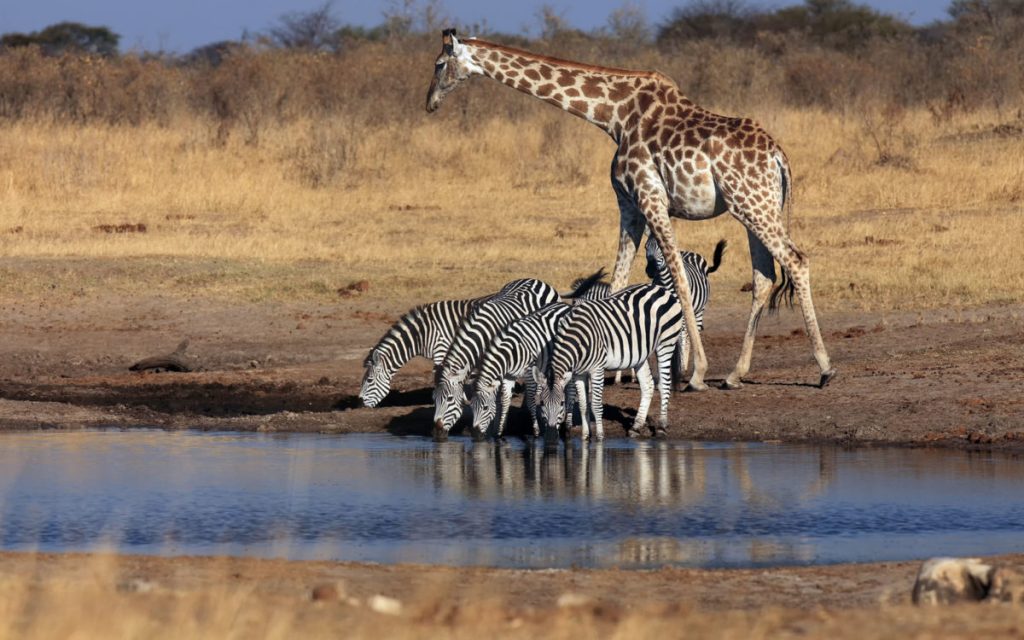
This is Chobe at its most famous. With the interior almost completely dry, the Chobe Riverfront becomes a magnet for wildlife. Large elephant herds walk down to the water every afternoon to drink, bathe and cross to the islands, while buffalo, giraffe, zebra, sable and antelope line the floodplains. Predators follow the prey. Savuti’s waterholes become hotspots for lions and hyenas. September and October get hot – often 35°C or higher – and the landscape turns dusty and bare.
- Pros: The best and most predictable game viewing of the year, excellent boat cruises, thin vegetation for easy spotting.
- Cons: Highest prices, busiest riverfront (especially around Kasane), intense heat in October, hazy and dusty air.
3. Early Wet Season (November to December)
The first rains usually arrive in November, often as afternoon thunderstorms. Within days the bush turns green, pans start to refill, and animals disperse away from the river. This is also birthing time: impala, tsessebe and other antelope drop their young, which attracts predators. Migratory birds arrive from Europe and other parts of Africa, and zebra begin moving between the Linyanti and Savuti areas.
- Pros: Newborn animals, dramatic skies, superb birding, lower prices and fewer vehicles.
- Cons: Heat and humidity before storms, more mosquitoes, game becomes more spread out.
4. Green / Peak Rainy Season (January to April)
January and February are usually the wettest months. Chobe is lush, flowers bloom and the air is clear. Game is more scattered, but the riverfront still offers good sightings, and Savuti can host impressive zebra numbers in the rains. By March and April, the rains ease while water levels in the Chobe River rise as floodwater from the Zambezi system backs up into it, creating beautiful high-water scenery for boat cruises.
- Pros: Best value of the year, green scenery, excellent photography light, peaceful game drives.
- Cons: Heavy downpours, some sandy or muddy tracks in Savuti and Linyanti become difficult, higher malaria risk.
Month-by-Month Guide to Visiting Chobe
Use the table below to compare conditions throughout the year. Temperatures are approximate averages for Kasane and the Chobe Riverfront; Savuti and the interior can be hotter by day and colder at night.
| Month | Season | Avg. Temp (°C) | Rainfall | Game Viewing | Highlights |
| January | Wet | 19 – 31 | High | Fair | Lush scenery, migratory birds, low rates |
| February | Wet | 19 – 31 | High | Fair | Peak rains, zebra in Savuti, quiet camps |
| March | Wet | 18 – 31 | Moderate | Fair–Good | Rising river levels, green landscapes |
| April | Shoulder | 15 – 30 | Low | Good | Rains end, high water, shoulder pricing |
| May | Dry | 10 – 28 | Very low | Good | Cooler days, animals start returning to river |
| June | Dry | 6 – 25 | None | Very good | Crisp mornings, peak season begins |
| July | Dry | 6 – 25 | None | Excellent | Busy riverfront, great boat cruises |
| August | Dry | 9 – 29 | None | Excellent | Large elephant herds, predator action |
| September | Dry | 14 – 33 | Very low | Outstanding | Peak elephant numbers, carmine bee-eaters |
| October | Dry | 18 – 35+ | Low | Outstanding | Hottest month, dramatic river scenes |
| November | Shoulder | 19 – 33 | Moderate | Good | First rains, impala lambing, migrants arrive |
| December | Wet | 19 – 31 | High | Fair–Good | Newborns, festive travel, green season rates |
January
January is deep green season. Afternoon storms are common, but mornings are often bright and clear. Wildlife is spread across the park, yet resident herds remain along the river. Birders will find this one of the most rewarding months, with migrant species in breeding plumage. Lodges are quiet and green-season rates apply.
February
Typically the wettest month. Savuti can be spectacular for zebra herds and accompanying predators, though access by road can be challenging. A good month for photographers who want dramatic skies and travellers seeking the lowest prices.
March
Rains begin to taper off. The Chobe River starts rising as Zambezi floodwater pushes in, creating channels and flooded floodplains that look superb from a boat. Game drives are relaxed with very few other vehicles.
April
A rewarding shoulder month. Rains have largely stopped, the bush is still green, temperatures are comfortable, and the river is high. Many lodges are still on lower rates. An excellent month to combine Chobe with Victoria Falls, which is near peak flow.
May
The dry season begins. Pans inland start to dry and animals drift towards permanent water. Days are warm and pleasant; evenings cool down. May offers a strong balance of good wildlife, comfortable weather and moderate visitor numbers.
June
Winter arrives with cold mornings and sunny days. Game viewing along the river improves steadily, and the peak tourism season begins. Bring warm layers for early drives and evening cruises.
July
One of the most popular months. The riverfront fills with elephants, buffalo and antelope, and sightings are reliable. Expect busy roads near Kasane and book accommodation well in advance, especially during European and North American summer holidays.
August
Excellent all round. Vegetation is thin, water is scarce inland and elephant herds are huge. Savuti offers strong predator viewing, including its famous lion prides. Temperatures start to climb, but nights remain mild.
September
For many guides, September is Chobe’s finest month. Elephant concentrations along the river are at or near their peak, the light is golden, and southern carmine bee-eaters nest in riverbanks in the region. It is warm to hot, and the busiest month for boat cruises.
October
The hottest month, sometimes above 38–40°C in the interior. It is also when wildlife is most dependent on the river, delivering extraordinary sightings. Plan activities for early morning and late afternoon, and rest during the midday heat.
November
The first rains usually arrive, transforming the landscape almost overnight. Impala and other antelope give birth, and predators take advantage. Some excellent game viewing remains early in the month, and shoulder rates often return.
December
Green season is fully under way. Newborn animals, abundant birdlife and beautiful scenery make it a wonderful month for a holiday safari, though festive dates around Christmas and New Year can still book up early at popular lodges.
Best Time to Visit Each Region of Chobe
Chobe is large, and each region has its own rhythm. The best time to visit depends partly on where you plan to stay.
| Region | Best Time | Why Visit Then | Access Notes |
| Chobe Riverfront (Serondela) | May – October (peak Aug–Oct) | Huge elephant and buffalo herds, boat cruises, puku and sable | Easiest region, reached from Kasane year-round |
| Savuti | May – October; also Nov–Mar for zebra | Strong predator viewing; zebra movements in the rains | Deep sand; 4×4 essential; wet-season roads can be tough |
| Linyanti | June – October | Wild dogs, lions, elephants on the Linyanti waterfront | Remote; most visitors fly in to private concessions |
| Nogatsaa / Tchinga | May – August | Quiet pans, few vehicles, elephants and antelope | Remote interior; self-sufficient 4×4 travel only |
Chobe Riverfront
The riverfront in the northeast is the most visited part of the park because of its proximity to Kasane. It is excellent year-round, but truly comes into its own from July to October, when animals arrive in their thousands. Boat cruises on the Chobe River are a highlight at any time; in the late dry season they offer close views of elephants swimming between the banks and islands.
Savuti
Savuti, in the west-central part of the park, is famous for its predators, particularly lion prides known for tackling large prey. The dry season brings animals to the artificial waterholes and the Savuti Marsh area. In the rains, Savuti becomes a stopover for zebra moving through the region. Water in the Savuti Channel varies greatly from year to year, so ask your operator about current conditions.
Linyanti
The Linyanti area in the northwest borders the Linyanti River and swamps. It is best in the dry season, when the waterfront attracts elephants, buffalo and predators. Much of the area falls within private concessions, which allow night drives and walking safaris not permitted inside the national park itself.
Best Time to Visit Chobe by Travel Interest
| Interest | Best Months | What to Expect |
| Elephant viewing | August – October | Herds of hundreds at the river; spectacular crossings |
| Big cats and predators | June – October | Lions and hyenas around Savuti waterholes; leopards on riverine edges |
| Birdwatching | November – March | Migratory species, breeding plumage; 450+ species recorded |
| Baby animals | November – December | Impala lambing and newborn antelope; active predators |
| Photography | Aug–Oct for wildlife; Jan–Apr for skies and greenery | Photographic boats on the river; storm light in summer |
| Boat cruises | Year-round (best Jul – Oct) | Elephants, hippos, crocodiles and water birds |
| Budget travel | November – April | Green-season discounts and easier availability |
| Family safaris | April – August | Mild weather, low malaria risk, school holidays |
| Honeymoons | April – June, September | Pleasant weather, romantic river sunsets, good game |
| Self-drive safaris | May – October | Firmer tracks; avoid Savuti sand roads in heavy rains |
Weather and Climate in Chobe
Chobe’s climate is semi-arid with a clear divide between the dry winter and the hot, rainy summer. The table below summarizes typical conditions in Kasane.
| Period | Day Temp | Night Temp | Rain | Humidity |
| May – July | 24 – 28°C | 5 – 10°C | Almost none | Low |
| August – October | 29 – 38°C | 10 – 20°C | Very little | Low |
| November – December | 30 – 33°C | 19 – 20°C | Increasing | Moderate–High |
| January – March | 30 – 32°C | 18 – 20°C | Highest | High |
| April | 29 – 30°C | 14 – 16°C | Light | Moderate |
| Guide’s Tip: Dress for Morning, Not Midday
Even in October, an open safari vehicle at 6 a.m. can feel chilly. In June and July, temperatures before sunrise can fall close to freezing in the interior. Pack a warm fleece, a windproof jacket, a beanie and gloves for winter drives, and peel off layers as the day warms. |
Peak vs. Green Season: Pros and Cons
| Factor | Dry Season (May – Oct) | Green Season (Nov – Apr) |
| Game viewing | Excellent and predictable | Good but more spread out |
| Scenery | Dry, open, dusty | Lush, green, dramatic skies |
| Crowds | Busier, especially riverfront | Quieter, fewer vehicles |
| Prices | Highest rates | Lower rates and special offers |
| Weather | Dry; cold mornings, hot Sep–Oct | Hot, humid, afternoon storms |
| Malaria risk | Lower | Higher – take precautions |
| Birding | Good | Outstanding |
| Road access | Good throughout | Some sandy/muddy routes challenging |
Combining Chobe with Victoria Falls
Chobe is only about 80 km (roughly a 1–1.5-hour drive) from Victoria Falls, making it one of Africa’s easiest safari-and-waterfall combinations. The two destinations peak at different times, so timing matters:
- February to May: Victoria Falls is at its fullest and most dramatic, while Chobe offers green scenery and value pricing. April and May give the best balance of both.
- June to August: A strong all-round window – good water at the falls and excellent wildlife in Chobe.
- September to December: Chobe’s game viewing peaks, but the falls are at their lowest. On the Zambian side, parts of the falls may be largely dry, though Devil’s Pool swims become possible.
The KAZA Univisa, when available, can simplify travel between Zambia and Zimbabwe and covers day trips into Botswana through Kazungula. Check current visa rules before travelling, as availability and requirements change.
Planning and Booking Tips
- Book early for peak season: For July to October, reserve lodges 6–12 months ahead, particularly riverfront lodges and Savuti or Linyanti camps.
- Use shoulder months: April, May and November offer some of the best value-to-wildlife ratios of the year.
- Mix regions: Combining the riverfront with Savuti or Linyanti gives you water-based and predator-focused safaris in one trip.
- Do both drives and boats: A morning game drive and afternoon boat cruise give the fullest picture of Chobe’s wildlife.
- Self-drivers: A well-equipped 4×4 is essential beyond the riverfront. Carry extra fuel, water and recovery gear, and book campsites in advance – Ihaha, Savuti and Linyanti campsites fill up quickly in the dry season.
- Check entry and park fees: Botswana’s Department of Wildlife and National Parks reviews fees periodically. Confirm current rates and vehicle permits with your operator before departure.
What to Pack for Each Season
| Dry Season (May – Oct) | Green Season (Nov – Apr) |
| Warm fleece, jacket, beanie and gloves for early drives | Lightweight rain jacket or poncho |
| Neutral-coloured, layered clothing | Quick-dry, breathable clothing |
| Lip balm and moisturiser for dry air | Strong insect repellent (DEET or picaridin) |
| Dust cover or bag for camera gear | Waterproof bag for electronics |
| Sunscreen, sunglasses and wide-brimmed hat | Sunscreen, hat and sunglasses |
| Binoculars and spare batteries | Binoculars and a bird field guide |
Health and Safety by Season
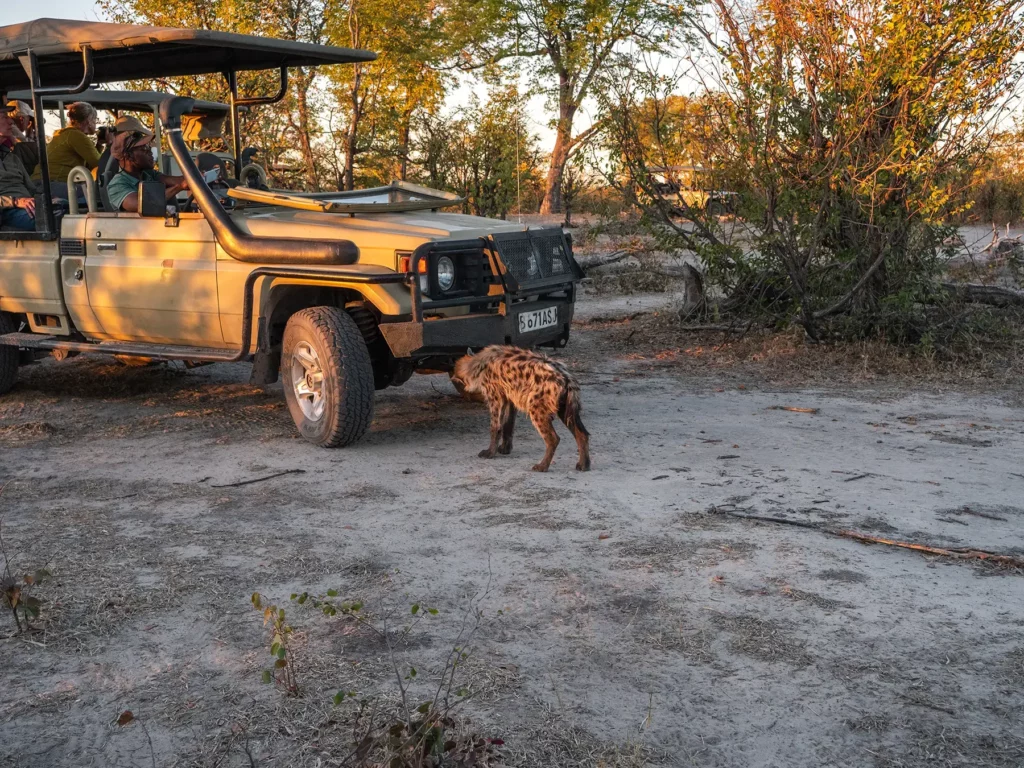
Northern Botswana, including Chobe, is a malaria area. The risk is highest during and just after the rains (November to April) and lower in the dry winter months, but it is never zero. Consult a travel health professional about antimalarial medication, use repellent, and wear long sleeves in the evenings. In the late dry season, heat is the main concern: drink plenty of water, rest at midday and protect yourself from the sun. Always follow your guide’s instructions around wildlife, especially near the river where elephants, hippos and crocodiles are common.
Frequently Asked Questions
What is the best month to visit Chobe National Park?
September is often considered the single best month for wildlife, thanks to huge elephant concentrations on the river and good predator viewing. August and October are also outstanding, while July is excellent with cooler weather.
Is Chobe worth visiting in the rainy season?
Yes. The green season brings newborn animals, superb birding, lush landscapes, dramatic skies and lower prices. Game is more spread out, but resident wildlife along the river still provides rewarding sightings.
When are the most elephants in Chobe?
Elephant numbers along the Chobe Riverfront peak from August to October, when the interior water sources have dried up and herds depend on the river.
Can I visit Chobe year-round?
Yes. The park is open all year, and the Chobe Riverfront near Kasane is accessible in every season. Some routes to Savuti and Linyanti can be difficult in heavy rains, so check road conditions if you plan to self-drive.
What is the cheapest time to visit Chobe?
November to April generally offers the lowest accommodation rates. January to March is typically the quietest and most affordable period.
How cold does Chobe get in winter?
In June and July, early mornings and nights can drop to around 5–8°C, and colder in the open interior. Daytime temperatures remain pleasant, usually in the mid-20s.
How many days do I need in Chobe?
Two to three nights on the riverfront allows several game drives and boat cruises. Add two to three nights in Savuti or Linyanti for a deeper experience, or combine Chobe with the Okavango Delta and Victoria Falls for a complete northern Botswana safari.
Is Chobe good for a first safari?
Absolutely. Its easy access from Kasane and Victoria Falls, reliable wildlife, and mix of game drives and boat cruises make Chobe one of the best introductions to an African safari.
Final Thoughts: Choosing Your Perfect Time
There is no wrong time to visit Chobe National Park – only different experiences. Choose the dry season, June to October, for classic, high-density game viewing and the legendary elephant herds of the Chobe River. Choose the green season, November to April, for newborn animals, outstanding birdlife, fewer vehicles and better value. And if you want the best of both worlds, the shoulder months of April, May and November deliver an excellent balance.
| Plan Your Chobe Safari with Marriott Safaris Africa
Whether you want a peak-season riverfront safari, a green-season photography trip, a self-drive adventure through Savuti, or a combined Chobe and Victoria Falls itinerary, our team will help you choose the right month, lodges and route for your interests and budget. Marriott Safaris Africa – Perfection Anytime. |