
15 Days Gorilla Trekking in Uganda, Serengeti & Okavango Delta
15 Days Gorilla Trekking in Uganda, Serengeti & Okavango Delta, a detailed day-by-day itinerary across Uganda, Tanzania and Botswana — mountain gorillas, the Great Migration and the world’s largest inland delta in one journey
Bwindi Impenetrable Forest • Serengeti National Park • Okavango Delta & Moremi
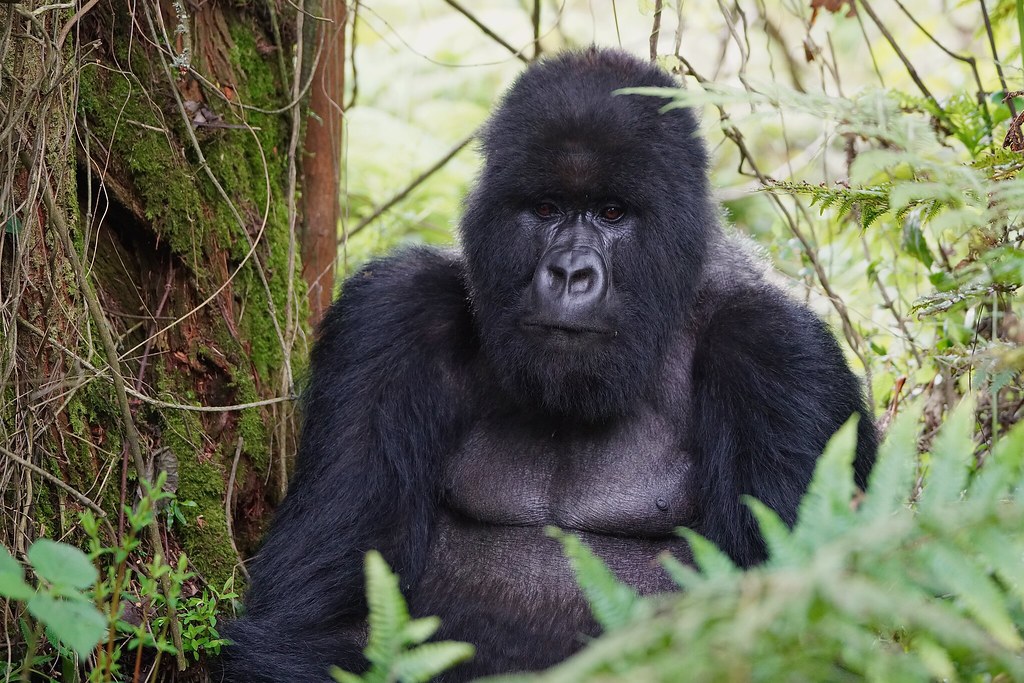
Three Icons of African Wildlife in One Journey
Few safaris anywhere on Earth can match the sheer range of this 15-day journey. In two weeks you will stand within metres of a mountain gorilla family in Uganda’s Bwindi Impenetrable Forest, watch hundreds of thousands of wildebeest pour across the Serengeti plains of Tanzania, and drift silently by mokoro (dugout canoe) through the papyrus-lined channels of Botswana’s Okavango Delta.
Each destination delivers something the others cannot. Bwindi is a misty Afromontane rainforest and home to nearly half of the world’s remaining mountain gorillas. The Serengeti is the definitive big-cat and Great Migration stage. The Okavango is a UNESCO World Heritage wetland where floodwaters from the Angolan highlands spread into the Kalahari, drawing elephants, lechwe, wild dogs and extraordinary birdlife. Put together, they form what many seasoned travelers describe as the ultimate “bucket-list” safari.
This guide gives you a complete, practical blueprint: a day-by-day itinerary, flight logistics between the three countries, 2026 permit and park fees, accommodation options by budget, cost estimates, visa requirements, packing advice and answers to the questions travelers ask most.
| Why this route works
Uganda offers the best-value gorilla permit in East Africa, the Serengeti is Africa’s most famous predator arena, and the Okavango adds a water-based safari experience you cannot find in East Africa. Flying between the three regions keeps road travel to a minimum, so more of your 15 days is spent with wildlife rather than in a vehicle. |
Itinerary at a Glance
| Day | Destination | Highlights | Overnight |
| 1 | Entebbe, Uganda | Arrival, Lake Victoria sunset | Entebbe |
| 2 | Bwindi (Buhoma) | Scenic flight to Kihihi, forest walk | Buhoma, Bwindi |
| 3 | Bwindi (Buhoma) | Mountain gorilla trekking | Buhoma, Bwindi |
| 4 | Bwindi (Buhoma) | Batwa experience / waterfall trail / optional 2nd trek | Buhoma, Bwindi |
| 5 | Uganda → Tanzania | Fly Kihihi–Entebbe–Kilimanjaro | Arusha |
| 6 | Central Serengeti | Flight to Seronera, afternoon game drive | Central Serengeti |
| 7 | Central Serengeti | Full day: big cats of the Seronera Valley | Central Serengeti |
| 8 | Migration area | Transfer to seasonal migration zone | Northern / Southern Serengeti |
| 9 | Migration area | Full day with the herds; optional balloon | Northern / Southern Serengeti |
| 10 | Tanzania → South Africa | Fly to Kilimanjaro, connect to Johannesburg | Johannesburg (airport) |
| 11 | Okavango Delta | Fly Johannesburg–Maun, light aircraft into Delta | Water camp, Okavango |
| 12 | Okavango Delta | Mokoro, island walk, boating | Water camp, Okavango |
| 13 | Moremi / Khwai | Light-aircraft hop to land-based camp | Moremi or Khwai |
| 14 | Moremi / Khwai | Game drives; night drive (Khwai) | Moremi or Khwai |
| 15 | Departure | Fly to Maun, connect home via Johannesburg | — |
Total: 14 nights — 4 in Uganda, 5 in Tanzania, 1 in Johannesburg, 4 in Botswana. Style: fly-in, private guided safari (can be adapted for mid-range or luxury budgets).
Best Time to Do This Safari
Because this itinerary spans the equator and the southern hemisphere, the ideal window is the period when all three destinations are at their best at the same time. That sweet spot is June to October.
| Months | Uganda (Gorillas) | Serengeti | Okavango Delta | Verdict |
| Jun – Aug | Dry season, easier trails | Migration in Western Corridor/north; river crossings begin | Peak flood, best water activities | Best overall |
| Sep – Oct | Mostly dry | Mara River crossings in the north | Water receding, superb game viewing | Excellent |
| Nov | Short rains; low-season permits | Herds moving south | Hot; first rains possible | Good value |
| Dec – Feb | Drier spell | Calving season in Ndutu/south | Green season, low water | Very good for Serengeti |
| Mar – May | Long rains, muddy trails | Southern plains, long rains (Apr–May) | Floods arriving (Apr–May) | Budget / low season |
| Planning tip
The Okavango’s floodwaters peak in the dry winter months (roughly June to August), months after the rains fall in Angola. This is why mokoro excursions are at their best exactly when Uganda and the Serengeti are also dry — a rare alignment that makes June–October ideal for this route. |
Detailed Day-by-Day Itinerary
Part One: Uganda — Mountain Gorillas of Bwindi (Days 1–4)
Day 1: Arrival in Entebbe, Uganda
Overnight: Entebbe | Meals: Dinner | Travel: ~45 min airport transfer
Welcome to Uganda, the “Pearl of Africa.” On arrival at Entebbe International Airport, your Marriott Safaris Africa representative meets you after immigration and customs and transfers you to your hotel on the shores of Lake Victoria, Africa’s largest lake.
Depending on your arrival time, relax by the pool, take a stroll in the Entebbe Botanical Gardens, or visit the Uganda Wildlife Conservation Education Centre. In the evening, your guide delivers a full safari briefing covering gorilla trekking rules, flight times and luggage limits for the light-aircraft sections of the trip.
- Luggage note: domestic and safari flights typically allow 15–20 kg per person in soft-sided bags. Most Entebbe hotels will store excess luggage until you fly out of Uganda.
Day 2: Fly to Bwindi Impenetrable National Park
Overnight: Buhoma sector, Bwindi | Meals: Breakfast, Lunch, Dinner | Travel: ~1.5 hr scheduled flight + 30–45 min drive
After breakfast, transfer to Entebbe Airport for the scenic scheduled flight to Kihihi airstrip in south-western Uganda. You fly over the patchwork farmland of central Uganda, crater lakes and the edges of Queen Elizabeth National Park before landing near the northern boundary of Bwindi.
Your driver-guide collects you for the short drive to the Buhoma sector, Bwindi’s original gorilla trekking hub. In the afternoon, take a gentle guided walk along the forest edge, where black-and-white colobus, L’Hoest’s monkeys and some of Bwindi’s 350-plus bird species are often seen.
| Prefer to drive?
The road journey from Entebbe to Buhoma takes 9–10 hours, passing the Equator crossing at Kayabwe and the town of Mbarara. It saves on flight costs but uses a full day. A good compromise is to drive with an overnight stop at Lake Mburo National Park, which adds one night to the itinerary. |
Day 3: Gorilla Trekking in Bwindi
Overnight: Buhoma sector, Bwindi | Meals: Breakfast, Packed Lunch, Dinner | Activity: Gorilla trek (2–8 hrs)
This is the day the whole journey is built around. After an early breakfast, report to the Buhoma park headquarters by 07:30 for a briefing from Uganda Wildlife Authority (UWA) rangers. Trekkers are allocated to a habituated gorilla family based on fitness and preference, with a maximum of eight visitors per group.
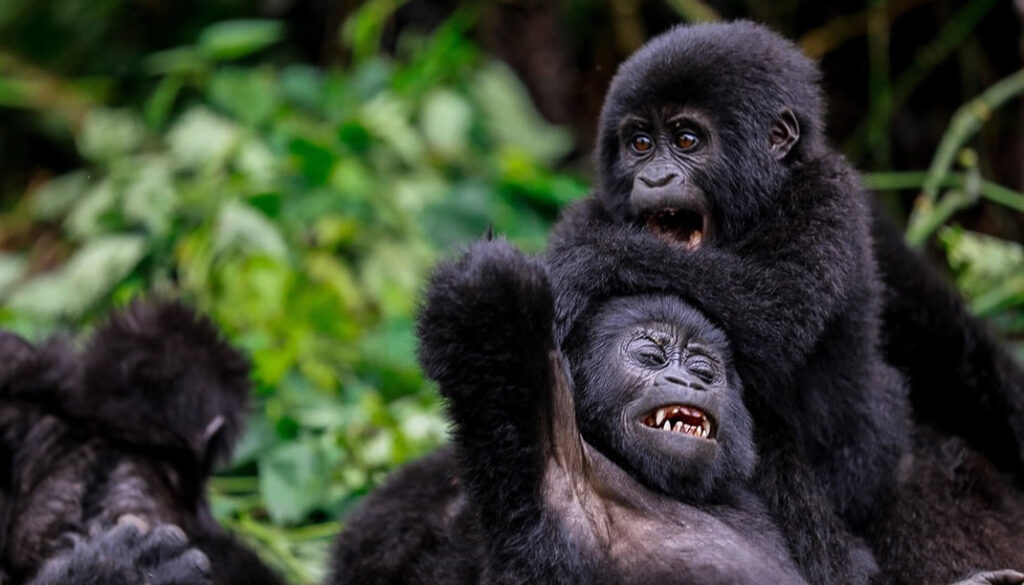
Accompanied by an armed ranger, trackers and optional porters, you set off into the forest. Treks can last anywhere from two to eight hours depending on where the gorillas fed and nested the previous night. Once the family is located, you spend one unforgettable hour with them — watching a silverback feeding, juveniles tumbling through the vines and mothers nursing infants, often only seven to ten metres away.
Return to your lodge in the afternoon to rest, and receive your gorilla trekking certificate in the evening.
- Hire a porter (around US$20–30, plus tip). It supports the local community and makes steep, muddy sections far easier.
- Wear long trousers tucked into socks, waterproof hiking boots and gardening gloves for gripping vegetation.
- Visitors with colds, flu or other infectious illnesses are not permitted to trek, as gorillas are highly susceptible to human diseases.
Day 4: Community Experiences or a Second Gorilla Trek
Overnight: Buhoma sector, Bwindi | Meals: Breakfast, Lunch, Dinner | Activity: Choose your day
Today is flexible, giving you a buffer day in case of weather or flight disruptions. Choose from:
- Batwa cultural experience: spend time with the Batwa, the forest’s original hunter-gatherer people, learning about traditional hunting, honey gathering, herbal medicine and forest life.
- Buhoma community walk: visit a traditional healer, a banana beer brewery, local craft cooperatives and a school.
- Munyaga River or Waterfall Trail: a forest hike to a cascading waterfall with excellent birding and primate sightings.
- Second gorilla trek: many travellers find one encounter is not enough. A second permit lets you meet a different family, and it is a great hedge against heavy rain on Day 3.
Part Two: Tanzania — Serengeti and the Great Migration (Days 5–9)
Day 5: Fly from Uganda to Tanzania
Overnight: Arusha | Meals: Breakfast, Dinner | Travel: Kihihi–Entebbe + Entebbe–Kilimanjaro
Take the morning scheduled flight from Kihihi back to Entebbe, then connect onto a regional flight to Kilimanjaro International Airport (JRO) in northern Tanzania. Depending on the day’s schedule, the routing may be direct or connect via Nairobi or Dar es Salaam.
On arrival, your Tanzanian guide meets you and transfers you (about one hour) to a garden lodge in Arusha, set beneath Mount Meru. Spend the evening relaxing after a long travel day.
| Flight connection note
Regional schedules change seasonally. If the Kihihi and Entebbe departures do not connect on your travel date, we add a night in Entebbe and fly to Kilimanjaro the next morning, or route via Nairobi. Your consultant confirms the best routing at the time of booking. |
Day 6: Fly to the Central Serengeti
Overnight: Central Serengeti (Seronera) | Meals: Breakfast, Lunch, Dinner | Travel: ~1.5 hr light-aircraft flight
After breakfast, transfer to Arusha Airport for your light-aircraft flight over the Great Rift Valley and the Ngorongoro Highlands to Seronera airstrip in the heart of the Serengeti. Your safari guide and 4×4 open-roof Land Cruiser are waiting on the airstrip.
Game drive en route to your camp. The Seronera River Valley is one of Africa’s most reliable places to see lions, leopards and cheetahs year-round, thanks to its permanent water and abundant resident prey such as topi, Thomson’s gazelle and impala. Continue with an afternoon game drive and return to camp for dinner under the stars.
Day 7: Full Day in the Central Serengeti
Overnight: Central Serengeti | Meals: Breakfast, Lunch, Dinner | Activity: Full-day game drive
Spend a full day exploring the Serengeti’s endless plains with a packed picnic lunch. Your guide follows the action: lion prides resting on granite kopjes such as the Simba and Moru Kopjes, leopards draped in the sausage trees along the Seronera River, and cheetahs hunting across the open grasslands.
Other highlights may include elephant and buffalo herds, giraffe, hippo pools and over 500 recorded bird species, from the secretary bird to the endemic grey-breasted spurfowl.
- Optional: hot-air balloon safari at sunrise over the Seronera Valley (around US$550–650 per person), finishing with a champagne bush breakfast.
Day 8: Into the Heart of the Great Migration
Overnight: Seasonal migration camp | Meals: Breakfast, Lunch, Dinner | Travel: Game drive or short flight
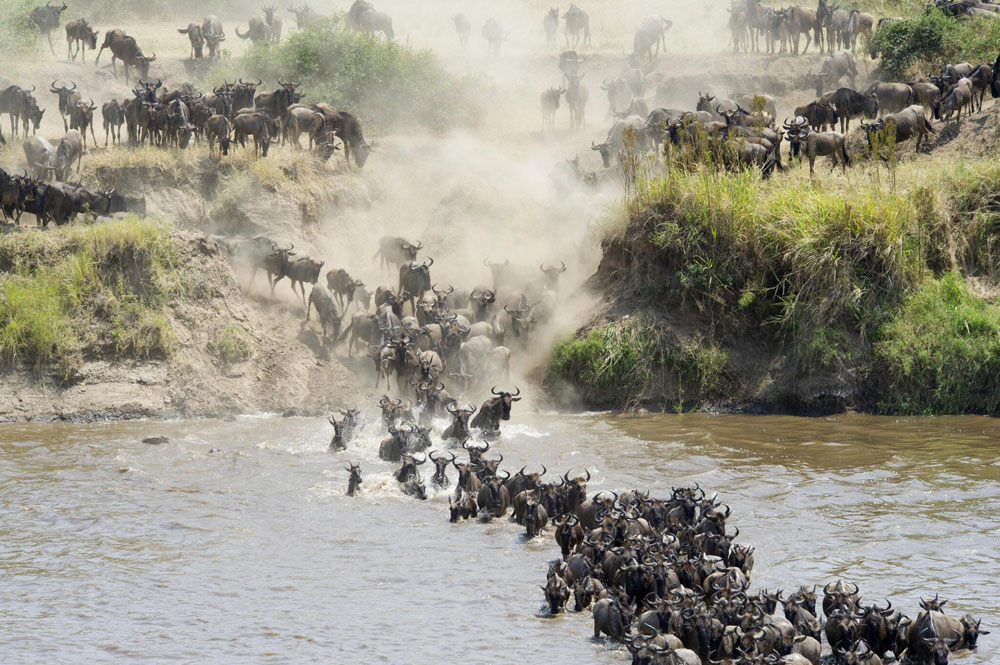
Today you move to wherever the Great Migration is. Over a million wildebeest, accompanied by zebra and gazelle, follow the rains in a vast clockwise loop through the Serengeti ecosystem. Your camp is chosen according to your travel month:
| Travel Month | Migration Location | What to Expect | Getting There |
| Jul – Oct | Northern Serengeti (Kogatende / Lamai) | Dramatic Mara River crossings | Short flight from Seronera |
| Nov | Moving south via Lobo | Herds on the move | Game drive |
| Dec – Mar | Southern Serengeti / Ndutu | Calving season; predator action | Game drive (2–3 hrs) |
| Apr – May | Central / southern plains | Lush green season, fewer visitors | Game drive |
| Jun | Western Corridor (Grumeti River) | Grumeti River crossings, crocodiles | Game drive or flight |
In the June–October window recommended for this itinerary, you will most likely fly to the far north, where the herds gather on the banks of the Mara River before plunging across in one of nature’s most dramatic spectacles.
Day 9: Full Day with the Herds
Overnight: Seasonal migration camp | Meals: Breakfast, Lunch, Dinner | Activity: Full-day game drive
Devote the entire day to the migration. River crossings are unpredictable — herds may mass on the bank for hours before the first animal leaps — so patience is rewarded. Your guide positions the vehicle at known crossing points and uses radio reports to follow the action.
Away from the river, look for big prides of lion, clans of hyena and crocodiles that take advantage of the herds. The northern Serengeti is also a good area for black rhino sightings and has far fewer vehicles than the central region.
Part Three: Botswana — Okavango Delta and Moremi (Days 10–15)
Day 10: Serengeti to Johannesburg
Overnight: Johannesburg (O.R. Tambo airport hotel) | Meals: Breakfast | Travel: Light aircraft + international flight
Enjoy a final early-morning game drive before your light-aircraft flight back to Arusha or Kilimanjaro. From Kilimanjaro, connect onto an international flight to Johannesburg, either direct or via Nairobi or Dar es Salaam depending on the schedule.
Overnight at an O.R. Tambo airport hotel. This stopover is the most reliable way to link East Africa with the Okavango, because almost all scheduled flights into Maun depart from Johannesburg in the morning.
Day 11: Fly into the Okavango Delta
Overnight: Water-based camp, Okavango Delta | Meals: All meals and local drinks | Travel: Johannesburg–Maun + light aircraft
Take the morning flight from Johannesburg to Maun, the gateway to the Okavango Delta. After clearing immigration and paying the Botswana Tourism Development Levy (if not pre-paid online), board a small light aircraft for the flight into the Delta.
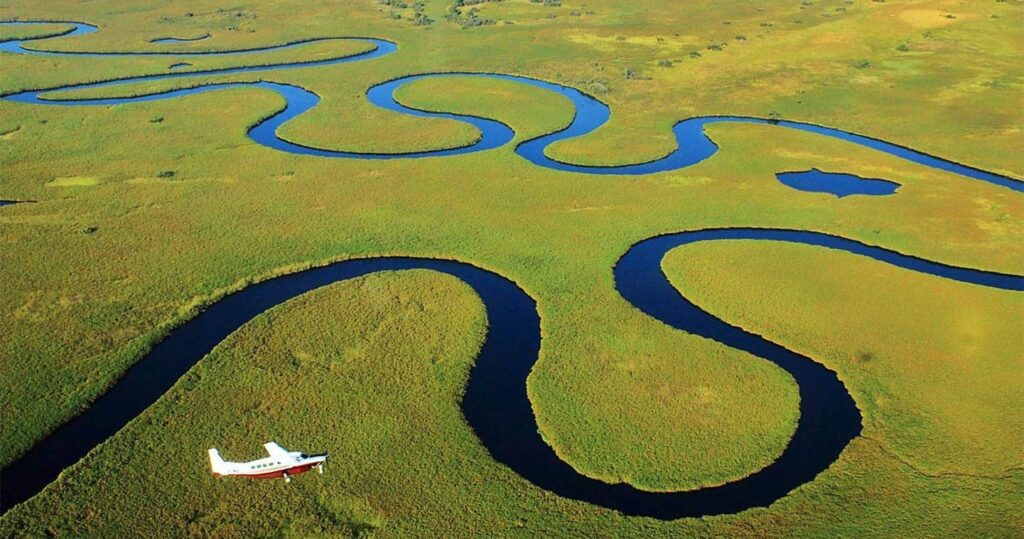
The scenic flight is a highlight in itself: from just a few hundred metres up you see the Delta’s maze of channels, lagoons and palm-fringed islands, often with elephants and buffalo wading below. Land at your camp’s airstrip in a permanent-water area of the Delta. After lunch and siesta, head out on an afternoon boat or mokoro excursion as the light turns golden.
Day 12: Mokoro, Walks and Water Safaris
Overnight: Water-based camp, Okavango Delta | Meals: All meals and local drinks | Activity: Mokoro, walking, boating
Today is all about experiencing the Delta at water level. Glide through quiet channels in a traditional mokoro, poled by an expert local guide. You will pass painted reed frogs clinging to papyrus stems, African jacanas walking on lily pads and perhaps a herd of red lechwe bounding through the shallows.
- Guided island walks to track elephant, giraffe and buffalo on foot, learning about plants, spoor and animal behaviour.
- Motorboat excursions into deeper lagoons in search of the elusive sitatunga antelope, Pel’s fishing owl and African fish eagles.
- Sundowners on a remote island or aboard a boat as the Delta turns gold and pink.
Day 13: Fly to Moremi Game Reserve or Khwai
Overnight: Land-based camp, Moremi / Khwai | Meals: All meals and local drinks | Travel: ~20–40 min light-aircraft hop
After a final morning activity, take a short light-aircraft hop to a land-based camp in or beside Moremi Game Reserve, the protected eastern section of the Delta. This combination of a water camp and a land camp is the classic way to see the full range of Okavango wildlife.
Moremi’s mix of floodplains, mopane woodland and permanent lagoons supports outstanding predator densities. Afternoon game drives here regularly produce lion, leopard, spotted hyena and, with luck, the endangered African wild dog, for which northern Botswana is one of the continent’s last strongholds.
Day 14: Big Game in Moremi and Khwai
Overnight: Land-based camp, Moremi / Khwai | Meals: All meals and local drinks | Activity: Morning & afternoon game drives
Spend your final full day on morning and afternoon game drives in open 4×4 vehicles. Botswana is home to the world’s largest elephant population, and large herds gather along the river systems in the dry season.

If you are staying in the Khwai Private Reserve or another private concession, you can also enjoy night drives in search of nocturnal species such as aardvark, honey badger, serval and leopard, as well as guided walks and off-road driving to follow predators — activities that are restricted inside the national reserve itself.
Celebrate the end of your three-country adventure with a farewell sundowner overlooking the floodplains.
Day 15: Departure
Meals: Breakfast | Travel: Light aircraft to Maun + flight to Johannesburg
Enjoy a last early-morning game drive or breakfast overlooking the floodplains before your light-aircraft flight back to Maun. Connect onto your flight to Johannesburg (or onward to Cape Town or Victoria Falls if you are extending your trip) for your international journey home.
| End of services
Our services conclude at Maun Airport. Allow at least three hours between your scheduled Johannesburg arrival and any international departure. |
Flight Logistics and Route Overview
This itinerary links three regions that are not connected by direct flights, so careful routing is essential. Below is the typical flight plan, with indicative one-way economy prices per person.
| Day | Route | Aircraft / Carrier Type | Indicative Cost (USD) |
| 2 | Entebbe → Kihihi (Bwindi) | Scheduled domestic light aircraft | $300 – $450 |
| 5 | Kihihi → Entebbe | Scheduled domestic light aircraft | $300 – $450 |
| 5 | Entebbe → Kilimanjaro | Regional airline (direct or 1 stop) | $300 – $600 |
| 6 | Arusha → Seronera | Scheduled safari light aircraft | $250 – $400 |
| 8 | Seronera → Kogatende (if north) | Scheduled safari light aircraft | $200 – $350 |
| 10 | Serengeti → Kilimanjaro | Scheduled safari light aircraft | $300 – $450 |
| 10 | Kilimanjaro → Johannesburg | International airline (direct or 1 stop) | $400 – $800 |
| 11 | Johannesburg → Maun | Scheduled airline | $250 – $450 |
| 11, 13, 15 | Maun ↔ Delta camps | Charter light aircraft (seat rate) | $200 – $350 per leg |
| Luggage limits on light aircraft
Most safari light aircraft allow 15 kg per person in a soft-sided bag (no wheels or hard frames) including hand luggage, and some Botswana charters allow as little as 20 kg in total. Pack light, and use your Entebbe or Johannesburg hotel to store extra baggage if needed. |
Permits, Park Fees and Entry Requirements (2026)
Gorilla Permits and Park Fees
| Item | Foreign Non-Resident | Notes |
| Uganda gorilla trekking permit | US$800 per person | Includes park entry for the day; one hour with the gorillas |
| Uganda low-season permit (Apr, May, Nov) | US$600 per person | Discounted tier announced by UWA; confirm availability for your dates |
| Uganda gorilla habituation experience | US$1,500 (rising to US$1,800 from 1 Jan 2027) | Up to four hours with a family under habituation (Rushaga/Nkuringo) |
| Serengeti National Park entry | Approx. US$82.60 per adult per 24 hrs | US$70 plus 18% VAT |
| Serengeti concession fee (lodges & camps) | Approx. US$71 per adult per night | Usually included in safari package prices |
| Moremi Game Reserve entry | Set by Botswana DWNP | Botswana’s park fees were revised in 2026; confirm current rate at booking |
| Okavango private concessions | Included in camp rate | Conservation and community levies are built into lodge pricing |
Since 2024, foreign non-resident gorilla permits in Uganda must be booked through a licensed Ugandan tour operator rather than directly with UWA. Permits are limited (eight people per gorilla family per day), so for June–October travel we recommend securing them six to twelve months in advance.
Visas and Entry Requirements
| Country | Visa | Approx. Cost | Key Requirements |
| Uganda | e-Visa (apply online before travel) | US$50 single entry | Yellow fever vaccination certificate required |
| Tanzania | e-Visa or visa on arrival | US$50 (US$100 for US citizens) | Yellow fever certificate required when arriving from Uganda |
| South Africa (transit) | Visa-free for many nationalities | — | Check if you need a visa to overnight in Johannesburg |
| Botswana | Visa-free for many nationalities | Tourism Development Levy US$30 | Yellow fever certificate if arriving from an endemic country |
| Important
The East Africa Tourist Visa covers Uganda, Kenya and Rwanda only — it does not include Tanzania, so you will need a separate Tanzanian visa. Passports should be valid for at least six months beyond your return date, with at least three blank pages. Visa rules change frequently; always confirm with the relevant embassy or official e-visa portal before travel. |
Where to Stay: Accommodation by Budget
The itinerary can be built at three comfort levels. Botswana’s Okavango operates on a low-volume, high-value model, so even “mid-range” camps there are priced higher than equivalents in Uganda and Tanzania.
| Stop | Luxury | Mid-Range | Budget / Value |
| Entebbe (Day 1) | Lake Victoria Serena Golf Resort & Spa | Protea Hotel by Marriott Entebbe | Airport Guesthouse Entebbe |
| Bwindi – Buhoma (Days 2–4) | Sanctuary Gorilla Forest Camp; Buhoma Lodge | Mahogany Springs; Engagi Lodge | Buhoma Community Rest Camp |
| Arusha (Day 5) | Arusha Coffee Lodge; Gran Meliá Arusha | Mount Meru Hotel | Outpost Lodge |
| Central Serengeti (Days 6–7) | Four Seasons Safari Lodge Serengeti | Serengeti Serena Safari Lodge | Kati Kati Tented Camp |
| Migration area (Days 8–9) | Sayari Camp; Lamai Serengeti | Nasikia Mobile Migration Camp | Seasonal mobile tented camps |
| Johannesburg (Day 10) | InterContinental O.R. Tambo | City Lodge Hotel O.R. Tambo | Airport guesthouses (Kempton Park) |
| Okavango water camp (Days 11–12) | Vumbura Plains; Jao Camp | Gunn’s Camp; Delta Camp | Oddballs’ Enclave |
| Moremi / Khwai (Days 13–14) | Chief’s Camp; Khwai River Lodge | Machaba Camp; Camp Moremi | Guided mobile camping safari |
Property availability and suitability vary by season. Your safari consultant will match each stop to your budget, travel dates and preferences, and suggest alternatives where camps are fully booked.
How Much Does This 15-Day Safari Cost?
The figures below are approximate per-person costs for two people sharing during the June–October high season. They include accommodation, meals, guiding, ground transfers, one gorilla permit, park fees and the internal and regional flights listed above. International flights to Entebbe and home from Johannesburg are excluded.
| Component | Value | Mid-Range | Luxury |
| Uganda (4 nights + 1 gorilla permit) | $2,000 – $2,800 | $3,000 – $4,200 | $5,500 – $8,000 |
| Tanzania (5 nights incl. park fees) | $2,300 – $3,200 | $3,800 – $5,500 | $7,500 – $12,000 |
| Johannesburg stopover | $100 – $150 | $150 – $250 | $250 – $400 |
| Botswana (4 nights, fully inclusive) | $2,800 – $4,000 | $5,500 – $8,500 | $12,000 – $20,000+ |
| Regional & light-aircraft flights | $2,300 – $3,000 | $2,500 – $3,500 | $2,800 – $4,000 |
| Estimated total per person | $9,500 – $13,000 | $15,000 – $22,000 | $28,000 – $45,000+ |
Not included: international flights, visas, travel insurance, the Botswana Tourism Development Levy, optional activities (second gorilla permit, balloon safari, Batwa experience), premium drinks, gratuities and personal expenses.
| Ways to reduce the cost
Travel in the shoulder months of November or early December for low-season gorilla permits and lower camp rates; drive rather than fly between Entebbe and Bwindi; choose value camps in the central Serengeti; or swap the private Okavango concessions for a guided mobile camping safari in Moremi. |
What to Pack
This safari covers cool, wet rainforest, warm savannah and hot, sandy delta country, so layers are essential. Keep everything in a soft duffel bag to meet light-aircraft rules.
Clothing
- Neutral-coloured clothing (khaki, olive, beige); avoid bright white, and avoid dark blue or black in tsetse fly areas.
- Long-sleeved shirts and long trousers for gorilla trekking and evening mosquito protection.
- A warm fleece or down jacket — early-morning game drives in Botswana’s winter (June–August) can be near freezing.
- Lightweight waterproof rain jacket for Bwindi.
- Wide-brimmed hat, swimwear and comfortable camp clothes.
Gear and Essentials
- Broken-in waterproof hiking boots with good ankle support for gorilla trekking.
- Gardening gloves, gaiters or long socks to tuck trousers into.
- Binoculars (one pair per person), camera with a 100–400 mm zoom lens, spare batteries and memory cards.
- High-SPF sunscreen, insect repellent containing DEET or picaridin, sunglasses and lip balm.
- Small daypack with rain cover, reusable water bottle and headlamp.
Documents and Health
- Passport, printed e-visas, yellow fever certificate, travel insurance with medical evacuation cover and copies of gorilla permits.
- Personal medication, antimalarials (as prescribed), basic first-aid kit and hand sanitiser.
- US dollars in small, recent (post-2013) notes for tips and incidentals.
Health and Safety Tips
- Malaria: all three destinations are malaria areas. Consult a travel health clinic about antimalarial medication at least six weeks before departure.
- Vaccinations: yellow fever is required for Uganda. Hepatitis A, typhoid and routine vaccinations are commonly recommended.
- Fitness: gorilla trekking involves steep, slippery and humid terrain at altitudes of 1,160–2,600 metres. Regular walking or hiking in the months before travel makes a big difference.
- Gorilla etiquette: keep a seven-metre distance, wear a face mask if instructed, keep voices low, avoid flash photography and never eat near the gorillas.
- In camp: many Okavango and Serengeti camps are unfenced. Always follow staff instructions and use an escort to and from your tent after dark.
- Insurance: comprehensive cover including medical evacuation and trip cancellation is strongly recommended, given the high value of permits and remote locations.
Ways to Customise or Extend This Itinerary
- Add chimpanzees: include 2 nights in Kibale Forest National Park before Bwindi for chimpanzee tracking, plus Queen Elizabeth National Park’s Kazinga Channel and the tree-climbing lions of Ishasha.
- Add Ngorongoro Crater: insert 1–2 nights in the Ngorongoro highlands for a crater descent and a chance to see black rhino.
- Add Victoria Falls: finish with 2 nights at Victoria Falls, an easy flight from Maun or a short transfer from Kasane after Chobe National Park.
- Add Chobe: fly from the Delta to Kasane for river cruises among Chobe’s huge elephant herds.
- Beach finale: add Zanzibar after the Serengeti, then continue to Botswana.
Frequently Asked Questions
Is 15 days enough for Uganda, the Serengeti and the Okavango Delta?
Yes, provided you fly between the regions. Fifteen days gives you three to four nights in each destination, which is the minimum to enjoy each properly. Driving between countries would require at least 20–25 days.
Why do I need to overnight in Johannesburg?
There are no practical direct flights between northern Tanzania and Maun, and most scheduled flights into Maun leave Johannesburg in the morning. An overnight stop avoids tight connections and protects the rest of your itinerary.
Can I do this itinerary in reverse?
Yes. Starting in Botswana and finishing with the gorillas in Uganda works well and lets you end with the most intimate wildlife encounter of the trip. Flight routings are simply reversed.
How fit do I need to be for gorilla trekking?
A moderate level of fitness is enough for most travellers. Rangers assign groups by ability, porters are available and some families live closer to the trailhead. Sedan chairs carried by local porters are also available for travellers with limited mobility.
What is the minimum age for gorilla trekking?
Visitors must be at least 15 years old to trek gorillas in Uganda. Note that many Okavango camps also have minimum age policies for children (often 6 to 12 years), so families should check before booking.
Will I definitely see the wildebeest river crossings?
Crossings are a natural event and cannot be guaranteed, even in peak season. Staying two full days in the northern Serengeti, as this itinerary does, gives you the best chance.
Is it safe to travel to Uganda, Tanzania and Botswana?
All three are well-established safari destinations with experienced guides and tourism infrastructure. As with any international trip, check your government’s travel advisories before departure and follow your guide’s advice throughout.
How far in advance should I book?
Ideally 9–12 months ahead for June–October travel. Gorilla permits, Mara River camps and small Okavango camps (often only 8–12 tents) are the first to sell out.
| Plan Your Three-Country Safari with Marriott Safaris Africa
From securing gorilla permits in Bwindi to timing your stay with the Great Migration and choosing the right Okavango camps, our team handles every detail of this complex route. We tailor the itinerary to your dates, budget and interests, and support you 24/7 while you travel. Get in touch today for a personalized quote — and turn this once-in-a-lifetime journey into reality. |