Accommodations in the Okavango Delta, Botswana
Where to Stay in the Okavango Delta
Choosing where to stay is the single most important decision you will make when planning an Okavango Delta safari. Unlike parks where you drive between attractions from a central hotel, the Delta is a roadless maze of channels, lagoons, floodplains and palm-fringed islands. Your lodge or camp is not just a bed for the night: it determines which activities you can do, what wildlife you are likely to see, how exclusive your experience feels and how much you will pay.
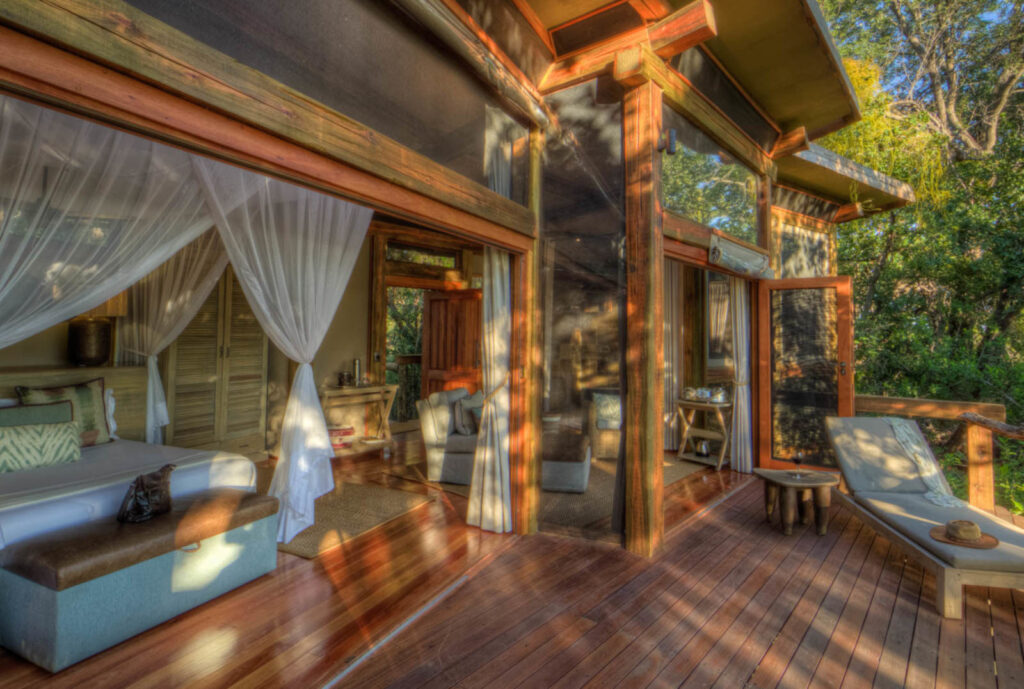
Botswana follows a “high-value, low-volume” tourism model. Most camps in the heart of the Delta sit inside large private concessions, host only a handful of guests, and are reached by light aircraft. At the other end of the scale, self-drivers and budget travellers can still experience the Delta through public campsites in Moremi Game Reserve, community-run areas such as Khwai, mokoro camps on the Delta fringe and the riverside lodges of the Okavango Panhandle and Maun.
This guide explains how Delta accommodation works, profiles the leading lodges and camps by budget tier, compares water, land and mixed camps, and gives practical advice on seasons, pricing, inclusions, transfers and booking.
| Quick Facts: Okavango Delta Accommodation
• Main gateway: Maun (MUB), with light-aircraft transfers to camp airstrips; Kasane serves northern and eastern routings. • Camp size: Most Delta camps have roughly 4 to 12 rooms, which keeps game viewing exclusive. • Typical pricing: Fully inclusive, quoted per person sharing per night. • Peak season: June to October (flood high water plus dry-season game concentrations). • Value season: November to March (“green season”), often with significant discounts and stay-pay offers. • Luggage rule: Soft-sided bags only, typically 20 kg per person including hand luggage, on light-aircraft transfers. |
How Accommodation Works in the Okavango Delta
Before comparing individual lodges, it helps to understand the three factors that shape every Delta stay: the type of terrain the camp sits in, whether it is inside a private concession or public reserve, and how you get there.
Water Camps, Land Camps and Mixed Camps
The Delta floods every year with rainwater that falls in the Angolan highlands months earlier. Some areas hold water all year, others flood seasonally, and some stay dry. Camps are usually described by which activities their location allows.
| Camp Type | Where Found | Main Activities | Best For |
| Water camps | Permanent Delta, deep channels and lagoons (e.g. Jao, Xugana, Nxaragha areas) | Mokoro, motorboat, island walks, fishing, birding | Classic Delta scenery, birders, peace and quiet |
| Land camps | Drier eastern fringes, Moremi mainland, Khwai, Chitabe area | Day and (where allowed) night game drives, walks | Big cats, wild dog, predator action |
| Mixed (land and water) | Seasonal floodplains and islands (e.g. Vumbura, Duba, Mombo region) | Game drives plus mokoro or boating, depending on water levels | First-timers who want the full Delta experience |
| Expert Tip: Combine Camp Types
• Most experienced planners book two or three camps in different habitats, for example one water camp and one or two land or mixed camps. This gives you mokoro excursions and serious predator viewing in a single trip. |
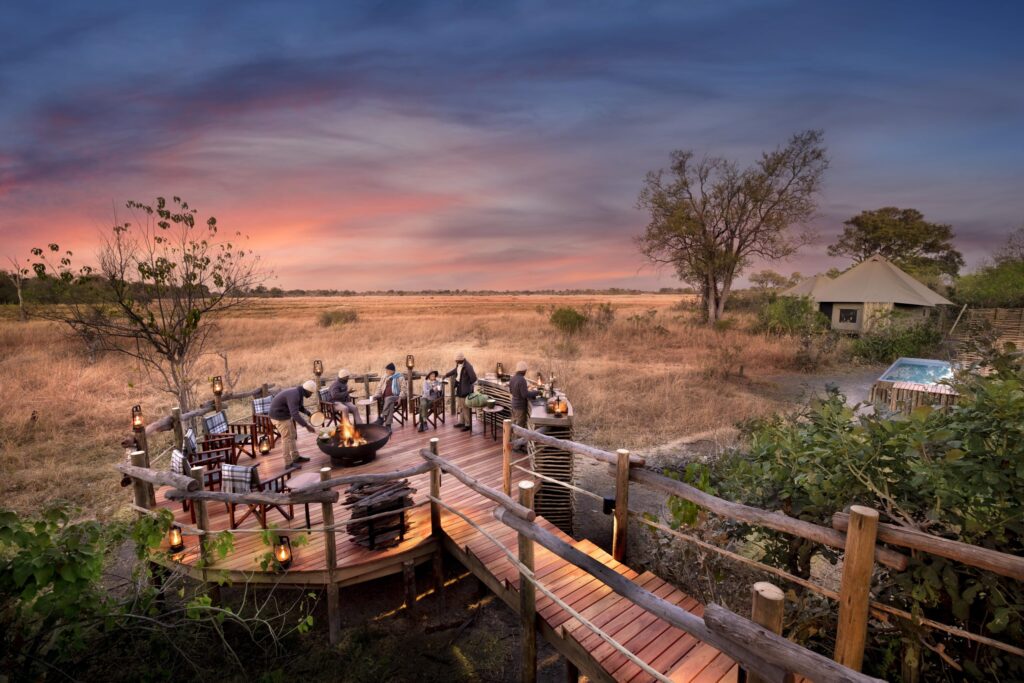
Private Concessions vs. Moremi Game Reserve vs. Community Areas
- Private concessions: Large leased wilderness areas (Botswana labels them NG followed by a number) where a single operator may host only a few camps. Expect off-road driving to follow sightings, night drives, guided walks and minimal vehicles at sightings. This is where most luxury camps are found.
- Moremi Game Reserve: The protected core of the eastern Delta, including Chief’s Island. Camps inside the reserve enjoy outstanding wildlife, but national park rules generally restrict off-road driving and night drives. Moremi also has public campsites for self-drivers.
- Community concessions (e.g. Khwai): Areas managed by local communities, often bordering Moremi. They allow night drives and walks, host a mix of lodges and campsites, and directly support local livelihoods.
- Delta fringe and gateway towns: Maun and the Okavango Panhandle in the northwest offer hotels, riverside lodges and houseboats at far lower prices, ideal as a starting point or for budget-conscious travellers.
Getting to Your Camp
Almost all camps inside the Delta are fly-in only. You will typically fly into Maun, then board a small light aircraft (often a Cessna Caravan or similar) to your camp’s private airstrip. Flights between camps are usually 20 to 45 minutes and double as scenic flights over the floodplains. A few water camps add a short boat transfer from the airstrip, while Moremi, Khwai and Panhandle properties can also be reached by 4×4.
Types of Accommodation in the Okavango Delta
| Accommodation Type | What to Expect | Indicative Rate (per person sharing / night)* |
| Ultra-luxury lodges | Private suites with plunge pools, wellness facilities, fine dining, private vehicles on request | US$2,500 – 6,000+ |
| Luxury tented camps | Spacious canvas suites on raised decks, en-suite bathrooms, outdoor showers, expert guiding | US$1,200 – 2,500 |
| Mid-range and classic camps | Comfortable safari tents or chalets, shared vehicles, traditional bush atmosphere | US$550 – 1,200 |
| Budget mokoro camps and community lodges | Simpler tents, often bring-your-own options or basic catering | US$150 – 550 |
| Mobile and participation camping safaris | Guided overland trips with dome tents moved between sites | US$250 – 800 (all-in, varies widely) |
| Public campsites (Moremi, Khwai) | Self-drive camping with ablutions; you bring all gear and food | Around US$40 – 80 plus park fees |
| Maun and Panhandle hotels and lodges | Riverside hotels, guesthouses, cabins and houseboats | US$60 – 350 |
Ultra-Luxury Lodges in the Okavango Delta
These properties sit at the very top of African safari hospitality. Expect exceptional locations, very low guest numbers, outstanding guiding and design-led suites.
Singita Elela (New: Scheduled to Open December 2026)
| Location | NG26 (Abu) private concession, north-western Okavango Delta |
| Style | Eight private, circular stilted camps (one to four bedrooms), each with its own pool and dedicated team |
| Activities | Game drives, bush walks, seasonal mokoro, boating, fishing, stargazing, spa and wellness, helicopter excursions |
| Best for | Families and groups wanting total privacy, milestone celebrations, travellers who have “done” the classic safari circuits |
| Indicative rate | Top tier; confirm with operator |
Singita, one of Africa’s most celebrated luxury safari brands, is opening its first Botswana property in the Okavango Delta. Named after the Setswana word for “to flow”, Elela is set within a vast private concession of roughly 170,000 to 175,000 hectares of floodplains, islands and waterways. Rather than one central lodge, the property is designed as eight independent camps raised on stilts so the seasonal floodwaters can pass beneath them.
Each camp is planned to include a pool, kitchenette, indoor and outdoor dining areas, lounges and decks, with private vehicles and guides. Children of all ages are welcome, which makes Elela unusual among top-tier Delta properties. Opening dates for new lodges can shift, so confirm availability before building an itinerary around it.
Wilderness Mombo Camp and Little Mombo
| Location | Northern tip of Chief’s Island, Moremi Game Reserve |
| Style | Raised luxury tented suites linked by elevated walkways; Little Mombo is the smaller, more intimate sister camp |
| Activities | Game drives, seasonal boating; superb year-round predator viewing |
| Best for | Wildlife purists, big-cat and rhino enthusiasts, bucket-list safaris |
| Indicative rate | US$3,000 – 5,000+ |
Often called “the place of plenty”, Mombo is widely regarded as one of the finest wildlife areas in Africa. Chief’s Island supports dense populations of lion, leopard, wild dog, buffalo, elephant and plains game, and the area has been central to Botswana’s rhino reintroduction efforts. Suites overlook floodplains where wildlife often wanders past the decks.
Wilderness Jao Camp
| Location | Jao Reserve, western Okavango Delta |
| Style | Architecturally striking suites and private villas with plunge pools, spa, gym and wellness facilities |
| Activities | Mokoro, motorboat, game drives (water levels permitting), walks, birding |
| Best for | Honeymooners, design lovers, those wanting a water-and-land experience in serious luxury |
| Indicative rate | US$2,500 – 4,500+ |
Rebuilt as one of the Delta’s flagship luxury properties, Jao combines sweeping floodplain views with high-end design inspired by the Delta’s woven baskets and riverine forest. It sits in a region of seasonal floodplains and islands, known for lechwe, sitatunga, and strong lion and leopard populations.
Xigera Safari Lodge
| Location | Paradise Island, Moremi Game Reserve (western side) |
| Style | Luxury suites on raised boardwalks, an extensive collection of African art and design, spa, plunge pool |
| Activities | Mokoro, boating, game drives, walks, the Baobab Tree Lookout sleep-out experience |
| Best for | Art lovers, honeymooners, water-focused safaris in a lavish setting |
| Indicative rate | US$2,500 – 4,000+ |
Operated by Red Carnation Hotels, Xigera (pronounced “kee-jera”) is a showcase of contemporary African craftsmanship set among water-lily-filled channels. The lodge is a strong choice for travellers wanting a mainly water-based experience: it is famous for sitatunga sightings, excellent birding and peaceful mokoro excursions.
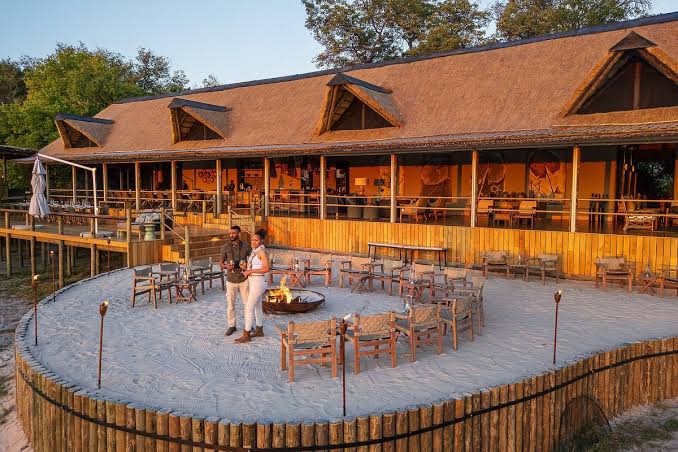
&Beyond Sandibe Okavango Safari Lodge
| Location | Private concession bordering Moremi Game Reserve, southern Delta |
| Style | Organic, curved architecture under a woven-shingle canopy; suites with private plunge pools |
| Activities | Day and night game drives, guided walks, seasonal mokoro |
| Best for | Predator viewing in a striking design setting |
| Indicative rate | US$1,800 – 3,500 |
Sandibe’s sculptural main lodge is one of the most photographed buildings in the Delta. Its location on a wildlife corridor next to Moremi delivers reliable lion, leopard and wild dog sightings, and the concession setting allows off-road tracking and night drives.
Duba Plains Camp (Great Plains Conservation)
| Location | Duba concession, northern Okavango Delta |
| Style | Elegant raised tented suites with private plunge pools; Duba Explorers Camp offers a smaller, slightly simpler sister option |
| Activities | Game drives, boating, walks, mokoro (seasonal), photographic hides |
| Best for | Photographers and lion enthusiasts |
| Indicative rate | US$2,000 – 3,800 |
Duba Plains is famous for the dramatic interactions between lion prides and large buffalo herds, documented in several wildlife films. The concession is a remote, water-rich mosaic of papyrus, floodplain and palm islands, operated with a strong conservation focus.
Luxury Tented Camps
Luxury tented camps deliver the romance of canvas without sacrificing comfort. Suites are typically raised on decks, with en-suite bathrooms, indoor and outdoor showers, and private viewing areas.
Wilderness Vumbura Plains and Little Vumbura
| Location | Vumbura concession, northern Okavango Delta |
| Style | Vumbura Plains: two contemporary camps (North and South) with plunge pools; Little Vumbura: intimate island camp |
| Activities | Game drives, night drives, mokoro, motorboat, walks |
| Best for | A true land-and-water experience in one location |
| Indicative rate | US$1,500 – 3,000 |
The Vumbura concession blends seasonal floodplains with dry woodland, so you can track lion and wild dog in the morning and glide through papyrus channels in the afternoon. Little Vumbura, set on a tree-shaded island, has refurbished, enlarged tents and a relaxed, personal atmosphere.
Wilderness Chitabe and Chitabe Lediba
| Location | Private 22,000-hectare concession bordering Moremi Game Reserve, south-eastern Delta |
| Style | Tented suites rebuilt in 2025 with enhanced cooling and sustainability features; Chitabe Lediba is smaller and family-friendly |
| Activities | Day and night game drives, walks |
| Best for | Wild dog, leopard and lion; families (Lediba) |
| Indicative rate | US$1,400 – 2,800 |
Chitabe has long been known as one of the best places in the Delta for African wild dog. Following a major rebuild, the main camp reopened in 2025 with larger, solar-supported suites. Chitabe Lediba remains a good option for families thanks to its welcoming, intimate layout.
Wilderness Tubu Tree and Little Tubu
| Location | Hunda Island, Jao Reserve, western Delta |
| Style | Raised tented suites in a marula canopy, recently rebuilt with a contemporary look |
| Activities | Game drives, night drives, walks, seasonal mokoro and boating |
| Best for | Leopard sightings, travellers seeking excellent value in the Jao Reserve |
| Indicative rate | US$1,200 – 2,400 |
Hunda Island is a large, mostly dry island surrounded by floodplains, giving Tubu Tree a rare combination of land activities and water views. The camps were rebuilt to blend into the tree canopy and are known for leopard, wild dog and lion sightings.
&Beyond Xaranna Okavango Delta Camp
| Location | Private concession in the permanent waters of the south-western Delta |
| Style | Elegant tented suites with private plunge pools, light and airy décor |
| Activities | Mokoro, motorboat, island walks, game drives (seasonal), birding |
| Best for | A water-focused luxury stay; pairs well with a land camp such as Sandibe |
| Indicative rate | US$1,500 – 2,800 |
Xaranna offers the quintessential “lily pads and palm islands” Delta experience in refined comfort. It is ideal as the water component of a multi-camp itinerary.
&Beyond Nxabega Okavango Tented Camp
| Location | Private concession bordering Moremi Game Reserve |
| Style | Classic, Out-of-Africa-style tents with wooden decks |
| Activities | Game drives, mokoro, walks, birding |
| Best for | Travellers wanting land and water activities from one camp |
| Indicative rate | US$1,300 – 2,500 |
Nxabega has a timeless, classic safari feel and offers both seasonal mokoro trips and game drives, making it a strong single-camp option for shorter trips.
Sanctuary Chief’s Camp
| Location | Mombo concession, Chief’s Island, Moremi Game Reserve |
| Style | Luxury bush pavilions with private plunge pools, spa |
| Activities | Game drives, seasonal mokoro, walks, birding |
| Best for | Big Five-style game viewing on Chief’s Island with polished service |
| Indicative rate | US$1,800 – 3,500 |
Sharing the wildlife-rich Chief’s Island region with Mombo, Chief’s Camp is a well-loved alternative with spacious pavilions, excellent guiding and the chance to see rhino, leopard and large lion prides.
Wilderness Qorokwe
| Location | South-eastern Delta, bordering Moremi |
| Style | Contemporary tented suites with plunge pools |
| Activities | Game drives, night drives, walks, seasonal boating |
| Best for | Predators and elephants in a quieter corner of the Delta |
| Indicative rate | US$1,400 – 2,600 |
Qorokwe sits where the Delta’s waters meet the drier eastern woodland, attracting large elephant herds and predators. Its modern design and plunge-pool suites offer a high-comfort stay at a step below the flagship camps in price.
Mid-Range and Classic Safari Camps
Mid-range camps offer authentic Delta experiences, comfortable rooms and good guiding at more accessible prices. Many have been run by the same families or operators for decades and have a loyal following.
Camp Okavango and Camp Moremi (Desert & Delta Safaris)
| Location | Camp Okavango: Nxaragha Island, permanent Delta; Camp Moremi: Xakanaxa Lagoon, Moremi Game Reserve |
| Style | Classic tented camps with relaxed, traditional atmosphere |
| Activities | Camp Okavango: mokoro, boating, walks; Camp Moremi: game drives, boating |
| Best for | A well-priced water-plus-land combination from one operator |
| Indicative rate | US$800 – 1,600 |
These sister camps are often combined in a single itinerary: Camp Okavango for tranquil water activities and Camp Moremi for game drives in the reserve and boating on the Xakanaxa lagoons, a renowned heronry area.
Xugana Island Lodge
| Location | Xugana Lagoon, north-eastern permanent Delta |
| Style | Thatched chalets on a forested island overlooking a large lagoon |
| Activities | Mokoro, motorboat, fishing (seasonal), walks, birding |
| Best for | Anglers, birders and water lovers |
| Indicative rate | US$800 – 1,500 |
One of the longest-established water lodges in the Delta, Xugana is famous for its lagoon setting, tiger fish and bream angling in season, and excellent birdlife including the Pel’s fishing owl.
Machaba Camp and Gomoti Plains Camp (Machaba Camps)
| Location | Machaba: Khwai River, bordering Moremi; Gomoti Plains: south-eastern Delta |
| Style | Classic 1950s-inspired canvas tents with modern comforts |
| Activities | Game drives, night drives, walks, seasonal mokoro |
| Best for | Elephants, predators and authentic, good-value luxury |
| Indicative rate | US$900 – 1,800 |
Machaba overlooks the Khwai River, one of the best elephant and predator areas in northern Botswana, while Gomoti Plains sits on the Gomoti River system. Both deliver an upmarket feel at prices below the flagship lodges.
Delta Camp
| Location | Southern edge of Chief’s Island, permanent Delta |
| Style | Reed-and-thatch chalets built into the riverine forest |
| Activities | Mokoro and guided walking safaris only (a non-motorised camp) |
| Best for | Purists who want quiet, low-impact water and walking safaris |
| Indicative rate | US$600 – 1,200 |
Delta Camp is a deliberately peaceful, motorboat-free camp where the soundtrack is reed frogs and fish eagles. Multi-day mokoro and walking excursions onto Chief’s Island are a highlight.
Khwai Community Concession Lodges
Bordering the north-eastern boundary of Moremi, Khwai is one of the most rewarding areas for game drives in the whole Delta region. Its lodges are generally more affordable than those deep in the Delta and some can be reached by road.
- Why stay in Khwai: Excellent leopard, lion and wild dog viewing; large dry-season elephant herds along the Khwai River; night drives and walks permitted; easy combination with Moremi and Chobe/Savuti.
- Options: Lodges and tented camps such as Machaba Camp and Sable Alley, plus community-operated campsites for self-drivers.
- Getting there: Light-aircraft transfer to the Khwai airstrip or a 4×4 drive from Maun (allow around 3 to 4 hours depending on sand and water levels).
Budget and Self-Drive Accommodation
The Okavango Delta has a reputation as an expensive destination, but there are genuine ways to experience it on a smaller budget.
Moremi Game Reserve Public Campsites
Self-drive travellers in a fully equipped 4×4 can camp inside Moremi at designated, unfenced campsites with basic ablutions. Campsites are run by private concessionaires and must be pre-booked; you will not be allowed in without a confirmed reservation. Popular sites include:
| Campsite | Location | Highlights |
| Third Bridge | Central Moremi, near Mboma Island | Iconic Delta waterways, lion and leopard; deep water crossings in flood season |
| Xakanaxa | North-western Moremi, lagoon edge | Boat trips, heronries, excellent birding and predators |
| South Gate (Maqwee) | Southern entrance to Moremi | Convenient first or last night from Maun |
| Khwai / North Gate | Northern entrance on the Khwai River | Elephants, hippos and easy access to the Khwai area |
| Self-Drive Safety Essentials
• Campsites are unfenced: elephants, hyena and lion regularly walk through. Never sleep outside your tent or leave food out. • Travel in a high-clearance 4×4 with low range, recovery gear, two spare tyres, extra fuel and water. • Check water crossings carefully during peak flood (roughly June to September) and never drive after dark inside the reserve. • Rooftop tent 4×4 rentals from Maun are widely available and well suited to Moremi and Khwai. |
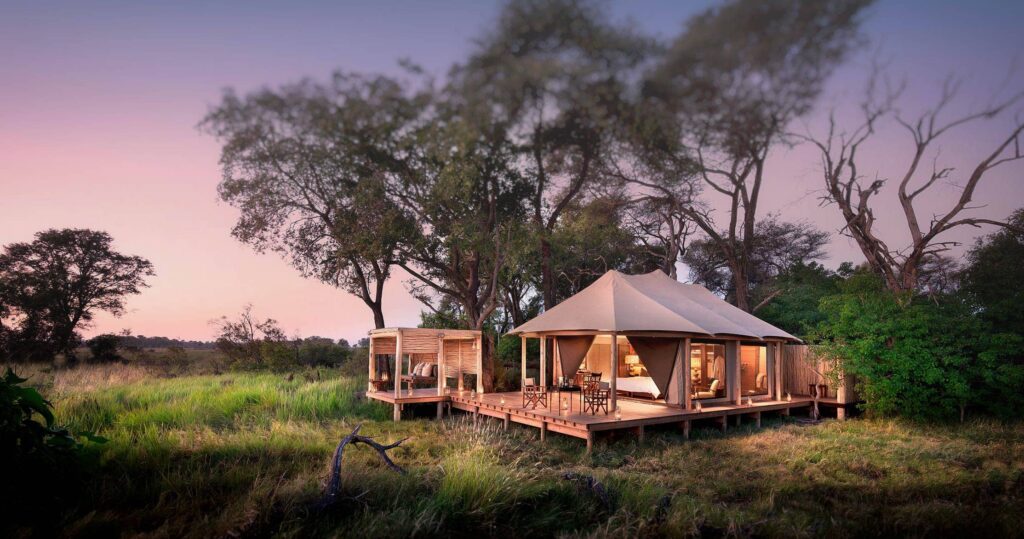
Budget Mokoro Camps and Mobile Safaris
- Delta fringe mokoro trips: Day or overnight mokoro excursions from Maun and the southern buffer areas use community polers and simple bush camping. These are the most affordable way to experience the waterways.
- Oddballs’ Enclave: A long-running, more affordable fly-in camp on the edge of Chief’s Island (sister to Delta Camp), focused on mokoro and walking safaris.
- Mobile camping safaris: Guided overland trips staying in dome or walk-in tents at Moremi, Khwai and Savuti campsites. Choose between participation trips (you help set up camp) and fully serviced luxury mobile safaris.
Maun: Gateway Hotels and Lodges
Most travellers spend at least one night in Maun, either on arrival or before an onward flight. Maun hotels are also an excellent base for scenic helicopter flights and day mokoro trips. Many sit along the Thamalakane River.
| Property | Style | Best For |
| Thamalakane River Lodge | Riverside chalets with pool and restaurant | Comfortable first or last night |
| Royal Tree Lodge | Tented and chalet accommodation on a private game farm | A peaceful, bush-style night near town |
| Cresta Riley’s Hotel | Historic town-centre hotel | Convenience, close to the airport and shops |
| Sedia Riverside Hotel | Mid-range hotel with campsite | Value and family stays |
| Maun Lodge | Business-style hotel on the river | Business travellers, short stays |
| Okavango River Lodge | Simple chalets and camping | Budget travellers and self-drivers |
| Old Bridge Backpackers | Dorms, tents and campsite | Backpackers and overlanders |
The Okavango Panhandle and Houseboats
In the far northwest, the Okavango River flows through a narrow corridor known as the Panhandle before fanning out into the Delta. This region is accessible by road from Maun or Namibia’s Caprivi Strip and is far less visited.
- Riverside lodges and cabins: Properties around Shakawe, Sepopa and Etsha, such as Drotsky’s Cabins and Guma Lagoon Camp, offer affordable accommodation, fishing and birding.
- Houseboats: Multi-day houseboat cruises on the Panhandle combine comfortable cabins with fishing, birdwatching and tender-boat excursions into papyrus channels.
- Nearby: The Tsodilo Hills, a UNESCO World Heritage Site with thousands of ancient San rock paintings, makes a rewarding cultural side trip.
Top Okavango Delta Accommodation at a Glance
| Lodge / Camp | Area | Type | Tier | Standout Feature |
| Singita Elela | NW Delta (NG26) | Mixed | Ultra-luxury | Private stilted camps, opening Dec 2026 |
| Mombo / Little Mombo | Chief’s Island | Land (mixed seasonally) | Ultra-luxury | Legendary wildlife density |
| Jao Camp | Jao Reserve | Mixed | Ultra-luxury | Design, villas and spa |
| Xigera Safari Lodge | Moremi | Water | Ultra-luxury | Art collection, sitatunga |
| Duba Plains | Northern Delta | Mixed | Ultra-luxury | Lion vs. buffalo |
| Vumbura Plains | Northern Delta | Mixed | Luxury | Land and water in one |
| Chitabe | SE Delta | Land | Luxury | Wild dog, rebuilt 2025 |
| Xaranna | SW Delta | Water | Luxury | Lily-pad lagoons |
| Camp Okavango | Permanent Delta | Water | Mid-range | Classic mokoro camp |
| Machaba Camp | Khwai | Land | Mid-range / Luxury | Elephants and predators |
| Moremi campsites | Moremi | Land / water views | Budget | Self-drive adventure |
How to Choose the Right Okavango Delta Accommodation
By Travel Style
- Honeymooners: Jao, Xigera, Sandibe, Duba Plains and Vumbura Plains offer plunge-pool suites, star beds and private dining.
- Families: Many camps set minimum ages (often 6, 8 or 12 years) for activities like mokoro and walking. Family-friendly picks include Chitabe Lediba, family suites at selected Wilderness and &Beyond camps, and Singita Elela, which plans to welcome children of all ages. Booking a private vehicle is strongly recommended.
- Photographers: Choose concession camps that allow off-road driving, and consider Duba Plains, Mombo or Chitabe. Ask about private vehicles and photographic hides.
- Birders: Water camps such as Xugana, Xigera, Camp Okavango and the Panhandle lodges give the best chance of Pel’s fishing owl, African skimmer, wattled crane and slaty egret.
- Self-drivers: Base yourself at Moremi and Khwai campsites, with Maun hotels at the start and end. Add a fly-in water camp for one or two nights to see the inner Delta.
By Season
| Season | Months | Accommodation Considerations |
| High / Peak | July – October | Highest rates, best game viewing, flood waters at their peak in many areas. Book 9 to 18 months ahead for top camps. |
| Shoulder | April – June, November | Moderate rates; floods arriving (April – June) or receding (November); good availability. |
| Green / Low | December – March | Lowest rates and frequent stay-pay deals; lush scenery, newborn animals, superb birding; some water activities limited; a few camps close for maintenance. |
What Is Usually Included in Your Stay
Most Delta camps are sold on a fully inclusive basis. Always confirm details with your operator, but the following is typical:
| Usually Included | Usually Excluded |
| All meals, snacks and high tea | International and domestic flights to Maun |
| Local drinks (soft drinks, house wines, beers and spirits) | Light-aircraft transfers (sometimes included, sometimes extra) |
| Twice-daily guided activities (game drives, mokoro, boating, walks) | Premium imported wines and spirits |
| Laundry service (often excluding underwear) | Gratuities for guides and camp staff |
| Conservation and concession fees (at many private camps) | Park entry fees in Moremi (at some camps), travel insurance, visas |
| Wi-Fi in main areas (increasingly common) | Spa treatments, scenic helicopter flights, private vehicles |
Sample Accommodation Combinations
7-Night Luxury Delta Circuit
- Nights 1–3: Xigera Safari Lodge or &Beyond Xaranna (water activities and birding).
- Nights 4–7: Mombo, Chief’s Camp or Vumbura Plains (prime game drives with seasonal water activities).
8-Night Mid-Range Land-and-Water Safari
- Night 1: Thamalakane River Lodge, Maun.
- Nights 2–4: Camp Okavango (mokoro and walks).
- Nights 5–7: Camp Moremi or Machaba Camp (game drives in Moremi and Khwai).
- Night 8: Return to Maun or continue to Chobe.
7-Night Self-Drive Moremi and Khwai Adventure
- Night 1: Maun (vehicle collection and supplies).
- Nights 2–3: Third Bridge Campsite.
- Nights 4–5: Xakanaxa Campsite.
- Nights 6–7: Khwai community campsite, then continue north to Savuti and Chobe or return to Maun.
Booking Tips for Okavango Delta Accommodation
- Book early: The best camps have very few rooms. For July to October, reserve 9 to 18 months ahead, especially for families needing multiple rooms.
- Use a specialist operator: Delta camps are linked by a network of light-aircraft schedules. An operator such as Marriott Safaris Africa coordinates camp availability, flight timings and luggage rules into one seamless itinerary.
- Stay at least 2 to 3 nights per camp: Short stays waste time on transfers. Three nights per camp gives you around six guided activities.
- Ask about specials: Green-season and shoulder-season offers (such as stay-four-pay-three) can reduce costs significantly.
- Check water levels: Mokoro and boating depend on the annual flood. Ask your operator which activities are likely during your travel dates.
- Pack light: Use a soft duffel bag within the light-aircraft weight limit (usually 20 kg including hand luggage).
- Get the right insurance: Choose cover that includes medical evacuation, as camps are remote.
Frequently Asked Questions
What is the best area to stay in the Okavango Delta?
It depends on your priorities. For dense wildlife, Chief’s Island (Mombo and Chief’s Camp) and the concessions bordering Moremi are hard to beat. For a classic water experience, choose a camp in the permanent Delta such as Xigera, Xaranna or Camp Okavango. For value and predators, Khwai is excellent.
How much does it cost to stay in the Okavango Delta?
Indicative 2026 rates range from around US$40 to US$80 per person for public campsites (plus park fees) to US$550 to US$1,200 for mid-range camps, US$1,200 to US$2,500 for luxury tented camps and US$2,500 to US$6,000 or more per person per night for ultra-luxury lodges in peak season.
Can I drive myself into the Okavango Delta?
You can self-drive into Moremi Game Reserve and the Khwai area in a well-equipped 4×4, staying at pre-booked campsites. The inner Delta and most private concession camps can only be reached by light aircraft or boat.
Are Okavango Delta camps fenced?
Generally no. Most camps are unfenced so wildlife can move freely, which is part of the magic. Guests are escorted to their rooms after dark, and safety briefings are given on arrival.
Is the Okavango Delta suitable for children?
Yes, with planning. Many camps have age restrictions for mokoro and walking activities, so choose family-friendly camps, book family suites and consider a private vehicle.
What is the difference between a water camp and a land camp?
Water camps focus on mokoro, boating and walking in the permanent Delta, while land camps focus on game drives and predator viewing. Mixed camps offer both depending on seasonal water levels.
When is the cheapest time to stay in the Okavango Delta?
The green season from December to March typically offers the lowest rates and the most special offers, along with lush scenery and excellent birding.
Is there Wi-Fi at Okavango Delta lodges?
Many lodges now offer Wi-Fi in main areas, and some in suites, but connections can be slow. Budget camps and public campsites usually have no connectivity.
| Plan Your Okavango Delta Stay with Marriott Safaris Africa
• Tailor-made Delta itineraries combining water, land and mixed camps to suit your budget. • Coordinated light-aircraft transfers, Maun hotel nights and onward connections to Chobe, Victoria Falls and beyond. • Fully equipped 4×4 and rooftop tent rentals for self-drive Moremi and Khwai adventures. • Contact our safari Marriott Safaris Africa specialists today for availability and a personalized quote. Perfection Anytime. |