
Best Time to Visit the Okavango Delta, Botswana
| Quick Answer: When Is the Best Time to Visit the Okavango Delta?
The best time to visit the Okavango Delta is from June to October, during the dry winter season. The annual floodwaters peak across the Delta between June and August, mokoro (dugout canoe) excursions are at their best, and wildlife concentrates around permanent water, making game viewing outstanding. July to September is the absolute peak for combined water and land safaris. September and October deliver the most intense predator and big-game sightings, though October brings extreme heat. The green season (November to March) is ideal for birdwatchers, photographers and budget-conscious travellers, offering lush scenery, newborn animals, dramatic storms and significantly lower lodge rates. |
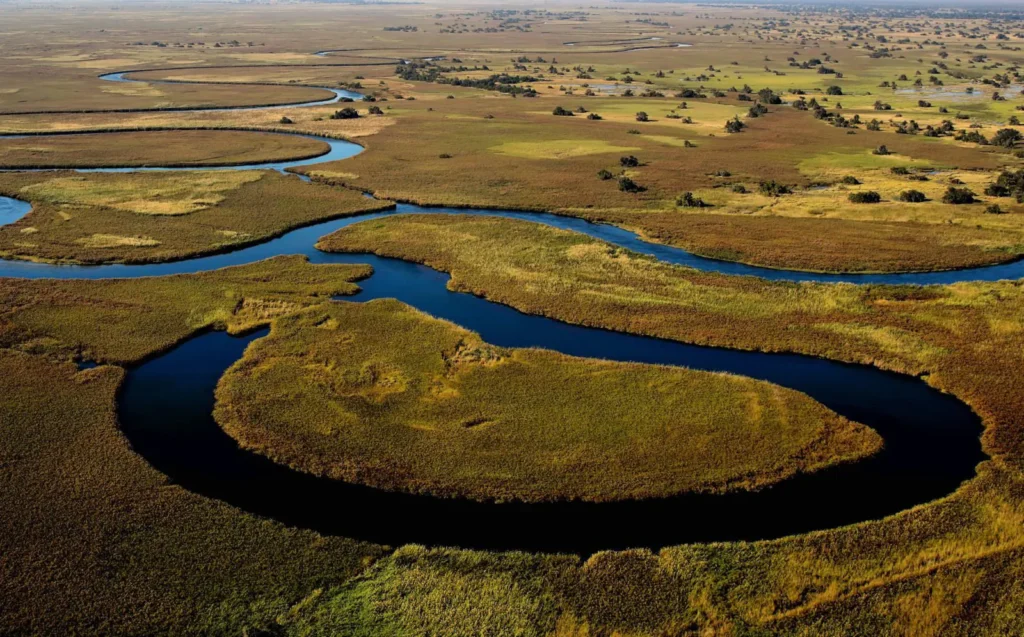
Timing Your Okavango Delta Safari
The Okavango Delta is one of the most extraordinary wilderness areas on Earth. Covering roughly 15,000 square kilometers in northwestern Botswana, this vast inland delta is a UNESCO World Heritage Site and a labyrinth of lagoons, papyrus-lined channels, palm-fringed islands and seasonal floodplains. It supports elephants, lions, leopards, African wild dogs, buffalo, hippos, crocodiles, red lechwe and more than 400 bird species.
Unlike most safari destinations, the Okavango Delta does not follow a simple wet-and-dry rhythm. Its waters arrive from the highlands of Angola months after the rains fall there, which means the Delta floods during Botswana’s dry season. This unusual cycle is the single most important factor when deciding when to go, and it shapes everything from mokoro trips and game drives to lodge prices and the animals you are likely to see.
This guide breaks down the Okavango Delta’s seasons, explains the flood cycle, walks through every month of the year, and matches the best travel times to your specific interests, whether that is the Big Five, wild dog sightings, birding, photography, a honeymoon or a value-for-money safari.
Understanding the Okavango Flood Cycle
The Okavango River rises in the Angolan highlands, where heavy rain falls between roughly November and March. That water travels south for more than 1,000 kilometres, crosses the Caprivi Strip in Namibia and enters Botswana at the Panhandle. Because the Delta is extremely flat, with a gradient of only a few metres across its entire length, the floodwater moves slowly, spreading across the fan-shaped basin over several months.
The result is a natural paradox: just as the local rains end and the surrounding Kalahari dries out, the Delta swells to its largest extent. Wildlife from the dry hinterland moves in towards this lifeline of water, creating one of Africa’s richest concentrations of game.
| Period | What Happens to the Water | Effect on Safari |
| Nov – Feb | Local summer rains fall; Delta water levels are at their lowest. Floodplains fill only from rainfall. | Game disperses widely; mokoro limited in some areas; lush green landscape. |
| Mar – Apr | Angolan floodwaters reach the Panhandle and begin entering the upper Delta. | Water levels start rising; transition season; rains taper off. |
| May – Jun | Floodwaters spread into the central Delta and fill channels and floodplains. | Mokoro and boating improve rapidly; animals start concentrating. |
| Jul – Aug | Peak flood across most of the Delta; water reaches the southern edge near Maun. | Best water-based activities; excellent game viewing on islands. |
| Sep – Oct | Floods begin to recede and evaporate under rising temperatures. | Peak game concentrations around shrinking water; superb predator action. |
| Flood Levels Vary Each Year
The size and timing of the flood depend on how much rain fell in Angola the previous summer. In high-flood years, some roads in Moremi Game Reserve become impassable and certain camps switch to boat transfers; in low-flood years, some mokoro routes may be shallow. A reputable operator will monitor current levels and choose camps accordingly. |
Okavango Delta Seasons at a Glance
| Season | Months | Weather | Highlights | Considerations |
| Peak Dry Season | Jul – Oct | Dry, sunny; cold mornings in Jul–Aug; very hot by Oct | Peak flood, superb game viewing, mokoro, predators | Highest prices; book 9–18 months ahead |
| Early Dry / Shoulder | May – Jun | Dry, mild days, cool to cold nights | Rising floods, fewer visitors, good value | Very cold early mornings in open vehicles |
| Green Season | Dec – Mar | Hot, humid, afternoon thunderstorms | Birding, newborn animals, lush scenery, low rates | Game more dispersed; some camps close; higher malaria risk |
| Shoulder Months | Apr & Nov | Transitional; Apr drying out, Nov hot with first rains | Strong value, good game, few crowds | Weather can be unpredictable |
Dry Season (May to October)
Botswana’s winter dry season is the classic time for an Okavango Delta safari. Skies are clear, rain is virtually absent, humidity is low and the vegetation thins out, making animals easier to spot. As inland water sources dry up, elephants, buffalo, zebra and antelope gather on the Delta’s islands and floodplain edges, followed closely by lions, leopards, hyenas and wild dogs.
June to August brings pleasant daytime temperatures in the mid-20s °C, but nights and early mornings can fall close to freezing, particularly in open safari vehicles and on mokoro excursions at dawn. By September and October, temperatures climb sharply, with October afternoons often exceeding 38°C. The heat is challenging, but it pushes wildlife to the water and produces some of the most dramatic sightings of the year.
Green Season (November to April)
Summer rains transform the Delta into a vibrant green paradise. Thunderstorms typically build in the afternoon and clear by evening, producing spectacular skies and leaving mornings fresh for activities. This is the breeding season: impala, tsessebe, red lechwe and wildebeest drop their young from around late November, attracting opportunistic predators. Hundreds of migratory bird species arrive, and many resident birds display in full breeding plumage.
Because water is widely available, animals spread out across the landscape, so game viewing requires more patience. However, lodge rates drop considerably, the Delta is far quieter, and many camps offer extended-stay specials. Some remote camps close for maintenance during part of this period.
Okavango Delta Month-by-Month Guide
Use the guide below to understand exactly what to expect each month, from water levels and temperatures to wildlife activity and pricing.
January
Hot and humid with regular afternoon thunderstorms; January is among the wettest months. Water levels in the Delta are low, and floodplains are filled mainly by rainfall. Calving season is in full swing, and young impala and lechwe draw predators. Birding is exceptional, with migrants such as carmine bee-eaters, woodland kingfishers and various cuckoos present. Low-season rates apply, and you may have entire areas to yourself.
February
Similar to January, with heat, humidity and rain. The landscape is at its most lush and photogenic. Game is dispersed, but resident species, predators and birds keep sightings rewarding. Some roads in Moremi may be muddy or flooded by rainfall. Excellent value month for experienced safari-goers and photographers.
March
Rains begin to ease towards the end of the month. The first Angolan floodwaters reach the Panhandle in the north. Vegetation remains thick, but the weather becomes more comfortable. Green-season pricing generally continues, making March a strong value choice.
April
A transitional shoulder month. Rains largely stop, temperatures become pleasant, and the bush starts to dry. Floodwaters push into the upper Delta. Many lodges still offer shoulder rates. Game viewing improves steadily as surface rainwater evaporates.
May
The dry season begins. Clear skies, warm days and cooler nights set in. Floodwaters spread into the central Delta, reviving channels and lagoons for mokoro and motorboat trips. Wildlife begins concentrating, and visitor numbers are still moderate. An excellent, often overlooked month.
June
Winter arrives, with crisp, cold mornings and sunny, comfortable days. The flood is approaching its peak in many areas. Mokoro excursions are superb. Wild dogs typically begin denning around this time, which can make them easier to locate for several weeks. High-season rates start at many camps.
July
Peak flood across much of the Delta and the start of peak season. Wildlife viewing is excellent, with large elephant herds, buffalo, and active predators. Nights are the coldest of the year, so warm layers are essential. Demand is very high; reserve well in advance.
August
One of the best all-round months. The flood remains high, temperatures begin warming, and vegetation is sparse, making visibility excellent. Water and land activities can be combined at their best. Breeding colonies at heronries become active from around this time. Expect peak pricing and full camps.
September
Often regarded as the single best month for game viewing. Warm to hot days, dry conditions, and wildlife concentrated around the receding water produce outstanding predator sightings. Carmine bee-eaters return to nest in riverbanks. Mokoro remains possible in deeper areas. Peak season pricing.
October
The hottest month, with temperatures frequently above 38°C. Water recedes, pans dry up and animals congregate dramatically at remaining water sources. Predator-prey interactions are intense, making October a favourite among serious wildlife photographers. Some travelers find the heat demanding, so camps with plunge pools and siesta-friendly schedules are worth choosing.
November
A shoulder month marking the start of the rains, although early November may still be dry. Heat and humidity build. The first newborn antelope appear, and migratory birds arrive. Rates fall, and wildlife viewing can still be very good before the bush fully greens.
December
Green season is established, with thunderstorms, lush scenery and abundant young animals. Birding is spectacular. Holiday periods around Christmas and New Year can see some festive-season pricing at certain lodges, but generally December offers good value.
Month-by-Month Summary Table
| Month | Season | Water Level | Game Viewing | Birding | Price Level |
| January | Green | Low | Good | Excellent | Low |
| February | Green | Low | Good | Excellent | Low |
| March | Green | Rising (north) | Good | Excellent | Low |
| April | Shoulder | Rising | Very good | Very good | Low–Mid |
| May | Early dry | Rising | Very good | Good | Mid |
| June | Dry | High | Excellent | Good | Mid–High |
| July | Peak dry | Peak | Excellent | Good | High |
| August | Peak dry | Peak | Excellent | Very good | High |
| September | Peak dry | Receding | Outstanding | Very good | High |
| October | Peak dry (hot) | Receding | Outstanding | Very good | High |
| November | Shoulder | Low | Very good | Excellent | Mid |
| December | Green | Low | Good | Excellent | Low–Mid |
Okavango Delta Weather and Climate
The Okavango Delta has a semi-arid climate with a distinct summer rainy season and a dry winter. The figures below are approximate long-term averages for the Maun area, the main gateway town; temperatures inside the Delta are broadly similar, although early mornings on open water can feel colder.

| Month | Avg. High (°C) | Avg. Low (°C) | Rainfall (mm, approx.) | Conditions |
| Jan | 32 | 19 | 100–110 | Hot, humid, storms |
| Feb | 31 | 19 | 80–90 | Hot, humid, storms |
| Mar | 31 | 17 | 60–70 | Warm, rains easing |
| Apr | 30 | 14 | 20–30 | Pleasant, drying |
| May | 28 | 9 | <10 | Dry, mild |
| Jun | 25 | 6 | 0 | Dry, cold mornings |
| Jul | 25 | 5 | 0 | Dry, coldest nights |
| Aug | 29 | 8 | 0 | Dry, warming |
| Sep | 33 | 13 | <5 | Dry, hot |
| Oct | 35 | 18 | 15–25 | Very hot, dry |
| Nov | 34 | 19 | 40–60 | Hot, first rains |
| Dec | 32 | 19 | 80–90 | Hot, humid, storms |
| Pack for Cold Mornings
Many first-time visitors are surprised by how cold Botswana gets in winter. Between June and August, early-morning game drives and dawn mokoro trips can feel close to freezing. Bring a warm fleece, a down or insulated jacket, a beanie and gloves. Most camps provide blankets and hot-water bottles in vehicles, but layering is essential. |
Best Time to Visit the Okavango Delta by Travel Interest
Best Time for Wildlife and Game Viewing
July to October offers the most consistent and concentrated wildlife viewing. Thin vegetation, scarce water elsewhere and high animal densities around the Delta create ideal conditions. September and October are especially productive for lions, leopards, cheetahs and wild dogs, as well as large elephant and buffalo herds.
Best Time for Mokoro (Dugout Canoe) Safaris
June to September, when the flood is at or near its peak. Gliding silently through clear channels lined with papyrus and water lilies is the signature Okavango experience. Water-based camps in the central and northern Delta offer mokoro year-round, but routes are most extensive and scenic during the high-water months.
Best Time for Birdwatching
November to March. Summer migrants from Europe, Asia and other parts of Africa join the Delta’s resident species, and many birds breed and display colourful plumage. Specials include the Pel’s fishing owl, slaty egret, wattled crane, African skimmer and carmine bee-eater. The heronries, where storks, herons and egrets nest in large colonies, are typically active from around August to November.
Best Time for Photography
Both seasons offer outstanding photography for different reasons. The dry season provides clear sightlines, dusty golden light and dramatic predator action, particularly in September and October. The green season offers vivid green backdrops, towering storm clouds, newborn animals and fewer vehicles at sightings, which many professional photographers prefer.
Best Time for African Wild Dogs
June to August, when wild dog packs typically den. While the pack is tied to a den site, guides can often locate them more reliably. The Okavango Delta and adjoining Moremi Game Reserve are among the best places in Africa to see this endangered predator.
Best Time for Budget and Value Travel
December to March, plus April and November as shoulder months. Green-season rates at many lodges can be significantly lower than peak-season prices, and pay-stay offers (such as stay four nights, pay three) are common. Shoulder months strike an excellent balance between price and wildlife.
Best Time for Honeymoons
May, June and August to September suit most couples, combining comfortable weather, beautiful water landscapes and excellent sightings. For a more secluded and affordable romantic escape, the green season offers private-feeling camps, dramatic sunsets and lower rates.
Best Time for Families
June to August coincides with many international school holidays and offers dry, mild weather with lower malaria risk. Note that many camps have minimum age limits (often 6, 8 or 12 years), particularly for mokoro and walking activities, so family-friendly camps should be booked early.
Best Time for Self-Drive in Moremi and the Delta Fringes
May to October. Self-drive travelers exploring Moremi Game Reserve, Khwai and the Delta’s eastern fringes will find roads firmer and campsites more accessible during the dry season. Deep sand remains a challenge year-round, and high flood years can submerge some tracks and water crossings, so a fully equipped 4×4, local advice and pre-booked campsites are essential. Most of the inner Delta is accessible only by light aircraft or boat.
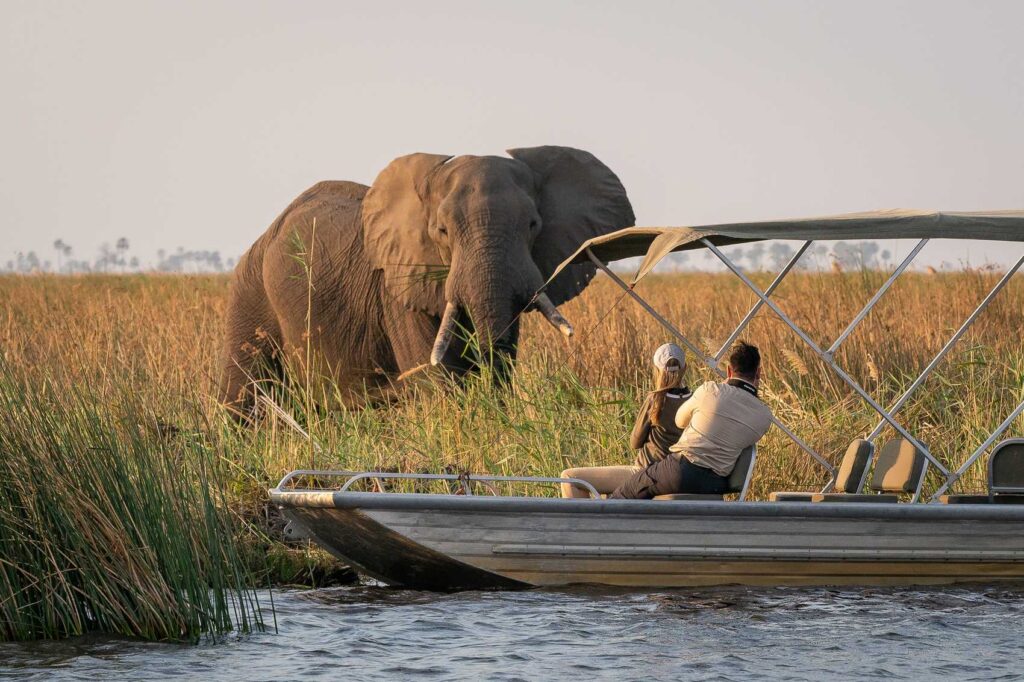
Water Camps vs. Land Camps: How Season Affects Your Choice
Okavango camps fall broadly into three types, and the right choice depends on when you travel.
| Camp Type | Typical Activities | Best Season | Notes |
| Water-based camps | Mokoro, motorboat safaris, island walks, fishing (where permitted) | May – Oct | Located in permanent or seasonal swamps; limited or no game drives. |
| Land-based camps | Day and night game drives, walking safaris | Year-round (best Jul – Oct) | Often on the Delta fringes, in Moremi or private concessions; best for big game. |
| Mixed (water and land) camps | Game drives plus seasonal mokoro and boating | Jun – Sep | Offer the most variety; water activities depend on current flood levels. |
For a balanced experience, many travellers combine two or three camps, for example a water camp for mokoro and birding followed by a land camp in a private concession for game drives, night drives and walking safaris.
Okavango Delta Safari Costs by Season
Botswana follows a high-value, low-volume tourism model, and the Okavango Delta is one of Africa’s premium safari destinations. Prices vary considerably by season, camp category and concession. The ranges below are indicative per-person sharing rates for fully inclusive stays (accommodation, meals, activities and usually park or concession fees) and should be confirmed at the time of booking.
| Season | Months | Mid-Range Camps (per person/night) | Luxury Camps (per person/night) |
| Green / Low | Dec – Mar | Approx. US$450 – 800 | Approx. US$900 – 1,800 |
| Shoulder | Apr – Jun, Nov | Approx. US$600 – 1,000 | Approx. US$1,200 – 2,500 |
| Peak / High | Jul – Oct | Approx. US$800 – 1,400 | Approx. US$1,800 – 4,000+ |
Additional costs to budget for include light-aircraft transfers between Maun or Kasane and the camps (often charged per sector), international flights, visas where required, travel insurance, gratuities and any pre- or post-safari nights. Mobile and camping safaris, along with self-drive trips in Moremi, offer more affordable alternatives to lodge-based stays.
Combining the Okavango Delta with Other Destinations
The ideal Okavango companion destination depends on your travel month.
- Chobe National Park (best May to October): Famous for enormous elephant herds along the Chobe River and boat cruises from Kasane. A natural pairing with the Delta in the dry season.
- Makgadikgadi Pans and Nxai Pan (best December to April): The green season brings a zebra and wildebeest migration to the pans, making this the perfect complement to a summer Delta safari.
- Central Kalahari Game Reserve (best December to April): Summer rains attract springbok, gemsbok and their predators to the Deception Valley area.
- Victoria Falls (best February to May for maximum flow; August to December for clearer views and lower water activities): Easily combined via Kasane, just over an hour by road.
- Linyanti, Savuti and Kwando (best June to October): Excellent predator country and remote wilderness close to the Delta’s northern edge.
What to Pack by Season
Dry Season (May to October)
- Warm layers: fleece, insulated jacket, beanie, gloves and a scarf for cold mornings (especially June to August).
- Light, breathable neutral-coloured clothing (khaki, olive, beige) for warm afternoons.
- Wide-brimmed hat, sunglasses, high-SPF sunscreen and lip balm.
- Lightweight long sleeves and trousers for September and October heat and sun protection.
Green Season (November to April)
- Lightweight rain jacket or poncho and quick-dry clothing.
- Long-sleeved shirts and trousers for evenings to reduce mosquito bites.
- Strong insect repellent containing DEET or picaridin.
- Waterproof bags or covers for cameras and electronics.
Year-Round Essentials
- Soft-sided duffel bag (light-aircraft transfers usually limit luggage to around 20 kg including hand luggage).
- Binoculars, camera with a telephoto lens, spare batteries and memory cards.
- Comfortable closed shoes and sandals for camp.
- Personal medication, malaria prophylaxis and a basic first-aid kit.
| Light Aircraft Luggage Limits
Most Okavango camps are reached by small charter aircraft, and strict luggage limits apply — commonly around 20 kg per person in a soft bag without wheels or a rigid frame. Check the exact limit with your operator, as it can vary by route and aircraft type. |
Health and Safety Considerations by Season
- Malaria: The Okavango Delta is a malaria area. Risk is highest during and just after the rains (roughly November to April) and lower in the dry winter months, but precautions are recommended year-round. Consult a travel health professional about prophylaxis.
- Heat: In October and November, temperatures can exceed 38°C. Stay hydrated, rest during the midday heat and choose camps with shade, fans or plunge pools.
- Cold: June to August mornings can approach freezing. Hypothermia is not a typical risk, but discomfort is common without proper layers.
- Water safety: Hippos and crocodiles inhabit the channels. Always follow your polers’ and guides’ instructions, and never swim in the Delta’s waters.
- Yellow fever: Botswana may require a yellow fever vaccination certificate from travelers arriving from or transiting through countries with yellow fever risk. Check current entry rules before travel.
- Travel insurance: Comprehensive cover including medical evacuation is strongly recommended given the remoteness of most camps.
Tips for Booking Your Okavango Delta Safari
- Book early for peak season. Camps are small, often with fewer than 10 tents, so July to October dates fill 9 to 18 months ahead.
- Match camps to the season. Choose water-based camps for high-flood months and land-based or mixed camps for drier periods or green-season game drives.
- Stay at least two to three camps. Combining different habitats gives a fuller Delta experience and maximises sightings.
- Consider private concessions. Concessions outside the national reserve often allow night drives, off-road tracking and walking safaris, with fewer vehicles at sightings.
- Look for green-season specials. Pay-stay offers and reduced rates can make a luxury Okavango experience far more accessible.
- Allow time in Maun or Kasane. Build in a buffer night if your international flight connections are tight, as light-aircraft schedules are fixed.
- Use a specialist operator. An experienced safari company can advise on flood levels, camp availability and the best route for your dates.
Frequently Asked Questions
What is the best month to visit the Okavango Delta?
September is often considered the best single month, offering peak game concentrations, warm dry weather and continuing water activities. August is a close second for a balanced combination of high water and excellent wildlife.
When does the Okavango Delta flood?
Floodwaters from Angola begin entering the Delta around March and April, spread through May and June, and typically peak between June and August. Levels recede from September onwards.
Is the Okavango Delta worth visiting in the rainy season?
Yes. The green season (November to March) offers lush scenery, exceptional birding, newborn animals, fewer tourists and lower prices. Game is more dispersed, but sightings remain rewarding, especially in land-based private concessions.
Can you do a mokoro safari all year?
In permanent-water areas of the Delta, mokoro excursions are generally possible year-round. In seasonal floodplains, mokoro trips depend on water levels and are best from roughly June to September.
When is the cheapest time to visit the Okavango Delta?
December to March is usually the least expensive period, with April and November offering good shoulder-season value.
How cold does the Okavango Delta get?
In June and July, night and early-morning temperatures can drop to around 5°C or lower, occasionally approaching freezing, while daytime temperatures typically reach the mid-20s °C.
When is the hottest time in the Okavango Delta?
October is usually the hottest month, with daytime temperatures commonly above 35°C and sometimes exceeding 40°C.
How many days do I need in the Okavango Delta?
A minimum of three nights is recommended, though five to seven nights split between two or three camps provides a much fuller experience of both water and land activities.
Can I self-drive in the Okavango Delta?
The inner Delta is accessible only by air or water, but experienced self-drivers can explore Moremi Game Reserve and the Khwai area with a fully equipped 4×4, ideally during the dry season (May to October) and with pre-booked campsites.
Is the Okavango Delta good for seeing the Big Five?
The Delta supports lion, leopard, elephant and buffalo in good numbers. Rhinos are present in small, closely protected populations in some areas, so sightings are not guaranteed. The Delta is also one of Africa’s best places to see African wild dogs.
Final Verdict: When Should You Go?
For most travellers, June to October is the best time to visit the Okavango Delta. This is when the floods transform the landscape, mokoro trips are at their finest and wildlife gathers in remarkable numbers. If your priority is outstanding predator action, aim for September or October; for the ideal balance of water, wildlife and comfortable weather, choose July or August.
If you are a keen birder, a photographer seeking dramatic skies, or a traveller looking for value, the green season from November to March reveals a different but equally captivating side of the Delta. Whatever month you choose, the Okavango Delta rewards every visitor with an unforgettable encounter with one of Africa’s last great wildernesses.
| Plan Your Okavango Delta Safari with Marriott Safaris Africa
Our safari specialists design tailor-made Okavango Delta and Botswana itineraries matched to your travel dates, budget and interests — from luxury fly-in safaris and mixed water-and-land camp combinations to Moremi self-drive adventures and Chobe, Makgadikgadi and Victoria Falls extensions. Contact Marriott Safaris Africa today to check availability and start planning your Okavango adventure. Perfection Anytime. |