6 days Chobe wildlife safari and Boat cruise on Chobe River
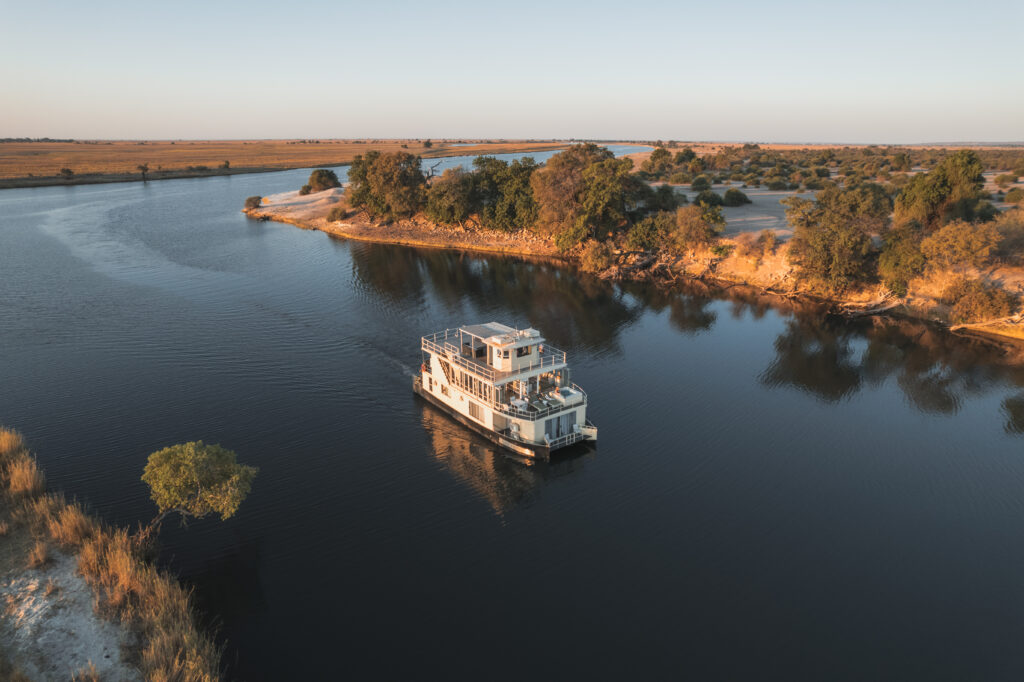
6 days Chobe wildlife safari and Boat cruise on Chobe River , Experience Africa’s greatest elephant sanctuary, where the Chobe River mirrors golden sunsets and vast herds of elephants come to drink. This six-day immersive safari combines thrilling game drives through Chobe National Park with serene sunset boat cruises on the legendary Chobe River — home to one of the highest concentrations of wildlife on Earth.
Trip Overview
| Destination | Chobe National Park, Botswana |
| Duration | 6 Days / 5 Nights |
| Start / End Point | Kasane, Botswana |
| Best Time to Visit | April – October (Dry Season) |
| Accommodation | Chobe Safari Lodge / Chobe Game Lodge (or similar) |
| Park Fees (Approx.) | USD $15 per person per day (KAZA UNIVISA holders) |
| Activities | Game Drives, Boat Cruises, Bush Walks, Bird Watching |
| Wildlife Highlights | Elephants, Hippos, Crocodiles, Lions, Leopards, Wild Dogs, 450+ Bird Species |
| Visa | KAZA UNIVISA recommended (covers Botswana, Zambia, Zimbabwe) |
| Currency | Botswana Pula (BWP) | USD widely accepted |
| 🌟 Safari Highlights |
| ✦ Witness thousands of elephants at the Chobe riverfront — the largest elephant population in Africa |
| ✦ Sunset boat cruises on the Chobe River with hippos surfacing just metres from your vessel |
| ✦ Dawn game drives through Savuti and Serondela sectors for lion and leopard sightings |
| ✦ World-class birdwatching with over 450 recorded species including the rare Pel’s Fishing Owl |
| ✦ Optional visit to Victoria Falls (Zimbabwe/Zambia) — just 80 km from Kasane |
| ✦ Night game drives revealing nocturnal predators — aardvark, genet, serval, and lion |
| ✦ Bush walk with armed ranger for close encounters with nature and tracking skills |
| ✦ Photographic opportunities rated among the finest in all of southern Africa |
DAY 1 Arrival in Kasane & Orientation
Gateway to Chobe — Settle In and Begin Your African Adventure
Welcome to Kasane — the small but bustling gateway town that sits at the meeting point of four countries: Botswana, Zimbabwe, Zambia, and Namibia. Today is an orientation day, allowing you to settle into your lodge, meet your guide, and begin absorbing the sights and sounds of the African bush.
Morning Arrival & Transfer to Lodge
Arrive at Kasane International Airport (BBK) or cross overland via the Kazungula Border Post (from Zambia or Zimbabwe). Transfer to your lodge along the Chobe riverfront. As you drive into town, keep your eyes open — elephants frequently cross the main road between the national park and the river, and your safari has effectively already begun.
Midday Lodge Check-In & Orientation Briefing
Check into your riverside lodge and take time to freshen up. At midday, your lead guide will host a comprehensive orientation briefing covering park regulations, safety protocols, daily schedules, and what to expect from Chobe National Park. Lunch is served at the lodge with views over the Chobe River.
Afternoon (15:30) Introductory Afternoon Boat Cruise — 2.5 Hours
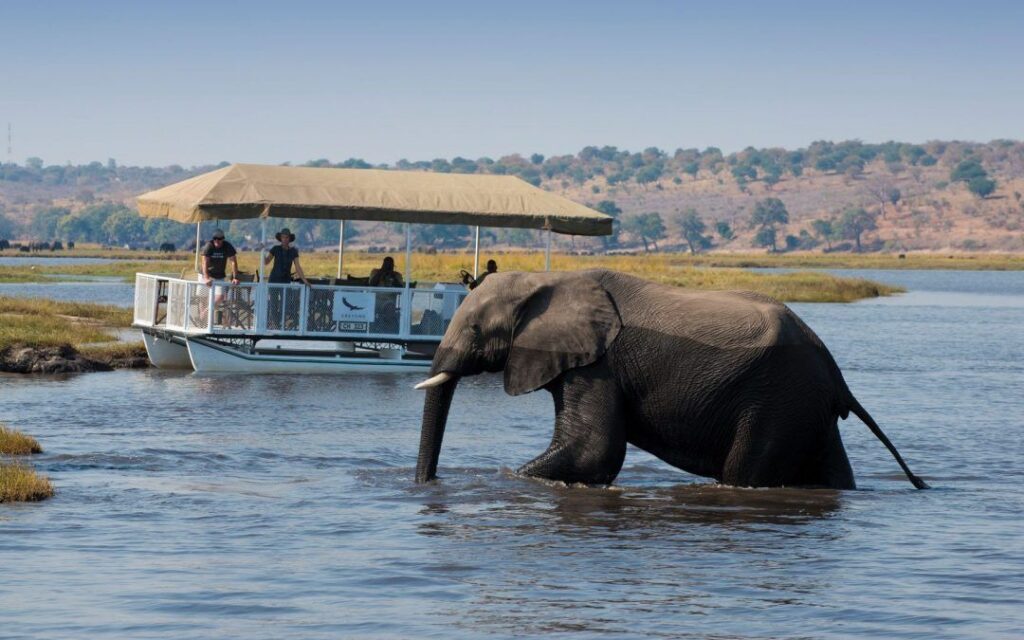
Board your safari boat for an introductory 2.5-hour cruise on the Chobe River. This gentle afternoon outing eases you into the safari experience. The Chobe River forms the northern boundary of the national park, and the floodplains along its banks attract enormous herds of elephant, buffalo, and antelope — especially in the dry season. Hippos grunt and surface around the vessel, crocodiles bask on sandbanks, and the birdlife is immediate and abundant. Watch for African fish eagles, kingfishers, storks, and herons. Your guide will provide running commentary identifying species and explaining the ecology of the river system.
Sunset (18:00) Sundowner on the River & Return to Lodge
As the sun descends and paints the Chobe River in tones of gold and amber, your boat pauses in a sheltered channel for sundowner drinks. This is one of Africa’s most celebrated natural spectacles — vast herds of elephant drinking at the river’s edge silhouetted against a blazing African sky. Return to the lodge as darkness falls for dinner and your first night in Chobe.
| 💡 Safari Tip
Pack your binoculars and camera on Day 1. Even the “gentle” introductory cruise regularly delivers extraordinary sightings. Elephant herds of 50–200+ animals at the river’s edge are a common late-afternoon spectacle. |
DAY 2 Dawn Game Drive — Serondela Sector
The Elephant Highway: Chobe’s Most Iconic Riverfront Circuit
The Serondela sector in northern Chobe is perhaps the most densely wildlife-populated stretch of riverfront in Africa. Vast floodplains extend from the water’s edge through mopane woodland, creating a concentrated wildlife corridor that draws elephants in their thousands during the dry season.
05:30 Pre-Dawn Wake-Up & Bush Breakfast
Rise before first light for a quick bush breakfast — hot coffee, rusks, and a light bite — before heading into the park as the gates open. The golden hour after sunrise offers the finest photographic light and the most active wildlife behavior as predators finish their nocturnal hunts and the plains game moves toward the water.
06:00 – 11:00 Serondela Full Morning Game Drive
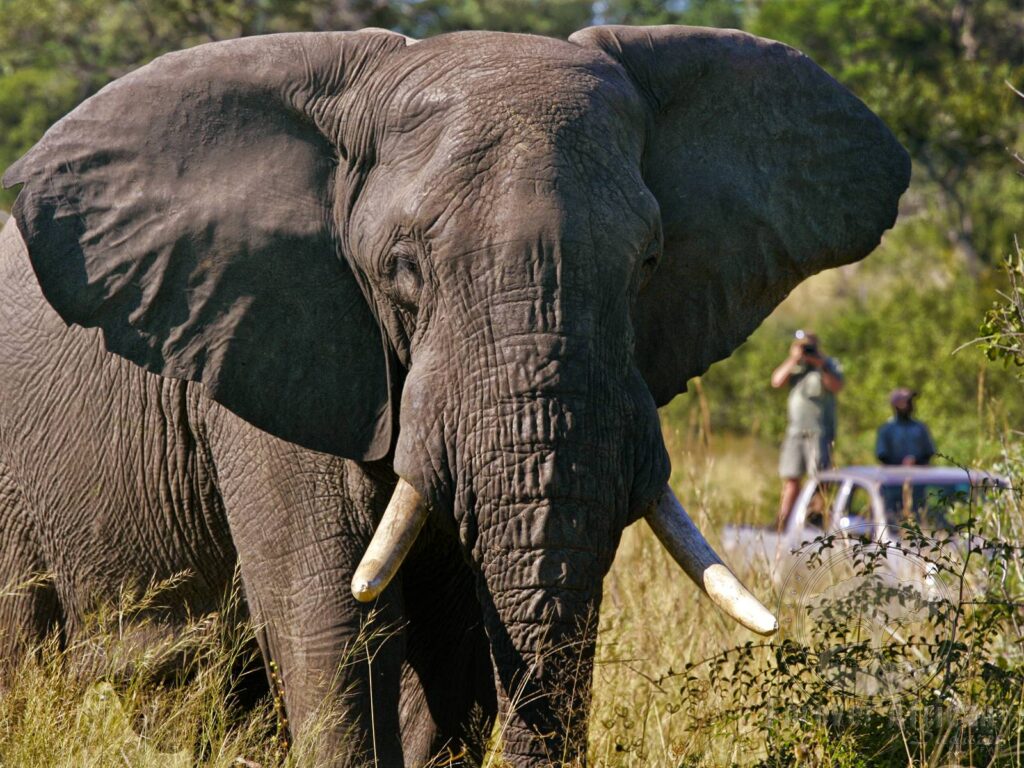
Enter the park via the Serondela gate and begin a 5-hour game drive through the riverfront circuit. The floodplains along the Chobe River are the main stage. You will encounter: elephant herds numbering in the hundreds moving purposefully toward the water; buffalo in formations that darken the plains; impala, puku, waterbuck, and reedbuck grazing on the floodplain edges; and if fortune favours you, lion or wild dog following the game corridors. Your guide will stop at active sightings for extended observation and photography. The mopane woodland transitions between open plains offer contrasting habitats and different species. Lions frequently den in the mopane and can often be found resting in shade by mid-morning. The Serondela area is also exceptional for leopard sightings — a thrilling and patient pursuit through the dense woodland.
11:30 Return to Lodge for Lunch & Rest
Return to the lodge for a well-earned lunch and midday rest. The heat of the afternoon (particularly October–February) makes this the least productive wildlife viewing time, and most animals seek shade. Use this time to review your photographs, cool off in the pool, read, or rest on your private deck overlooking the river.
15:30 – 18:30 Afternoon Boat Cruise — Chobe Riverfront
Return to the water for your afternoon boat cruise, one of the signature experiences of a Chobe safari. As the heat of the day subsides, the entire ecosystem mobilisers toward the river. This is when elephant numbers on the banks reach their peak — herds wading chest-deep into the river, baby elephants being helped across by protective mothers, young bulls mock-fighting in the shallows. Hippos and crocodiles compete for the best sandbanks. Huge flocks of carmine bee-eaters wheel overhead. Your boat moves slowly and quietly along the river, often stopping within 20–30 metres of drinking elephant herds. You have time to simply observe and absorb the spectacle at length. As evening approaches, the light becomes extraordinary for photography — warm, low, and golden.
| 💡 Safari Tip
For the best elephant riverfront experience, request that your guide position the vehicle or boat on the eastern banks in the late afternoon — the light is perfect for photography and the herds tend to concentrate here as the heat builds. |
DAY 3 Full Day Safari — Savuti & Mababe Depression
Lion Country: Into Chobe’s Wild Interior
Today takes you deep into Chobe’s vast interior, far beyond the riverfront that most visitors experience. The Savuti region — 250 km south of Kasane — is legendary for its lions and is one of the best lion-viewing destinations in Africa. An early departure and long drive deliver you into genuinely wild, remote Africa.
05:00 Early Departure with Packed Lunch
A very early start is essential for the full-day Savuti excursion. Your guide prepares a packed bush lunch, cool drinks, and snacks. Vehicles head south through the park’s interior, passing through mopane woodland, open savanna, and ancient dry riverbeds. The drive itself is a game-viewing experience — cheetah, steenbok, giraffe, and kudu are frequently encountered in the open woodland.
08:00 – 12:00 Savuti Channel & Marsh Game Drive
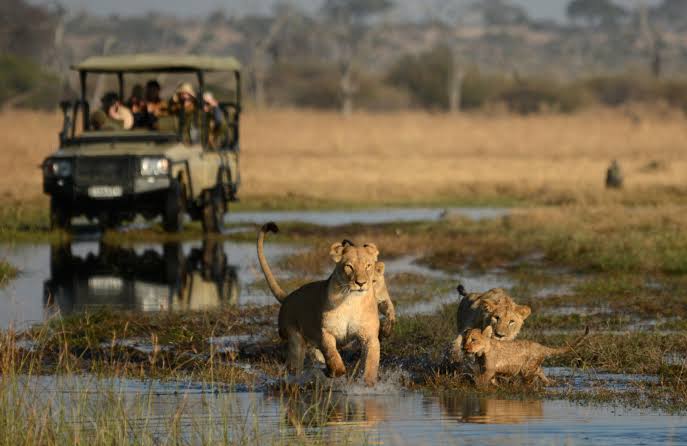
Arrive at the legendary Savuti Channel — an ancient waterway that mysteriously stops and starts flowing based on tectonic activity. The Savuti Marsh, when dry (which it frequently is), becomes a vast open grassland that concentrates prey species and the predators that follow them. The Savuti pride of lions is one of the most studied lion populations in Africa, known historically for hunting elephants — a rare and dramatic behavior documented in numerous wildlife films. Your guide tracks recent lion movements using radio signals and local intelligence. Beyond lions, Savuti is exceptional for spotted hyena, whose large clans are highly visible and photogenic, wild dog packs that use the open terrain for hunting, cheetah on the open flats, and large breeding herds of elephant. The ancient baobab trees of Savuti create dramatic photographic backdrops.
12:30 Bush Lunch in the Wild
Stop in a shaded clearing for a proper bush lunch experience. Your guide selects a scenic, safe location — often beside a dry riverbed or rocky outcrop — and sets up a lunch table in the bush. This is genuine wilderness dining: the sounds of the African bush, the smell of dust and wild sage, and occasionally the distant whooping of hyena or bark of baboons. Keep binoculars at hand — wildlife does not stop during your lunch.
13:30 – 17:00 Afternoon Mababe Depression Circuit
The Mababe Depression is a vast, flat ancient lake bed that creates stunning open vistas. The grasslands attract large herds of zebra and wildebeest, and the open terrain is ideal for cheetah hunting. Your afternoon drive covers this region, working back northward toward Kasane. The afternoon light over the Mababe plains is spectacular — flat, golden, and dramatic.
18:30 Return to Lodge for Dinner
Arrive back at the lodge for dinner, a hot shower, and rest. Today’s extensive game drive is the most immersive day of the safari — a genuine foray into the wild heart of Chobe that relatively few visitors experience.
| 💡 Safari Tip
Savuti requires a full day — it’s a long drive but completely worth it. The Savuti lions are large, bold, and frequently active during daylight hours. Request that your guide contact the Savuti Camp rangers for the latest lion location before departure. |
DAY 4 Sunrise Boat Cruise & Guided Bush Walk
Dawn on the River — Then On Foot in the African Bush
Day 4 offers Chobe from two entirely different perspectives: from the water at dawn, and on foot through the riparian woodland in the late morning. Walking in the African bush — guided by an armed and certified ranger — is a transformative experience that opens up a world invisible from a vehicle or boat.
05:30 Sunrise Boat Cruise — Chobe River
Board the safari boat before first light for the most magical time on the Chobe River. As the sky lightens from deep indigo to rose to gold, the river wakes up around you. Hippos yawn cavernously, announcing their territory. Fish eagles call their haunting, echoing cry from tall trees along the banks — a sound that defines Africa. Elephant families arrive at the water’s edge for their morning drink in the first soft light, and the river surface mirrors the dawn sky in perfect reflection. Your guide positions the boat quietly in channels where the light is perfect and the concentration of wildlife is highest. Baboon troops descend from riverside trees to drink. Impala and puku pick their way carefully to the water’s edge, ever alert for crocodile. Monitor lizards haul themselves from the water onto warm rocks. The colors and contrasts of the Chobe River at sunrise are breathtaking and unrepeatable.
08:00 Return & Bush Breakfast
Return to the lodge for a full cooked breakfast — eggs, fruit, fresh bread, and coffee served on the riverside deck as the sun climbs. Debrief the morning’s sightings with your guide over breakfast.
09:30 – 12:00 Guided Bush Walk — Riparian Woodland
Your armed ranger guide leads a 2.5-hour walking safari through the riparian woodland along the Chobe River. Walking in wild Africa is profoundly different from driving. You slow down and engage all your senses simultaneously. The guide teaches you: • Animal tracks and spoor — elephant, lion, hyena, porcupine, and dozens more • Bush medicine — the extraordinary uses of mopane, leadwood, sausage tree, and wild sage • Insect life, termite ecology, and how termite mounds structure entire ecosystems • Bird identification by call and silhouette • Wind direction awareness, approach techniques, and reading animal body language • Geology and the ancient lake systems that created the Chobe ecosystem While large predators are possible encounters, your guide manages all approaches safely. Elephant, buffalo, giraffe, and various antelope are frequently encountered at very close range on foot — a viscerally exciting experience unavailable from a vehicle.
Afternoon Rest, Photography Review & Leisure
The afternoon is yours. Many guests use this time to rest, review and edit photographs, read in a hammock, or simply watch the river from the deck. Elephant and hippo are visible from lodge decks throughout the day. A swim and a cold drink on the riverfront are well deserved.
16:30 Sunset Cruise with Sundowner Drinks
A dedicated sunset cocktail cruise on the Chobe River. Tonight the emphasis is on the spectacle of the African sunset — drinks in hand as the sky transforms and thousands of animals complete their evening rituals on the banks. Your guide provides a running natural history narrative, and the boat stops for extended observation wherever activity warrants it.
| 💡 Safari Tip
On your bush walk, wear neutral colours (khaki, olive, beige). Avoid white, black, or bright colours. Closed shoes are essential. Walk in single file behind your guide, maintain silence, and follow instructions immediately — this is a safe but genuinely wild experience. |
DAY 5 Night Game Drive & Birdwatching Safari
Chobe After Dark — A New World Emerges
Most safari visitors experience Chobe only in daylight. Tonight you step into a completely different Africa — the nocturnal world of predators, night birds, and creatures that spend their days hidden from the sun. Day 5 also dedicates time to birdwatching, for which Chobe is rated among southern Africa’s premier destinations.
06:00 – 09:30 Morning Birdwatching Safari — Dedicated Circuit
A specialized morning game drive dedicated to birdwatching, following the river channels and woodland edges where bird diversity is highest. Chobe National Park is home to over 450 recorded bird species, and the variety of habitats — river, floodplain, woodland, and Kalahari sandveld — creates extraordinary diversity. Species you may encounter include: • African Fish Eagle — Chobe’s iconic signature bird • Pel’s Fishing Owl — a rare and spectacular prize for birders • Carmine, White-fronted, and Little Bee-eaters • Saddle-billed Stork — Africa’s most spectacular stork • Woodland Kingfisher, Giant Kingfisher, Malachite Kingfisher • African Skimmer — skimming the river surface at low tide • Wattled Crane — critically endangered, regular at Chobe • Southern Ground Hornbill — the booming call of the African bush • Bateleur Eagle — the acrobatic eagle of the savanna • Marsh Tchagra, Slaty Egret, Rock Pratincole Your guide moves slowly, stops frequently, and uses a spotting scope for exceptional close views. A bird checklist is provided for you to record your sightings.
10:00 Return & Midday Rest
Return to the lodge for brunch and the midday rest. Today you will eat well and rest fully before the night drive adventure that awaits this evening.
15:00 Afternoon Leisure & Final River Cruise
A relaxed afternoon boat cruise on the Chobe River — your final cruise of the safari. By now you have come to recognise individual elephant families by their size and tusk configurations, familiar hippo pods, and the regular crocodile basking spots. There is a different quality to this final cruise — a depth of appreciation and familiarity that only multiple days of observation can bring. Sundowner drinks at your favourite spot on the river.
19:30 Night Game Drive — 3 Hours
After dinner, depart for a 3-hour night game drive with your guide. The vehicle is equipped with a powerful spotlight operated by your guide. As soon as you enter the park, the world transforms. Nocturnal species regularly encountered on Chobe night drives: • Leopard — far more visible at night when they descend from trees • Lion — night is when prides are most actively hunting • Spotted Hyena — clans are highly active from dusk • African Wild Cat — the ancestor of all domestic cats • Civet — a spectacular and rarely-seen nocturnal carnivore • Aardvark — the Holy Grail of night drives, a remarkable ant-eating mammal • Genet — cat-like carnivores seen in trees along the river • Scrub Hare and Spring Hare — entertaining and abundant • Various owl species: Verreaux’s Eagle-Owl, African Barred Owlet • Night Jars and Nighthawks along the road edges • Hippos grazing on land — a surprising sight far from the water The atmosphere of the bush at night — the sounds, the smell of dust and wild herbs, the sudden drama of predator and prey — creates one of the most memorable experiences available in wild Africa.
| 💡 Safari Tip
On the night drive, let your eyes adjust to the spotlight rather than looking away. Predator eyes “eyeshine” brilliantly under spotlight — your guide will teach you to distinguish eye colour and height from ground to identify species before the animal is fully visible. |
DAY 6 Final Morning Drive & Departure
One Last Dawn in Chobe — Farewell to Africa’s Wildlife Capital
Your final morning in Chobe arrives too soon. This is your last chance to be in the park, to watch the elephants, to hear the fish eagle, to feel the African dawn. Make the most of it — departures are typically arranged after your morning activity to allow maximum time in the bush.
05:30 Final Dawn Game Drive — Riverfront Circuit
Your last game drive follows the classic Serondela riverfront circuit — the route you know well now, but which delivers something new every single morning. In six days you have learned to read the bush: the alert posture of impala that signals predator proximity, the direction of elephant travel by the freshness of dung, the calls that announce lion or wild dog. This morning’s drive is an hour or two of unhurried, appreciative final observation. You are no longer a tourist — you are someone who has genuinely spent time in this wild and magnificent place. Linger at your favourite viewpoint. Watch the elephant families with their calves. Listen to the fish eagle’s call echo across the water one final time.
08:30 Bush Breakfast — A Farewell Feast
A special farewell bush breakfast is set up in a scenic location within or beside the park. Hot food, fresh fruit, good coffee, and the company of your guide for a relaxed debrief of the entire safari. Review your best wildlife sightings, discuss conservation challenges facing Chobe and the KAZA region, and exchange contacts with your guide for future visits.
10:30 Return to Lodge & Check-Out
Return to the lodge for final check-out. Pack, handle any last purchases from the lodge gift shop (supporting local artisans and conservation initiatives), and prepare for your onward journey.
Optional Victoria Falls Day Trip (Extensions Available)
Kasane sits just 80 km from Victoria Falls — one of the Seven Natural Wonders of the World. If your flight schedule allows, a half-day excursion to “The Smoke That Thunders” is a magnificent addition to your safari. Options include walking the rainforest path for direct views, helicopter flights over the falls, and white-water rafting on the Zambezi below the falls. This can be arranged as a separate extension through Marriott Safaris Africa.
Afternoon Transfer to Kasane Airport & Departure
Transfer to Kasane International Airport (BBK) for your onward flight. Alternatively, cross the Kazungula Border Post for onward travel to Zambia, Zimbabwe, or Namibia. As Botswana disappears behind you, the memories of Chobe — the elephants, the river, the sunsets, the sounds of the African night — stay with you permanently.
Practical Safari Information
Getting to Kasane — Gateway to Chobe
Kasane is well connected to major southern and eastern African hubs. The most common air routing is via Johannesburg (O.R. Tambo International) with onward flights on Airlink or Air Botswana to Kasane Airport (BBK). Overland crossings are available from Livingstone, Zambia (Kazungula Ferry/Bridge), Victoria Falls, Zimbabwe, and Katima Mulilo, Namibia. The Kazungula Road Bridge — opened in 2021 — has significantly eased cross-border travel from Zambia.
Best Time to Visit Chobe
| Season | Months | Conditions & Wildlife |
| Dry Season (Peak) | May – October | BEST. Wildlife concentrated at river. Excellent game viewing, boat cruises. Less vegetation. Cooler mornings. High season — book ahead. |
| Early Dry | April – May | Very good. Receding floodwaters concentrate game. Green, photogenic. Fewer crowds. |
| Late Dry | August – October | Outstanding. Maximum wildlife density. Very hot October. Spectacular elephant gatherings. |
| Green Season | November – March | Wet, lush, hot. Excellent birdwatching (migrants arrive). Lower rates. Some roads difficult. Newborn animals. Reduced visibility through thick vegetation. |

Accommodation Options
Chobe offers accommodation ranging from exclusive private lodges to comfortable tented camps, all positioned along the Chobe River or within the park boundaries:
- Luxury Chobe Game Lodge — The only lodge inside the park. Electric vehicle game drives, swim safaris alongside elephants.
- Upper Mid-range Chobe Safari Lodge — Excellent riverfront lodge with pool, spa, and multiple dining decks.
- Mid-range Elephant Valley Lodge — Beautiful tented camp on the Kasane floodplain.
- Budget Chobe Backpackers / Campsite — For self-drive visitors and budget travellers.
Health & Safety
- Malaria: Chobe is a malaria area. Consult your doctor about prophylaxis (Malarone or Doxycycline recommended). Use DEET repellent, especially at dusk.
- Yellow Fever: Vaccination certificate required if arriving from yellow fever endemic countries.
- Water: Drink bottled or filtered water only.
- Sun Protection: SPF 50+, wide-brimmed hat, and UV-protective clothing are essential in the intense Botswana sun.
- Wildlife Safety: Always follow guide instructions. Never exit a vehicle without permission. Maintain respectful distances from all wildlife.
What to Pack
- Clothing: Neutral colours (khaki, olive, beige, grey). Layering is key — mornings are cool, afternoons very warm.
- Footwear: Closed walking shoes or boots for bush walks. Sandals for lodge.
- Camera: DSLR or mirrorless camera with 100–500mm+ telephoto lens. A good zoom bridge camera as backup. Extra batteries and memory cards.
- Binoculars: 8×42 or 10×42 recommended for both game viewing and birdwatching.
- Other: Head torch, insect repellent, personal medication, sunscreen, hat, sunglasses, travel insurance documents, and KAZA UNIVISA.
Conservation & Responsible Tourism
Chobe National Park is the centrepiece of the KAZA UNIVISA Transfrontier Conservation Area — the world’s largest transfrontier conservation area spanning 520,000 km² across five countries. Botswana has one of Africa’s most progressive wildlife conservation policies, with trophy hunting banned since 2014 and significant resources devoted to anti-poaching.
The elephant population of the greater KAZA region is estimated at over 200,000 — the largest remaining elephant population on Earth. Chobe’s sustainability depends on visitor revenues directly funding park management, ranger salaries, and community development programs in surrounding villages. By choosing a responsible operator and staying in lodges committed to conservation, you are actively contributing to the future of this magnificent ecosystem.
Marriott Safaris Africa is committed to low-impact tourism. Our guides are certified, our operators comply fully with park regulations, and a portion of every booking fee is directed to community conservation funds in the Kasane region.