
Wildlife in Chobe National Park, Botswana
Wildlife in Chobe National Park, Few places on earth deliver wildlife the way Chobe National Park does. Picture a herd of several hundred elephants wading across the Chobe River at sunset, buffalo crowding the floodplain, hippos grunting in the shallows and an African fish eagle calling overhead – all within a single afternoon. Chobe is Botswana’s first national park and is widely celebrated as home to one of the largest concentrations of elephants anywhere in Africa.
This guide covers every major group of wildlife you can see in Chobe: the famous elephants, the elephant-hunting lions of Savuti, leopards, wild dogs, buffalo, rare antelope such as the puku and Chobe bushbuck, the river’s hippos and crocodiles, the zebra migration and more than 450 bird species. You will also learn where each animal is most likely to be found, the best months to visit, how to view and photograph wildlife responsibly and how to plan a wildlife-focused Chobe safari.
Why Chobe Is One of Africa’s Greatest Wildlife Destinations
Chobe’s extraordinary wildlife density comes down to one thing: water. Northern Botswana is part of the vast, sandy Kalahari Basin, and for much of the year the interior dries out almost completely. The Chobe River, which forms the park’s northern boundary with Namibia’s Zambezi (formerly Caprivi) Strip, is one of the few permanent water sources in the region. As the dry season progresses, animals from a huge surrounding area converge on its banks and floodplains.
Chobe also sits at the heart of the Kavango–Zambezi Transfrontier Conservation Area (KAZA), the world’s largest cross-border conservation area, which links protected land in Botswana, Namibia, Zambia, Zimbabwe and Angola. This connectivity allows elephants, buffalo, zebra and predators to move across a landscape far bigger than the park itself.
Several factors make Chobe special for wildlife viewing:
- Sheer numbers: Dry-season concentrations of elephant and buffalo along the riverfront are among the most impressive on the continent.
- Variety of habitats: Riverine floodplains, papyrus swamps, mopane woodland, open grassland and the dramatic Savuti Marsh support very different communities of animals.
- Land and water viewing: You can watch the same animals from a game vehicle and from a boat on the river – a combination few parks offer.
- Accessibility: Kasane has an international airport and is roughly 80 km from Victoria Falls, making Chobe easy to combine with other destinations.
Chobe’s Four Wildlife Regions
Chobe National Park is large and varied, and the animals you see depend heavily on which area you visit. The park is usually described in four main regions.
1. Chobe Riverfront (Serondela)
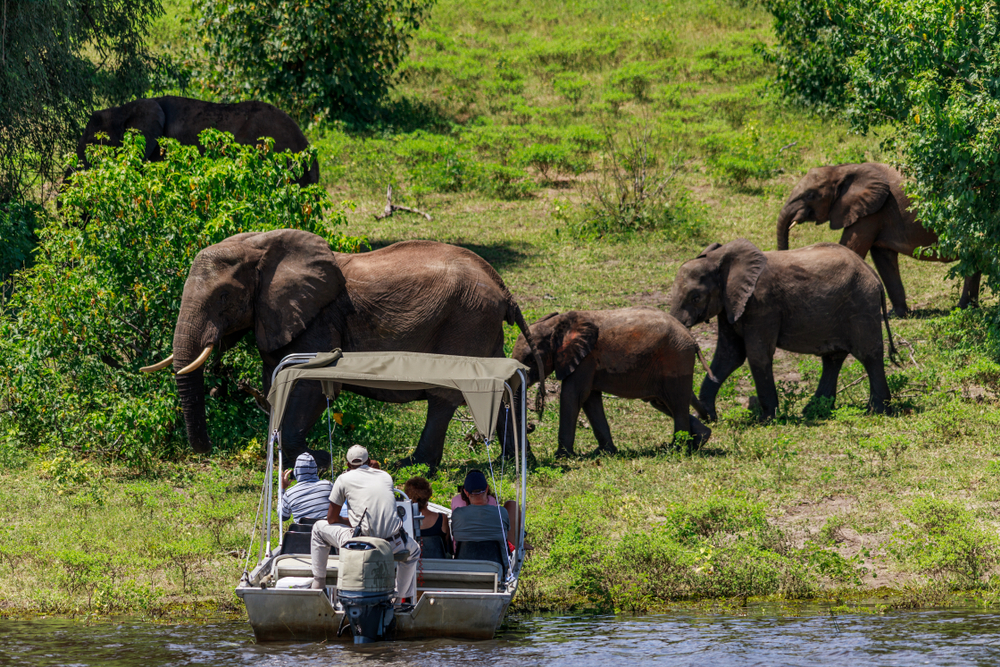
The riverfront in the far north-east, near Kasane, is the most visited part of the park and the one most people picture when they think of Chobe. Lush floodplains and riverine woodland attract enormous herds of elephant and buffalo, plus hippo, crocodile, puku, red lechwe, waterbuck, giraffe, sable and healthy populations of lion and leopard. Both game drives and boat cruises operate here.
2. Savuti
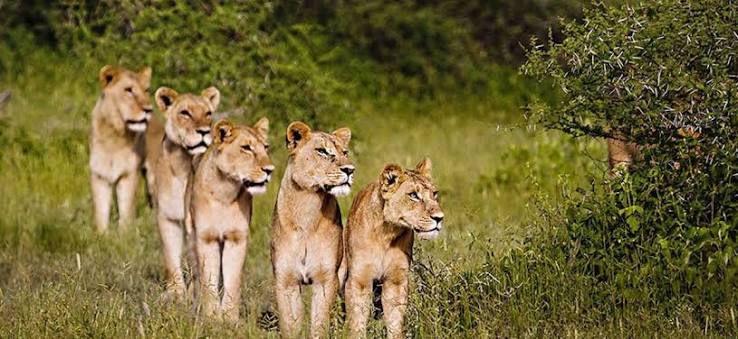
Savuti, in the park’s west, is famous for its predators. The Savuti Marsh and the unpredictable Savuti Channel – which has dried up and flowed again several times over recorded history – create open plains where lion, spotted hyena, cheetah, leopard and wild dog hunt. Savuti is also the stage for a seasonal zebra migration and is renowned for lions that have learned to hunt elephants.
3. Linyanti
Bordering the Linyanti River and its swamps in the north-west, this remote region is excellent for elephant, wild dog, lion, leopard, roan and sable antelope, and the shy, water-dwelling sitatunga. Much of the best Linyanti viewing takes place in neighbouring private concessions, where night drives and guided walks are permitted.
4. Nogatsaa and Tchinga (the Hinterland)
The dry interior of the park is dotted with pans and waterholes. It is quiet and seldom visited, but it can be rewarding during and just after the rains, when elephant, eland, roan and other species disperse away from the river.
| Region | Landscape | Wildlife Highlights | Best For |
| Chobe Riverfront | Floodplains, riverine woodland | Huge elephant and buffalo herds, hippo, croc, puku, lechwe, lion, leopard | First-time visitors, boat cruises, photography |
| Savuti | Marsh, open plains, rocky hills | Lion prides, hyena, cheetah, wild dog, zebra migration | Predator action, the green season |
| Linyanti | Swamps, riverine forest | Wild dog, elephant, roan, sable, sitatunga | Exclusive, low-density safaris |
| Nogatsaa / Tchinga | Mopane woodland, pans | Elephant, eland, roan, buffalo at waterholes | Off-the-beaten-track self-drivers |
Elephants: The Giants of Chobe
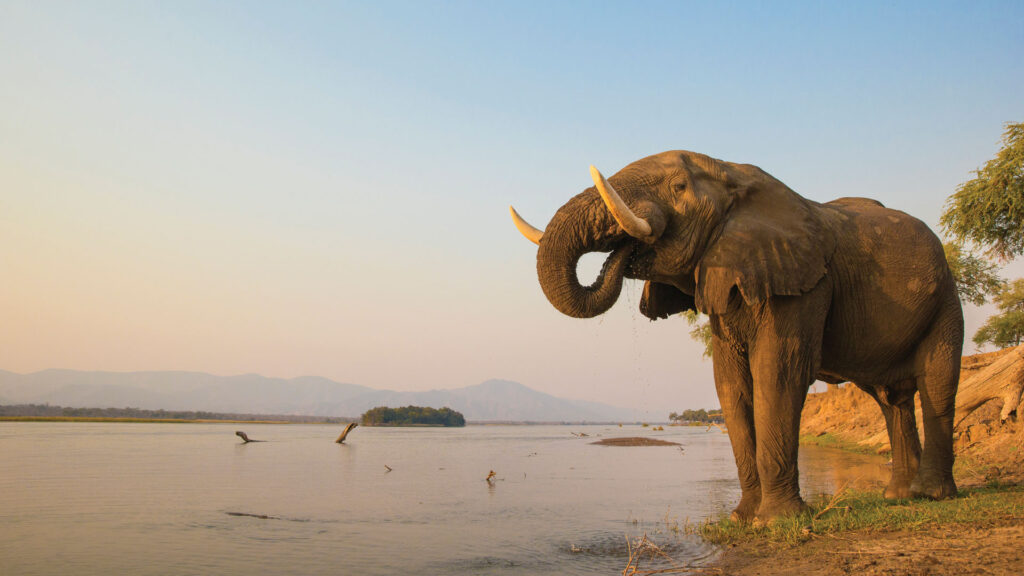
Elephants are the defining animal of Chobe. Botswana holds the world’s largest population of African savanna elephants – estimated at around 130,000 animals – and a significant share of them spend the dry season in and around Chobe. On a good afternoon along the riverfront it is possible to see many hundreds of elephants drinking, bathing, mud-wallowing and swimming across the river.
The Kalahari Elephant
Chobe’s elephants belong to what is often called the Kalahari population. They are among the largest-bodied elephants in Africa, yet many have relatively short, brittle tusks, a trait commonly linked to the calcium-poor soils of the region. Breeding herds are led by experienced matriarchs, while adult bulls move alone or in loose bachelor groups.
Elephant Behaviour to Watch For
- River crossings: Herds swim between the Botswana bank and the river islands, sometimes almost fully submerged with only their trunks raised like snorkels.
- Mud and dust bathing: Elephants coat themselves to cool down and protect their skin from sun and insects.
- Play among calves: Young elephants splash, wrestle and chase egrets – an endless source of entertainment.
- Sparring bulls: Young males test their strength with pushing contests, especially near water.
- Musth: Bulls in musth show swollen, streaming temporal glands and can be unpredictable, so guides give them extra space.
| Did You Know?
Chobe’s high elephant density has visibly reshaped parts of the riverfront. Large areas of former woodland have been opened up by feeding elephants, which is one reason the floodplain feels so open today. This impact is the subject of ongoing research and debate among conservationists. |
Big Cats of Chobe
Lions
Lions are found throughout Chobe, with the riverfront and Savuti offering the most reliable sightings. Riverfront prides often hunt buffalo, impala and other antelope, and are frequently seen resting in the shade by day.
The elephant-hunting lions of Savuti. Savuti’s lions became world-famous through wildlife documentaries showing large prides bringing down young and sub-adult elephants, especially at night during the dry season when other prey is scarce. This specialised behaviour relies on co-ordinated hunting by a big pride, is extremely rare elsewhere in Africa and is one of the most dramatic natural spectacles a predator enthusiast can hope for.
Leopards
Leopards are present across the park but remain elusive. Look for them draped over branches in the riverine woodland along the Chobe River, in the rocky outcrops of Savuti and in the thick vegetation of Linyanti. Early morning and late afternoon drives give the best chance of a sighting.
Cheetahs
Cheetahs need open ground to hunt, so they are most often seen on the plains around Savuti and occasionally on open sections of the riverfront. Numbers are low, so any sighting is special.
Smaller Cats
Serval, caracal and the African wildcat also live in Chobe. They are mostly nocturnal and are more often seen on night drives in the private concessions that border the park.
Wild Dogs, Hyenas and Other Predators
- African wild dog: One of Africa’s most endangered carnivores. Northern Botswana is a stronghold, and Linyanti and Savuti are among the best areas in the region to see packs, particularly during the denning season (roughly June to August), when packs stay in one area for several weeks.
- Spotted hyena: Common and highly vocal, especially around Savuti, where clans frequently clash with lions over kills.
- Brown hyena: Rare and secretive; occasionally recorded in the drier interior.
- Jackals: Both black-backed and side-striped jackals occur, scavenging and hunting small prey.
- Smaller carnivores: Honey badger, African civet, genets, bat-eared fox and several mongoose species, including banded and dwarf mongoose.
Buffalo, Hippos, Giraffe, Zebra and Other Large Herbivores
Cape Buffalo
Large herds of Cape buffalo – sometimes numbering in the hundreds – graze the Chobe floodplains, particularly in the dry season. Their presence is a major reason the riverfront supports so many lions. Older bulls, nicknamed “dagga boys” for their love of mud, often loiter alone or in small groups near water.
Hippopotamus
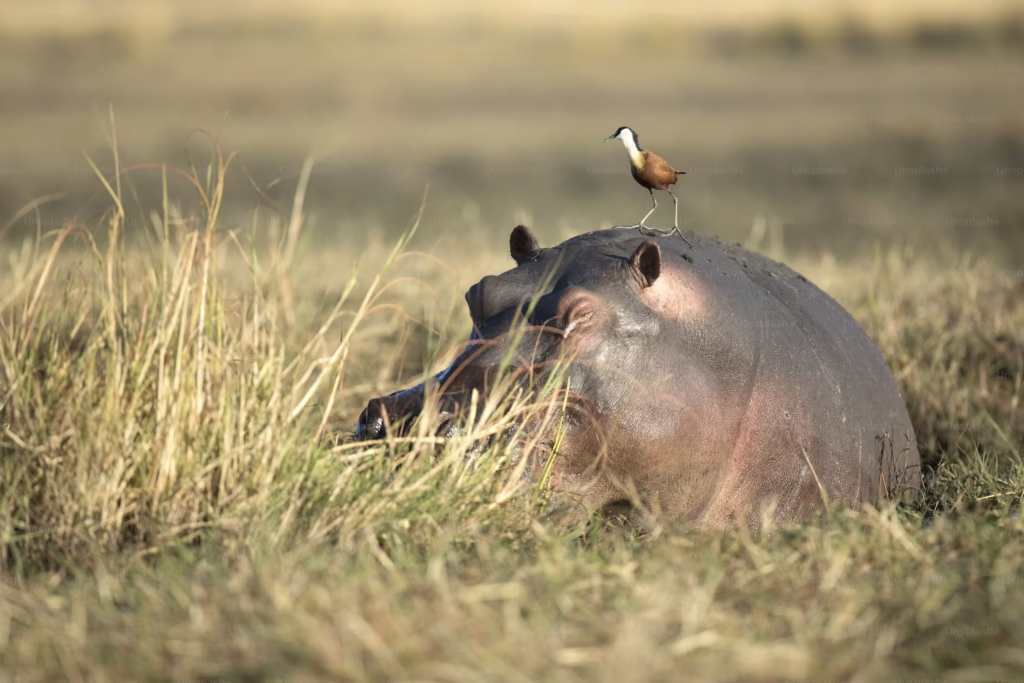
Hippos are abundant in the Chobe River. By day they rest in pods in the water, and at night they leave the river to graze on the floodplains. Boat cruises provide close, safe views of their yawning territorial displays.
Giraffe and Zebra
Southern giraffes browse the woodland edges along the riverfront and in Savuti. Plains (Burchell’s) zebras are common, and in Savuti they take part in one of southern Africa’s most remarkable migrations.
Other Herbivores
Warthogs are common on the floodplains, and you may also see bushpigs, porcupines (at night), chacma baboons and vervet monkeys. Rhinos are not part of the typical Chobe experience, so visitors hoping to see them usually plan time in other reserves.
The Savuti Zebra Migration
Each year, thousands of zebras move between the Linyanti and Chobe river systems and the Savuti area, with many continuing south towards Nxai Pan National Park. The movement follows the rains: zebras typically arrive in Savuti around November and December, when fresh grazing appears after the first storms, and many foals are born around this time. They head back north as the pans dry out, usually around March and April. Research using GPS-collared zebras has shown this to be one of the longest land migrations in Africa, with a round trip of roughly 500 km. Predators follow the herds, making the green season an exciting time in Savuti.
Antelope of Chobe, Including the Park’s Specials
Chobe is outstanding for antelope, including several species that are rare or absent elsewhere in Botswana.
| Chobe Specials You Should Look Out For
Puku: A golden-coated antelope found in Botswana essentially only along the Chobe River floodplains, making Chobe the best place in the country to see it. Chobe bushbuck: A richly coloured, boldly marked form of bushbuck associated with the riverine thickets of the Chobe area. Red lechwe: A water-loving antelope that bounds through shallow floodplains, common on the riverfront and in Linyanti. Sitatunga: A secretive swamp antelope with splayed hooves adapted to papyrus beds, mainly in Linyanti. |
| Antelope | Where to See It | How Common | Viewing Tip |
| Impala | Throughout the park | Very common | Watch for rutting males around May and June |
| Puku | Chobe Riverfront | Fairly common (locally) | Scan the grassy floodplain edges |
| Red lechwe | Riverfront, Linyanti | Common | Best seen from a boat |
| Waterbuck | Riverfront | Common | Look for the white ring on the rump |
| Chobe bushbuck | Riverine thickets | Uncommon | Early morning along the river road |
| Greater kudu | Woodland, riverfront | Common | Males have spectacular spiral horns |
| Sable antelope | Riverfront, Linyanti, interior | Uncommon | Often come to drink in the dry season |
| Roan antelope | Linyanti, Nogatsaa | Rare | Most likely in remote areas |
| Eland | Savuti, interior | Uncommon | Africa’s largest antelope; wary of vehicles |
| Tsessebe | Savuti, open grassland | Uncommon | One of the fastest antelopes |
| Sitatunga | Linyanti swamps | Rare | Search papyrus edges by boat |
| Steenbok & common duiker | Woodland and grassland | Fairly common | Small and easy to miss – look low |
Reptiles and River Life
The Chobe River teems with life beyond its mammals. Nile crocodiles, including some very large individuals, bask on sandbanks and island edges, and boat cruises often allow remarkably close views. Water monitor lizards forage along the banks, while the African rock python, black mamba, puff adder and boomslang are among the snakes present, though they are seldom seen.
The river is also home to the hard-fighting tigerfish and several species of bream, making the Kasane area popular with catch-and-release anglers in stretches outside the park where fishing is allowed.
Birdlife in Chobe National Park
With more than 450 species recorded, Chobe is one of Botswana’s top birding destinations. The mix of river, wetland, woodland and grassland habitats means that even non-birders quickly become fascinated by the colourful variety on show.
Birding Highlights
- African fish eagle: Its ringing call is the soundtrack of the Chobe River.
- Southern carmine bee-eater: Breeding colonies nest in the riverbanks, typically from around September to November, creating a blaze of colour.
- African skimmer: Flies low, slicing the water surface with its longer lower bill; often seen on sandbanks.
- Rock pratincole: A specialist of rocky rapids, seen near Kasane during the drier months.
- Pel’s fishing owl: A sought-after, ginger-coloured owl of riverine forest, mainly in Linyanti.
- Slaty egret: A regional speciality of the wetlands with a restricted global range.
- Storks and herons: Saddle-billed stork, marabou stork, African openbill, goliath heron and many more.
- Raptors and vultures: Bateleur, martial eagle, tawny eagle and several vulture species, including the white-backed vulture.
| Habitat | Species to Look For |
| River and sandbanks | African fish eagle, African skimmer, pied and malachite kingfishers, African jacana, water thick-knee |
| Floodplains and wetlands | Saddle-billed stork, slaty egret, wattled crane, spur-winged goose, African openbill |
| Riverine woodland | Pel’s fishing owl, Meyer’s parrot, trumpeter hornbill, white-fronted bee-eater |
| Open grassland and plains | Kori bustard, secretarybird, ostrich, lilac-breasted roller |
| Birding Tip
Visit between November and April to see migratory species from Europe and the rest of Africa. The landscape is green, many resident birds are in breeding plumage and species variety is at its highest. |
Best Time to See Wildlife in Chobe
Chobe offers good wildlife viewing all year, but the experience changes dramatically between the dry and wet seasons.
Dry Season (May to October)
This is the classic time for a Chobe safari. As the interior waterholes dry up, animals concentrate along the Chobe River, and elephant numbers on the riverfront build to a peak in September and October. Vegetation thins out, making animals easier to spot. Days are sunny, nights can be cold in June and July, and October can be very hot.
Wet or Green Season (November to April)
After the rains begin, animals disperse into the interior and riverfront numbers drop. However, this is the best time for birding, newborn animals, lush scenery and the zebra migration in Savuti. Some roads, especially around Savuti, can become muddy and difficult, and lodge rates are often lower.
| Months | Season | Wildlife Viewing | Highlights |
| January – March | Wet | Good (animals dispersed) | Zebra in Savuti, birding, newborn animals, green scenery |
| April – May | Transition | Good to very good | Rains ending, herds start returning to the river |
| June – August | Dry (cool) | Excellent | Large herds build, wild dog denning season, clear skies |
| September – October | Dry (hot) | Outstanding | Peak elephant concentrations, carmine bee-eater colonies |
| November – December | Early wet | Good | First rains, zebra arrive in Savuti, migrant birds arrive |
Ways to Experience Chobe’s Wildlife
Game Drives
Morning and afternoon game drives in open safari vehicles are the main way to explore Chobe. Inside the national park, drives must take place within park opening hours, so early starts make a real difference to predator sightings. Guides know the territories of local prides and leopards and can read signs such as alarm calls and fresh tracks.
Boat Cruises on the Chobe River
A boat cruise is one of the essential Chobe experiences. From water level you can watch elephants swim, hippos surface near the boat, crocodiles bask on the banks and herds come down to drink. Sunset cruises are the most popular, while specialist photographic boats with swivel camera mounts are ideal for serious photographers. Multi-day houseboats offer a relaxed way to spend more time on the river.
Self-Drive Safaris
Chobe can be explored on a self-drive safari in a well-equipped 4×4. The riverfront has deep sand in places, and the routes to Savuti and Linyanti are remote, so self-drivers need solid off-road experience, reliable navigation, recovery equipment and pre-booked campsites.
Night Drives and Walking Safaris
Night drives and guided walks are generally not permitted inside the national park itself, but they are offered in several private concessions bordering Chobe, particularly in the Linyanti area. These activities reveal nocturnal species such as civets, genets, servals, aardvarks and owls.
Wildlife Photography Tips for Chobe
- Bring a telephoto lens: A 100–400 mm zoom or similar covers most situations; a wider lens is useful for elephant herds and river scenes.
- Shoot from the water: Low angles from a boat give intimate, eye-level portraits of elephants, hippos and birds.
- Use the golden hours: The light shortly after sunrise and before sunset is warm and flattering, and animals are most active.
- Stabilise your camera: A bean bag works well on vehicles and boats, where tripods are impractical.
- Protect your gear: Fine Kalahari dust gets everywhere – carry a dust cover, blower and microfibre cloths.
- Be patient: Wait for behaviour – a calf playing, a fish eagle catching prey or lions waking up – rather than rushing to the next sighting.
Wildlife Safety and Responsible Viewing
- Stay inside the vehicle or boat unless your guide says otherwise; never stand up or lean out during sightings.
- Keep voices low and avoid sudden movements, especially around elephants with calves.
- Never feed wild animals, including baboons and monkeys around campsites.
- Self-drivers must give elephants plenty of space and never block their path to water.
- Keep food and rubbish sealed in vehicles at night; hyenas and honey badgers are skilled scavengers.
- Follow park rules on speed limits, gate times and designated roads.
- Do not share the real-time location of sensitive species, such as wild dog dens, on social media.
| Health Reminder
Chobe lies in a malaria area. Speak to a travel health professional before your trip about antimalarial medication, use insect repellent and wear long sleeves in the evenings. |
Conservation in Chobe
Chobe faces the same pressures as many of Africa’s great wildlife areas, but its scale and its place within the KAZA landscape give it a strong foundation. Key conservation themes include:
- Managing elephant impact: The large elephant population affects vegetation and brings elephants into conflict with farming communities around the park.
- Human-wildlife conflict: Crop raiding by elephants and livestock losses to predators are real challenges for local people, and community-based programmes aim to share the benefits of tourism.
- Protecting wildlife corridors: Keeping migration routes open between Chobe, Namibia, Zambia and Zimbabwe is vital for long-term population health.
- Anti-poaching efforts: Rangers and conservation partners work to protect elephants and other species from illegal hunting.
Choosing responsible operators, respecting park rules and paying park fees all help fund conservation and support the communities who share their land with Chobe’s wildlife.
Sample 3-Day Chobe Wildlife Itinerary
| Day | Morning | Afternoon / Evening | Wildlife Focus |
| Day 1 | Arrive in Kasane; transfer to lodge | Sunset boat cruise on the Chobe River | Elephants, hippos, crocodiles, water birds |
| Day 2 | Early game drive on the riverfront | Afternoon game drive; exit before gate closing | Lion, leopard, buffalo, puku, sable |
| Day 3 | Photographic boat safari or final game drive | Depart, or continue to Victoria Falls or the Okavango Delta | Birds, elephant herds, Chobe bushbuck |
For a deeper wildlife experience, add two to three nights in Savuti for predator viewing, or in the Linyanti concessions for wild dogs, night drives and walking safaris.
Frequently Asked Questions
What animals can I see in Chobe National Park?
Chobe is home to elephant, buffalo, lion, leopard, cheetah, African wild dog, spotted hyena, hippo, Nile crocodile, giraffe, zebra and a wide range of antelope, including puku, red lechwe, sable, roan, kudu, waterbuck and the Chobe bushbuck. More than 450 bird species have also been recorded.
Can you see the Big Five in Chobe?
You can reliably see four of the Big Five – elephant, buffalo, lion and leopard. Rhinos are not part of the typical Chobe experience, so if seeing them is important to you, plan time in another reserve.
How many elephants live in Chobe?
Numbers vary through the year as elephants move across the wider region. Botswana’s total elephant population is estimated at around 130,000, and the Chobe area hosts tens of thousands of them, with the highest concentrations along the river in the dry season.
When is the best time to see wildlife in Chobe?
The dry season from May to October is best for big game, with peak elephant numbers in September and October. The green season from November to April is better for birding, newborn animals and the zebra migration in Savuti.
Is a boat cruise or a game drive better in Chobe?
Do both if you can. Game drives give the best chance of seeing predators, while boat cruises offer close-up views of elephants, hippos, crocodiles and birds from a unique angle.
Where is the best place to see lions in Chobe?
Savuti is famous for its large lion prides, including those known for hunting elephants. The Chobe Riverfront also offers frequent lion sightings.
Can I see wild dogs in Chobe?
Yes. Linyanti and Savuti are the best areas, and the denning season from about June to August offers the best chances, as packs remain in one area for several weeks.
Is Chobe safe for a self-drive safari?
Yes, for prepared and experienced drivers. Use a properly equipped 4×4, book campsites in advance, respect gate times, carry enough fuel and water, and always give wildlife, especially elephants, plenty of room.
| Plan Your Chobe Wildlife Safari with Marriott Safaris Africa
Whether you dream of watching elephants swim the Chobe River, tracking lions in Savuti or searching for wild dogs in Linyanti, our team can design a safari around the wildlife you most want to see. We arrange lodges, boat cruises, guided game drives, self-drive 4×4 vehicles with camping gear and combination trips with Victoria Falls and the Okavango Delta. Contact Marriott Safaris Africa today to start planning your Chobe adventure. Perfection Anytime. |