North Luangwa National Park
The Complete Guide to Zambia’s Wildest Walking Safari Destination — Wildlife, Black Rhino, Camps, Self-Drive, Park Fees & Best Time to Visit
Tucked into the remote northern reaches of Zambia’s Luangwa Valley, North Luangwa National Park is one of the last places in Africa where you can still feel like an explorer. There are no tarred roads, no crowds of vehicles jostling around a lion sighting, and only a small handful of camps spread across more than 4,600 square kilometres of untouched wilderness. Instead, there is the crunch of your boots on a dry riverbed, the rumble of a buffalo herd moving through mopane woodland, and the very real chance of tracking Zambia’s only population of black rhino.
Often called simply “the North Park”, North Luangwa has built its reputation on walking safaris, exceptional conservation success and deep, genuine solitude. This guide covers everything you need to plan a visit: the park’s history, wildlife and landscapes, the best things to do, when to go, how to get there, 2025/2026 park fees, where to stay at every budget, the Amatololo self-drive loop, sample itineraries, practical safety advice and answers to the most common questions.
| North Luangwa at a Glance
Country / Province: Zambia — Muchinga Province, north-eastern Zambia Size: Approximately 4,636 km² (1,790 sq mi) Established: Gazetted as a national park in 1972 Famous for: Walking safaris, Zambia’s only black rhino population, huge buffalo herds, Cookson’s wildebeest, total exclusivity Best time to visit: June to October (dry season); camps generally open mid-June to end of October Main access: Light aircraft from Mfuwe/Lusaka, or 4×4 via Mano Gate (from the Great North Road near Mpika) or the pontoon crossing from the east International park fee: From about US$20 per person per day (US$25 for self-drivers) Ideal for: Experienced safari-goers, walkers, photographers, conservation enthusiasts and adventurous 4×4 travellers |
Overview and History of North Luangwa
North Luangwa National Park lies on the floor of the Luangwa Valley, bounded on its western side by the dramatic Muchinga Escarpment, which rises roughly 1,000 metres above the valley. The mighty Luangwa River forms the park’s eastern boundary, and several crystal-clear tributaries — most notably the Mwaleshi, Lufila and Mulandashi rivers — tumble down from the escarpment and cut across the park, creating waterfalls, sandy riverbeds and fertile floodplains.
For many years North Luangwa was effectively closed to tourism, and even today public access is deliberately limited. The park’s modern story is one of recovery. Heavy poaching in the 1970s and 1980s devastated the elephant population and wiped out the black rhino entirely. In 1986 the North Luangwa Conservation Programme (NLCP) was founded, and today it operates as a long-term partnership between Zambia’s Department of National Parks and Wildlife (DNPW) and Frankfurt Zoological Society (FZS). Over the decades, anti-poaching patrols, ecological monitoring and community programmes have transformed North Luangwa into one of the best-protected wilderness areas in southern Africa.
The park sits at the heart of a far larger conservation landscape of roughly 22,000 km², which includes surrounding Game Management Areas (GMAs) such as Mukungule, Musalangu and Munyamadzi. These buffer zones are home to local communities who now share directly in tourism through community-owned camps and campsites.
| Did You Know?
Zambia once held the third-largest black rhino population in Africa — almost 12,000 animals in the 1960s, with the North Luangwa ecosystem alone home to an estimated 500 to 2,000. By 1998 the species was declared extinct in Zambia. Thanks to the NLCP, black rhinos now roam North Luangwa once again. |
Why Visit North Luangwa National Park?
- True wilderness and exclusivity. With only a few small camps and very limited roads, you may not see another safari vehicle for your entire stay.
- World-class walking safaris. North Luangwa is one of Africa’s purest walking destinations. Safaris here are built around time on foot with expert guides and armed scouts.
- Black rhino conservation. It is the only place in Zambia where black rhino survive, making a visit a direct contribution to one of Africa’s great conservation comebacks.
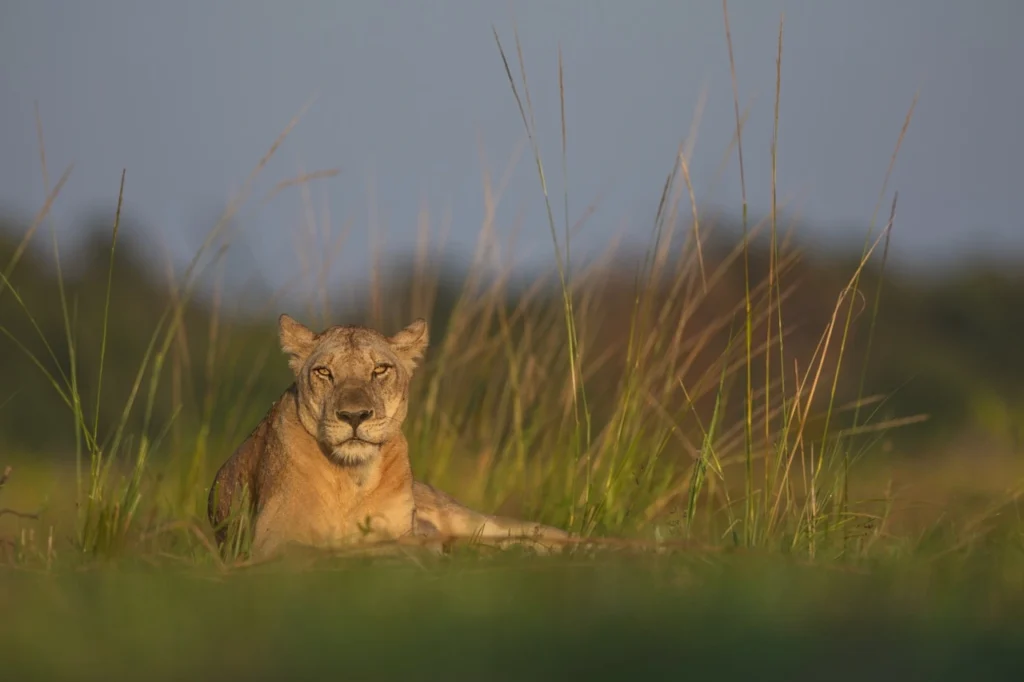
- Huge buffalo herds and big cats. Herds of several hundred buffalo are a signature sight, and they draw lions and hyenas in their wake.
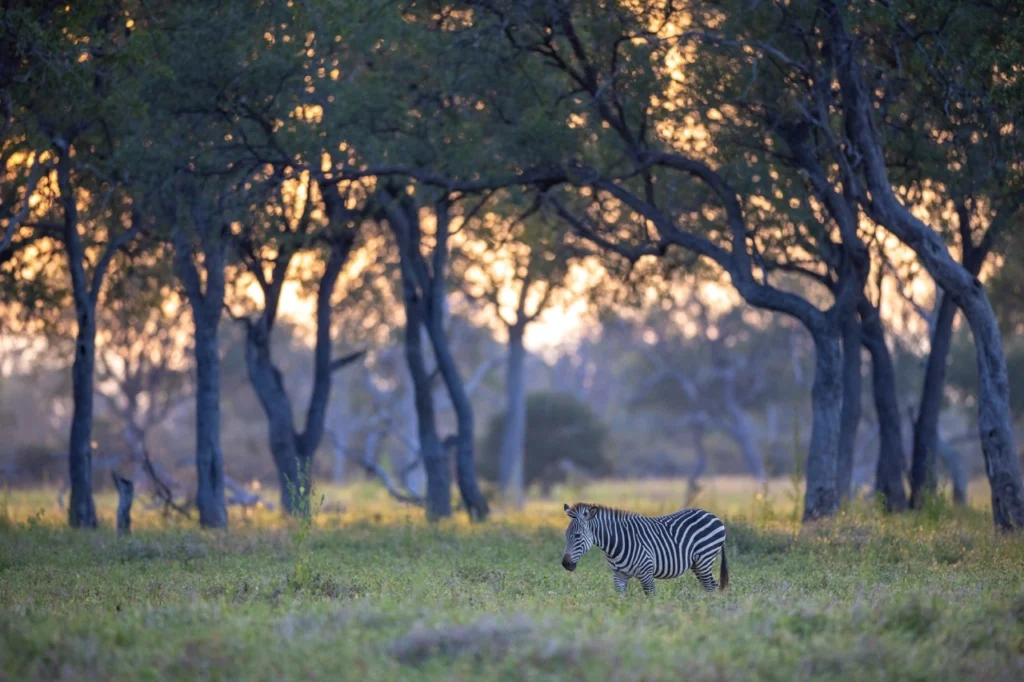
- Endemic species. The Luangwa Valley is the only home of Cookson’s wildebeest, and Crawshay’s zebra is also found here.
- Dramatic scenery. The Muchinga Escarpment, Lufila Falls, cathedral mopane forests and winding sand rivers make for stunning landscapes.
- Affordable self-drive option. The Amatololo Loop and community camps now open the park to self-sufficient 4×4 travellers for a fraction of the cost of a fly-in safari.
Landscapes and Habitats
North Luangwa packs remarkable variety into its boundaries. As you descend from the escarpment to the river, the landscape changes dramatically:
- Muchinga Escarpment: Rugged, hilly terrain cloaked in miombo woodland, with waterfalls and cool rivers — beautiful for walking and scenery, though less productive for game.
- Miombo woodland: Tall, open forest dominated by Brachystegia trees, typical of the upper slopes and plateau.
- Cathedral mopane forest: Towering mopane trees forming natural “cathedrals”, especially near the Luangwa River in the east.
- Riverine forest and floodplains: Ebony, sausage trees, winterthorn (Faidherbia albida) and open grassy plains along the Mwaleshi and Luangwa rivers, where wildlife concentrates in the dry season.
- Lagoons and dambos: Seasonal pans and oxbow lagoons that become magnets for birds, hippos and grazing herds.
Wildlife in North Luangwa National Park
Game densities in North Luangwa are lower than in its famous southern neighbour, but the quality of encounters is extraordinary. Because animals are rarely exposed to vehicles, sightings feel raw and intimate — and on foot, every track and sound becomes part of the story.
| Species | What to Expect |
| Black rhino | Zambia’s only population, protected within a dedicated Rhino Conservation Area. Sightings are rare and never guaranteed. |
| Lion | Healthy prides that follow the buffalo herds; frequently heard at night and often tracked on foot. |
| Elephant | The wider ecosystem supports one of Zambia’s largest elephant populations, recovering strongly after the poaching era. |
| Buffalo | Large herds, sometimes numbering several hundred — a highlight of the park. |
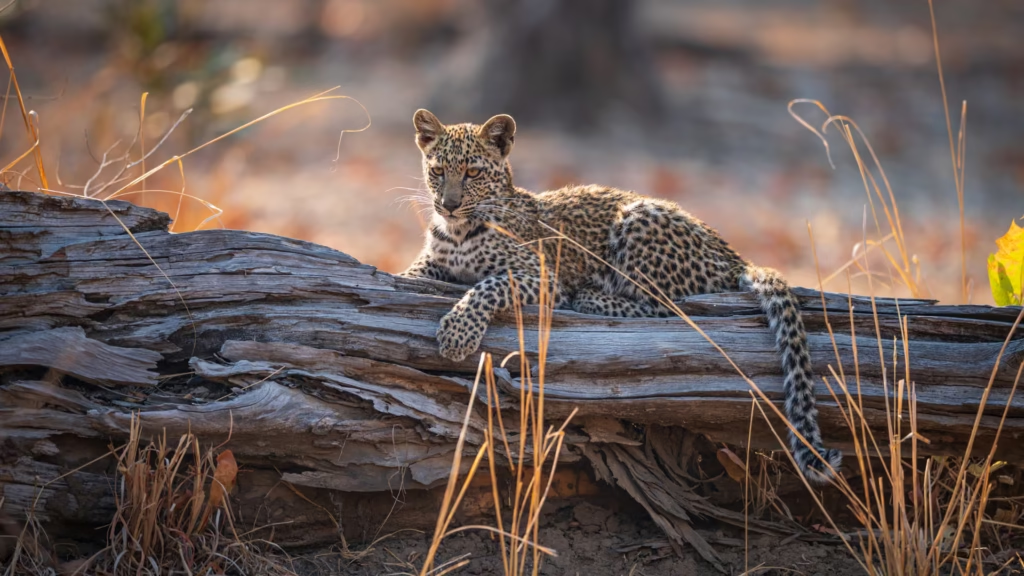
| Leopard & spotted hyena | Present throughout; leopard is elusive by day, hyena common around kills. |
| Cookson’s wildebeest | Endemic to the Luangwa Valley; often seen on the open plains. |
| Crawshay’s zebra | Distinctive zebra subspecies with narrow stripes and no shadow stripes. |
| Antelope | Puku, impala, waterbuck, Lichtenstein’s hartebeest, eland, roan, bushbuck and kudu. |
| Hippo & crocodile | Abundant in the Luangwa River and larger pools of the tributaries. |
| Wild dog | Occasionally recorded in the wider landscape; a special sighting if you are lucky. |
The Black Rhino Comeback
North Luangwa’s most celebrated success story is the return of the black rhino. After poaching drove the species to extinction in Zambia, the NLCP proposed a reintroduction in 2001. Between 2003 and 2010, 25 black rhinos were translocated into the park in four phases: five in 2003, ten in 2006, five in 2008 and five in 2010. The population has since been breeding, and it is now classed as a nationally important population requiring intensive protection.
The rhinos live within a carefully managed Rhino Conservation Area, monitored by dedicated rhino and elephant protection units. Visitors should understand that seeing a rhino is a rare privilege rather than an expected highlight — but simply being in the park supports the funding and ranger operations that keep these animals safe.
Birdlife
The Luangwa Valley is one of Zambia’s richest birding regions, and North Luangwa offers excellent birding along rivers and lagoons. Look out for Carmine bee-eaters (nesting in riverbanks from around August), African fish eagles, saddle-billed storks, Pel’s fishing owl in riverine forest, Lilian’s lovebirds, Böhm’s bee-eater, crowned cranes and a huge variety of raptors. The lagoon-facing Muzungwe campsite on the Amatololo Loop is especially good for water birds.
Top Things to Do in North Luangwa
1. Walking Safaris
Walking is the soul of North Luangwa. Private camps offer guided walks led by highly trained guides and armed DNPW scouts, typically in the cool of the morning. Walks focus on tracking, animal behaviour, plants and the small details often missed from a vehicle. Some operators offer multi-day walking itineraries moving between camps. Note that walking safaris are offered only through private operators — self-drive visitors cannot walk freely in the park.
2. Game Drives
Day game drives complement walking, especially for covering more ground to find lions and buffalo. Because the road network is small, drives feel exploratory and you will rarely meet other vehicles. Some camps also offer night drives, subject to park regulations.
3. The Amatololo Self-Drive Loop
A self-drive circuit along the Lufila and Luangwa rivers with four rustic campsites inside the park, open from July to mid-November depending on the rains. It is the most affordable way to experience North Luangwa independently (see the dedicated section below).
4. Lufila Falls and the Escarpment
Where the Lufila River tumbles off the escarpment, visitors find cool pools, rocky gorges and spectacular hill scenery. It is not a prime game-viewing spot, but it is ideal for walking, swimming in safe areas and photography.
5. Birdwatching and Photography
Low visitor numbers mean unobstructed photography, golden light over the floodplains and wildlife that behaves naturally. Lagoons and riverbanks reward patient birders.
6. Fishing and Waterfalls in the GMAs
From Samala Camp on the Mwaleshi River, visitors can enjoy catch-and-release fishing for yellowfish and bream (a fishing licence is required) and excursions to the Kapamba Waterfalls on the Munyamadzi River.
7. Explore the Northern Circuit
North Luangwa is a gateway to Zambia’s Northern Circuit: Shiwa Ng’andu manor house, Kapishya Hot Springs, Mutinondo Wilderness, the Bangweulu Wetlands (shoebills and black lechwe), Kasanka’s fruit bat migration (October to December) and Lake Tanganyika.
Best Time to Visit North Luangwa
North Luangwa has two main seasons: the dry season (roughly June to October) and the green or “emerald” season (November to May). Most private camps open from mid-June and close at the end of October, as the black cotton soils and rivers make roads impassable in the rains.
| Period | Conditions | Verdict |
| Jun – Jul | Cool, dry, mornings around 10°C; lush vegetation drying out; camps reopen | Very good — pleasant walking weather |
| Aug – Sep | Warm, dry; wildlife concentrating at rivers; carmine bee-eaters nesting | Excellent — peak season |
| Oct | Very hot (up to around 40°C); best concentration of game at the last water | Excellent for game, demanding heat |
| Nov – mid-Nov | First rains; Amatololo Loop closes by mid-November (rain dependent) | Self-drive only, risky |
| Dec – May | Emerald season, up to about 900 mm of rain; most camps and the loop closed | Closed for most visitors |
| Planning Tip
Community camps Samala (near Mano Gate) and Mandalena (on the 05 Road) are open all year, but game viewing inside the park is only practical in the dry season. Book fly-in camps 6–12 months ahead for August and September, as bed numbers are very small. |
How to Get to North Luangwa National Park
By Charter Flight (Most Popular)
Most visitors fly in on light aircraft (typically 4–6 seats) as part of a safari package. Flights from Mfuwe or Mwanya in South Luangwa take around 45–60 minutes and land at bush airstrips such as Mwaleshi. Direct charters from Lusaka are also possible. Operators serving the park include RAS Air, Skytrails, Ngwazi Air Charters, Staravia and Proflight. International travellers usually arrive via Lusaka (Kenneth Kaunda International Airport) and connect to Mfuwe on Proflight.
By Road from the Great North Road (Mano Gate)
- Turn east off the Great North Road about 60 km north of Mpika (signposted at Lwanya village, shown as Chitembo on Google Maps).
- Follow the track for about 32 km to Mukungule village, turn left at the T-junction and continue roughly 12 km to Mano Gate, the main park entrance.
- At Mano Gate you sign in, pay park fees, receive the latest updates and collect a park map.
- An alternative route runs from Mpika via Katibunga and Mukungule village.
- Lusaka to Mpika is a long drive of roughly 650 km on the Great North Road; most travellers overnight in Mpika or at Samala Camp.
By Road from South Luangwa (via Luambe)
Self-drivers can travel north from Mfuwe through Luambe National Park along the eastern bank of the Luangwa, past Chipuka and Zokwe scout camps and through cathedral mopane forest, to the pontoon crossing near Ituba Camp — roughly 265 km. Late in the season the pontoon may be withdrawn and the river is crossed by vehicle, depending on water levels. This route is for 4×4 vehicles only, and trailers are not recommended on the pontoon.
North Luangwa Park Fees (2025/2026)
Park entry fees are charged per person per day (or part thereof) by Zambia’s Department of National Parks and Wildlife. North Luangwa is a Category A park. The figures below are the most recently published official rates; always confirm current fees with DNPW or your operator before travel.
| Fee Type | Rate |
| International visitors | US$20 per person per day |
| Self-drivers (residents and non-residents) | US$25 per person per day |
| Residents / SADC nationals | US$15 per person per day |
| Zambian citizens | K44.80 per person per day |
| Foreign-registered vehicle (under 3 tonnes) | US$15 per day |
| Amatololo Loop campsite | US$10 per person per night |
| Pontoon crossing | US$5 |
| Aircraft landing (foreign) | US$50 |
Note: Fly-in lodges usually quote park fees, bed levies and conservation contributions separately or as an add-on (for example, around US$60 per person per night at some camps). Children under five are generally free, with discounts for ages 5–13.
Where to Stay in North Luangwa
Accommodation is deliberately limited, which is exactly what keeps the park so exclusive. Options range from intimate fly-in bush camps to community-owned safari tents and basic campsites.
Luxury and Fly-In Bush Camps
- Mwaleshi Camp (Remote Africa Safaris): A classic, rustic bush camp on the Mwaleshi River and one of the pioneers of walking safaris in the park. Rates from around US$590 per person per night.
- Takwela Camp (Remote Africa Safaris): Opened in 2019; four solar-powered en-suite chalets built from natural materials, for a maximum of eight guests. 2026 rates from about US$645 (June–July) to US$760 (August–October) per person per night, fully inclusive excluding park fees.
- Kutandala Camp (Classic Zambia): Set on the Mwaleshi River inside the Special Protection Zone, known for low-impact, regenerative tourism and outstanding walking guides.
- North Luangwa camps by Luangwa Valley Safaris: Including North Luangwa Skybeds, with fully inclusive 2026 rates from about US$495 per person per night (park fees and levies extra), and packages that combine Luambe and South Luangwa.
Community-Owned Tented Camps (Mid-Range / Budget)
Developed with NLCP support, these camps in the surrounding GMAs are owned by local communities, so every booking directly supports conservation-linked livelihoods. Each offers twin safari tents and a campsite, with self-catering facilities.
| Camp | Location | Season | International Rate |
| Samala Camp | Mwaleshi River, 10 km from Mano Gate (Mukungule community) | All year | US$75 pp sharing (tent); US$10 camping |
| Ituba Camp | Luangwa River near the pontoon (Chifunda community) | June – mid-Nov | US$75 pp sharing (tent); US$10 camping |
| Mandalena Camp | Mutinondo River on the 05 Road (Nabwalya community) | All year | US$75 pp sharing (tent); US$10 camping |
SADC residents pay US$25 and Zambian citizens K400 per adult for safari tents. Cooking at Ituba and Mandalena is on wood fires only (firewood provided), while Samala has a gas stove and solar fridge/freezer. Mandalena also offers Starlink internet.
The Amatololo Self-Drive Loop
The Amatololo Experience was created by the NLCP to give independent travellers safe, affordable access to North Luangwa. Around 200 km of self-drive roads have been opened outside the park’s Special Protection Zone, following the Lufila and Luangwa rivers. Inside the park, the loop links four exclusive-use campsites.
| Campsite | Setting | Best For |
| Lufila Falls | Escarpment river beside a waterfall; ~50 m walk from parking | Scenery, walking, small groups |
| Nkholo | Deep ebony shade near the Lufila–Luangwa confluence | Families, year-round shade |
| Muzungwe | Facing a lagoon near the Luangwa River | Birdwatching |
| Mushika | Sweeping Luangwa River bend under cathedral mopane, with an insaka (shelter) | Larger groups, views |
Facilities: long-drop toilets, borehole water (river water at Lufila), bucket-shower enclosures. Each site takes up to 15 people and is booked for exclusive use, so advance booking is essential.
Access: enter from the west via Samala Camp and Mano Gate, or from the east via Ituba Camp and the pontoon. Open July to mid-November, rains dependent.
Bookings: North Luangwa Conservation Programme — bookings@northluangwa.org | WhatsApp +260 950 987 579.
Sample North Luangwa Itineraries
4-Day Self-Drive: Great North Road Diversion via the Amatololo Loop
| Day | Route & Activities | Overnight |
| Day 1 | Drive from Mpika to Samala Camp (about 3 hours). Afternoon swim and birding on the Mwaleshi River. | Samala Camp |
| Day 2 | Enter at Mano Gate, follow signs to the Amatololo Loop and descend toward the Luangwa River. Afternoon game viewing. | Nkholo, Muzungwe or Mushika campsite |
| Day 3 | Full day exploring the loop along the Luangwa — buffalo, puku, hippos, lagoon birdlife. | Another Luangwa campsite |
| Day 4 | Either cross the pontoon and head south to Mfuwe via Luambe, or return via the main park road to Mano Gate and the Great North Road. | Onward journey |
7-Day Fly-In Walking Safari: Mwaleshi and Takwela
| Day | Highlights | Overnight |
| Day 1 | Arrive Mfuwe; light-aircraft transfer to Mwaleshi airstrip; sundowner walk. | Mwaleshi Camp |
| Day 2 – 3 | Morning walking safaris along the Mwaleshi; afternoon drives; tracking lion and buffalo. | Mwaleshi Camp |
| Day 4 | Transfer to Takwela as part of a morning activity (game drive or walk). | Takwela Camp |
| Day 5 – 6 | Walks and drives through floodplains and woodland; birding and photography. | Takwela Camp |
| Day 7 | Final walk, then fly back to Mfuwe for onward connections. | Depart |
Packages of this kind (3 nights Mwaleshi + 4 nights Takwela) are advertised for 2026 from roughly US$5,150 per person sharing in June–July and US$5,790 in August–October, including flights from Mfuwe, park fees, meals and activities. A popular alternative combines several nights in South Luangwa with three nights in the North Park.
10-Day Luangwa Valley Combination
Spend 3–4 nights in South Luangwa for classic game drives and leopard sightings, 3 nights at Luambe or in the Luangwa GMAs, then 3 nights in North Luangwa for walking and solitude. This gives you the full spectrum of the valley — from Zambia’s busiest wildlife haven to its wildest.
North Luangwa vs South Luangwa
| Feature | North Luangwa | South Luangwa |
| Size | ~4,636 km² | ~9,050 km² |
| Visitor numbers | Very low; handful of camps | Higher; many lodges, Mfuwe hub |
| Signature activity | Walking safaris | Game drives, night drives, walking |
| Black rhino | Yes — Zambia’s only population | No |
| Thornicroft’s giraffe | Not a feature | Yes — a South Luangwa speciality |
| Access | Charter flight or remote 4×4 tracks | Scheduled flights to Mfuwe; good roads |
| Season | Mostly mid-June to October | Many lodges open longer, some year-round |
| Best for | Repeat visitors, walkers, wilderness seekers | First-timers, big-game density |
Self-Drive Tips for North Luangwa
- Vehicle: A high-clearance 4×4 is essential. Carry two spare tyres, a puncture repair kit, compressor, tow rope, shovel and a high-lift jack.
- Fuel: Fill up in Mpika or Mfuwe and carry extra in jerrycans — there is no fuel in or near the park.
- Supplies: Bring all food and drinking water reserves; campsites provide borehole water but no shops.
- Navigation: Download offline maps and the NLCP park map, and note campsite GPS coordinates before you leave signal.
- Travel in convoy: Two vehicles are strongly recommended for safety in this remote area.
- Trailers: Not recommended on the pontoon; if you must bring one, two winches are needed to load and unload.
- Rules: Stay on designated roads, never walk away from your vehicle or campsite, drive only between sunrise and sunset, and respect the closed Special Protection Zone.
- Check conditions: Contact Mano Gate or the NLCP for road and river-crossing updates, particularly early and late in the season.
Health, Safety and Practical Information
Entry Requirements
Zambia offers visa-free entry to many nationalities, while others can obtain an e-visa or visa on arrival. The KAZA Univisa allows travel between Zambia and Zimbabwe (and day trips into Botswana via Kazungula) — useful if you are combining North Luangwa with Victoria Falls. Rules change, so check the Zambia Department of Immigration website before travel.
Health
- North Luangwa is a malaria area — take prophylaxis on medical advice, use repellent and sleep under nets.
- Tsetse flies are present in woodland areas; wear neutral colours (avoid dark blue and black) and long sleeves.
- Carry a well-stocked first-aid kit. Medical facilities are many hours away, so comprehensive travel insurance with emergency air evacuation cover is essential.
- Check yellow fever certificate requirements if arriving from or transiting through a risk country.
Safety on Walking Safaris
- Always walk in single file behind your guide and armed scout, and follow instructions immediately.
- Keep quiet, never run, and wear earth-toned clothing and sturdy closed shoes.
What to Pack
- Clothing: Neutral khaki, olive and brown layers; long-sleeved shirts; a warm fleece for cold June–July mornings; wide-brimmed hat.
- Footwear: Broken-in walking shoes or boots, plus sandals for camp.
- Gear: Binoculars, camera with a 100–400 mm lens, spare batteries, power bank (camps run on solar), headlamp.
- Health: Sunscreen, insect repellent, malaria tablets, personal medication, rehydration salts.
- Documents: Passport, visa/e-visa, insurance details, US dollars in small notes for fees and tips.
- Self-drivers: Camping equipment, fridge/freezer, cooking gear, water containers, rubbish bags (carry out everything you bring in).
Conservation and Community
Every visit to North Luangwa supports one of Africa’s most effective conservation programmes. Park fees and levies fund ranger patrols, rhino and elephant protection units and ecological monitoring. The NLCP also runs conservation education — including the long-running Lolesha Luangwa programme focused on black rhinos — and supports alternative livelihoods in surrounding communities.
Staying at community-owned camps such as Samala, Ituba and Mandalena puts income straight into local hands, strengthening the link between thriving wildlife and thriving communities. Private operators like Remote Africa Safaris and Classic Zambia also contribute to conservation and community funds through their rates.
Frequently Asked Questions
Is North Luangwa National Park worth visiting?
Yes — especially if you have already done a classic safari and want something wilder. It offers exceptional walking safaris, genuine solitude and the chance to support Zambia’s black rhino recovery. First-time visitors focused on seeing many animals quickly may prefer to combine it with South Luangwa.
Can I see black rhino in North Luangwa?
North Luangwa is the only place in Zambia with black rhino, but they live in a protected conservation area and sightings by tourists are rare. Think of a sighting as a bonus rather than a goal.
Can I self-drive in North Luangwa?
Yes. The Amatololo Loop and the main park road are open to self-sufficient 4×4 travellers from July to mid-November. Campsites must be booked in advance through the NLCP, and walking safaris are only available through private operators.
How much does a North Luangwa safari cost?
Self-drive campers pay around US$25 per person per day in park fees plus US$10 per night camping and vehicle fees. Community safari tents cost about US$75 per person sharing. Fully inclusive fly-in camps range from roughly US$495 to US$760+ per person per night, and 7-night packages start from around US$5,150 per person.
When is North Luangwa open?
Most private camps operate from mid-June to the end of October. The Amatololo Loop and Ituba Camp close by mid-November, while Samala and Mandalena camps in the surrounding GMAs are open all year.
How do I get from South Luangwa to North Luangwa?
The quickest option is a 45–60 minute light-aircraft flight from Mfuwe or Mwanya. By road, it is roughly 265 km from Mfuwe via Luambe National Park to the pontoon crossing near Ituba Camp — a full day’s 4×4 drive.
Is North Luangwa suitable for children?
Most fly-in walking camps set minimum ages (often 12 or older) for walking activities. Families with younger children may find the self-drive campsites — Nkholo is particularly family-friendly — a better fit, with strict supervision at all times.
Is North Luangwa safe?
Yes, when visited responsibly. The park is well managed and protected. The main risks are remoteness and wild animals, so follow guide instructions, travel prepared and carry evacuation insurance.
Plan Your North Luangwa Safari
North Luangwa National Park rewards those who make the journey with something increasingly rare: the feeling of having a vast African wilderness almost entirely to yourself. Whether you fly into an intimate bush camp to walk in the footsteps of lions and buffalo, or load up a 4×4 and camp beside the Luangwa on the Amatololo Loop, this is Zambia at its most authentic.
| Ready to Explore Zambia’s Wildest Park?
Marriott Safaris Africa can help you plan a tailor-made North Luangwa safari — from fly-in walking safaris combined with South Luangwa and Victoria Falls, to fully equipped 4×4 self-drive adventures across Zambia’s Northern Circuit. Contact our team to start planning your journey. |