Liuwa Plain National Park: Africa’s Best-Kept Safari Secret
Far out in the western corner of Zambia, close to the Angolan border, lies a landscape that feels almost unreal in its scale. Liuwa Plain National Park is a sea of grass so flat and so wide that the horizon seems to curve. Dotted with shallow pans, isolated tree islands and wildflowers after the rains, it is one of the last truly wild grasslands left in Southern Africa — and one of the least visited.
Liuwa (the name simply means “plain” in the Lozi language) covers roughly 3,369–3,660 square kilometres in Zambia’s Western Province. It hosts the second-largest wildebeest migration on the continent, a dominant population of spotted hyenas living in huge clans, recovering prides of lions, cheetahs, wild dogs and more than 350 bird species, including some of Africa’s most important populations of wattled cranes.
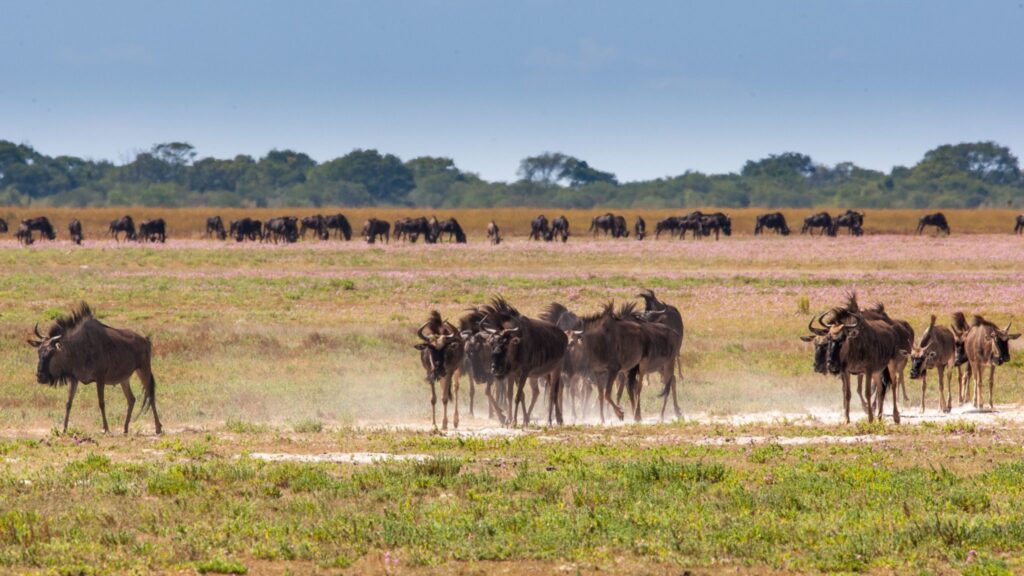
Unlike the Serengeti or the Maasai Mara, you will rarely share a sighting here. Liuwa receives only a few hundred visitors a year, and the park’s single permanent lodge hosts a maximum of around 15 guests. For travellers who want raw wilderness, dramatic skies and a conservation success story they can actually see unfolding, Liuwa Plain is one of the most rewarding safari destinations in Africa.
This guide covers everything you need to plan a trip: the park’s remarkable history, its wildlife and migration, the best time to visit, how to get there by road or air, self-drive tips, fees, accommodation, sample itineraries, packing, health and safety, and answers to the most common questions.
| Liuwa Plain at a Glance
Location: Western Province, Zambia — north-west of Kalabo, near the Angolan border Size: Approx. 3,369–3,660 km² (figures vary by source) Managed by: African Parks, the Department of National Parks and Wildlife (DNPW) and the Barotse Royal Establishment (BRE) — partnership renewed in 2026 Famous for: Africa’s second-largest wildebeest migration (47,000+ animals), large hyena clans, wattled cranes, vast open plains Gateway town: Kalabo (park reception and pontoon crossing over the Luanginga River) Best time: Late October to mid-December for the migration and predator action; May–July for green plains and birds Access: High-clearance 4×4 only, or charter/scheduled flight to Kalabo |
Quick Facts About Liuwa Plain National Park
| Feature | Details |
| Country / Province | Zambia / Western Province (historic Barotseland) |
| Protected since | Early 1880s (by King Lubosi Lewanika); national park status in 1972 |
| Management partner | African Parks (since 2003), with DNPW and the Barotse Royal Establishment |
| Habitat | Upper Zambezi floodplain grassland, seasonal pans, woodland islands |
| Key wildlife | Blue wildebeest, spotted hyena, lion, cheetah, wild dog, zebra, red lechwe, tsessebe, oribi, eland, buffalo |
| Birdlife | 350+ species; wattled crane, grey crowned crane, Denham’s bustard, migrant raptors |
| Nearest towns | Kalabo (gateway), Mongu (provincial capital, fuel and supplies) |
| Distance from Lusaka | About 680 km by road (roughly 10 hours to Kalabo) |
| Distance from Livingstone | About 565 km by road (roughly 8–9 hours to Kalabo) |
| Park hours | Sunrise to sunset |
| Accommodation | King Lewanika Lodge (luxury), Sibika Camp (classic), community campsites and chalets |
History and Conservation: One of Africa’s Oldest Protected Areas
A Royal Hunting Ground Turned Sanctuary
Liuwa’s conservation story begins long before modern national parks existed. In the early 1880s, Lubosi Lewanika, the Litunga (King) of Barotseland, declared Liuwa Plain a protected area and appointed his people as custodians of its wildlife. The plain had been a royal hunting ground, and Lewanika’s decree embedded its protection deep in Lozi culture — making Liuwa one of the oldest conservation areas on the continent.
The Zambian government formally gazetted Liuwa as a national park in 1972. Uniquely, local communities continued to live within and around the park, with traditional rights to fish, graze and harvest resources — an arrangement that continues today.
Decline and Recovery
Through the 1980s and 1990s, civil war in neighbouring Angola, weak enforcement and widespread poaching pushed Liuwa to the brink. Wildebeest numbers collapsed, and lions were almost entirely wiped out. By the early 2000s, only one lioness was known to survive in the entire park.
In 2003, the Barotse Royal Establishment, under King Lubosi Imwiko II, partnered with African Parks and the Department of National Parks and Wildlife to take over management of Liuwa. Over the following two decades, anti-poaching patrols, community engagement and carefully planned reintroductions transformed the park. Wildebeest numbers recovered to more than 47,000, eland and buffalo were reintroduced, and lions were slowly brought back.
In 2026, the three partners renewed their agreement. The renewed mandate also brings part of the Upper West Zambezi Game Management Area under the partnership — an important step because these lands are critical to the migratory routes that sustain Liuwa’s wildebeest.
| The Legend of Lady Liuwa
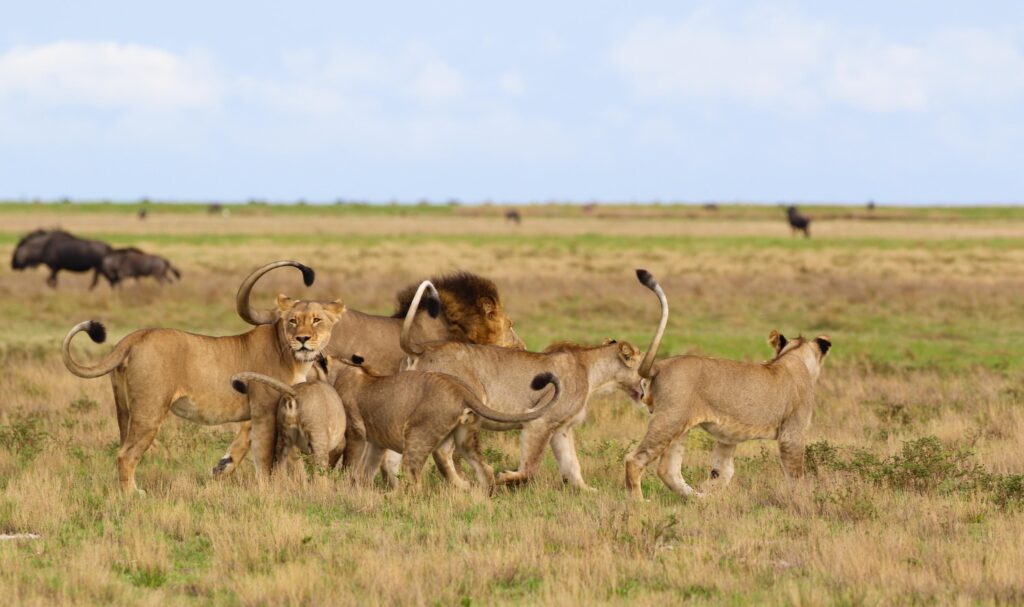
Lady Liuwa was the park’s lone surviving lioness, first recorded around 2002 after poachers had killed every other lion. For years she lived without a pride, famously seeking company with the researchers and guides who monitored her. From 2008 onward, African Parks introduced new lions to give her companions, and she eventually became a matriarch figure in the rebuilt population. She died of natural causes in 2017, but her story — told in the documentary “The Last Lioness” — made Liuwa famous worldwide. Additional lions, including lionesses from Kafue National Park, were translocated in 2021 to strengthen genetic diversity. |
The Liuwa Wildebeest Migration: Africa’s “Secret” Migration
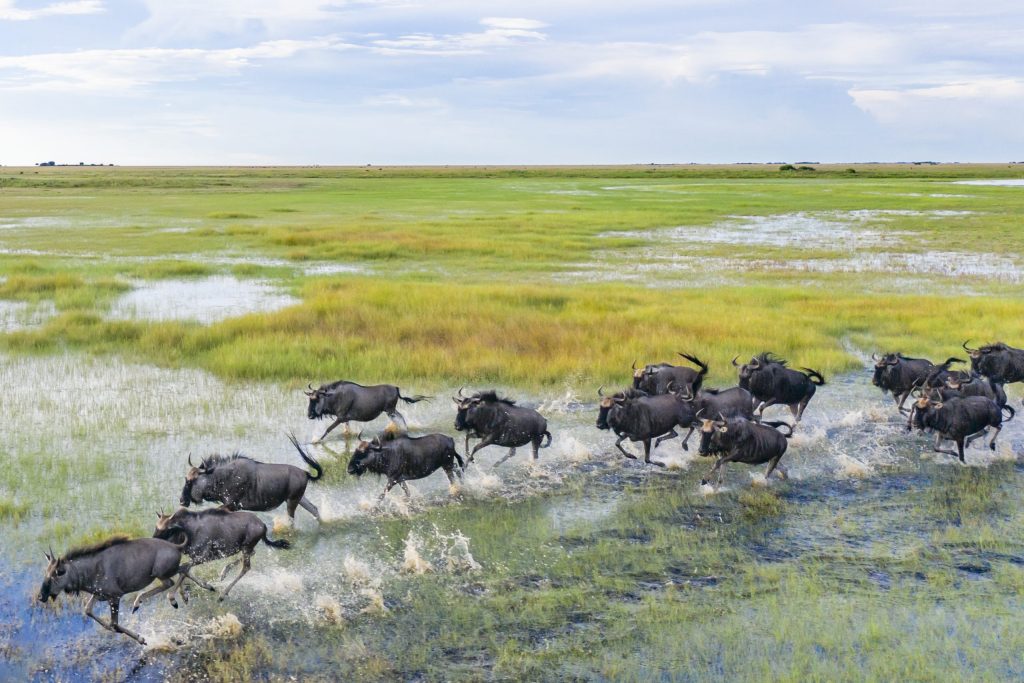
Every year, tens of thousands of blue wildebeest move across Liuwa’s plains in what is now recognised as the second-largest wildebeest migration in Africa, after the Serengeti–Mara. It is sometimes called the “secret migration” because so few people witness it — and the experience is completely different from the crowded river crossings of East Africa.
How the Migration Works
The wildebeest of Liuwa spend part of the year in the Upper West Zambezi Game Management Area and areas toward the Angolan border. As the first rains arrive in late October and November, the herds stream south and west onto the fresh grass of the plains. The calving season follows from around November into December, attracting hyenas, lions and cheetahs. As floodwaters rise early in the year, the herds gradually move again, returning to higher ground.
| Period | What Happens | Viewing Quality |
| Late Oct – Nov | Herds arrive with the first rains; dramatic storm skies | Excellent |
| Nov – Dec | Calving season; peak predator activity, especially hyena hunts | Outstanding |
| Jan – Apr | Floods; park largely inaccessible by road; herds disperse | Fly-in only / limited |
| May – Jul | Green plains as floods recede; herds scattered, great birding | Good |
| Aug – mid-Oct | Dry, golden plains; wildlife concentrates near pans | Good |
| Insider Tip
Migration timing depends on the rains, which can shift by several weeks. If seeing large herds is your top priority, plan for mid-November to early December and keep your dates flexible. Your guide or the park office in Kalabo can give the latest herd locations. |
Wildlife of Liuwa Plain
Liuwa’s open terrain makes it one of the best places in Southern Africa to watch predators hunt in plain view. Without dense bush to hide in, interactions between species unfold in full sight, often with no other vehicles around.
The Predators
- Spotted hyena: Liuwa’s apex predator. Clans here can number 50 or more, and they hunt actively rather than scavenge. Watching a clan chase down a wildebeest across the plain at dawn is a signature Liuwa experience.
- Lion: A small but growing population, rebuilt from Lady Liuwa’s legacy and later translocations. Prides are well monitored and often seen near Katoyana and central pans.
- Cheetah: The flat grasslands are ideal cheetah habitat. Sightings are regular, particularly in the dry season and during calving.
- African wild dog: Packs move in and out of the park across a huge range; sightings are possible but never guaranteed.
- Others: Side-striped jackal, serval, African wildcat, honey badger and bat-eared fox.
Plains Game and Other Mammals
| Species | Notes |
| Blue wildebeest | 47,000+ animals; the star of the migration |
| Burchell’s zebra | Often move alongside the wildebeest herds |
| Red lechwe | Common near water and floodplain edges |
| Tsessebe | Fast, elegant antelope of open grassland |
| Oribi & steenbok | Small antelope frequently seen in short grass |
| Eland | Reintroduced; Africa’s largest antelope |
| Buffalo | Reintroduced; most often seen around Kwale |
| Roan antelope | Occasionally recorded in woodland areas |
Birdwatching in Liuwa
Liuwa is an Important Bird Area with over 350 recorded species. When the plains flood and the pans fill, the park becomes a magnet for waterbirds and migrants, making it a top destination for serious birders.
- Wattled crane: Liuwa supports one of the most significant populations of this vulnerable species in Africa.
- Grey crowned crane: Often seen in pairs or small groups on the open plain.
- Denham’s bustard: Displaying males are a highlight in the wet season.
- Waterbirds: Pelicans, storks (saddle-billed, marabou, open-billed), egrets, herons and slaty egret in wetter areas.
- Raptors: Secretary bird, tawny and steppe eagles, pallid harrier, and migrating kestrels and falcons in summer.
- Plains specialists: Rosy-throated longclaw, black-winged pratincole and Angolan larks.
Best Time to Visit Liuwa Plain National Park
Liuwa’s seasons are dictated by the floods of the Upper Zambezi. Road access is usually possible from around May/June to December, while from January to April much of the park floods and access is mainly by air (if camps are open at all).
| Season | Months | Conditions | Best For |
| Green season / receding floods | May – Jul | Lush green plains, cool nights, wet tracks early on | Birding, landscapes, fewer visitors |
| Dry season | Aug – mid-Oct | Golden grass, dry and hot by October, easy driving | Predators near pans, self-drive camping |
| Migration & storms | Late Oct – mid-Dec | First rains, spectacular storms, fresh grass | Wildebeest migration, calving, hyena hunts, photography |
| Flood season | Jan – Apr | Heavy rain and flooding; most roads impassable | Generally closed to self-drive |
| Our Recommendation
For the classic Liuwa experience: travel between early November and mid-December. You’ll see the wildebeest on the plains, newborn calves, intense predator action and the dramatic thunderstorms that make Liuwa a photographer’s dream. For birders and green landscapes: May to July is quieter and beautiful, with excellent waterbirds as the floods recede. |
How to Get to Liuwa Plain National Park
All visitors enter through Kalabo, a small town on the Luanginga River where African Parks runs the park reception. From Kalabo, a pontoon carries vehicles across the river into the park’s southern section. Tarred roads now link Mongu and Kalabo, making the gateway far easier to reach than it was a decade ago.
By Road from Lusaka
The most common overland route follows the M9 west from Lusaka through Kafue National Park to Mongu, then on to Kalabo across the Barotse Floodplain. The total distance is about 680 km and takes roughly 10 hours of driving. Many travellers break the trip with a night in Kafue National Park or in Mongu.
By Road from Livingstone
From Livingstone and Victoria Falls, drive north-west via Sesheke and Senanga to Mongu, then on to Kalabo — around 565 km and 8–9 hours. This route pairs well with Victoria Falls and Botswana’s Chobe region on a longer Southern Africa self-drive.
By Air
Fly-in safaris are the quickest way to reach Liuwa. Scheduled seasonal flights and private charters connect Lusaka (and sometimes Lower Zambezi or South Luangwa’s Mfuwe) with the airstrip at Kalabo. The flight from Lusaka takes about 2.5 hours. Guests at King Lewanika Lodge are usually met at Kalabo and transferred into the park; some lodge packages include charter flights directly into the park.
| Route | Distance | Approx. Time | Notes |
| Lusaka – Mongu – Kalabo | ~680 km | 10 hrs | Via M9 through Kafue NP; overnight stop recommended |
| Livingstone – Sesheke – Mongu – Kalabo | ~565 km | 8–9 hrs | Combine with Victoria Falls |
| Mongu – Kalabo | ~75 km | 1–1.5 hrs | Tarred road across the Barotse Floodplain |
| Kalabo – campsites | — | 40 min – 5 hrs | Sandy 4×4 tracks; depends on campsite |
| Lusaka – Kalabo (flight) | — | ~2.5 hrs | Seasonal scheduled or charter flights |
Self-Drive Safari Guide to Liuwa Plain
Liuwa is one of Zambia’s great self-drive adventures, but it is also one of the most demanding. Tracks are deep sand in places, waterlogged in others, and there is no signage across vast stretches of identical-looking grassland. Preparation is essential.
Vehicle Requirements
- High-clearance 4×4 only: A Toyota Land Cruiser, Hilux double cab or Land Cruiser Prado is ideal. Low-range gearing is strongly recommended for deep sand.
- Rooftop tent or ground tent setup: Most self-drivers camp, so a fully equipped camping 4×4 is the most practical choice.
- Recovery gear: Tyre deflator and compressor, sand ladders/recovery boards, tow strap, high-lift jack and shovel.
- Two spare tyres: Punctures are common on long, rough tracks.
Fuel, Supplies and Navigation
- Fuel: Fill up completely in Mongu. Fuel in Kalabo is unreliable, and there is none inside the park. Carry jerrycans for at least 300–400 km of extra range — sand driving uses far more fuel than tar.
- Water and food: Bring all drinking water and food for your entire stay. Mongu has the best supermarkets; Kalabo has only basic shops.
- Navigation: Use offline GPS maps (Tracks4Africa or similar) and save campsite coordinates. Mobile signal is patchy to non-existent inside the park.
- Hire a community scout or guide: Strongly recommended for first-time visitors. Scouts can be arranged at the African Parks office in Kalabo and know where the herds and predators are.
Driving Tips
- Lower tyre pressures (roughly 1.2–1.6 bar) for deep sand and reinflate on firm ground.
- Drive only on established tracks — off-road driving damages fragile grassland and is prohibited.
- Avoid driving after dark; it is not permitted and navigation becomes extremely difficult.
- Allow plenty of time: 30–50 km can take several hours in sand or after rain.
- Travel with a second vehicle if possible, especially to remote northern campsites like Sikale.
| Self-Drive with Marriott Safaris Africa
Planning to drive yourself? We can arrange a fully equipped 4×4 with rooftop or ground tent, recovery gear, camping kit and route planning for a Lusaka- or Livingstone-based Western Zambia circuit — including Liuwa Plain, Kafue and Victoria Falls. Check cross-border and one-way rental conditions with us before you travel. |
Liuwa Plain National Park Entry Fees (2026 Guide)
Fees for Liuwa are set and collected by African Parks and its partners, and different operators publish slightly different figures. Lodge guests normally pay park and conservation levies on top of their accommodation rate, while self-drivers pay at the reception in Kalabo. The table below gives indicative figures — always confirm current rates with African Parks or your operator before travelling.
| Fee Type | Indicative Rate | Notes |
| Park entry – international visitors | ~US$40 per person per day | Confirm current rate at Kalabo reception |
| Park entry – residents / SADC | Reduced rate | Proof of residency required |
| Park entry – Zambian citizens | Kwacha rate (low) | Payable in ZMW |
| Vehicle entry | ~US$15–30 per vehicle per day | Varies by vehicle type/weight |
| Community campsite | Per person per night | Paid in advance or at Kalabo; supports local communities |
| Community scout / guide | Daily fee | Recommended for self-drivers |
| Lodge conservation & community levy | ~US$135 per person per night | King Lewanika Lodge guests (2027 rates), plus park fees |
| Payment Tip
Card machines and connectivity in Kalabo are unreliable. Carry enough US dollars and Zambian kwacha in cash to cover fees, campsites, scouts, firewood and the pontoon crossing. |
Where to Stay in Liuwa Plain National Park
Accommodation in Liuwa is deliberately limited, which is exactly what keeps the park so wild. Choose between one exceptional luxury lodge, a small classic camp and a network of community-run campsites.
Luxury: King Lewanika Lodge
Named after the king who first protected the plain, King Lewanika Lodge is the only permanent luxury lodge in Liuwa. Its spacious canvas-and-glass suites look straight out across the open plains, and with only around 15 guests, the experience is extraordinarily exclusive. Expect expert guiding, day and night game drives, guided walks, fine dining and access to the best migration and predator sightings. The lodge is now marketed by Ker & Downey Zambia, with published 2027 rates of around US$1,205 per person per night sharing, plus park fees and conservation levies. It typically operates from around May/June to mid-December.
Classic: Sibika Camp
Sibika Camp offers a handful of en-suite reed-and-thatch rooms on raised platforms — a comfortable middle ground between luxury lodge and self-catering camping. It suits travellers who want a roof over their heads with a more traditional bush feel.
Self-Catering: Community Campsites and Chalets
Liuwa’s community campsites are owned and run by local communities with support from African Parks, so your camping fees directly benefit the villages around the park. Each campsite has several private pitches, and all except Sikale have camp attendants, flush toilets and hot (solar or wood-fired) showers. Kwale and Katoyana also have simple self-catering chalets.
| Campsite | Location | Drive from Kalabo | Highlights |
| Kwale | Southern Liuwa | ~40–75 min | Shaded, great birding, buffalo sightings; chalets available |
| Lyangu | Western area | ~75–90 min | Convenient; hyena, lechwe and wildebeest |
| Katoyana | Centre of the park | ~2–2.5 hrs | Woodlands and pans; frequent lion, cheetah and hyena; chalets available |
| Mukalabumbu | Between Katoyana and Sikale | ~3–4 hrs | Best base for the northern plains |
| Sikale | Far north | ~4.5–5 hrs | True wilderness; no facilities — fully self-sufficient only |
| Accommodation by Budget
Luxury: King Lewanika Lodge — all-inclusive, guided, fly-in friendly. Mid-range: Sibika Camp or a guided mobile camping safari with a specialist operator. Budget / adventure: Community campsites with your own fully equipped 4×4. Consider a night in Mongu or Kalabo guesthouses before entering. |
Top Things to Do in Liuwa Plain National Park
- Witness the wildebeest migration — watch tens of thousands of animals spread across the plains from November.
- Follow the hyena clans — Liuwa is one of the best places in Africa to see hyenas hunting, especially at dawn and dusk.
- Track lions and cheetahs — with expert guides who monitor the park’s predators.
- Self-drive game drives — explore at your own pace from a community campsite.
- Night drives — offered by King Lewanika Lodge; look for serval, wildcat, aardwolf and hunting hyenas.
- Guided walking safaris — experience the plain on foot with an armed scout.
- Birdwatching — wattled cranes, crowned cranes, bustards and spectacular waterbird gatherings.
- Storm photography — the build-up of thunderclouds over the endless plain in November is unforgettable.
- Cultural visits — learn about Lozi culture and the communities who live alongside the park.
- Stargazing — with almost zero light pollution, Liuwa’s night skies are breathtaking.
Lozi Culture and the Kuomboka Ceremony
Liuwa sits in the heart of Barotseland, the traditional kingdom of the Lozi people. The Lozi have lived with the rhythm of the Zambezi floods for centuries, and around 10,000–12,000 people still live within the park area, fishing, farming and grazing cattle under traditional arrangements.
If your travel dates fall around March or April, consider timing a visit to Mongu for the Kuomboka Ceremony — one of Africa’s most spectacular traditional events. When the floods rise, the Litunga travels from his dry-season palace at Lealui to his high-ground palace at Limulunga aboard the royal barge, the Nalikwanda, paddled by around 100 men to the sound of royal drums. The date depends on water levels and is announced only a short time in advance.
Sample Liuwa Plain Safari Itineraries
4-Day Liuwa Fly-In Safari (Luxury)
| Day | Plan |
| Day 1 | Fly Lusaka to Kalabo; transfer to King Lewanika Lodge. Afternoon game drive and sundowners on the plain. |
| Day 2 | Dawn drive to find hyena clans and the wildebeest herds; afternoon cheetah tracking; night drive. |
| Day 3 | Full day exploring the central pans and northern plains; lunch in the field; guided walk. |
| Day 4 | Final early game drive; fly back to Lusaka or onward to South Luangwa or Lower Zambezi. |
7-Day Western Zambia Self-Drive: Lusaka, Kafue and Liuwa
| Day | Route | Overnight |
| Day 1 | Lusaka to Kafue National Park (M9), afternoon game drive | Kafue NP (campsite or lodge) |
| Day 2 | Kafue to Mongu; stock up on fuel, water and food | Mongu guesthouse |
| Day 3 | Mongu to Kalabo, register at reception, pontoon crossing, drive to Kwale | Kwale Campsite |
| Day 4 | Morning drive in the south; transfer north to Katoyana | Katoyana Campsite |
| Day 5 | Full day exploring central pans with a community scout — predators and herds | Katoyana Campsite |
| Day 6 | Return to Kalabo, cross the river, drive to Mongu | Mongu |
| Day 7 | Mongu to Lusaka (or continue south to Livingstone and Victoria Falls) | Lusaka / Livingstone |
| Extend Your Trip
Liuwa combines beautifully with Kafue National Park, Victoria Falls, Botswana’s Chobe National Park, South Luangwa or the Lower Zambezi. A 12–14 day Zambia circuit lets you experience woodland, river and grassland ecosystems in one journey. |
What to Pack for Liuwa Plain
Clothing
- Neutral-coloured, lightweight clothing (khaki, olive, beige)
- Warm fleece or jacket — mornings and night drives can be cold, especially May–August
- Rain jacket for the November storms
- Wide-brimmed hat, sunglasses and buff
- Sturdy closed walking shoes or boots
Gear and Essentials
- Binoculars (one pair per person) and a camera with a 100–400mm or longer lens
- Power bank, solar charger and in-car charging — campsites have no plug points
- Headlamp and spare batteries
- Insect repellent (DEET or picaridin) and high-SPF sunscreen
- Personal first aid kit and any prescription medication
- Cash in US dollars and kwacha
- Offline maps, printed bookings and permits
Extra for Self-Drivers
- All drinking water (plan 5 litres per person per day minimum)
- Jerrycans of fuel, recovery gear and two spare tyres
- Cooler box or fridge, camping stove and gas
- Rubbish bags — carry out everything you bring in
Health, Safety and Practical Information
- Malaria: Western Zambia is a malaria-risk area year-round. Consult a travel health clinic about antimalarial medication and use repellent and long sleeves at dusk.
- Vaccinations: Ensure routine vaccines are up to date. A yellow fever certificate may be required if arriving from an endemic country — check current rules before travel.
- Remoteness: Medical facilities are basic. Comprehensive travel insurance including emergency air evacuation is essential.
- Wildlife safety: Campsites are unfenced. Never walk around camp at night without a torch, store food in your vehicle and keep a safe distance from all animals, especially hyenas and lions.
- Heat: October and November can be very hot. Stay hydrated and avoid midday walking.
- Visas: Many nationalities can enter Zambia visa-free or with an e-visa; the KAZA Univisa covers Zambia and Zimbabwe. Confirm current requirements for your passport before travelling.
- Communication: Expect little or no mobile coverage inside the park. Self-drivers should consider a satellite messenger or phone.
Responsible Travel in Liuwa
Visiting Liuwa directly supports one of Africa’s most inspiring conservation turnarounds. Park and community fees help fund rangers, schools, health programmes and local jobs — African Parks’ operations in Liuwa are among the largest employers in the region.
- Stay on established tracks and never drive after dark
- Keep noise down and never pursue or crowd animals
- Use community campsites and local guides where possible
- Carry out all rubbish and leave no trace
- Ask permission before photographing local people
- Buy supplies and crafts locally in Mongu and Kalabo
Frequently Asked Questions About Liuwa Plain National Park
Where is Liuwa Plain National Park?
Liuwa Plain is in Zambia’s Western Province, north-west of the town of Kalabo and close to the Angolan border. The nearest major town is Mongu.
What is Liuwa Plain famous for?
It is famous for Africa’s second-largest wildebeest migration, large and active spotted hyena clans, the story of Lady Liuwa the lioness, wattled cranes and its vast, empty grasslands.
When is the best time to see the wildebeest migration?
Usually from early November to mid-December, when the herds arrive with the first rains and calving begins. Timing depends on the rains each year.
Can I self-drive in Liuwa Plain?
Yes, but only in a high-clearance 4×4 with recovery gear, extra fuel and full self-sufficiency. Hiring a community scout from Kalabo is strongly recommended.
How much are the park fees?
Indicative international park fees are around US$40 per person per day, plus vehicle and campsite fees. Lodge guests pay additional conservation and community levies. Confirm current rates before travelling.
Is Liuwa Plain open all year?
Road access is generally possible from around May/June to December. From January to April, heavy rains and flooding make most of the park inaccessible by road.
How do I get to Liuwa from Lusaka?
Drive about 680 km west via the M9 through Kafue National Park to Mongu and Kalabo (around 10 hours), or take a seasonal or charter flight to Kalabo (around 2.5 hours).
Is there luxury accommodation in Liuwa?
Yes. King Lewanika Lodge is the park’s only permanent luxury lodge, hosting around 15 guests with all-inclusive guided safaris.
Are there lions in Liuwa Plain?
Yes. After poaching left only Lady Liuwa, African Parks reintroduced lions from 2008 and again in 2021. The population is small but growing.
Is Liuwa Plain safe to visit?
Yes, it is a well-managed and peaceful park. The main risks are remoteness, wildlife and malaria, all of which can be managed with good planning and an experienced guide.
Can I combine Liuwa with Victoria Falls?
Absolutely. Livingstone is about 8–9 hours by road from Kalabo, and flights connect via Lusaka. Many itineraries combine Liuwa, Kafue and Victoria Falls.
Plan Your Liuwa Plain Safari
Liuwa Plain is not a park you visit by accident. It rewards those who make the journey with something increasingly rare in Africa: genuine solitude in a landscape full of life. Whether you fly into a luxury lodge to watch the migration unfold or drive yourself across the floodplain to a remote campsite, Liuwa offers a safari you will remember long after you leave.
| Book Your Liuwa Adventure with Marriott Safaris Africa
From fly-in luxury safaris at King Lewanika Lodge to fully equipped 4×4 self-drive camping trips across Western Zambia, our team can tailor your Liuwa Plain itinerary, arrange vehicles and permits, and combine it with Kafue, Victoria Falls, Chobe or South Luangwa. Contact us today to start planning — Perfection Anytime. |