Lake Katwe
Deep within the heart of Queen Elizabeth National Park in western Uganda lies one of Africa’s most remarkable and ancient natural wonders — Lake Katwe, a hypersaline crater lake that has sustained communities, shaped cultures, and dazzled visitors for centuries. Unlike the sweeping savannahs and jungle-draped gorges that define most of Uganda’s safari landscape, Lake Katwe offers something entirely different: a visceral encounter with the raw power of volcanic geology, traditional salt mining practices that date back over 500 years, and a living cultural landscape that endures to this day.
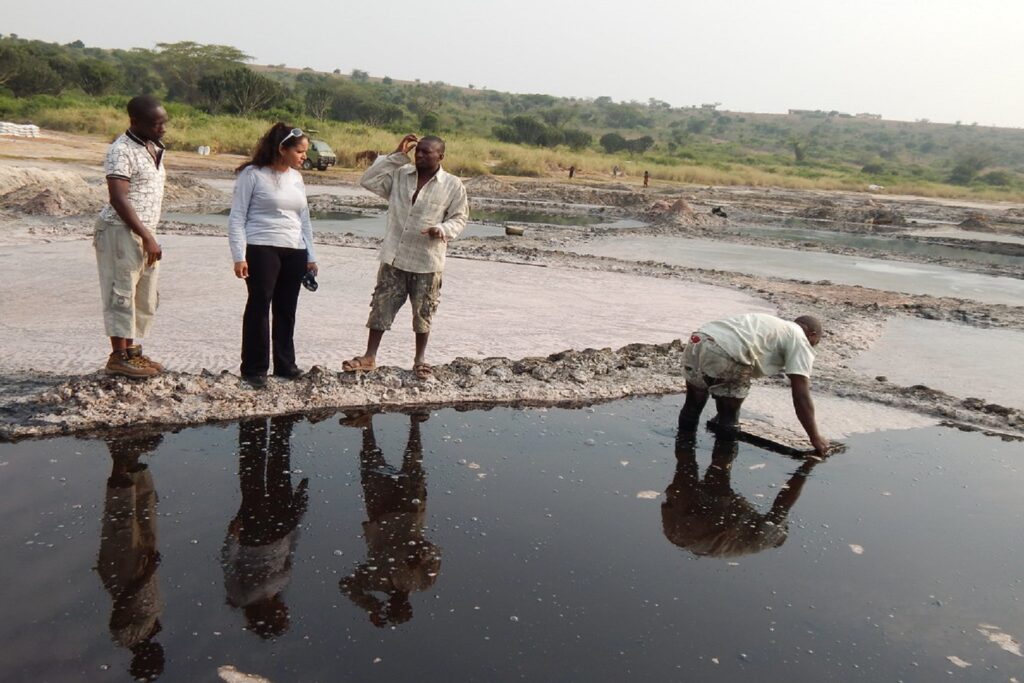
Situated in Kasese District in southwestern Uganda, Lake Katwe sits in a dramatic depression on the floor of the Western Rift Valley, approximately 800 yards from the larger Lake Edward. The lake lies roughly 95 feet below the surface level of Lake Edward, a topographic curiosity that speaks to the explosive volcanic forces that carved this region. It is ringed by crater hills, overlooked by the distant Rwenzori Mountains — the “Mountains of the Moon” — and embedded within one of East Africa’s finest wildlife sanctuaries.
For travelers on Uganda safari, a visit to Lake Katwe is far more than a sightseeing detour. It is an immersive lesson in geology, local history, environmental stewardship, and the remarkable resilience of a community whose livelihoods depend on one of the most extreme aquatic environments on Earth.
Geological Origins: Born from Volcanic Fire
Lake Katwe owes its very existence to the ancient volcanic upheaval that shaped the entire western arm of the East African Rift System. Approximately 8,000 to 10,000 years ago, a series of powerful phreatomagmatic explosions — caused when superheated magma met underground water — blasted a cluster of craters into the landscape now known as the Katwe-Kikorongo volcanic field. These are not the towering shield volcanoes of the Virunga range to the south; they are maar craters — wide, low-rimmed depressions formed by violent steam-driven explosions rather than the slow buildup of lava flows.
Lake Katwe is the largest and most economically significant of this volcanic crater cluster. The lake has no surface outlet — no river drains it into the rift valley or into Lake Edward. Instead, water enters via small seasonal streams and underground seepage, while relentless equatorial sun and hot dry winds drive intense evaporation. Over millennia, this closed-basin hydrology has concentrated salts and minerals to extraordinary levels, turning the lake into a natural brine pan.
The lake’s chemical composition is dominated by sodium chloride (common table salt), sodium carbonate (trona or soda ash), and sodium sulphate, with smaller concentrations of potassium compounds. At peak dry season, the lake’s salinity can reach approximately 13.5%, more than four times the salinity of the ocean. The color of the water shifts with the seasons — from deep pink and rust-red hues driven by halophilic (salt-loving) microorganisms and algae, to brilliant white salt crusts that glitter in the equatorial sun.
The surrounding Katwe Explosion Craters extend across the landscape, with more than 30 individual crater lakes dotting the rift floor and the Kyambura plateau. These include Lake Munyanyange — a sister crater lake famous for its flamingo colonies — Lake Kikorongo, and Lake Nyamunuka, each with its own distinctive chemistry and biodiversity. Together they form one of Uganda’s most geologically rich and visually dramatic landscapes.
A History Written in Salt: Five Centuries of Mining
The history of salt extraction at Lake Katwe is one of Uganda’s oldest and most enduring economic stories. Archaeological and oral historical records suggest that the Bakonjo and Bamba peoples — the indigenous communities of the Rwenzori foothills — were mining salt at Katwe as far back as the 16th century. Salt was an enormously valuable commodity in pre-colonial East Africa, used not only for food preservation and flavoring but as a medium of trade and barter across a vast regional network stretching from the Great Lakes to the Indian Ocean coast.
The Bakingwe people — the custodians and primary salt miners of Lake Katwe — developed sophisticated traditional methods for harvesting the lake’s mineral wealth, methods that have been refined and passed down through generations and that remain largely intact today. Their knowledge of the lake’s seasonal rhythms, its shifting salt crusts, and the best mining plots represents a form of environmental intelligence built over hundreds of years.
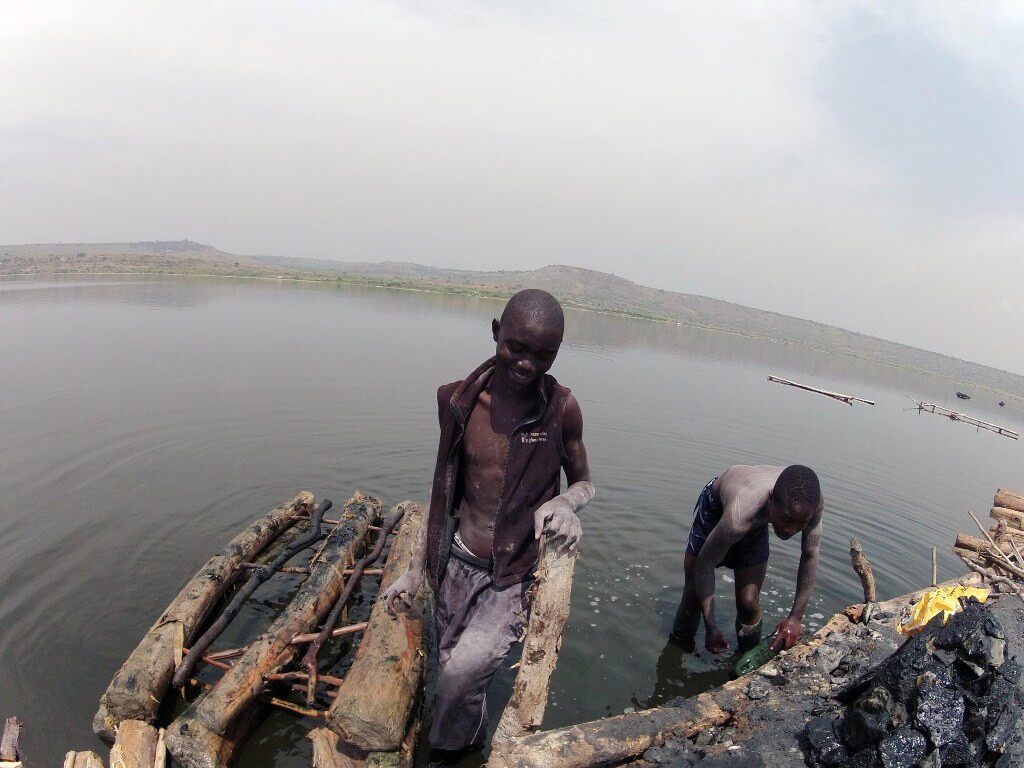
During the colonial era, British administrators recognized the economic potential of Katwe salt and established a more formalized extraction operation. A German-built salt factory was constructed at Katwe — its ruins still stand today as a monument to that industrial chapter. However, the traditional small-scale community mining never ceased, and it survived the industrial experiments to remain the dominant mode of salt production at the lake.
Today, the Katwe salt trade continues to supply markets across Uganda and neighboring countries in the region. Salt from Lake Katwe is exported to Rwanda, the Democratic Republic of Congo, and other regional markets, making it not only a cultural heritage site but an active node in East Africa’s informal economy.
How Salt Is Mined: The Traditional Process
Watching salt mining at Lake Katwe is an experience unlike anything else in East African safari travel. The process is physically demanding, visually spectacular, and deeply human — a reminder that some of Uganda’s most important industries operate not in factories or offices but in the open air, under a burning sun, by people who have inherited their craft from their grandparents and their grandparents before them.
The Mining Seasons
Salt mining at Lake Katwe is seasonal, peaking when evaporation is highest and the salt crusts are thickest. The two primary mining seasons run from January to March and from July to September — corresponding to the drier periods of Uganda’s bimodal climate. During the rainy seasons, the lake floods, the salt concentrations drop, and mining activity decreases significantly.
The Salt Gardens
The shoreline of Lake Katwe is divided into hundreds of small, privately owned salt plots — locally known as “salt gardens.” Each plot is roughly 10 by 12 feet in size and 3 to 5 feet deep. Many of these plots have been inherited within families across multiple generations, giving them an almost land-deed quality within the community’s customary tenure system.
Mining in the deeper, more central parts of the lake requires a license from the Association for Rock Salt Extraction — a community regulatory body that manages access and helps ensure sustainable, organized harvesting.
Men’s and Women’s Roles
Salt mining at Katwe is a highly gendered process, with distinct roles for men and women. Men wade into the lake using traditional floats made from ambutch wood — a buoyant local timber — to navigate the lake’s surface and transport harvested salt blocks. They use shovels and picks to cut rock-salt blocks from the lake bottom at the shallow sections, loading them onto the wooden floats for transport to shore.
Women work at the shoreline and in the salt gardens, collecting the salt crust that forms on the surface — the cleaner, finer salt destined for human consumption. They use their hands and simple tools to break up the deposits, then crush the salt crystals with their feet and wash them repeatedly in brine pools to produce the refined, edible product that reaches markets across the region.
Types of Salt Produced
Lake Katwe produces three main categories of salt: edible (washed) salt, which undergoes purification and is sold for human consumption in markets across Uganda and the region; crude or unwashed salt, which is sold as cattle salt licks and livestock minerals to farmers; and commercial crude salt, used in industrial applications, local meat tenderizing, and bean preparation. The finest, whitest crystals command the best prices and are sorted by experienced miners who can judge quality by sight, texture, and taste.
Wildlife and Ecology Around Lake Katwe
While Lake Katwe’s extreme salinity means it supports very limited aquatic life — only specialized halophilic microorganisms, bacteria, and algae survive in its brine — the broader landscape surrounding the lake is rich with wildlife characteristic of Queen Elizabeth National Park.
Birdlife
The Lake Katwe area and neighboring crater lakes form an important birding circuit. The hypersaline margins attract a variety of waterbirds and waders, including flamingos (particularly around the sister lake, Munyanyange), African skimmers, various sandpiper species, avocets, gull-billed terns, sacred ibises, and marabou storks. During the migratory seasons, Palearctic migrants add further diversity to the lake margins.
Queen Elizabeth National Park as a whole is considered one of Uganda’s premier birding destinations, with over 600 bird species recorded across the park. The crater lake area is particularly productive for birders seeking species adapted to alkaline and saline environments.
Mammals
Visitors traveling to Lake Katwe pass through or alongside the park’s wildlife areas, where the savannah and woodland habitats support an impressive diversity of large mammals. African elephants, Cape buffalo, Uganda kob (the national antelope), waterbuck, warthogs, hippos (in the nearby Kazinga Channel), leopards, and lions all inhabit the landscape around Katwe. Smaller species including mongooses, bushpigs, and monitor lizards are frequently encountered.
Crocodiles are present in the aquatic margins of the region, particularly in the Kazinga Channel which links Lake George to Lake Edward — a boat cruise on the Kazinga Channel is one of Queen Elizabeth National Park’s most celebrated wildlife experiences.
The Katwe Explosion Craters: A Volcanic Landscape
Lake Katwe is the centerpiece of a wider volcanic landscape — the Katwe Explosion Craters — that forms one of the most dramatic geological attractions in East Africa. The Crater Drive, a scenic route of approximately 27 kilometers, loops through this extraordinary terrain, passing a succession of crater lakes, each with its own color, chemistry, and character.
The drive reveals an almost lunar landscape of rounded crater rims rising above the flat rift valley floor, interspersed with acacia woodland, open grassland, and the dazzling glitter of saline lake surfaces. Key highlights along the route include Lake Munyanyange, a crater lake renowned for its colonies of lesser flamingos; Lake Nyamunuka, which offers hiking opportunities and wildlife watching for warthogs and antelope; and multiple unnamed crater lakes that add to the sense of geological abundance.
The craters are best viewed from elevated vantage points — the crater rims themselves provide panoramic perspectives across the rift valley toward Lake Edward, the Rwenzori Mountains on the Uganda-DRC border, and on exceptionally clear days, the distant Virunga volcanoes in the south. Photography from these viewpoints is exceptional at sunrise and in the late afternoon golden hour.
Tourism at Lake Katwe: What to Expect
A visit to Lake Katwe is typically included as a half-day excursion during a broader Queen Elizabeth National Park safari. The experience combines cultural tourism, community engagement, scenic driving, and geological discovery into a single compact itinerary that is accessible to all types of travelers — from dedicated cultural tourists to wildlife enthusiasts looking for context beyond the game drives.
Salt Mining Tours
Guided salt mining tours take visitors to the lake’s edge where they can watch miners at work, speak with community members, and learn firsthand about the harvesting process. Local guides explain the lake’s geology, the significance of salt in regional trade history, and the daily realities of a mining economy. Visitors are welcome to try their hand at some aspects of the process under the guidance of local workers.
Community Cultural Experiences
Beyond the lake itself, Katwe town offers a glimpse into everyday life in a working Ugandan community embedded within a national park. Craft markets along the roadside sell locally made products, providing a direct economic link between visitors and the community. Traditional music and dance performances by the Bakingwe people offer deeper cultural engagement for those interested in the heritage of the region’s indigenous communities.
Photography Opportunities
Lake Katwe offers some of the most unique and compelling photographic opportunities in Uganda. The contrasts are extraordinary: the deep pink or rust-red water against brilliant white salt crusts; the sun-weathered faces of miners against a backdrop of shimmering brine; the geometric patchwork of salt gardens extending to the water’s edge; and the wide-angle grandeur of crater rims and rift valley horizons. Early morning visits offer the best light and cooler temperatures.
Crater Drive
The 27-kilometer Crater Drive, which passes through the Katwe Explosion Craters, can be combined with the salt lake visit into a half-day or full-day excursion. The drive is scenic and wildlife-rich, with opportunities to spot kob, warthogs, and predators alongside the geological spectacle of the crater landscape. It is best done in a 4WD safari vehicle with a knowledgeable local guide.
Best Time to Visit Lake Katwe
Lake Katwe can be visited year-round, but the experience varies significantly by season:
Dry Season (June–August and December–February): The best time to witness salt mining at its peak. Evaporation is at maximum, salt crusts are thickest, and mining activity is most intense. The roads are firm and easily passable, and wildlife viewing across the broader park is excellent as animals concentrate around water sources. The heat at the lake can be extreme.
Wet Season (March–May and September–November): The lake partially floods and salt mining slows significantly. The landscape becomes lush and green, and migratory birds arrive in numbers. The Crater Drive and access roads can become muddy and challenging. This is a quieter, less visited time — better for those seeking solitude and verdant scenery.
For visitors combining Lake Katwe with a game drive and Kazinga Channel boat cruise — the classic Queen Elizabeth National Park itinerary — the June–August dry season offers the most rounded safari experience.
How to Get to Lake Katwe
Lake Katwe is located approximately 420 kilometers from Kampala, Uganda’s capital city. The journey by road takes roughly 5 to 6 hours depending on road conditions and stopping points. The main route follows the Kampala–Masaka–Mbarara highway before turning north toward Kasese and entering Queen Elizabeth National Park via the Katunguru gate or the Kasese gate.
Alternatively, domestic flights operate between Entebbe International Airport and Kasese Airport or Mweya Airstrip inside the park, reducing travel time significantly. Mweya Peninsula — the main hub for Queen Elizabeth National Park accommodation — is approximately 20 kilometers from Lake Katwe.
A 4WD vehicle is strongly recommended for navigating the park’s roads and the Crater Drive. Most visitors access the lake as part of an organized safari tour with a knowledgeable driver-guide who can enhance the experience with historical, geological, and cultural commentary.
Where to Stay: Accommodation Near Lake Katwe
Queen Elizabeth National Park offers a range of accommodation options to suit different budgets and preferences, with Mweya Peninsula — situated at the confluence of the Kazinga Channel and Lake Edward — serving as the park’s premier base.
Mweya Safari Lodge: The park’s flagship luxury lodge, operated by The Wildplaces Africa, sits on the Mweya Peninsula with spectacular views over the Kazinga Channel and Lake Edward. It is the most prestigious accommodation option in the park.
Katara Lodge: A luxury tented camp set on the escarpment above the park, offering panoramic rift valley views.
Enganzi Game Lodge: A mid-range option set among the Kyambura forest edge, offering proximity to both chimp trekking and the crater area.
Budget guesthouses are also available in Kasese town outside the park boundary, making Kasese a useful base for budget-conscious travelers combining Katwe with visits to the Rwenzori Mountains or Kibale National Park.
Conservation and Sustainability at Lake Katwe
Lake Katwe faces a range of conservation challenges that have grown more acute in recent decades. The lake sits within a national park boundary, yet the Katwe community’s right to mine salt predates the park’s establishment and is protected by customary tenure. Managing the intersection of community livelihoods, tourism development, and ecological conservation is an ongoing balancing act for the Uganda Wildlife Authority (UWA) and local governance structures.
One significant environmental concern is deforestation around the lake margins and crater rims, driven by demand for firewood used in evaporating brine to accelerate salt production. Community-led tree planting initiatives in Kasese District have made progress in restoring vegetation cover around the salt lake catchment and neighboring forests — a development that has helped stabilize water flows and reduced erosion into the lake.
The Association for Rock Salt Extraction plays a critical role in managing mining licenses and promoting sustainable extraction practices, ensuring that the lake’s resources are not depleted by overexploitation. Environmental monitoring programs, run in partnership with Ugandan academic institutions and international conservation organizations, track changes in the lake’s salinity, water levels, and microbial communities.
Responsible tourism plays a role here too. Visitor fees and community-based tourism revenues help fund conservation programs and provide economic alternatives to unsustainable resource extraction. Travelers who engage with Lake Katwe through licensed tour operators and community guides contribute directly to the long-term sustainability of this irreplaceable cultural and natural landscape.
Lake Katwe in the Context of Queen Elizabeth National Park
Queen Elizabeth National Park is Uganda’s most visited national park and one of the most biologically diverse protected areas on the African continent. Established in 1952 and covering approximately 1,978 square kilometers, the park spans the floor of the Western Rift Valley, taking in savannah grasslands, tropical forest patches, wetlands, and the Rwenzori Mountain foothills.
The park is famous for its tree-climbing lions of the Ishasha sector in the south; its chimpanzee trekking in the Kyambura Gorge; the Kazinga Channel boat cruise, one of the finest wildlife spectacles in Africa; and its extraordinary bird diversity of over 600 recorded species. Lake Katwe and the Explosion Craters represent the park’s geological crown jewel — a dimension of the park that most visitors encounter but fewer fully appreciate.
Adding Lake Katwe to a Queen Elizabeth National Park itinerary transforms a wildlife safari into something richer and more layered — a journey that encompasses the park’s natural history, its volcanic origins, the deep cultural roots of its surrounding communities, and the complex interplay between conservation and human livelihood that defines protected area management across East Africa.
Practical Tips for Visiting Lake Katwe
Wear protective clothing: The lake’s brine is caustic and can irritate exposed skin. Close-toed shoes and long trousers are advisable if you plan to walk near the shoreline.
Bring sun protection: Lake Katwe lies in one of Uganda’s hottest zones. The reflective salt surface intensifies UV exposure. Bring sunscreen, sunglasses, and a wide-brimmed hat.
Respect the miners: Salt mining is not a performance — it is hard, poorly paid labor that sustains families. Always ask permission before photographing individuals, treat workers with respect, and consider purchasing salt or local crafts as a way of directly supporting the community.
Go early: Morning visits offer better photography light, cooler temperatures, and more active wildlife in the surrounding landscape. The lake is at its most atmospheric in the early hours when mist still clings to the crater rims.
Use a licensed guide: Local guides add enormous value to the experience — explaining the geology, the mining process, community history, and birdlife in ways that a self-guided visit cannot replicate.
Combine with nearby attractions: Lake Katwe pairs naturally with the Kazinga Channel boat cruise, a game drive in the northern sector, and the Crater Drive. For the complete Queen Elizabeth National Park experience, consider also adding chimp trekking in Kyambura Gorge and tree-climbing lion tracking in Ishasha.
Conclusion: Why Lake Katwe Belongs on Your Uganda Safari
In a country overflowing with natural wonders — mountain gorillas in Bwindi, chimpanzees in Kibale, the mighty Nile at Murchison Falls — Lake Katwe occupies a unique and underappreciated place. It is not a spectacle of megafauna or primate behavior. It is something subtler and in many ways more profound: a living record of geology, history, and human adaptation inscribed in salt.
The lake reminds us that Africa’s national parks are not empty wilderness. They are inhabited landscapes with deep cultural roots, where people and nature have coexisted, competed, and adapted for thousands of years. Lake Katwe is a rare place where you can stand at the intersection of volcanic geology, medieval trade history, and 21st-century conservation — and see all three playing out simultaneously.
Whether you are a first-time visitor to East Africa or a seasoned safari traveler returning to Uganda, make time for Lake Katwe. It is one of those rare travel experiences that stays with you long after you have left — the taste of brine in the air, the glitter of salt crystals in the sun, and the sight of a community going about an ancient trade in one of the most beautiful landscapes on the continent.