Lake Kariba & Matusadona National Park
Lake Kariba & Matusadona National Park, Few places in Africa blend water and wilderness quite like Lake Kariba and Matusadona National Park in northern Zimbabwe. Picture elephants wading through shallow bays at sunset, buffalo grazing on lush shoreline grasslands, hippos grunting beside the skeletal silhouettes of drowned mopane trees, and the rugged Matusadona Mountains glowing red as the sun sinks into what feels like an inland ocean. This is a safari destination that feels entirely different from the classic savannah parks of East and Southern Africa.
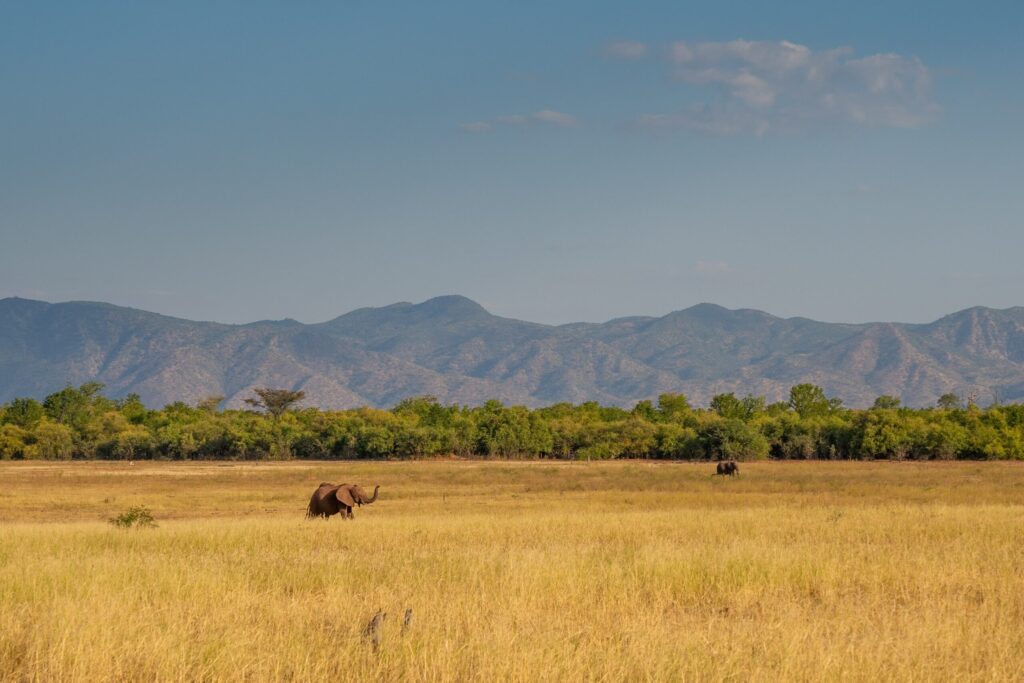
Lake Kariba is one of the largest man-made lakes in the world, created when the Kariba Dam was built across the Zambezi River in the late 1950s. As the waters rose, thousands of animals were rescued in a legendary operation, and much of the wildlife that remained on the southern shore became the heart of Matusadona National Park, proclaimed in 1975. Today the park is managed by African Parks in partnership with the Zimbabwe Parks and Wildlife Management Authority (ZimParks) under a 20-year agreement signed in 2019, and it is enjoying an exciting conservation revival.
This guide covers everything you need to plan your trip: how to get to Lake Kariba and Matusadona, the main attractions, the best things to do, what to expect on a game drive, where to stay across every budget, and the latest 2026 ZimParks entrance fees.
| Quick Facts: Lake Kariba & Matusadona
Country: Zimbabwe (Mashonaland West Province), on the border with Zambia Park size: Approximately 1,400 sq km of lakeshore, valley floor and escarpment Proclaimed: 1975; managed by African Parks with ZimParks since 2019 Lake Kariba: Roughly 220 km long and up to 40 km wide, shared with Zambia Nearest town: Kariba town, at the eastern end of the lake beside the dam wall Big draws: Boat safaris, elephant and buffalo on the shoreline, tigerfishing, houseboats, legendary sunsets Best time to visit: May to October (dry season) International conservation fee (2026): US$24 per person per day |
Overview of Lake Kariba & Matusadona National Park
The Story of Lake Kariba
Construction of the Kariba Dam began in 1955 in the Kariba Gorge on the Zambezi River, and when the floodgates closed the water spread across the middle Zambezi Valley over several years. The rising lake stranded countless animals on shrinking islands, which led to Operation Noah (1958 to 1964), a rescue effort in which game rangers captured and relocated thousands of animals, from antelope and snakes to rhinos, to the mainland. Many of those animals found refuge on the southern shore, in what is now Matusadona.
The flooding also displaced the Tonga people who had lived along the river for generations. Their river god, Nyaminyami, a serpent-like spirit said to guard the Zambezi, remains a powerful symbol in Kariba today, and you will see carved Nyaminyami walking sticks and sculptures throughout the region.
Matusadona’s Three Landscapes
Matusadona is bordered by Lake Kariba to the north and flanked by the Ume River in the west and the Sanyati River in the east. Its dramatic scenery falls into three distinct zones:
- The lakeshore and grasslands: When the lake level drops in the dry season, nutritious torpedo grass carpets the exposed shoreline, drawing large herds of buffalo, elephant, waterbuck and impala, with lions following close behind.
- The Zambezi Valley floor: Dense jesse thickets and mopane woodland shelter elephants from the midday heat and hide shy browsers such as kudu and bushbuck.
- The escarpment: The rugged Matusadona Mountains rise sharply behind the valley, clothed in miombo woodland and home to klipspringer and leopard.
A Park in Revival
Since African Parks took over management, Matusadona has seen stronger anti-poaching operations, community programmes and new species introductions. According to African Parks, 20 African wild dogs were translocated into the park in February 2026 after years of local extinction, and a group of critically endangered black rhino was introduced in June 2026. Matusadona was historically an Intensive Protection Zone for black rhino, so their return is a landmark moment for the park and a strong reason to visit now.
How to Get to Lake Kariba & Matusadona National Park
Getting to Matusadona is part of the adventure. The park is remote, with a rough road network and no public bridges across the lake, so most visitors arrive by a combination of air or road to Kariba town, followed by a boat transfer across the lake. Here are your options.
1. By Air
Scheduled flights to Kariba: Kariba Airport sits just outside Kariba town. Domestic carriers such as Fastjet have operated routes connecting Kariba with Harare and Victoria Falls, and light-aircraft operators such as Mack Air and Safari Logistics offer seat-rate flights between Zimbabwe’s main safari destinations during the safari season. Schedules change, so always confirm current routes when booking.
Charter flights to bush airstrips: There are no scheduled flights into the park itself, but light-aircraft charters can land at airstrips in or next to Matusadona, including Bumi Hills and the small airstrip at Tashinga, the park headquarters. From Victoria Falls, the flight to Bumi Hills takes roughly an hour and a quarter. Lodges then collect you by boat or 4×4.
2. By Road from Harare to Kariba Town
Kariba town is around 355 to 365 km from Harare on a fully tarred road. Leave Harare on the Chirundu road, drive through Chinhoyi and Karoi, and turn left at Makuti (about 295 km from Harare) before descending the escarpment to Kariba. Allow 5 to 6 hours including stops. Private road transfers can be arranged if you are not self-driving. From Kariba you will need a boat transfer to reach the park.
3. By Boat from Kariba Town
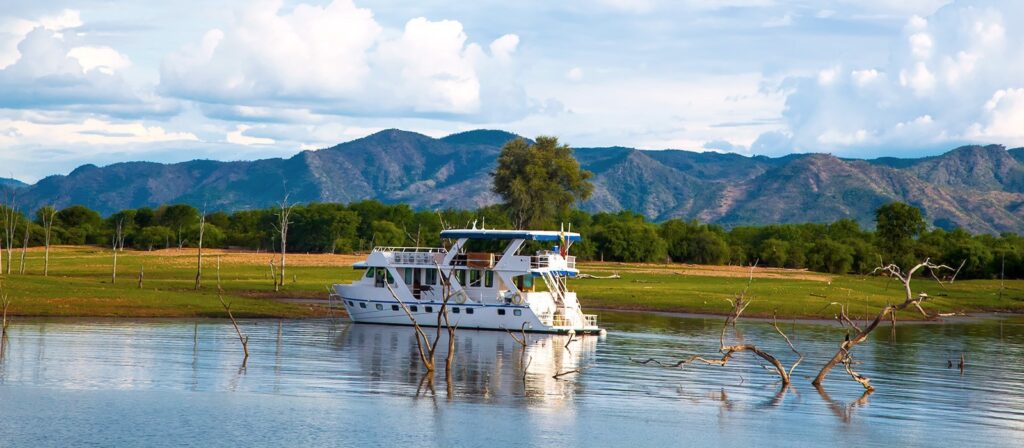
This is how most travellers reach Matusadona. Lodges arrange speedboat transfers from Kariba’s harbours (such as Marineland) across the lake to their camps. The eastern edge of the park lies only around 18 km from Kariba town, although transfer times to individual camps vary from about 45 minutes to 2 hours depending on location and lake conditions. Speedboat charters can also be arranged to Tashinga, and slower ferry charters are available for travellers bringing vehicles or larger groups.
4. Self-Drive by 4×4 via Karoi
For adventurous self-drivers, the overland route is possible but demanding. Turn off the main Harare–Chirundu road about 8 km north of Karoi and follow gravel and dirt roads through communal land, crossing the Sanyati River roughly 115 km from Karoi. Continue along the Binga road before turning off for the final, very rough stretch to Tashinga. The trip can take a full day, a high-clearance 4×4 is essential, and the roads are generally impassable in the rainy season (November to March) and can remain difficult into April and May after heavy rains.
5. The Kariba Ferry from Mlibizi
If you are driving from Victoria Falls or Hwange, the long-running Kariba Ferry offers a memorable alternative. It carries vehicles and passengers the length of the lake between Mlibizi in the west and Kariba town in the east in roughly 22 hours, with meals served on board. Sailings are infrequent, so book well in advance and confirm the schedule.
| Route | Distance / Time | Best For | Notes |
| Harare → Kariba (road) | ~355–365 km / 5–6 hrs | Self-drivers, budget travellers | Tarred all the way; fuel at Chinhoyi and Karoi |
| Kariba → Matusadona camps (boat) | 45 min – 2 hrs | Most visitors | Arranged by lodges; weather dependent |
| Victoria Falls → Bumi Hills (charter) | ~1 hr 15 min | Time-limited or luxury travellers | Combine with Hwange and Mana Pools |
| Harare/Vic Falls → Kariba (flight) | ~1 hr | Fly-in safaris | Confirm current schedules |
| Karoi → Tashinga (4×4) | Full day | Experienced 4×4 drivers | Dry season only; carry spares and fuel |
| Mlibizi → Kariba (ferry) | ~22 hrs | Overlanders with vehicles | Limited sailings; book early |
| Marriott Safaris Africa Tip
For most travellers the smoothest option is to fly or drive to Kariba town and let your lodge handle the boat transfer. If you are on a self-drive safari, leave your vehicle securely parked in Kariba and cross by boat rather than tackling the Karoi route, unless you have serious 4×4 experience and at least two or three nights to spend in the park. |
Top Attractions in Lake Kariba & Matusadona National Park
Kariba Dam Wall
The 128-metre-high, 579-metre-long concrete arch dam that created the lake is an engineering marvel. You can view it from the Zimbabwe side (the Zimbabwe–Zambia border post sits beside it), and the observation point offers striking views down the Kariba Gorge. Photography rules can be strict here, so ask before taking pictures.
The Drowned Forests
Perhaps the most iconic image of Kariba: the bleached, silver skeletons of trees that drowned when the valley flooded. They stand in the shallows along the Matusadona shoreline and make an unforgettable foreground for sunset photographs, often with fish eagles perched on top.
Sanyati Gorge
On the eastern boundary of the park, the Sanyati River cuts a narrow, steep-sided gorge into the escarpment. A boat trip up the gorge takes you between towering rock walls into quiet, clear water where you might spot klipspringer on the cliffs and crocodiles on the banks.
Matusadona Mountains & Escarpment
The jagged range behind the valley gives Matusadona its dramatic backdrop. The escarpment is wild, rarely visited and ideal for adventurous walks with an armed guide.
Tashinga
The headquarters of Matusadona on the western side of the park, set near the Ume River mouth. It has a ZimParks camp, an airstrip and good surrounding game viewing, and it is historically linked to the park’s black rhino programme.
Ume River & Western Shoreline
The western boundary river and its surrounding bays are excellent for boat-based game viewing, fishing and birding, with hippo pods and elephants frequently seen along the banks.
Bumi Hills
A high ridge on the western side of the lake, just beyond the park, offering sweeping panoramas over Kariba. It is home to one of the lake’s best-known safari lodges and an airstrip used by many fly-in guests.
Islands of Lake Kariba
Islands such as Spurwing, Fothergill and the islands near Musango are peaceful bases for exploring the park, with excellent birdlife and wildlife that often crosses from the mainland in the dry season.
Kariba Town Viewpoints & Heritage
Kariba Heights offers panoramic views over the lake. The Church of Santa Barbara, built in memory of workers who died during the dam’s construction, and stories of Operation Noah and the river god Nyaminyami add history and culture to your visit.
Things to Do in Lake Kariba & Matusadona National Park
What sets this destination apart is the mix of water and land activities. Most camps combine morning game drives or walks with afternoon boat trips, so you can experience the park from every angle.
Boat Safaris
The signature Kariba experience. Drifting slowly along the shoreline lets you approach elephants, buffalo, hippos and crocodiles quietly and photograph them at eye level. Afternoon boat cruises often end with sundowners among the drowned trees.
Tigerfishing
Lake Kariba is one of Africa’s top destinations for tigerfish, a hard-fighting predatory fish with fearsome teeth. Catch-and-release is encouraged. Bream (tilapia) and vundu catfish are also popular targets. The annual Kariba International Tiger Fishing Tournament draws anglers from across the region.
Houseboat Safaris
Hiring a houseboat is a classic Zimbabwean holiday. You cruise the lake with a crew, anchor in quiet bays off Matusadona, fish and game-view from tender boats, and fall asleep under the stars. Options range from simple self-catering boats to fully crewed luxury cruisers.
Walking Safaris
Guided walks with professional armed guides let you track animals on foot, learn about plants and tracks, and experience the bush at its most intimate. Matusadona’s guiding reputation is excellent, and walks along the shoreline and into the valley are highly rewarding.
Canoeing
Some camps offer canoe trips in sheltered bays and inlets. Paddling silently past grazing elephants is thrilling, though your guide will always manage distances from hippos and crocodiles carefully.
Birdwatching
More than 350 bird species have been recorded around Matusadona. Look for African fish eagles, goliath herons, African skimmers, open-billed storks, pied and malachite kingfishers, and a wide variety of raptors. Migrant species arrive from around November.
Sunset Cruises & Sundowners
Kariba sunsets are legendary. The combination of vast water, silhouetted dead trees and the mountain backdrop creates some of the most photographed skies in Africa.
Cultural & Community Visits
Learn about the Tonga people, the story of their displacement and the legend of Nyaminyami. Visits to local craft centres around Kariba support community livelihoods.
Kapenta Fishing Rigs by Night
After dark, the lights of kapenta fishing boats twinkle across the lake like a floating city. These small sardine-like fish support a major local industry, and some tours explain how it works.
Photography Safaris
With low-angle boat photography, dramatic skies and dense wildlife on the shoreline in the dry season, Matusadona is a favourite with wildlife photographers.
Game Drives in Lake Kariba & Matusadona National Park
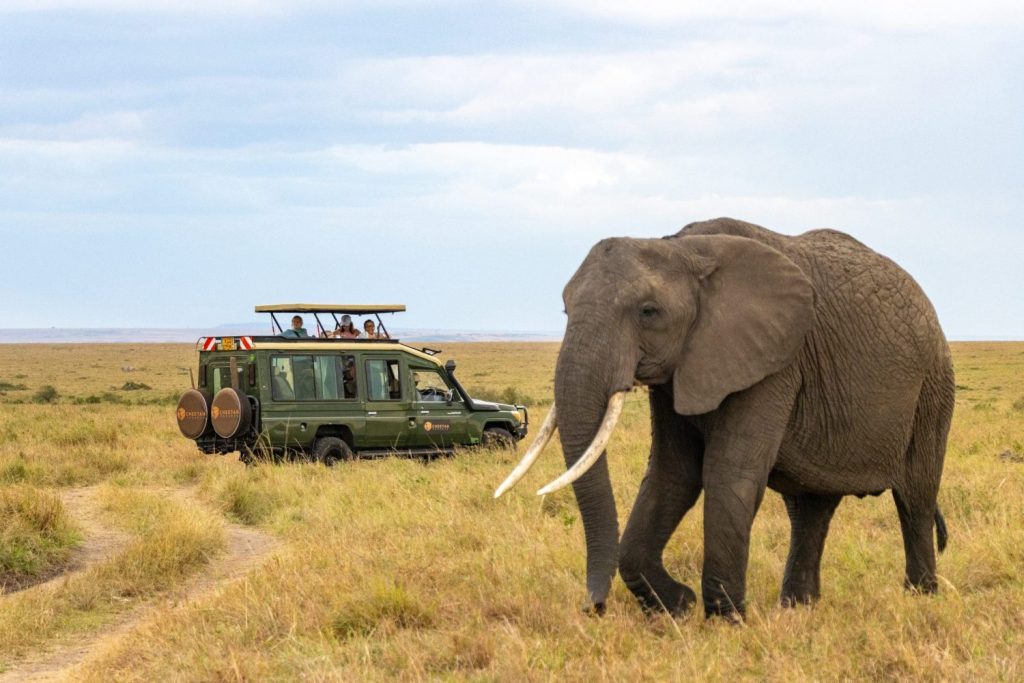
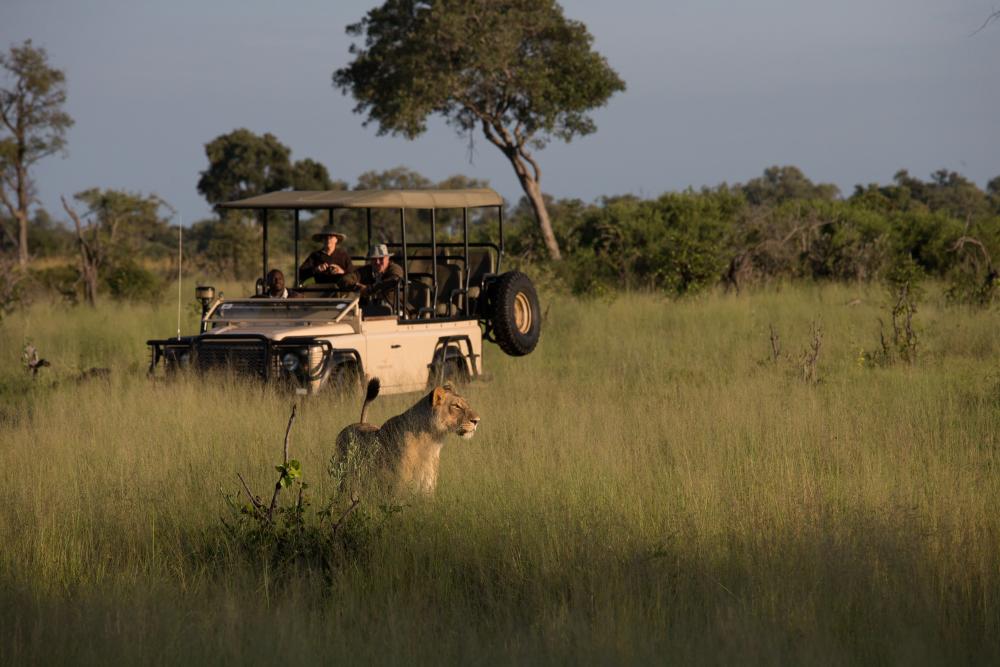
While boats steal the spotlight, game drives in Matusadona are a genuine highlight. The park’s rough roads and low visitor numbers mean you will rarely share a sighting, and the dry-season shoreline grasslands concentrate wildlife in open, easy-to-view areas.
What to Expect
- Morning drives usually depart around sunrise (roughly 6:00 am) and last 3 to 4 hours, returning for brunch. This is prime time for predators and active herds before the heat builds.
- Afternoon drives leave around 3:30 to 4:00 pm and often end with sundowners on the lakeshore, returning at or shortly after dusk.
- Vehicles are open 4×4 safari vehicles driven by experienced professional guides. Lodges on private concessions, such as Changa, run drives on their own tracks for greater exclusivity.
- Combination activities are common: many camps offer a drive in the morning and a boat trip in the afternoon, or a mixed drive-and-walk outing.
Wildlife You Can See
| Wildlife | Where & When | Sighting Likelihood |
| Elephant | Shoreline, bays and jesse thickets; year-round | Very high |
| Buffalo | Shoreline grasslands, especially in the dry season | Very high |
| Hippo & Crocodile | Bays, river mouths and the lake edge | Very high |
| Lion | Shoreline grasslands following buffalo herds | Good |
| Leopard | Escarpment, rocky areas and thickets | Moderate (elusive) |
| African Wild Dog | Reintroduced in February 2026; range still establishing | Occasional |
| Black Rhino | Reintroduced in June 2026; closely protected | Rare |
| Antelope (waterbuck, impala, kudu, bushbuck, eland) | Throughout the park | Very high |
| Zebra & Warthog | Open shoreline areas | High |
| Birds (350+ species) | Everywhere; best from November to April for migrants | Excellent |
Guided vs Self-Drive Game Drives
Self-driving inside Matusadona is possible for experienced 4×4 travellers staying at ZimParks camps such as Tashinga, but the internal roads are rough, poorly signposted in places and closed in the rains. Most visitors find that guided drives offer far better sightings, because guides know where the predators are, understand animal behaviour and handle the tricky terrain safely.
| Game Drive Tips
Wear neutral colours (khaki, olive, brown) and bring a warm layer for early mornings from May to August. Carry binoculars, a camera with a zoom lens, sunscreen, a hat and water. Stay seated and quiet near animals, never stand up in the vehicle, and always follow your guide’s instructions. Ask your lodge about combining a drive with a walking safari for the most complete Matusadona experience. |
Where to Stay in Lake Kariba & Matusadona National Park
Accommodation ranges from intimate luxury camps on the park shoreline and private islands to houseboats, Kariba town hotels and simple ZimParks campsites. Staying inside or on the edge of Matusadona gives the best wildlife experience, while Kariba town is ideal for budget travellers and anglers.
Luxury Lodges & Camps
Bumi Hills Safari Lodge: Perched high on the Bumi Hills ridge on the western side of the lake, this is the most upmarket and substantial lodge in the area, known for sweeping views and one of the most photographed infinity pools in Zimbabwe. Activities include boat safaris, game drives, fishing and visits to nearby community projects.
Changa Safari Camp: Set on a private concession inside Matusadona with several kilometres of lake frontage, Changa has just eight luxury tents (including a family option) with en-suite bathrooms and outdoor showers. It offers game drives on its private tracks, walks with professional guides and boat activities, all in a relaxed, romantic beachfront setting. Minimum age policies may apply, so check when booking.
MV Matusadona: A luxury three-deck motor cruiser with wood-panelled cabins, offering private charters around the lake with game viewing by tender boat, fishing and optional shore-based activities. Guests typically board at Marineland Harbour in Kariba town or at Bumi Hills.
Mid-Range Lodges & Camps
Musango Safari Camp: An owner-run island camp founded by Steve Edwards, a former head warden of Matusadona. Musango is famed for outstanding guiding, social dining and excellent birding. Unusually, it does not charge single supplements, making it a favourite with solo travellers.
Rhino Safari Camp: A simple, secluded camp on the shoreline overlooking Matusadona, reached by boat from Kariba or nearby airstrips. Great guiding and a flexible programme of drives, walks, boat trips and bush picnics make it good value.
Spurwing Island: A long-established lodge on an island just off the Matusadona shoreline, offering chalets and tents, boat safaris and fishing, with easy boat access from Kariba town.
Budget Options, Camping & Kariba Town
ZimParks camps inside Matusadona: The park has campsites at Tashinga, Sanyati and Changachirere, plus undeveloped bush camps and exclusive campsites (such as Ume, Muuyu, Mbalabala, Maronga and Kautsiga). Facilities are basic, so you must be fully self-sufficient. Book through ZimParks well in advance.
Nyanyana Camp (Kariba): A ZimParks campsite and lodge near Kariba on the lakeshore, popular with self-drivers and a practical overnight stop before crossing to Matusadona.
Kariba town hotels and lodges: Kariba has a range of hotels, resorts, lodges and backpacker-style camps around the harbours and Kariba Heights, ideal for travellers on a budget or those planning fishing trips and houseboat departures.
Self-catering houseboats: Sharing a houseboat with friends or family can be surprisingly affordable per person and places you right on the Matusadona shoreline.
| Accommodation | Style | Location | Best For |
| Bumi Hills Safari Lodge | Luxury lodge | Bumi Hills, west of the park | Couples, honeymooners, comfort seekers |
| Changa Safari Camp | Luxury tented camp | Private concession inside park | Exclusivity, romance, land and water |
| MV Matusadona | Luxury cruiser | Moves around the lake | Families, private groups |
| Musango Safari Camp | Mid-range island camp | Island, western Matusadona | Solo travellers, birders |
| Rhino Safari Camp | Mid-range camp | Shoreline facing the park | Value with great guiding |
| Spurwing Island | Mid-range island lodge | Off the Matusadona shoreline | Families, anglers |
| Houseboats | Budget to luxury | On the lake | Groups, fishing trips |
| Tashinga / Sanyati camps | ZimParks camping | Inside the park | Self-sufficient 4×4 travellers |
| Nyanyana Camp | ZimParks camping & lodge | Near Kariba town | Budget self-drivers |
| Rates Note
Lodge rates vary widely by season and package. As a guide, simpler shoreline camps such as Rhino Safari Camp have been advertised from around US$150 to US$400 per person sharing per night, while luxury lodges and private cruisers cost considerably more. Rates usually include meals and activities but may exclude park fees, transfers and drinks. Contact Marriott Safaris Africa for a current quote. |
Lake Kariba & Matusadona National Park Entrance Fees (2026)
Park fees are set by ZimParks and were revised in its 2026 tariff schedule, with VAT now included in the published rates. Fees are charged per person per day in US dollars. Visitors are grouped as Local (Zimbabwean), SADC (citizens of Southern African Development Community countries) and International. All prices are pegged in US dollars, although local clients may pay in local currency at the prevailing rate.
Daily Conservation Fees (per person per day)
| Park / Station | Local | SADC | International |
| Matusadona National Park (day visitor) | US$10 | US$18 | US$24 |
| Matusadona National Park (accommodated) | US$10 | US$18 | US$24 |
| Ume / Sanyati (fishing included, day visitor) | US$15 | US$24 | US$30 |
| Kariba Recreational Park (day visitor) | US$5 | US$10 | US$12 |
| Kariba Recreational Park (accommodated) | US$2 | US$4 | US$5 |
Vehicle Entry Fees: Matusadona (per vehicle)
| Vehicle Type | Locally Registered | Foreign Registered |
| Saloon, pickup or 4×4 vehicle | US$2 | US$5 |
| Minibus (up to 25 seats) | US$5 | US$10 |
ZimParks Camping & Accommodation Around Kariba
| Facility | Local | International |
| Nyanyana (Kariba) camping, per person per night | US$8 | US$12 |
| Nyanyana lodge, 3 bedrooms / 6 beds, per night | US$110 | US$150 |
| Matusadona exclusive and bush campsites | Varies | Confirm with ZimParks |
| Important Fee Notes
Fees are drawn from the ZimParks 2026 de-gazetted tariff schedule and are inclusive of VAT. ZimParks has adjusted fees at short notice before, so always confirm current rates with ZimParks or your operator before travel. If you stay at a lodge, park fees are often added to your bill or included in your package. Accommodated guests at ZimParks facilities must pay conservation fees in advance. Fishing in some areas may require separate permits, and houseboat operators usually handle lake-related fees for guests. Check what is included when booking. Visas: Many nationalities can obtain a Zimbabwe visa on arrival or an e-visa, and the KAZA Univisa covers both Zimbabwe and Zambia. Check the latest requirements for your passport before travel. |
Best Time to Visit Lake Kariba & Matusadona
| Season | Months | What to Expect |
| Early dry season | April – June | Green landscapes, cooler days, roads reopening; good all-round conditions |
| Peak dry season | July – October | Best game viewing as animals gather on the shoreline; warm to very hot in October |
| Early rains | November – December | Dramatic storms, migrant birds, fewer visitors; interior roads start to close |
| Wet season | January – March | Lush and green, excellent birding, lower rates; road access very limited, boat access continues |
For game drives and classic safari sightings, July to October is best. Tigerfishing is good for much of the year, with the warmer months from around September to December especially popular. Because boats remain the main way in, Lake Kariba itself can be visited all year round.
Sample 4-Day Lake Kariba & Matusadona Itinerary
| Day | Plan |
| Day 1 | Fly or drive to Kariba town. Visit the dam wall viewpoint, then take a boat transfer across the lake to your Matusadona camp. Sunset cruise among the drowned forests. |
| Day 2 | Early morning game drive on the shoreline grasslands. Afternoon boat safari to watch elephants and buffalo at the water’s edge, with sundowners on the lake. |
| Day 3 | Guided walking safari at dawn. Midday rest and birdwatching. Afternoon boat trip up the Sanyati Gorge or a tigerfishing session. |
| Day 4 | Final morning drive or canoe outing, then boat transfer back to Kariba and onward travel, or connect by charter to Mana Pools, Hwange or Victoria Falls. |
Packing & Safety Tips
- Light, neutral-coloured clothing, plus a fleece or jacket for chilly boat rides and early mornings in winter.
- Wide-brimmed hat, sunglasses and high-SPF sunscreen, as sun reflection off the lake is intense.
- Insect repellent and malaria prophylaxis: Kariba is a malaria area, so consult a travel health professional before your trip.
- Binoculars, a camera with a zoom lens, spare batteries and a dry bag for boat activities.
- Never swim in Lake Kariba: crocodiles and hippos are common along the shoreline.
- Camps are unfenced, so animals can walk through at any time. Always follow staff instructions, especially after dark.
- Self-drivers should carry extra fuel, two spare tyres, recovery gear, water and a satellite communicator, as mobile signal is patchy or absent in the park.
Book Your Lake Kariba & Matusadona Safari with Marriott Safaris Africa
Planning a trip to this remote corner of Zimbabwe involves coordinating flights, road transfers, boat crossings and park fees. Marriott Safaris Africa takes care of every detail so you can simply enjoy the experience.
- Share your plans: Tell us your travel dates, group size, budget and interests, such as fishing, photography or a honeymoon.
- Receive a tailored itinerary: We design a Kariba and Matusadona trip that can be combined with Victoria Falls, Hwange, Mana Pools or neighbouring countries.
- Confirm and relax: We secure lodges, transfers and park fees, and support you before and during your trip.
Frequently Asked Questions
Where are Lake Kariba and Matusadona National Park?
In northern Zimbabwe on the border with Zambia. Matusadona lies on the southern shore of Lake Kariba, west of Kariba town.
How do I get to Matusadona National Park?
Most visitors fly or drive to Kariba town and take a boat transfer across the lake. Charter flights to Bumi Hills or Tashinga are also available, and experienced self-drivers can use the rough 4×4 route via Karoi in the dry season.
How much is the entrance fee for Matusadona National Park?
Under the ZimParks 2026 tariff, the daily conservation fee is US$24 for international visitors, US$18 for SADC citizens and US$10 for Zimbabwean residents. Vehicle entry for foreign-registered cars is US$5 per day.
Can you see the Big Five in Matusadona?
Elephant, buffalo, lion and leopard all occur in the park, and black rhino were reintroduced in June 2026, although rhino sightings are rare.
What is the best time to visit Lake Kariba?
The dry season from May to October is best for game viewing, with the peak from July to October. The lake itself can be visited year-round.
Can I do game drives in Matusadona?
Yes. Lodges offer guided morning and afternoon game drives, often combined with boat safaris and walking safaris.
Is it safe to swim in Lake Kariba?
No. The lake is home to large numbers of crocodiles and hippos, so swimming is strongly discouraged.
How many days should I spend in Matusadona?
Plan at least 2 to 3 nights to enjoy both land and water activities, or longer if you drive in by road or want to fish.
| Ready for Your Kariba Adventure?
Contact Marriott Safaris Africa today to start planning your Lake Kariba and Matusadona safari. Perfection Anytime. |