Kafue National Park, Zambia
Kafue National Park, Covering roughly 22,400 square kilometres of woodland, riverine forest, dambo grassland and seasonal floodplain, Kafue National Park is Zambia’s oldest and largest protected area, and one of the biggest national parks on the African continent. It is about the size of Wales or Slovenia, yet it receives only a fraction of the visitors that crowd better-known parks elsewhere in Southern and East Africa. For travellers, that means long, uninterrupted sightings, empty roads and the feeling of having a genuine wilderness almost to yourself.
Kafue rewards the curious. In the north, the Busanga Plains flood each wet season and then dry into a golden sea of grass where lions stalk red lechwe and puku, and cheetah hunt in the open. Through the centre, the wide Kafue River and its tributaries, the Lunga and Lufupa, carve green corridors lined with hippo pools, crocodile banks and some of the best leopard country in Zambia. In the south, the vast Lake Itezhi-Tezhi glitters against hills and baobabs, and the remote Nanzhila Plains host roan, sable and Lichtenstein’s hartebeest.
This guide covers everything you need to plan a Kafue safari in 2027: the park’s history and geography, its wildlife and birdlife, the best time to visit month by month, how to get there by road or air, current entry fees, accommodation from riverside campsites to luxury tented camps, sample itineraries, self-drive advice, health and safety, packing, and answers to the most common questions.
| Kafue in One Sentence
A huge, uncrowded, wildlife-rich park, close enough to Lusaka for a road trip, wild enough for true explorers, and one of the best places in Zambia to see leopard, cheetah and the remarkable antelope diversity of the Zambezian woodlands. |
Kafue National Park at a Glance
| Feature | Details |
| Country / location | Central-western Zambia, spanning Central, Southern, Western and North-Western provinces |
| Size | Approximately 22,400 km² (more than 60,000 km² including surrounding Game Management Areas) |
| Established | Proclaimed in 1950; Zambia’s oldest national park |
| Management | Department of National Parks and Wildlife (DNPW) in partnership with African Parks |
| Key areas | Busanga Plains (north), Kafue & Lunga rivers (central), Lake Itezhi-Tezhi and Nanzhila Plains (south) |
| Signature wildlife | Lion, leopard, cheetah, African wild dog, elephant, buffalo, hippo, red lechwe, puku, sable, roan |
| Antelope species | About 21, among the highest counts of any African park |
| Bird species | Around 500 recorded |
| Best time to visit | June to October (dry season); Busanga Plains roughly July to early November |
| Entry fee (international) | US$20 per person per day |
| Nearest city | Lusaka, roughly 200 km east of the eastern (Nalusanga) gate |
| Transfrontier link | Part of the Kavango–Zambezi (KAZA) Transfrontier Conservation Area |
History and Conservation
The Kafue area was protected as a game reserve before being proclaimed a national park in 1950, making it the oldest national park in what is now Zambia. Its sheer size was intended to safeguard the full sweep of the Kafue River basin, from the floodplains of the north to the hills and woodlands of the south.
Like many African parks, Kafue suffered heavily from poaching in the late twentieth century, and some species declined sharply. In the decades since, a combination of government protection, private safari operators, community programmer and conservation partners has helped wildlife recover. The construction of the Itezhi-Tezhi Dam in the 1970s created the lake that now defines the southern sector and supports excellent boating and fishing.
In 2022, the Zambian government and African Parks signed a long-term partnership to manage Kafue alongside DNPW. The focus is on law enforcement, anti-poaching, infrastructure such as roads and ranger posts, community engagement in the surrounding Game Management Areas, and long-term wildlife monitoring. Kafue is also a key component of the KAZA Transfrontier Conservation Area, which links protected areas across Zambia, Zimbabwe, Botswana, Namibia and Angola.
| Your Visit Makes a Difference
Park fees, lodge levies and community-based tourism directly fund ranger patrols, wildlife monitoring and local livelihoods. Choosing Kafue over overcrowded parks helps prove that wilderness tourism can pay for conservation. |
Geography: Understanding Kafue’s Three Regions
The M9 highway between Lusaka and Mongu crosses the park from east to west, crossing the Kafue River at Hook Bridge. This main road divides Kafue into distinct northern and southern sections, each with its own character and access routes.
Northern Kafue and the Busanga Plains
The far north is home to the Busanga Plains, roughly 750 km² of seasonally flooded grassland fed by the Lufupa River and dotted with tree islands of wild date palm and fig. During the rains, much of Busanga lies underwater; as the floods recede from around June, the plains open into one of the finest big-game spectacles in Zambia. Herds of red lechwe and puku graze in their thousands, lions patrol the open country, cheetah hunt, and the swampy fringes hide sitatunga. Busanga is reached only in the dry season, typically from about July until early November.
Central Kafue: The River Heartland
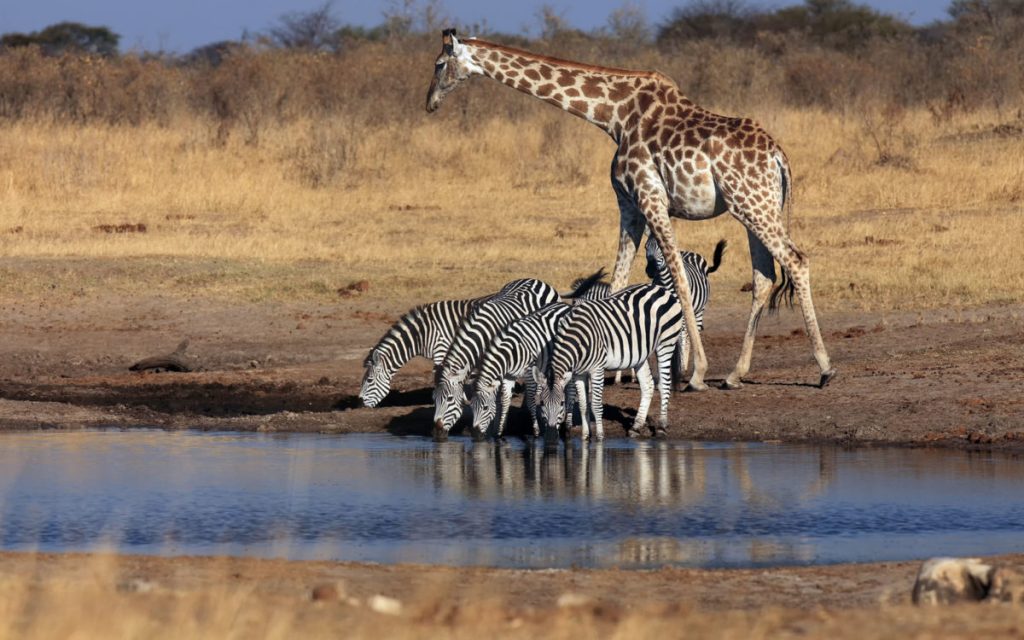
Around the M9 and Hook Bridge, the Kafue River flows broad and slow, fringed by riverine forest and pockets of miombo woodland. This is where many lodges and campsites cluster, offering game drives, boat cruises and walks. The Lunga and Lufupa rivers join the Kafue to the north, and their confluence areas are excellent for leopard, elephant, hippo and birdlife. Central Kafue is accessible for much of the year and is the easiest region for a short safari from Lusaka.
Southern Kafue: Lake Itezhi-Tezhi and the Nanzhila Plains
South of the M9, the landscape shifts to mopane and miombo woodland, rocky hills and teak forest. Lake Itezhi-Tezhi stretches across the south-eastern edge, providing sundowner cruises, fishing and dramatic sunsets. Further south, the Nanzhila Plains are a remote area of grassland and dambos known for sable, roan, Lichtenstein’s hartebeest, oribi and good birding, including wattled cranes. The far south can be reached from Livingstone via Kalomo, making Kafue a natural extension to a Victoria Falls trip.
| Region | Landscape | Highlights | Best for |
| Busanga Plains (north) | Floodplain grassland, tree islands | Lion, cheetah, red lechwe, puku, sitatunga, ballooning | Big-cat photography, remote luxury |
| Central (M9 / Hook Bridge) | River, riverine forest, woodland | Leopard, elephant, hippo, boat cruises, birding | Short safaris, self-drive, first-timers |
| Lunga / Lufupa confluence | Rivers and woodland mosaic | Leopard, wild dog, walking safaris | Walking and boating |
| Lake Itezhi-Tezhi (south) | Lake shores, hills, baobabs | Sunset cruises, fishing, elephants | Relaxed safaris, fishing |
| Nanzhila Plains (far south) | Grassland and dambos | Sable, roan, hartebeest, wattled crane | Off-the-beaten-path explorers |
Wildlife in Kafue National Park
Kafue protects an exceptional variety of mammals, with well over 150 species recorded. Its outstanding feature is antelope diversity: around 21 species, more than almost any other park in Africa. Predators are well represented, and sightings feel personal because there are so few other vehicles.
Predators
- Lion: Prides are found throughout the park, but the Busanga Plains lions are the most famous, often seen hunting lechwe and puku in the open and occasionally climbing fig trees.
- Leopard: Kafue is considered one of Zambia’s best leopard parks, with regular sightings along the Kafue, Lunga and Lufupa rivers, especially on night drives.
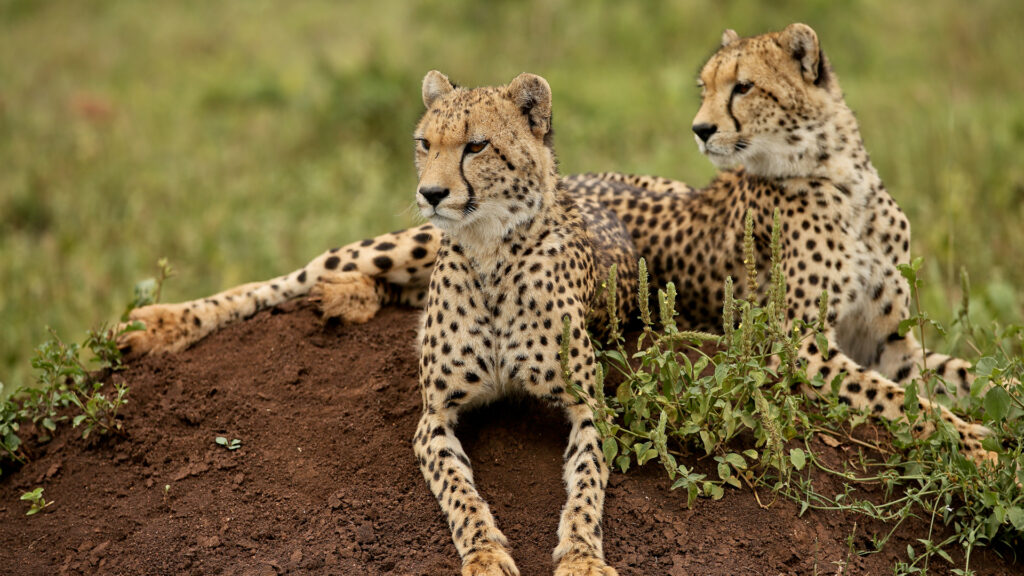
- Cheetah: Kafue holds Zambia’s most significant cheetah population, a major draw since cheetah are rare elsewhere in the country. Busanga and the southern plains offer the best chances.
- African wild dog: Packs range widely across the park and are seen most often in the dry season, particularly in central and southern Kafue.
- Others: Spotted hyena, side-striped jackal, serval, civet, genet and honey badger.
Large Mammals
Elephants are found throughout the park and are especially visible near the rivers and Lake Itezhi-Tezhi in the dry season. Large buffalo herds roam Busanga and the southern plains. Hippo and Nile crocodile are abundant in the Kafue River. Rhinos are not present, so Kafue offers four of the Big Five.
Antelope Diversity
| Antelope | Where to look | Notes |
| Red lechwe | Busanga Plains | Huge herds on the receding floodplains |
| Puku | Busanga, river edges | Golden antelope common across the north |
| Sable antelope | Southern woodlands, Nanzhila | Striking black coat and curved horns |
| Roan antelope | Nanzhila, woodland clearings | One of Africa’s largest antelopes |
| Lichtenstein’s hartebeest | Southern plains, dambos | A Zambezian woodland speciality |
| Sitatunga | Busanga swamps | Shy, water-loving; best seen from elevated hides or at dawn |
| Defassa waterbuck | River fringes | Common along the Kafue River |
| Oribi | Open grassland | Small, graceful plains antelope |
| Blue wildebeest | Busanga Plains | Seasonal herds on the open plains |
| Kudu, eland, bushbuck, reedbuck, impala, duiker | Park-wide | Plus grysbok and klipspringer in rocky areas |
Birdlife
With around 500 species recorded, Kafue is a paradise for birders. The river systems, floodplains and woodlands support a remarkable range, and the wet season brings migrants from Europe and other parts of Africa.
- Specials: Pel’s fishing owl, African finfoot, wattled crane, Böhm’s bee-eater, Ross’s turaco and the Chaplin’s barbet, Zambia’s near-endemic.
- Water birds: African fish eagle, African skimmer, saddle-billed stork, goliath heron, white-backed night heron and numerous kingfishers.
- Raptors: Bateleur, martial eagle, Dickinson’s kestrel and a variety of vultures.
| Birding Tip
November to April is peak birding season, when migrants arrive and residents breed in full colour. A river cruise at dawn on the Kafue River is one of the best ways to find finfoot and Pel’s fishing owl. |
Top Things to Do in Kafue National Park
1. Game Drives
Morning and afternoon game drives in open 4×4 vehicles are the core of any Kafue safari. Lodge guides know the territories of resident leopards and lion prides, while self-drivers can explore the network of park roads at their own pace.
2. Night Drives
Many lodges offer spotlit night drives, which reveal leopard, civet, genet, porcupine, bushbabies and hunting owls. Kafue’s night drives are among the most productive in Zambia for leopard.
3. Boat Cruises on the Kafue River and Lake Itezhi-Tezhi
Boat trips bring you close to hippo pods, crocodiles, elephants drinking on the banks and outstanding birdlife. A sunset cruise on Lake Itezhi-Tezhi, with drinks on board, is a highlight of the southern sector.
4. Walking Safaris
Guided bush walks with an armed scout reveal the small details of the ecosystem: tracks, dung, medicinal plants and insects. Walking is offered by most lodges, typically in the dry season.
5. Hot-Air Ballooning over the Busanga Plains
In season, selected Busanga camps offer dawn hot-air balloon flights over the floodplains, giving a rare aerial view of lechwe herds, lions and the patchwork of tree islands. Availability is limited and must be booked in advance.
6. Fishing
The Kafue River and Lake Itezhi-Tezhi offer catch-and-release fishing for tigerfish, bream and catfish. Check with your lodge for licence requirements and seasonal regulations.
7. Birdwatching
Dedicated birding walks, drives and cruises can easily yield more than 100 species in a day during the green season.
8. Community and Cultural Visits
Some lodges arrange visits to villages in the surrounding Game Management Areas, offering insight into rural Zambian life and the community projects supported by tourism.
Best Time to Visit Kafue National Park
Kafue has two main seasons: a dry season from about May to October and a wet (green) season from November to April. Your choice depends on what you want to see and which parts of the park you plan to reach.
| Months | Season | Conditions | What to expect |
| January – March | Peak wet season | Heavy rain, high humidity, many roads impassable | Most camps closed; Busanga flooded; superb birding for the few who visit |
| April – May | Late wet / early dry | Rains easing, lush and green | Some camps reopen in central/south; beautiful scenery, fewer visitors |
| June – July | Early dry season | Cool, clear days; cold mornings and nights | Floods recede; Busanga opens from about July; excellent game viewing begins |
| August – September | Peak dry season | Warm days, sparse vegetation | Best overall game viewing; wildlife concentrates near water; peak predator action |
| October | Late dry season | Hot (often above 35°C), dusty | Superb game viewing, dramatic light; heat can be intense |
| November – December | Early wet season | First storms, rising humidity | Migrant birds arrive, newborn antelope; camps start closing; Busanga closes early Nov |
| Our Recommendation
For first-time visitors: August and September offer the best all-round game viewing. For the Busanga Plains: Plan for July to October, and book Busanga camps well in advance. For birders and photographers seeking green landscapes: Consider April–May or November, accepting that some camps and roads will be closed. |
How to Get to Kafue National Park
By Road from Lusaka
Most visitors drive west from Lusaka on the M9 highway through Mumbwa. The eastern Nalusanga Gate is roughly 200 km from Lusaka, and Hook Bridge, in the heart of the park, is about 3.5 to 4.5 hours’ drive depending on traffic and road conditions. The M9 is tarred and generally in reasonable condition, but potholes do occur, so drive in daylight and watch for livestock and pedestrians.
By Road from Livingstone (Victoria Falls)
The southern sector can be reached from Livingstone via Kalomo and the Dundumwezi Gate, typically a 4 to 6-hour drive. Beyond the tar, roads are gravel and sandy, and a high-clearance 4×4 is essential. This route makes it easy to combine Victoria Falls with Kafue.
Other Road Access
- Itezhi-Tezhi: Reached via Mumbwa or Namwala, giving access to the southern lake area.
- Western access: The Tateyoyo Gate on the M9 serves travellers coming from Kaoma, Mongu and Liuwa Plain.
- Busanga Plains: Accessible by road only in the dry season, on long sandy tracks from the central sector; most luxury visitors fly in.
By Air
Scheduled and charter light-aircraft flights connect Lusaka and Livingstone with bush airstrips inside and around the park. Flying is the most practical way to reach the Busanga Plains and saves a long day of driving. Luxury camps usually arrange flights as part of the package. Remember that light aircraft impose strict luggage limits, typically around 15–20 kg per person in soft bags.
| Route | Approx. distance | Approx. time | Vehicle |
| Lusaka → Nalusanga Gate (east) | ~200 km | 3 – 3.5 hrs | Any vehicle to gate; 4×4 inside park |
| Lusaka → Hook Bridge (central) | ~280 km | 3.5 – 4.5 hrs | 4×4 recommended |
| Livingstone → Dundumwezi Gate (south) | ~250 – 300 km | 4 – 6 hrs | 4×4 essential |
| Lusaka → Itezhi-Tezhi | ~300 km | 4.5 – 5.5 hrs | 4×4 recommended |
| Lusaka → Busanga Plains (flight) | — | ~1.5 hrs flying | Charter aircraft |
Distances and times are approximate and vary with road conditions and exact lodge location.
Kafue National Park Entry Fees (2026)
Park fees are set by Zambia’s Department of National Parks and Wildlife and are charged per person per day, where a day runs from 6 am to 6 pm. Kafue does not add a self-drive surcharge, which makes it one of the best-value self-drive parks in Zambia.
| Category | Fee per day |
| International visitors (adults) | US$20 per person |
| Residents / SADC nationals (adults) | US$15 per person |
| Zambian citizens (adults) | Approx. K33.60 – K44.80 per person |
| Children aged 5 – 13 | 50% of the adult fee |
| Children under 5 | Free |
| Foreign-registered vehicle (under 3 tonnes) | US$15 per vehicle |
| Foreign-registered vehicle (over 3 tonnes) | US$30 per vehicle |
| DNPW camping fee | US$5 per person per night (plus campsite rate) |
| Important
Fees are subject to change. Always confirm current rates with DNPW, African Parks or your safari operator before travel. Lodge packages usually include park fees, but self-drivers pay at the gate, so carry US dollars in small denominations or check whether card payment is available. |
Typical Safari Costs
| Travel style | Approx. cost per person per day | What’s included |
| Self-drive & camping | US$70 – 150 | Park fees, campsite, vehicle fee (car hire and fuel extra) |
| Mid-range lodge | US$250 – 500 | Accommodation, meals, some activities |
| Luxury / fully inclusive camp | US$600 – 1,500+ | All meals, drinks, activities, park fees; often includes flights from Lusaka |
Indicative 2026 ranges only; actual prices depend on season, lodge, group size and inclusions.
Visa and Entry Requirements for Zambia
- Visa-free travel: Since 2023, Zambia has allowed visa-free entry for citizens of many countries, including the United States, United Kingdom, EU member states, Australia and others, for short tourist stays.
- e-Visa / visa on arrival: Nationalities that still require a visa can usually apply online through the Zambia Department of Immigration e-Visa portal or obtain one on arrival.
- KAZA Univisa: Covers Zambia and Zimbabwe (plus day trips into Botswana via Kazungula) and is ideal if combining Kafue with Victoria Falls. Availability has occasionally been suspended, so check before travel.
- Passport: Valid for at least six months beyond your stay, with blank pages.
- Yellow fever: A certificate is required if arriving from or transiting through a country with yellow fever risk, including Uganda, Kenya, Tanzania and Rwanda.
| For East African Travellers
If you are flying in from Entebbe, Nairobi, Kigali or Dar es Salaam, carry your yellow fever certificate. You may be asked for it at Lusaka or Livingstone. |
Where to Stay in Kafue National Park
Kafue offers accommodation for every budget, from simple riverside campsites to intimate luxury camps on the Busanga Plains. Many camps are seasonal and close during the wet months, so check opening dates when planning.
Luxury Camps and Lodges
- Shumba Camp (Busanga Plains): An elevated luxury tented camp overlooking the floodplains, famous for its lion sightings.
- Busanga Bush Camp (Busanga Plains): A small, classic tented camp offering an intimate, back-to-basics luxury experience.
- Chisa Busanga Camp (Busanga Plains): Distinctive raised “bird’s nest” style rooms with sweeping views over the plains.
- Ila Safari Lodge (central Kafue River): Elegant riverside villas with a strong sustainability focus.
Mid-Range Lodges
- Mukambi Safari Lodge: A popular, comfortable lodge on the Kafue River close to the M9, with a seasonal satellite camp in Busanga.
- KaingU Safari Lodge: A peaceful, owner-run lodge on a scenic section of the Kafue River, known for birding and walking.
- Konkamoya Lodge: A tranquil camp on the shores of Lake Itezhi-Tezhi in the south.
- Musungwa Safari Lodge: Overlooking Lake Itezhi-Tezhi, offering lodge rooms, camping and boat activities.
Budget Camps and Campsites
- Mayukuyuku Bush Camp: A relaxed riverside camp with tents and campsites, popular with self-drivers.
- McBride’s Camp: A long-established, family-run bush camp known for its walking safaris.
- Kasabushi Camp: A self-drive favourite offering riverside camping and simple chalets.
- Mapunga Bush Camp: A rustic camp offering affordable access to the river and wildlife.
| Tier | Approx. price (pp / night) | Typical inclusions | Best for |
| Luxury | US$600 – 1,500+ | Fully inclusive, guided activities, often flights | Busanga Plains, honeymoons, photographers |
| Mid-range | US$200 – 500 | Full board, some activities | Families, first-time safari-goers |
| Budget / camping | US$25 – 150 | Pitch or basic tent; self-catering or meals extra | Self-drivers, overlanders, backpackers |
Wild camping is not permitted anywhere in Kafue or its Game Management Areas. Always use designated campsites.
Sample Kafue Safari Itineraries
4-Day Kafue Highlights Safari from Lusaka
| Day | Route / area | Activities | Overnight |
| Day 1 | Lusaka → central Kafue (M9, Hook Bridge) | Morning drive west; afternoon game drive or boat cruise | Mid-range riverside lodge |
| Day 2 | Central Kafue | Morning walk; afternoon game drive; night drive for leopard | Same lodge |
| Day 3 | Central Kafue / Lunga confluence | Full-day game drive with picnic lunch; sunset river cruise | Same lodge |
| Day 4 | Kafue → Lusaka | Early game drive, brunch and return to Lusaka | — |
7-Day Kafue Self-Drive Safari (Dry Season)
| Day | Route / area | Highlights | Overnight |
| Day 1 | Lusaka → Nalusanga Gate → central Kafue | Afternoon game drive along the Kafue River | Riverside campsite / camp |
| Day 2 | Central Kafue | Full day exploring river loops; boat cruise | Same |
| Day 3 | Central → northern Kafue (Lufupa) | Drive north through woodland; leopard country | Bush camp in the north |
| Day 4 | Busanga Plains (Jul–Oct only) | Full-day plains drive: lion, cheetah, lechwe, puku | Busanga camp |
| Day 5 | Northern → southern Kafue | Long transfer via the M9 to the south; break at Hook Bridge | Lake Itezhi-Tezhi lodge |
| Day 6 | Lake Itezhi-Tezhi / southern woodlands | Game drive for sable and roan; sunset lake cruise | Same |
| Day 7 | Itezhi-Tezhi → Lusaka | Return drive via Namwala or Mumbwa | — |
10-Day Victoria Falls & Kafue Combination
- Days 1–3: Livingstone and Victoria Falls. Tour the Falls, take a Zambezi sunset cruise and optional activities such as a helicopter flight or Livingstone Island visit.
- Day 4: Drive north via Kalomo to southern Kafue (Lake Itezhi-Tezhi or Nanzhila area).
- Days 5–6: Southern Kafue game drives, Nanzhila Plains, boat cruise on Lake Itezhi-Tezhi.
- Days 7–9: Transfer to central Kafue or fly to the Busanga Plains for big-cat viewing.
- Day 10: Drive or fly to Lusaka for your onward flight.
Combining Kafue with Other Destinations
| Destination | Distance / link from Kafue | Why combine |
| Victoria Falls / Livingstone | 4 – 6 hrs by road to the south | World-famous waterfall, adventure activities |
| Lower Zambezi National Park | Via Lusaka, then road or flight | Canoe safaris, elephants on the Zambezi |
| South Luangwa National Park | Flight from Lusaka | Walking safaris, high predator density |
| Liuwa Plain National Park | West via Mongu | Africa’s second-largest wildebeest migration (Nov) |
| Lusaka | ~3.5 – 4.5 hrs by road | International flights, city break |
| Chobe (Botswana) | Via Livingstone and Kazungula | River safaris and huge elephant herds |
Self-Drive Tips for Kafue National Park
Kafue is one of Zambia’s most rewarding self-drive parks: it is close to Lusaka, has no self-drive surcharge and offers well-run campsites. Its size and remoteness, however, demand careful preparation.
- Vehicle: A high-clearance 4×4, such as a Toyota Land Cruiser or Hilux, is essential once you leave the M9. Sandy tracks, black-cotton soil and river crossings are common.
- Fuel: Fill up in Mumbwa, Kaoma or Itezhi-Tezhi. Fuel inside the park is very limited; carry jerrycans for long routes such as Busanga.
- Navigation: Use offline maps such as Tracks4Africa, and carry a paper map. Mobile coverage is patchy or absent in most of the park.
- Spares and recovery: Two spare tyres, a tyre repair kit, compressor, high-lift or bottle jack, tow strap and basic tools.
- Timing: Avoid driving after dark. Park roads are for game viewing in daylight hours, and night driving on the M9 is hazardous.
- Supplies: Stock up on food and water in Lusaka or Mumbwa. Shops near the park are small and basic.
- Tsetse flies: Common in wooded areas. Drive with windows closed in tsetse zones and avoid dark blue and black clothing.
- Cross-border rentals: If renting in another country, confirm the rental agreement allows entry into Zambia and carry the COMESA Yellow Card, vehicle registration papers and a letter of authority from the owner.
| Marriott Safaris Africa Self-Drive Support
We provide fully equipped 4×4 vehicles with rooftop or ground tents, camping gear, recovery equipment, route planning and 24/7 support, including cross-border paperwork for travellers driving from East Africa. |
Health and Safety
- Malaria: Kafue is a malaria area year-round. Consult a travel doctor about prophylaxis, use insect repellent and sleep under a mosquito net.
- Vaccinations: Ensure routine vaccinations are current; discuss hepatitis A, typhoid and rabies with your doctor. Carry a yellow fever certificate if required.
- Travel insurance: Choose a policy that covers medical evacuation, as the nearest major hospitals are in Lusaka.
- Wildlife safety: Never leave your vehicle except at designated points, keep a respectful distance from animals, and never walk in the bush without an armed guide.
- Camp safety: Unfenced camps mean wildlife can wander through. Stay in your tent at night and use a torch when walking between areas.
- Sun and heat: October temperatures can exceed 35°C. Drink plenty of water and wear a hat and sunscreen.
- Water: Drink bottled or treated water.
What to Pack for a Kafue Safari
| Category | Essentials |
| Clothing | Neutral-coloured (khaki, olive, beige) shirts and trousers, long sleeves for evenings, warm fleece or jacket for June–August mornings, wide-brimmed hat, comfortable walking shoes |
| Health | Antimalarials, insect repellent (DEET), sunscreen, personal medication, first-aid kit, rehydration sachets |
| Gear | Binoculars, camera with zoom lens (100–400 mm or more), spare batteries and memory cards, power bank, headtorch |
| Documents | Passport, visa or e-Visa printout, yellow fever certificate, travel insurance details, driving licence/IDP for self-drivers |
| Self-drive extras | Offline maps, jerrycans, cool box, water containers, recovery kit, cash in US dollars and kwacha |
| Luggage | Soft-sided bag if flying in light aircraft (check the weight limit with your operator) |
Responsible Travel in Kafue
- Stay on designated roads and respect park opening hours.
- Never feed animals or leave litter; take all rubbish out of the park.
- Keep noise low and give wildlife space, particularly at sightings involving predators or young animals.
- Support community-run initiatives and buy crafts locally.
- Use water and electricity sparingly at camps that rely on solar power and boreholes.
- Choose operators who work with DNPW, African Parks and local communities.
Plan Your Kafue Safari with Marriott Safaris Africa
Whether you dream of watching lions on the Busanga Plains from a luxury camp or exploring Kafue’s rivers in your own 4×4 with a rooftop tent, Marriott Safaris Africa can design the perfect trip. We handle lodge bookings, flights, vehicle hire, park fees, cross-border documents and day-by-day itineraries, so you can focus on the wildlife.
- Tailor-made itineraries combining Kafue with Victoria Falls, Lower Zambezi, South Luangwa, Botswana and East Africa.
- Well-maintained 4×4 fleet with camping equipment and recovery gear for self-drive safaris.
- Transparent pricing with no hidden extras.
- 24/7 support before, during and after your safari.
| Ready to Explore Kafue?
Contact Marriott Safaris Africa today to start planning your Zambian safari. Perfection Anytime. |
Frequently Asked Questions
Is Kafue National Park worth visiting?
Yes. Kafue is Zambia’s largest park, with excellent leopard and cheetah viewing, huge antelope diversity, the spectacular Busanga Plains and very few crowds. It is ideal for travellers who want an authentic wilderness experience.
How big is Kafue National Park?
About 22,400 km², making it Zambia’s largest national park and one of the largest in Africa. Including the surrounding Game Management Areas, the wider ecosystem exceeds 60,000 km².
How much is the entry fee for Kafue National Park?
International visitors pay US$20 per person per day, and residents and SADC nationals pay US$15. Foreign-registered vehicles under 3 tonnes pay US$15 per day. There is no additional self-drive surcharge.
What is the best time to visit Kafue?
June to October is best for game viewing, with August and September the peak. The Busanga Plains are generally accessible from about July to early November.
Can I see the Big Five in Kafue?
You can see four of the Big Five: lion, leopard, elephant and buffalo. There are no rhinos in Kafue.
How far is Kafue from Lusaka?
The eastern Nalusanga Gate is roughly 200 km from Lusaka, about 3 to 3.5 hours by road. Central lodges near Hook Bridge are around 3.5 to 4.5 hours away.
Can I self-drive in Kafue National Park?
Yes. Kafue is one of Zambia’s best self-drive parks. You will need a high-clearance 4×4, offline maps, extra fuel and supplies, and you must use designated campsites.
Is Kafue good for cheetah sightings?
Kafue holds Zambia’s most important cheetah population, and the Busanga Plains and southern plains offer the best chances to see them.
Are there tsetse flies in Kafue?
Yes, particularly in wooded areas. Wear light, neutral colours, use repellent and keep vehicle windows closed in tsetse zones.
How many days do I need in Kafue?
Three to four days is enough for a taste of the central sector. Allow six to ten days to explore the Busanga Plains and the southern lake region properly.
Can I combine Kafue with Victoria Falls?
Yes. Southern Kafue is roughly a 4 to 6-hour drive from Livingstone, and the KAZA Univisa (when available) covers both Zambia and Zimbabwe.
Is Kafue safe for tourists?
Kafue is generally safe for visitors who follow park rules, use reputable operators and take normal wildlife and health precautions, including malaria prevention.
Marriott Safaris Africa — Perfection Anytime