
Hwange National Park Entrance Fees 2027
The complete guide to ZimParks conservation fees, vehicle charges, camping rates and real trip budgets for Zimbabwe’s largest national park
| Quick Answer: How Much Is the Hwange Entrance Fee in 2027?
International visitors pay US$24 per person per day on a day visit, or US$12 per person per day if they sleep inside the park. SADC residents pay US$18 (day) or US$10 (staying inside). Zimbabwe residents pay US$5 (day) or US$3 (staying inside). A foreign-registered car adds US$10 per day on a day visit, or US$3 per day when you stay inside. All rates include 15.5% VAT and are payable in US dollars. |
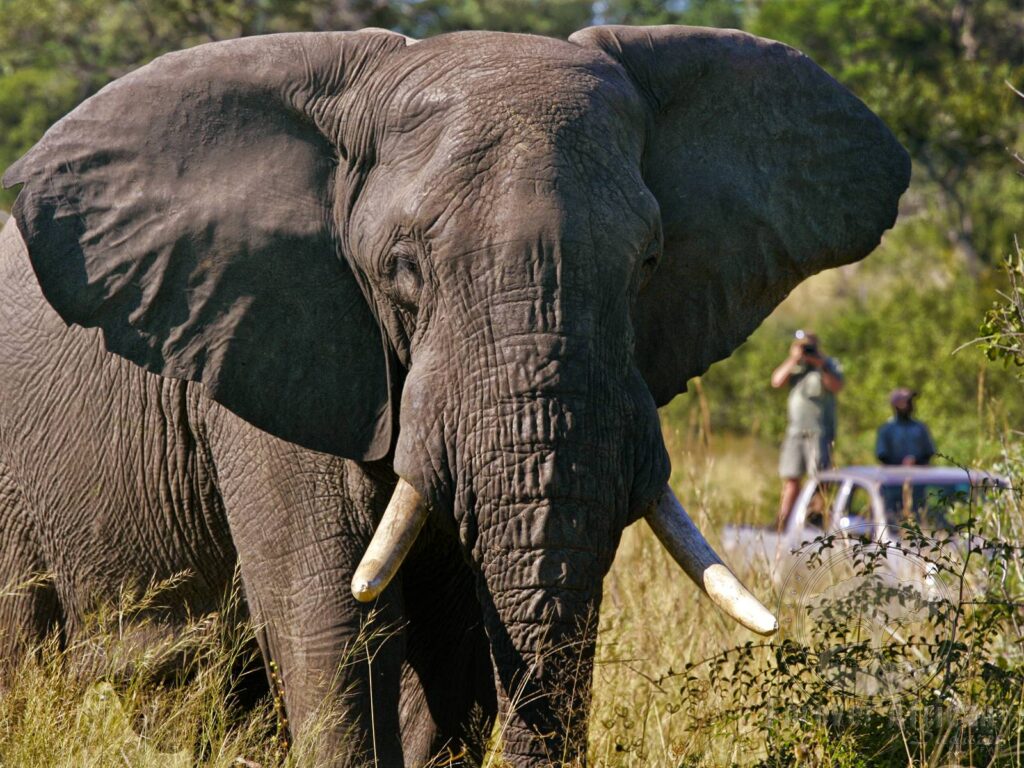
Hwange National Park is Zimbabwe’s largest protected area and one of the best-value Big Five destinations on the continent. Spread across roughly 14,650 square kilometres of Kalahari sand, teak woodland and open grassland in the north-west of the country, Hwange supports one of Africa’s largest elephant populations, a major stronghold of African wild dogs, and well-studied lion prides. And unlike many headline safari parks, getting in does not cost a fortune.
That said, Hwange’s fees changed in February 2026, when the Zimbabwe Parks and Wildlife Management Authority (ZimParks) published a new tariff after Value Added Tax was applied to tourism services. Many travel websites still quote the old US$20 flat rate, which leaves travellers confused at the gate. This guide sets out the current 2026 rates clearly, explains how the day-visitor versus staying-inside split works, and shows you what a real Hwange trip costs in park fees for different travel styles.
Who Sets Hwange’s Entrance Fees?
All entry, vehicle and ZimParks accommodation fees in Hwange are set by ZimParks, the government authority that manages Zimbabwe’s national parks and wildlife estates. The fees are often called “conservation fees” rather than entrance fees, and the name is apt: Zimbabwe’s parks are largely self-funded, so the money paid at the gate goes directly towards anti-poaching patrols, waterhole pumping, road maintenance and wildlife management.
This matters in Hwange more than almost anywhere else. The park has no permanent river running through it, and much of its wildlife depends on boreholes that pump water into pans during the long dry season. Your daily fee helps keep those pumps running.
| What Changed in 2026?
In February 2026, ZimParks released a new tariff schedule that replaced the 2023 rates. The main driver was the introduction of 15.5% VAT on tourism services, which is now built into park fees. The headline change for international visitors: the old flat US$20 daily rate has been replaced by a two-tier system of US$24 for day visitors and US$12 for visitors who stay overnight inside the park. If you are staying inside Hwange, your entry fee has actually gone down. |
Hwange National Park Conservation Fees 2027 (Per Person, Per Day)
The core charge every visitor pays is the daily conservation fee. The amount depends on two things: your residency category, and whether you are visiting for the day or sleeping inside the park boundaries.
| Visitor Category | Day Visitor | Staying Inside the Park | Notes |
| International visitor | US$24 | US$12 | Applies to all non-SADC passport holders |
| SADC resident | US$18 | US$10 | Residents of Southern African Development Community countries |
| Zimbabwe resident | US$5 | US$3 | May pay in local currency at the prevailing rate |
| Children | Ask at the gate | Ask at the gate | No separate child bracket published; camps often charge half for ages 6–12 |
All fees are per person, per day, quoted in US dollars and inclusive of VAT. Rates verified against the February 2026 ZimParks tariff as reported in October 2026. Always confirm at zimparks.org.zw before travel.
Understanding the Visitor Categories
- International visitors: Anyone who is not a Zimbabwean resident or a resident of a SADC member state. This includes visitors from East Africa – Uganda, Kenya, Rwanda and Burundi are not SADC members, so travellers from these countries pay international rates. Tanzania and the DRC, however, are SADC members.
- SADC residents: Citizens and residents of SADC countries such as South Africa, Botswana, Zambia, Namibia, Mozambique, Malawi, Tanzania and others. Carry your passport or residence permit as proof.
- Zimbabwe residents: Citizens and permanent residents of Zimbabwe, who pay heavily discounted rates. Proof of residency is required at the gate.
- Children: The current ZimParks tariff does not publish a clear child bracket for Hwange. Historically, children paid around half the adult rate. Ask at the gate or check with your camp, and budget for half the adult fee to be safe.
Day Visit vs Staying Inside: Why It Matters
The single most important thing to understand about Hwange’s 2026 fees is that sleeping inside the park halves your daily conservation fee. A “day visitor” is someone who enters the park from accommodation outside its boundaries – for example, from a lodge on the edge of the park near Dete or the Hwange Safari Lodge area – or who drives in from Victoria Falls for the day. An “accommodated visitor” is someone sleeping at a ZimParks camp or a lodge located inside the park.
| Worked Example: Two International Visitors, Three Days
Staying inside the park: 2 people × US$12 × 3 days = US$72 Staying outside and driving in daily: 2 people × US$24 × 3 days = US$144 Saving by staying inside: US$72 – before vehicle fees, which are also lower for accommodated visitors. |
Hwange Vehicle Entry Fees 2027 (Per Vehicle, Per Day)
If you are on a self-drive safari, you pay a separate daily fee for your vehicle in addition to the per-person conservation fee. As with personal fees, the rate drops significantly if you are staying inside the park.
| Vehicle Type | Day Visitor | Staying Inside | Notes |
| Car, pickup or 4×4 (foreign-registered) | US$10 | US$3 | Applies to cross-border self-drive vehicles |
| Car, pickup or 4×4 (Zimbabwe-registered) | US$5 | US$2 | Most rentals collected in Victoria Falls or Bulawayo |
| Minibus up to 25 seats (foreign-registered) | US$30 | US$10 | Group and tour vehicles |
| Trailer or caravan | – | US$3 | Charged separately from the towing vehicle |
| Overland truck (set routes only) | US$100 | US$60 | Restricted to designated routes |
| Self-Drive Tip: Check Your Vehicle’s Registration
If you are driving a rental vehicle across the border from Zambia, Botswana or South Africa – or on a longer overland trip from East Africa – you will pay the higher foreign-registered vehicle rate. A car hired in Victoria Falls, Bulawayo or Harare is Zimbabwe-registered and pays the lower local vehicle rate. Over a week-long safari, the difference adds up. |
ZimParks Accommodation and Camping Fees in Hwange
The cheapest way to stay inside Hwange – and therefore qualify for the lower accommodated conservation fee – is to book ZimParks’ own accommodation. These are separate from entry fees and are charged per night.
| Accommodation Type | Rate (Per Night) | Details |
| Camping or caravan pitch | US$23 | Up to 3 people; US$23 per extra person (Zimbabwe residents US$12) |
| Main Camp chalet, 1 bedroom | US$60 | 2-bedroom chalet: US$70 |
| Main Camp lodge, 1 bedroom | US$90 | 2-bedroom lodge: US$135 |
| Sinamatella lodge, 1 bedroom | US$90 | Renovated 2-bedroom: US$190 |
| Viewing platform (Guvalala or Makwa) | US$60 per person | Sleep above a waterhole; up to 6 people |
| Exclusive picnic site | US$235 per site | Shumba, Ngweshla, Masuma, Deteema, Kennedy 1, Mandavu; up to 6 people |
Private Lodges and Concession Levies
If you stay at a privately run lodge or tented camp, you still owe the ZimParks conservation fee for each day you are in the park. Many lodges collect this on your behalf and either include it in your rate or list it as a separate line item, so check your booking confirmation.
Camps located on private concessions within or bordering Hwange (such as those in the Linkwasha, Makalolo or Somalisa areas) often charge an additional community and conservation levy, set by the operator rather than ZimParks. These levies vary widely but typically range from around US$10 to US$50 per person per night. Ask your lodge for a full breakdown of park fees, levies and VAT before you confirm.
Activity Costs in Hwange
Unlike Tanzania, Kenya or Uganda, Zimbabwe does not publish an official national price list for guided activities in Hwange. Camps and lodges set their own prices, so treat any exact figures you see online with caution.
- Guided game drives: Booked through your camp or lodge. Usually included at fully inclusive lodges; charged separately at self-catering camps.
- Walking safaris: Led by licensed professional guides, usually around three hours. Priced by the operator.
- Night drives: Not permitted inside the national park itself – only available on private concessions.
- Waterhole hides: Public hides and platforms such as Nyamandhlovu Pan near Main Camp are free to use during daylight hours once you have paid your entry fee.
Where and How to Pay Hwange Park Fees
Park fees are paid at the ZimParks reception of the gate or camp you enter through. The main points of payment are:
- Main Camp: The main entrance, ZimParks office and the gate most self-drive visitors use. It is reached via a tarred road from the Victoria Falls–Bulawayo highway.
- Sinamatella: The northern camp on an escarpment above the Deka River, with its own ZimParks reception.
- Robins Camp: In the north-west of the park, also with a ZimParks reception.
- Mtoa Gate: A newer gate that is also staffed by ZimParks officials.
- Through your lodge: Private lodges inside the park often collect and remit conservation fees on your behalf.
| Payment Essentials
Bring US dollars in cash, in small denominations. ZimParks does not clearly publish card-payment availability at Hwange’s gates, and change can be scarce. Keep your receipt for the full duration of your stay – rangers may ask to see proof of payment. Fill your fuel tank before you arrive. Assume there is no fuel for sale inside the park; fill up in Victoria Falls, Hwange town, Dete or Bulawayo. |
Gate Times and Park Rules That Affect Your Costs
Hwange’s gates open at 06:00 and close at 18:00. You must be back inside your camp or out of the park by closing time – arriving late can result in a fine, and driving after dark inside the national park is not allowed. Plan your game drives so that you are never racing the clock, especially on the sandy tracks between Main Camp, Sinamatella and Robins, where distances are longer than they look on a map.
- Stick to designated roads; off-road driving is prohibited.
- Stay inside your vehicle except at designated hides, picnic sites and camps.
- Do not feed wildlife or leave litter.
- Observe speed limits to protect both wildlife and your vehicle.
Sample Hwange Park Fee Budgets for 2026
The figures below show park-related costs only – conservation fees, vehicle fees and ZimParks accommodation. They exclude fuel, food, vehicle hire, private lodge rates and activities.
Budget 1: Day Trip from Victoria Falls (2 International Adults, Zimbabwe-Registered Rental)
| Item | Calculation | Cost |
| Conservation fees | 2 × US$24 × 1 day | US$48 |
| Vehicle entry (Zimbabwe-registered) | 1 × US$5 × 1 day | US$5 |
| Total park fees | US$53 |
Note: Main Camp is roughly three hours’ drive from Victoria Falls, so a day trip leaves limited time for game viewing. An overnight stay is better value and far more rewarding.
Budget 2: Three-Night Self-Drive Camping Trip (2 International Adults, Foreign-Registered 4×4)
| Item | Calculation | Cost |
| Conservation fees (staying inside) | 2 × US$12 × 3 days | US$72 |
| Vehicle entry (foreign-registered, staying inside) | 1 × US$3 × 3 days | US$9 |
| Camping pitch | US$23 × 3 nights | US$69 |
| Total park fees | US$150 |
Budget 3: Two Nights at Main Camp Chalet (2 International Adults, Zimbabwe-Registered Rental)
| Item | Calculation | Cost |
| Conservation fees (staying inside) | 2 × US$12 × 2 days | US$48 |
| Vehicle entry (Zimbabwe-registered, staying inside) | 1 × US$2 × 2 days | US$4 |
| Main Camp 1-bedroom chalet | US$60 × 2 nights | US$120 |
| Total park fees | US$172 |
Budget 4: Night on a Viewing Platform (4 International Adults, Foreign-Registered 4×4)
| Item | Calculation | Cost |
| Conservation fees (staying inside) | 4 × US$12 × 1 day | US$48 |
| Vehicle entry (foreign-registered, staying inside) | 1 × US$3 × 1 day | US$3 |
| Viewing platform (Guvalala or Makwa) | 4 × US$60 | US$240 |
| Total park fees | US$291 |
How Hwange’s Fees Compare to Other Safari Parks
For travellers used to East African park fees, Hwange is remarkably affordable. Even the international day-visitor rate is a fraction of what you would pay for a day in the Serengeti or the Maasai Mara, where adult non-resident fees typically run from around US$70 to well over US$100 per day depending on the season and the park.
| Destination | International Adult Fee (2026) | Notes |
| Hwange National Park | US$24 day / US$12 staying inside | Two-tier system rewards overnight stays |
| Mana Pools National Park | US$24 per day | Same conservation fee tier as Hwange |
| Victoria Falls Rainforest (Zimbabwe side) | US$58 per visit | Rose sharply in 2026 after VAT was applied |
Combine a Hwange safari with Victoria Falls, and the falls entry will likely be your single most expensive park fee of the trip – Hwange itself remains excellent value.
Top Tips to Save on Hwange Park Fees
- Sleep inside the park. This alone halves your daily conservation fee and cuts your vehicle fee by up to 70%.
- Rent a Zimbabwe-registered vehicle. Collecting a 4×4 in Victoria Falls or Bulawayo means you pay the lower local vehicle rate.
- Share a camping pitch. A single pitch covers up to three people, making ZimParks camping one of the cheapest ways to experience Hwange.
- Travel in the green season. Park fees stay the same year-round, but private lodge rates drop significantly between November and April.
- Ask for an itemised quote. When booking through a lodge or operator, request a breakdown of conservation fees, concession levies and VAT so you know exactly what you are paying for.
- Use the free public hides. Waterhole hides such as Nyamandhlovu Pan offer outstanding game viewing at no extra cost.
Getting to Hwange National Park
Most visitors approach Hwange from Victoria Falls, roughly 195 kilometres to the north-west, which takes around three hours by road on tar. From the Victoria Falls–Bulawayo highway, a tarred access road leads to Main Camp, the park’s principal entrance. Alternatives include charter flights to airstrips inside and around the park, and the train service that stops at Dete near the park boundary.
For self-drive travelers coming from East Africa, Hwange fits naturally into longer overland routes through Zambia or Botswana. Remember that cross-border rental vehicles pay the foreign-registered vehicle rate, and you will need the correct cross-border documents, including COMESA Yellow Card insurance and a Temporary Import Permit.
Frequently Asked Questions
How much is the Hwange National Park entrance fee for foreigners in 2026?
International visitors pay US$24 per person per day on a day visit, or US$12 per person per day if they sleep inside the park. Both rates include VAT.
Why do so many websites say the Hwange fee is US$20?
US$20 was the international rate under the 2023 ZimParks tariff. It was replaced in February 2026 by the current two-tier system, but many sites have not been updated.
Do I pay the entrance fee if I am staying at a private lodge inside Hwange?
Yes. All visitors owe the daily ZimParks conservation fee. Most private lodges collect it on your behalf, either built into the rate or charged as a separate item. Some concession camps also add their own community or conservation levy.
Can I pay Hwange park fees by card?
ZimParks does not clearly publish card-payment availability at Hwange’s gates. Bring enough US dollars in cash, in small notes, to cover all fees for your stay.
Do children pay entrance fees in Hwange?
The 2026 tariff does not set out a clear child bracket for Hwange. Children have historically paid about half the adult rate, and many camps charge half for ages 6 to 12. Confirm at the gate.
Are Ugandan, Kenyan or Rwandan travellers eligible for SADC rates?
No. Uganda, Kenya, Rwanda and Burundi are not SADC members, so their citizens pay international rates. Tanzania and the DRC are SADC members.
What are Hwange’s gate opening hours?
Gates open at 06:00 and close at 18:00. You must be back in camp or out of the park by closing time, and driving after dark is not permitted inside the park.
Do park fees change by season?
No. ZimParks conservation fees in Hwange are the same throughout the year. Private lodge rates, however, are usually lower in the green season (November to April).
Is Hwange cheaper than Kenyan or Tanzanian safari parks?
Yes, considerably. Even Hwange’s top international day rate of US$24 is far below the daily fees charged in parks such as the Serengeti or the Maasai Mara.
Plan Your Hwange Safari with Marriott Safaris Africa
Hwange rewards travellers who plan well: stay inside the park, time your visit for the dry season, and you will enjoy some of Africa’s finest elephant viewing for a fraction of the cost of better-known destinations. Whether you want a self-drive 4×4 with camping gear, a guided safari linking Victoria Falls and Hwange, or a cross-border overland adventure, Marriott Safaris Africa can help you build an itinerary with transparent pricing and every park fee accounted for.
Marriott Safaris Africa – Perfection Anytime
| Disclaimer
Fees in this guide reflect the February 2027 ZimParks tariff as reported by sources checked in October 2026. ZimParks can change rates with little notice. Always verify current fees with ZimParks (zimparks.org.zw) or your safari operator before travelling. |