
Chobe National Park Entry Gates: The Complete 2027 Guide
Sedudu, Ngoma, Ghoha and Mababe gates explained — locations, opening hours, entry fees, payment, routes and self-drive tips
Chobe National Park is one of the most rewarding wildlife destinations on the continent, famous for the huge elephant herds that gather along the Chobe River and for the predator drama of Savuti. Yet for many first-time visitors — especially self-drivers — the single most confusing part of planning is working out which entry gate to use. Chobe covers roughly 11,700 square kilometres of northern Botswana, and its four main gates sit hundreds of kilometres apart, each opening onto a completely different landscape.
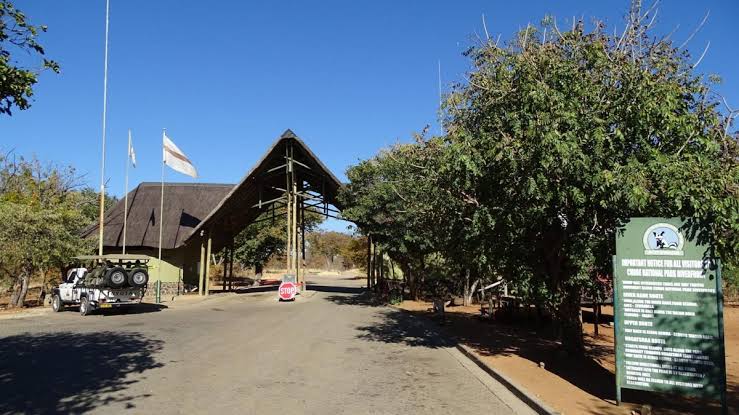
Pick the right gate and your safari flows smoothly from riverfront to marsh to Moremi. Pick the wrong one and you could lose half a day on deep-sand tracks, arrive after the gate has closed, or find yourself unable to pay. This guide walks you through every Chobe National Park entry gate: where it is, what it gives access to, how to reach it, current opening hours, 2027 entry and vehicle fees, payment rules, and the practical tips our team at Marriott Safaris Africa shares with every traveler before they set off.
| Quick Facts: Chobe Entry Gates at a Glance
Main gates: Sedudu (Kasane), Ngoma (Namibia border), Ghoha (north of Savuti) and Mababe (south, towards Moremi). Busiest gate: Sedudu Gate, about 6 km from Kasane town — the entry point for most riverfront game drives. Opening hours: 06:00–18:30 (1 April–30 September) and 05:30–19:00 (1 October–31 March). Entry fee (international visitor): P270 per adult per day; SADC residents P205; Botswana citizens P30. Vehicle fee: around P115 per day for a foreign-registered vehicle in Chobe. Vehicle needed: any car can reach Sedudu and Ngoma; a high-clearance 4×4 is essential for Ghoha, Savuti and Mababe. |
Understanding Chobe’s Layout Before Choosing a Gate
Chobe is not one uniform park. It is best understood as four distinct regions, and the gate you use depends entirely on which of them you plan to explore.
- Chobe Riverfront (Serondela area) — the far north of the park along the Chobe River, close to Kasane. This is where the famous elephant, buffalo and hippo concentrations are found, and where boat cruises operate. Accessed through Sedudu and Ngoma gates.
- Savuti — the central-western region known for its lion prides, the Savuti Channel, Gubatsa Hills and seasonal zebra migration. Accessed through Ghoha Gate from the north and Mababe Gate from the south.
- Linyanti — a remote, marshy area along the Linyanti River in the north-west, reached via tracks from Savuti. There is no separate main gate; access is controlled through the Savuti side.
- Nogatsaa / Tchinga hinterland — the dry, rarely visited woodland interior with pans that attract game in the dry season. Reached by sandy tracks from the riverfront area and best tackled with an experienced guide.
Because the riverfront and Savuti are more than 150 km apart on difficult roads, most travellers either stay near one gate and do day trips, or drive a classic north-to-south traverse: enter at Sedudu or Ngoma, continue through Ghoha to Savuti, and exit at Mababe towards Khwai and Moremi (or the reverse).
Chobe National Park Entry Gates Compared
| Gate | Location | Area Accessed | Nearest Town | Road Access | Best For |
| Sedudu | North-east, ~6 km west of Kasane | Chobe Riverfront | Kasane | Tarred to gate; any vehicle | Day game drives, Ihaha camping, short stays |
| Ngoma | North-west, near Ngoma Bridge (Namibia border) | Western riverfront | Kasane (~60 km) / Katima Mulilo | Tarred A33; any vehicle to gate | Arrivals from Namibia, quieter western riverfront |
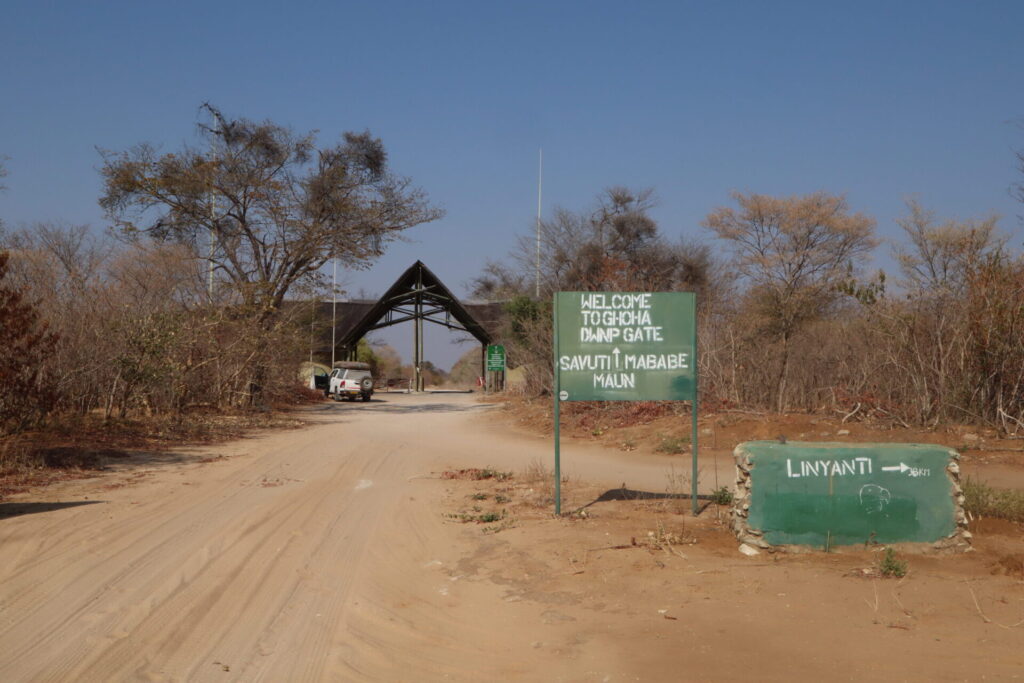
| Ghoha (Goha) | North of Savuti, off the Kachikau road | Savuti from the north | Kachikau | Deep sand; 4×4 only | Kasane–Savuti traverse |
| Mababe | South, ~56 km south of Savuti | Savuti from the south | Mababe village / Maun | Sand and clay; 4×4 only | Moremi/Khwai–Savuti traverse, arrivals from Maun |
1. Sedudu Gate (Kasane) — The Main Riverfront Entrance
Sedudu Gate (sometimes spelled Sidudu) is the park’s principal and busiest entrance. It sits on the tarred A33 just a few minutes’ drive west of Kasane town, which makes it the natural starting point for anyone staying in Kasane, flying into Kasane International Airport, or coming across from Victoria Falls in Zimbabwe or Livingstone in Zambia.
What Sedudu gives you access to
From Sedudu, game-drive tracks drop down to the Chobe River floodplains, running west past Puku Flats, Serondela and the Ihaha area. This stretch has one of the highest elephant densities in Africa during the dry season, along with buffalo, hippo, crocodile, sable, puku, Chobe bushbuck, lion, leopard and outstanding birdlife. Ihaha Campsite, the only public campsite on the riverfront, is reached from this side.
Facilities at Sedudu Gate
- Department of Wildlife and National Parks (DWNP) office where park fees are processed.
- Reception point for checking campsite booking confirmations (for example, Ihaha).
- Toilets and parking; fuel, ATMs, supermarkets and pharmacies are in Kasane, a short drive away.
Getting to Sedudu Gate
- From Kasane town / airport: a short drive west on the A33; most lodges include transfers.
- From Victoria Falls (Zimbabwe): roughly 80 km via the Kazungula border post, then on to Kasane.
- From Livingstone (Zambia): via the Kazungula Bridge across the Zambezi into Botswana, then west to Kasane.
| Insider Tip for Sedudu
Sedudu is busy at opening time, with dozens of lodge vehicles queuing alongside self-drivers. Arrive 15–20 minutes before the gate opens, have your passport, vehicle papers and any booking voucher ready, and you will be among the first onto the riverfront — when predators are most active and the light is best for photography. |
2. Ngoma Gate — The Western Riverfront and Namibia Entrance
Ngoma Gate lies at the western end of the Chobe Riverfront, close to the Ngoma Bridge border crossing into Namibia’s Zambezi Region (formerly the Caprivi Strip). It is the logical entrance if you are driving in from Katima Mulilo or travelling a Namibia–Botswana loop, and it offers a quieter alternative to the busy Sedudu end of the river.
What Ngoma gives you access to
Ngoma opens onto the western floodplains of the Chobe River, where lodge traffic is noticeably lighter. Game viewing can be excellent in the dry months, with elephant and buffalo herds coming down to drink. Self-drivers often enter at Ngoma and drive the riverfront tracks east to exit at Sedudu (or vice versa), seeing the whole riverfront in a single day.
The Sedudu–Ngoma transit route
The tarred road between Kasane and Ngoma passes through part of Chobe National Park. Traffic simply passing through on the main road — without leaving it to game-drive — is treated as transit traffic rather than park visitors. Following community requests, Botswana’s Ministry of Environment and Tourism opened this Sedudu–Ngoma transit route 24 hours a day from 1 April 2025, a big change from the previous dawn-to-dusk restriction. Drivers using it at night must stay on the road, keep to speed limits, never get out of their vehicles and watch carefully for elephants crossing.
| Important: Transit Is Not a Game Drive
The 24-hour opening applies to the transit road only. Leaving the tar to explore the riverfront tracks counts as a park visit, which means paying park and vehicle fees and observing normal game-drive hours. Night driving on game-viewing tracks is not permitted for self-drivers. |
3. Ghoha Gate — The Northern Gateway to Savuti
Ghoha Gate (also written Goha) is the northern entrance to the Savuti region. It is reached by heading south-west from Kasane on the Ngoma road, then turning south on the road to Kachikau. Beyond Kachikau the surface becomes deep, soft Kalahari sand all the way to the gate and beyond to Savuti. This is the gate most self-drivers use on the classic Kasane-to-Savuti traverse.
What Ghoha gives you access to
From Ghoha, a sandy track leads south to the Savuti Campsite area, passing the Ghoha Hills and waterholes that draw large numbers of elephants in the dry season. Savuti itself is known for its resident lion prides, wild dog sightings, the Savuti Channel and Marsh, the ancient rock paintings of the Gubatsa Hills, and the zebra migration that arrives with the summer rains.
Driving conditions
- A high-clearance 4×4 with low range is essential; tyre pressures usually need to be reduced for the deep sand.
- Allow plenty of time: the distance from Kasane looks short on a map, but sand driving is slow, and travellers regularly report the journey taking far longer than expected.
- Carry recovery gear, extra water, spare tyres and enough fuel — there is no fuel at Savuti.
- If you are not yet sure of your Savuti campsite dates, staff can usually advise whether park fees should be paid at the gate or confirmed at Savuti; always carry proof of your campsite booking.
4. Mababe Gate — The Southern Entrance from Moremi and Maun
Mababe Gate is Chobe’s southern entrance, located around 56 km south of Savuti near the village of Mababe. It is the link between Chobe and the Khwai area and Moremi Game Reserve’s North Gate, making it the key gate for anyone driving between the Okavango Delta region and Chobe, or arriving overland from Maun.
What Mababe gives you access to
Entering at Mababe, you cross the Mababe Depression — a vast, ancient lakebed — before reaching Savuti. Two main routes lead north: the Sand Ridge Road, which follows the old Magwikhwe Sand Ridge and stays drier but is heavy going in deep sand, and the Marsh Road, which skirts the Savuti Marsh with better game viewing but can become impassable black-cotton clay after rain. Check with gate staff about current conditions before choosing.
Driving conditions
- 4×4 only. In the green season (roughly December–March), the Marsh Road may be closed or extremely muddy.
- Expect a long, slow day on the Mababe–Savuti section; set off early and do not plan to arrive close to closing time.
- Fuel up in Maun or Kasane — there is no fuel inside the park.
Other Access Points: Savuti, Linyanti and the Interior
Inside the park, the DWNP office at Savuti functions as an important checkpoint where campers report in and where park fees can be confirmed. From Savuti, a track heads north-west to the remote Linyanti campsite on the Linyanti River — there is no separate main gate here, so visitors pass through the Savuti side. Ranger posts in the Nogatsaa and Tchinga hinterland control access to the dry interior pans. These areas are very remote, so self-drivers should travel in convoy or with a guide.
Visitors can also reach Chobe by light aircraft (lodges at Savuti and Linyanti have nearby airstrips) or by boat on the Chobe River from Kasane. Boat cruises still require park fees for time spent on the park side of the river, which operators normally include in their price.
Chobe National Park Gate Opening Hours
All Chobe gates follow the opening and closing times set by Botswana’s National Parks and Game Reserves Regulations. Visitors must be inside a campsite or out of the park by closing time.
| Period | Gates Open | Gates Close | Notes |
| 1 April – 30 September (winter / dry season) | 06:00 | 18:30 | Cool mornings; peak game viewing |
| 1 October – 31 March (summer / green season) | 05:30 | 19:00 | Longer days; hot, with rains from about November |
| Sedudu–Ngoma transit road | 24 hours | 24 hours | Main road transit only, since 1 April 2025 |
| Don’t Get Caught Out at Closing Time
Gate staff close promptly — travellers report buildings being locked a few minutes before the official time. Late exits can lead to fines, and driving after dark on game tracks is prohibited. Plan to reach your exit gate or campsite at least 45 minutes before closing, and allow extra time on the sandy Savuti routes. |
Chobe National Park Entry Fees 2027
Chobe and Moremi are Botswana’s two Category A protected areas, so they carry the country’s highest park fees. Fees are charged in Botswana Pula (P) per person, per calendar day — your arrival day and departure day each count as a full day. The table below shows the rates applied at the gates in 2026.
| Visitor Category | Adult (per day) | Approx. USD | Client of a Botswana Tour Operator |
| International visitor (non-resident) | P270 | ≈ $20 | P190 |
| SADC citizen / Botswana resident | P205 | ≈ $15 | P145 |
| Botswana citizen | P30 | ≈ $2 | P20 |
| Children (8–17 years) | About half the adult rate (e.g. P135 international) | ≈ $10 | Reduced rates apply |
Vehicle Fees
| Vehicle Type | Approx. Daily Fee (Chobe) | Notes |
| Foreign-registered vehicle (under 3.5 tonnes) | About P115 per day | Typical for rental 4x4s registered outside Botswana and cross-border self-drivers |
| Botswana-registered vehicle | Lower local rate | Most Kasane- and Maun-based rental vehicles |
| Heavy vehicles (over 3.5 tonnes) | Significantly higher | Overland trucks — confirm with DWNP before travel |
| 2026 Fee Update: The Planned Increase Has Been Postponed
Botswana had scheduled a major revision of tourism user fees — including much higher park entry fees — for 1 April 2026. On 31 March 2026 the Ministry of Environment and Tourism postponed the change, and no new implementation date had been announced at the time of writing. The rates above therefore remain the ones in use. Many websites still quote the old P120 rate, which dates from before 2022 and is out of date. Because fees, VAT and levies can change at short notice, always confirm the latest figures with the DWNP or your operator before you travel. |
Other Costs to Budget For
- Campsite fees are separate from park fees and are paid to the private operators that run the public campsites (for example, Kwalate Safaris for Ihaha, and SKL for Savuti and Linyanti).
- Boat cruise and lodge activity fees usually include park fees, but always check what your quote covers.
- Border and road fees if you arrive from Zimbabwe, Zambia or Namibia, plus any visa costs.
How and Where to Pay Chobe Park Fees
Payment arrangements at Botswana’s parks have changed several times in recent years, so prepare for more than one option.
- Pay in advance at a DWNP office. The Department of Wildlife and National Parks has offices in Kasane, Maun and Gaborone where you can pay for your entire stay before you reach the gate. This is the most reliable option, especially for remote gates such as Ghoha and Mababe.
- Pay at the gate. At Sedudu, fees can be processed on arrival, and travellers report that card payments are generally accepted there. At remote gates, connectivity can fail, so carry enough cash in Pula as a backup.
- Let your operator handle it. If you book a guided safari or a self-drive package with Marriott Safaris Africa, we can arrange park fees in advance, so you simply present your paperwork at the gate.
When you pay for a multi-day stay, staff calculate the total due per person and per vehicle for every day you will be in the park. Keep the receipt with you — rangers may ask to see it at any gate or checkpoint, including when you move from Chobe into Moremi, which requires its own separate fees.
Documents to Carry at Every Gate
- Valid passports for everyone in the vehicle (and visas where required).
- Vehicle registration papers and rental agreement; for foreign vehicles, cross-border permits and insurance documents.
- A valid driving licence (an International Driving Permit is recommended for non-English licences).
- Printed campsite booking confirmations for any overnight stay in the park.
- Park fee payment receipts if paid in advance.
| No Booking, No Overnight Entry
Botswana’s public campsites inside Chobe — Ihaha, Savuti and Linyanti — must be booked and confirmed in advance. Gate staff check booking vouchers, and self-drivers without a confirmed campsite can be refused entry for an overnight stay. Dry-season dates (July–October) often sell out months ahead. |
Which Chobe Gate Should You Use?
| Your Plan | Recommended Entry | Recommended Exit |
| Day trip or half-day game drive from Kasane | Sedudu | Sedudu |
| Full riverfront day for self-drivers | Sedudu | Ngoma (or reverse) |
| Arriving from Namibia (Katima Mulilo) | Ngoma | Sedudu |
| Day trip from Victoria Falls or Livingstone | Sedudu (via Kasane) | Sedudu |
| Kasane to Savuti and on to Moremi | Sedudu / Ngoma, then Ghoha | Mababe |
| Maun or Moremi to Savuti and Kasane | Mababe | Ghoha, then Kasane |
| Fly-in lodge safari at Savuti or Linyanti | Airstrip (handled by lodge) | Airstrip |
Self-Drive Routes Linking the Chobe Gates
The most popular self-drive itinerary in northern Botswana strings the gates together into a north-to-south (or south-to-north) traverse. Distances below are approximate and driving times vary hugely with sand and season.
| Route Section | Approx. Distance | Typical Driving Time | Road Surface |
| Kasane → Sedudu Gate | ~6 km | 10 minutes | Tar |
| Kasane → Ngoma Gate (A33) | ~60 km | 1 hour | Tar |
| Ngoma area → Kachikau → Ghoha Gate | ~70–90 km | 2–3 hours | Tar to Kachikau, then deep sand |
| Ghoha Gate → Savuti | ~40 km | 1.5–3 hours | Deep sand |
| Savuti → Mababe Gate | ~56 km | 2–4+ hours | Sand Ridge (sand) or Marsh Road (clay) |
| Mababe Gate → Khwai / Moremi North Gate | ~25–35 km | 1–2 hours | Sand and clay tracks |
| Mababe Gate → Maun | ~140 km | 3–4 hours | Gravel/sand, then tar |
| Marriott Safaris Africa Tip: Break Up the Traverse
Trying to drive from Kasane all the way to Moremi in one day is a common mistake. Spend at least two nights on the riverfront, two nights at Savuti and then continue to Khwai or Moremi. You will see far more wildlife and avoid racing the clock to beat gate closing times. |
Vehicle Requirements and Road Conditions
Sedudu and Ngoma gates can be reached in any vehicle because they sit on the tarred A33. Once you leave the tar, however, Chobe’s game tracks are sandy and uneven, and a 4×4 is strongly recommended even on the riverfront. For Ghoha, Savuti and Mababe, a properly equipped, high-clearance 4×4 with low-range gearing is non-negotiable.
- Recommended vehicles: Toyota Land Cruiser, Toyota Hilux double cab or similar, ideally with long-range fuel tanks and dual batteries.
- Essential kit: tyre pressure gauge and compressor, two spare tyres, shovel, recovery straps, first-aid kit, at least 5 litres of water per person per day, and a GPS with offline maps (mobile coverage is very limited beyond Kasane).
- Rooftop tent 4x4s are ideal for campers at Ihaha, Savuti and Linyanti, combining transport and accommodation in one package.
- Rainy season caution: from roughly December to March, clay sections — especially around the Savuti Marsh and Mababe Depression — can become impassable.
Gate Rules and Park Etiquette
- Enter and leave only during official gate hours, and report to the gate office every time you enter.
- Stay on designated tracks; off-road driving damages the habitat and is prohibited.
- Remain inside your vehicle except at designated sites such as campsites and marked viewpoints.
- Respect speed limits — usually 40 km/h on park roads — and give elephants plenty of space, especially breeding herds with calves.
- Do not feed animals or leave food or rubbish out; keep everything you bring in and take it out with you.
- Drones are not permitted without special authorisation.
- Self-drivers may not drive after dark inside the park; night drives are only possible with licensed operators in areas where they are allowed.
Best Time to Visit Through Each Gate
| Season | Months | Sedudu & Ngoma (Riverfront) | Ghoha & Mababe (Savuti) |
| Dry season (peak) | May – October | Outstanding — huge elephant and buffalo herds at the river | Excellent predator viewing; tracks dry but very sandy |
| Early rains | November – December | Hot, with game starting to disperse | Zebra migration begins arriving at Savuti |
| Green season | January – April | Lush scenery, superb birding, fewer vehicles | Muddy; Marsh Road may close — check conditions |
Common Mistakes to Avoid at Chobe’s Gates
- Underestimating driving times on the sandy Ghoha–Savuti–Mababe routes and arriving after the gate has closed.
- Turning up for an overnight stay without a confirmed campsite booking.
- Relying on card payment at remote gates without cash as a backup.
- Budgeting with outdated P120 fee figures from old websites.
- Forgetting that Chobe and Moremi charge separate park fees when travelling between them.
- Treating the 24-hour Sedudu–Ngoma transit road as permission to game-drive at night.
- Running low on fuel — there is no fuel between Kasane and Maun on the Savuti route.
Frequently Asked Questions
How many entry gates does Chobe National Park have?
Chobe has four main entry gates: Sedudu near Kasane and Ngoma near the Namibian border, both serving the riverfront; Ghoha, the northern entrance to Savuti; and Mababe, the southern entrance linking Savuti with Khwai and Moremi.
What is the main entrance to Chobe National Park?
Sedudu Gate, about 6 km from Kasane, is the main and busiest entrance. Most lodge game drives and day visitors from Kasane and Victoria Falls enter here.
What time do Chobe gates open and close?
From 1 April to 30 September, gates open at 06:00 and close at 18:30. From 1 October to 31 March, they open at 05:30 and close at 19:00. The Sedudu–Ngoma transit road has been open 24 hours since 1 April 2025 for through-traffic only.
How much does it cost to enter Chobe National Park in 2026?
International visitors pay P270 per adult per day (about US$20), SADC citizens and Botswana residents pay P205, and Botswana citizens pay P30. A foreign-registered vehicle costs about P115 per day. A planned fee increase for April 2026 was postponed, so confirm current rates before travel.
Can I pay park fees at the gate?
Yes, in most cases — card payments are generally accepted at Sedudu. However, paying in advance at a DWNP office in Kasane, Maun or Gaborone is the safest option, especially if you will enter through a remote gate.
Do I need a 4×4 to visit Chobe?
You can reach Sedudu and Ngoma gates in a normal car, but game drives inside the park are best done in a 4×4. Ghoha, Savuti and Mababe require a high-clearance 4×4 with low range.
Which gate is best for a day trip from Victoria Falls?
Sedudu Gate. Day trips from Victoria Falls cross into Botswana at Kazungula, continue to Kasane and enter the riverfront through Sedudu, usually combining a game drive with a Chobe River boat cruise.
Can I drive from Chobe to Moremi?
Yes. Self-drivers typically travel from the riverfront through Ghoha Gate to Savuti, then exit at Mababe Gate and continue to Khwai and Moremi’s North Gate. Allow at least two nights at Savuti and pay separate park fees for Moremi.
Plan Your Chobe Safari with Marriott Safaris Africa
Whether you want a relaxed riverfront stay in Kasane, a guided traverse from Chobe to the Okavango Delta, or a fully equipped 4×4 with rooftop tent for an independent adventure, Marriott Safaris Africa can plan the gates, routes, campsite bookings and park fees for you — so you can focus on the elephants, lions and sunsets.
| Ready to Explore Chobe?
Tell us your travel dates, group size and preferred style — guided safari or self-drive — and our team will design an itinerary that uses the right Chobe entry gates for your route. Marriott Safaris Africa — Perfection Anytime. |