
Mongoose Tracking in Queen Elizabeth National Park
A Complete Guide to Spotting Uganda’s Fascinating Mongoose Species
Queen Elizabeth National Park (QENP) is widely celebrated as one of Uganda’s most biodiverse wildlife destinations. Nestled in the western arm of the East African Rift Valley, this sprawling 1,978 square kilometre protected area is home to lions, elephants, hippos, chimpanzees, and an extraordinary array of birdlife. Yet among the park’s most captivating — and often underappreciated — residents are the mongooses: small, agile, socially complex mammals that offer some of the most dynamic wildlife encounters in all of East Africa.
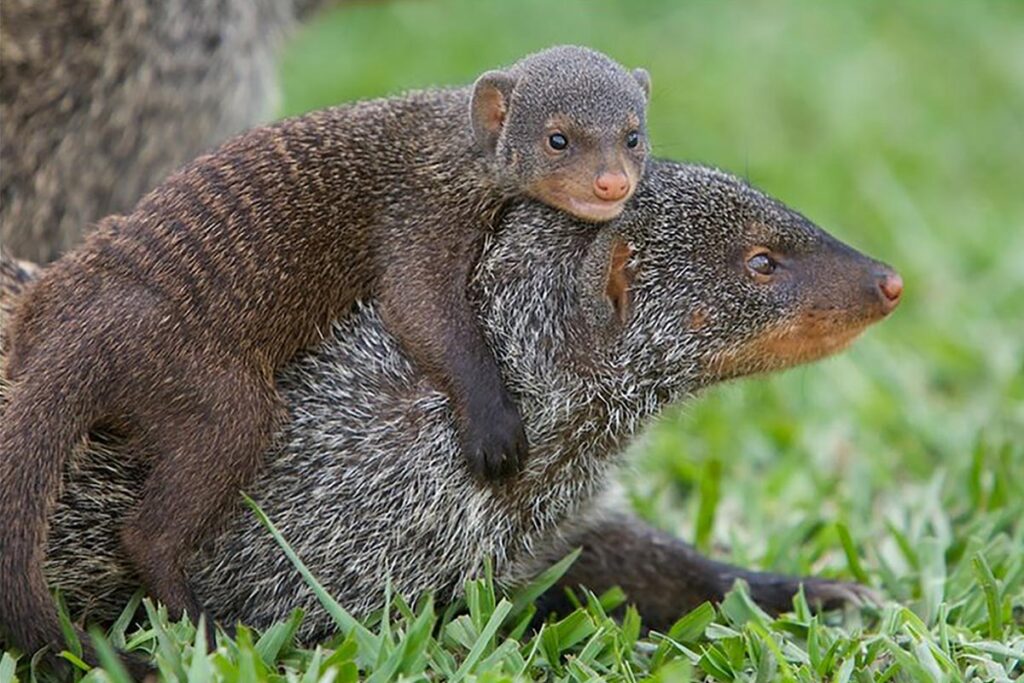
Mongoose tracking in Queen Elizabeth National Park has grown increasingly popular with wildlife enthusiasts, photographers, and researchers who seek intimate, unhurried wildlife encounters beyond the classic Big Five experience. Whether you are watching a banded mongoose troop forage noisily through the Mweya Peninsula or spotting the elusive marsh mongoose along the Kazinga Channel, every sighting reveals an intricate world of social behaviour, communication, and survival strategy.
This detailed guide covers everything you need to know about mongoose tracking in Queen Elizabeth National Park — the species you will encounter, the best locations to find them, the optimal times to visit, and the remarkable behaviors that make these animals so extraordinary to observe.
Understanding Mongooses in Queen Elizabeth National Park
Mongooses belong to the family Herpestidae and are found across Africa, Asia, and southern Europe. In Uganda, and Queen Elizabeth National Park specifically, they occupy a range of ecological niches — from open savannah and dense riverine woodland to papyrus swamps and rocky hillsides. Their adaptability, intelligence, and complex social structures make them compelling subjects for wildlife observation.
Unlike many larger mammals that require extensive off-road searching, mongooses are frequently encountered in predictable locations and at close range. They are largely diurnal — active during daylight hours — which makes them exceptionally accessible for game drives and guided walks.
Mongoose Species Found in Queen Elizabeth National Park
Queen Elizabeth National Park hosts several mongoose species, each occupying a distinct ecological niche within the park. Understanding each species will deepen your appreciation of what you observe during tracking sessions.
1. Banded Mongoose (Mungos mungo)
The banded mongoose is by far the most commonly encountered mongoose species in Queen Elizabeth National Park and is the primary target of most mongoose tracking activities. Easily identified by the 10 to 15 dark transverse bands running across its grey-brown back, this species is highly social and lives in troops of between 10 and 40 individuals, though larger groups have been recorded.
Banded mongooses are strongly diurnal and spend their days in constant motion, foraging cooperatively for beetles, millipedes, grasshoppers, small lizards, frogs, and fallen fruits. Troops maintain a core home range, sleeping communally in termite mounds, rock crevices, or dense thickets at night, and emerging at dawn to begin the day’s foraging circuit.
What makes banded mongoose tracking particularly rewarding is the richness of social behaviour on display. Within any troop, observers can witness alarm calling, sentinel duty, pup-escorting, play fighting among juveniles, and the remarkable “escort” system in which a single adult bonds with and exclusively feeds a specific pup. Inter-troop encounters — often involving fierce communal fighting — are dramatic events that wildlife researchers have studied extensively.
Best locations: Mweya Peninsula, Kasenyi Plains, the road network between Mweya and Katunguru.
2. White-tailed Mongoose (Ichneumia albicauda)
Africa’s largest mongoose species, the white-tailed mongoose is a solitary, primarily nocturnal animal most likely to be encountered on night game drives within the park. Its distinctive bushy white tail makes identification straightforward when caught in the beam of a spotlight. Adults can weigh up to 5 kilograms, giving them a robust, almost cat-like appearance.
The white-tailed mongoose is well adapted to open grasslands and woodland edges, where it forages for large insects, particularly dung beetles, as well as millipedes, small rodents, and occasionally carrion. Its immunity to snake venom — a trait shared by several mongoose species — allows it to prey on venomous snakes when the opportunity arises.
Best locations: Kasenyi sector, Ishasha sector, grassy corridors at woodland edges. Best observed on night drives.
3. Marsh Mongoose (Atilax paludinosus)
The marsh mongoose, also called the water mongoose, is a semi-aquatic species closely associated with the papyrus swamps, reed beds, and shorelines of the Kazinga Channel and Lake George. It is a solitary, secretive animal that is predominantly nocturnal but is occasionally active at dawn and dusk.
Unusually among mongooses, the marsh mongoose lacks webbing between its toes but is nonetheless a confident swimmer. It forages along water margins for crabs, frogs, fish, molluscs, and aquatic invertebrates, feeling beneath rocks and in mud with its highly dexterous forepaws. Its dark brown, shaggy coat provides excellent camouflage in dense vegetation.
Best locations: Banks of the Kazinga Channel, Lake George shoreline, Maramagambo Forest wetland edges.
4. Dwarf Mongoose (Helogale parvula)
Africa’s smallest carnivore, the dwarf mongoose weighs a mere 200 to 350 grams but compensates for its diminutive stature with fierce energy and an intricate social hierarchy. Groups of 8 to 25 individuals are led by a dominant breeding female — a rarity in mammal societies — and her mate.
Dwarf mongooses are closely associated with termite mounds, which they use as sleeping and refuge sites. Within Queen Elizabeth National Park, they favour areas of mixed thornbush, Acacia woodland, and rocky outcrops where termite mounds are abundant. They feed on insects, larvae, lizards, small snakes, and bird eggs.
One of the most fascinating aspects of dwarf mongoose biology is their mutualistic relationship with hornbills: the two species forage together, with hornbills warning mongooses of aerial predators in exchange for insects flushed by the mongooses’ foraging activities.
Best locations: Acacia woodland zones, rocky areas near Ishasha in the southern sector.
5. Egyptian Mongoose (Herpestes ichneumon)
One of the larger mongoose species in the region, the Egyptian mongoose is a solitary, largely crepuscular animal that inhabits areas of thick bush, forest edges, and riverine vegetation. It is a versatile predator, hunting a broad diet including rodents, birds, lizards, snakes, and eggs.
Less frequently encountered than the banded mongoose, the Egyptian mongoose is nonetheless recorded in several parts of Queen Elizabeth National Park, particularly in the Maramagambo Forest vicinity and along thickly vegetated drainage lines.
Best Locations for Mongoose Tracking in Queen Elizabeth National Park
Mweya Peninsula
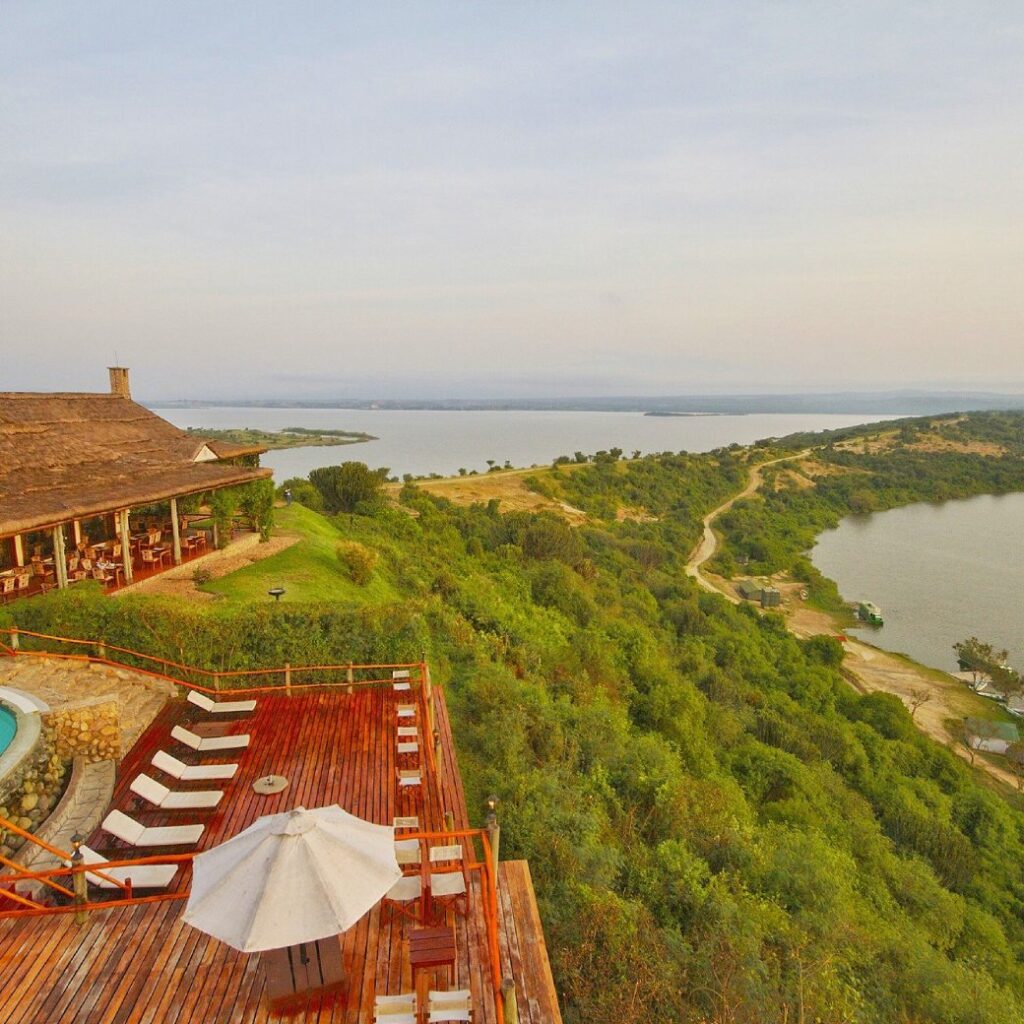
The Mweya Peninsula is the park’s principal tourism hub and one of the finest places in East Africa to observe banded mongoose behaviour. Several resident troops have become habituated to human presence over many years, allowing exceptional close-range observation. It is common to watch a troop of 20 or more animals foraging through the lodge grounds and visitor facilities at surprisingly close distances.
The peninsula juts into the confluence of Lake Edward and Lake George, offering spectacular scenery and a concentration of wildlife. Morning and late afternoon are the most productive times to find banded mongoose troops actively foraging. The troop’s predictable daily circuits around the peninsula make repeat sightings almost guaranteed.
Kasenyi Plains
The Kasenyi Plains in the northern sector of Queen Elizabeth National Park are renowned for large Uganda kob herds and resident lion prides, but the open grassland and scattered Acacia woodland also provide superb mongoose habitat. Banded mongoose troops are frequently encountered along the network of game tracks, and white-tailed mongooses are regularly spotted on nocturnal drives through this area.
The rolling, open topography of Kasenyi allows long-distance visibility, making it easier to spot mongooses moving through the grass before they disappear into cover. Early morning light on the golden plains adds a photographic dimension that makes this location particularly popular with wildlife photographers.
Kazinga Channel
The 40-kilometre natural channel linking Lake George and Lake Edward is one of Uganda’s most famous wildlife corridors, drawing enormous concentrations of hippos, buffaloes, elephants, and over 600 bird species to its shores. The channel also provides vital habitat for the marsh mongoose.
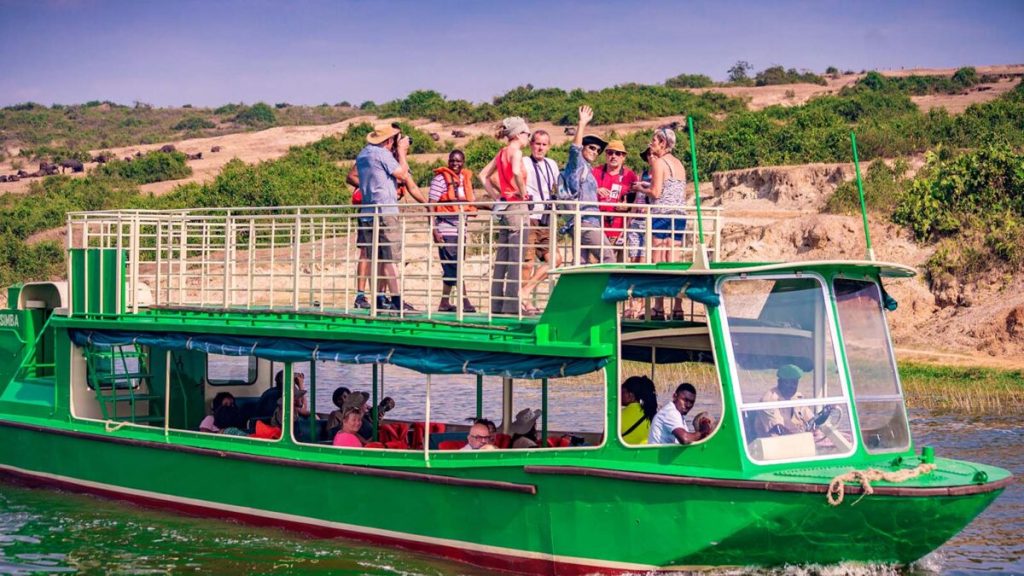
Boat cruises along the Kazinga Channel offer a unique perspective for mongoose spotting, particularly near dense vegetation along the northern bank. Scanning the papyrus and reed margins at dawn or dusk frequently rewards patient observers with sightings of marsh mongooses moving along the water’s edge. The boat also brings visitors close to banded mongoose troops that come to the shoreline to drink.
Maramagambo Forest
Maramagambo Forest, in the southeastern section of the park, is a dense tropical forest known for its populations of chimpanzees, forest elephants, and an exceptional diversity of snakes. The forest-grassland edge and the wetland areas fringing the forest are productive zones for marsh and Egyptian mongooses.
Walking trails through Maramagambo — typically guided by Uganda Wildlife Authority rangers — provide the best opportunities for observing forest-associated mongoose species. The Bat Cave walk is a particularly productive route for wildlife encounters in this sector.
Ishasha Sector
The Ishasha sector in the far south of the park is best known for its tree-climbing lions but also supports excellent mongoose populations in its mix of open grassland, Acacia woodland, and riverine forest. Dwarf mongooses are particularly associated with the rocky outcrops and termite mound complexes found across this sector.
Best Time for Mongoose Tracking in Queen Elizabeth National Park
Mongoose tracking in Queen Elizabeth National Park is productive throughout the year due to the park’s equatorial climate and the resident, non-migratory nature of all mongoose species. However, certain seasons offer distinct advantages.
Dry Seasons (December–February and June–September)
The dry seasons are widely regarded as the best time for mongoose tracking and game viewing generally. Shorter grass and reduced vegetation density make mongooses significantly easier to spot, particularly the smaller dwarf and banded mongoose species. Water sources become concentrated during dry periods, drawing mongooses and their prey to predictable locations.
June to September coincides with the long dry season and is considered the peak safari season across most of Uganda. This period also overlaps with the drier months in neighbouring Rwanda and Tanzania, making it an ideal time to combine visits to multiple East African destinations. Roads and game tracks are in their best condition, allowing access to more remote mongoose habitats.
Wet Seasons (March–May and October–November)
The wet seasons bring lush green landscapes, superb birdwatching, and dramatically reduced tourist numbers. For mongoose observation, the wet season presents more challenges — taller grass reduces visibility and muddy tracks can limit access to some areas — but also rewards. Prey abundance is highest during the rains, and mongooses are extremely active, particularly banded mongoose troops foraging for insects in the damp soil.
Birth seasons for banded mongooses often peak during or just after the rains, meaning that the November–January period can offer extraordinary opportunities to observe troops with young pups — among the most engaging mongoose behaviours to witness.
Best Time of Day for Mongoose Tracking
For banded and dwarf mongooses — both diurnal species — early morning (06:30–10:00) and late afternoon (15:30–18:30) are the most productive tracking windows. Mongooses are most actively foraging at these cooler times of day. During the midday heat, troops often rest in shade or inside termite mounds, making them significantly harder to locate.
For white-tailed and marsh mongooses — both nocturnal and crepuscular — night drives departing between 19:00 and 22:00 provide the best opportunities. Queen Elizabeth National Park permits authorised night drives within specific zones; always confirm current regulations with your guide or lodge.
Mongoose Behaviour: What to Watch For
One of the greatest rewards of mongoose tracking is the extraordinary breadth of behaviour on display. Here are the key behavioural events to watch for during your sightings.
Foraging and Food Handling
Watching a banded mongoose troop forage is endlessly entertaining. Individuals move rapidly through grass, turning over stones, excavating soil, and probing termite mounds with their pointed snouts. Prey that cannot be safely handled — particularly large millipedes — is smashed against hard surfaces by holding the item between the forepaws and throwing it repeatedly against a rock or tree root. This remarkable behaviour, also employed to crack bird eggs, demonstrates a level of object manipulation unusual in carnivores.
Sentinel Behaviour
While the troop forages, one or more individuals take up elevated positions on rocks, termite mounds, or fallen logs to scan for predators. Sentinels emit a continuous, low-frequency “watchman’s song” — a series of soft peeping calls — that reassures the foraging troop that all is safe. When a predator is spotted, the sentinel’s alarm call instantly changes in character, and the entire troop bolts for cover in a matter of seconds. The specificity of alarm calls varies with predator type, with aerial and terrestrial predators triggering different vocalization patterns.
Pup Escorting and Cooperative Breeding
Banded mongoose society is built around cooperative breeding. Multiple females give birth synchronously, and pups are raised communally in the den for the first four to five weeks of life. After emerging, each pup forms an exclusive “escort” bond with a single adult helper — which may be of either sex and is not necessarily a parent — that feeds and defends that pup almost exclusively during the critical learning period.
Watching a troop with young pups is an unforgettable experience. Pups sprint through the grass between the legs of adults, beg persistently for food with plaintive trilling calls, and play-fight with each other in elaborate wrestling matches that serve to develop both physical strength and social bonds.
Inter-troop Encounters
When two neighbouring banded mongoose troops encounter each other at their territorial boundaries, the result is often spectacular. Inter-troop battles can involve dozens of animals rushing at each other in a mob, with intense biting, chasing, and vocalisation. These encounters can last from a few minutes to over an hour and occasionally result in injuries or the killing of pups. Researchers at Queen Elizabeth National Park have documented that inter-troop encounters are a key driver of gene flow, as some individuals switch troops following a clash.
Snake Encounters
All mongoose species in Uganda possess varying degrees of resistance to snake venom, an adaptation that allows them to safely tackle venomous prey. Witnessing a banded mongoose troop mob and attack a snake is a dramatic sighting. The mongoose uses its speed and agility to deliver rapid bites to the snake’s head while dodging strikes, often returning again and again until the snake is subdued. The mongoose’s thick fur provides some protection against glancing bites.
How to Track Mongooses in Queen Elizabeth National Park
Successful mongoose tracking in Queen Elizabeth National Park requires a combination of local knowledge, patience, and an understanding of mongoose ecology. Here is how to maximise your chances of exceptional sightings.
Guided Game Drives
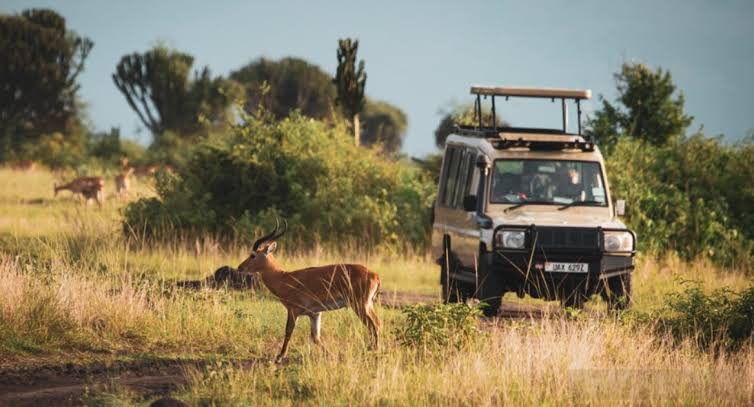
The most productive way to track mongooses across the park’s diverse habitats is through guided game drives with experienced Uganda Wildlife Authority rangers or qualified safari guides. Expert guides understand the territories and daily circuits of resident mongoose troops, dramatically increasing the likelihood of extended observation sessions. A good guide will not simply locate the animals but will explain behaviour as it unfolds, transforming a wildlife sighting into a genuine learning experience.
Guided Nature Walks
Guided walking safaris within designated areas of Queen Elizabeth National Park offer an entirely different quality of mongoose encounter. On foot, you can hear the troop’s contact calls before seeing them, observe subtle behavioural interactions invisible from a vehicle, and appreciate the rich sensory environment — soil smells, insect sounds, the rustle of grass — that contextualises mongoose life.
Walks are conducted in the company of armed rangers and are most productive in the Mweya Peninsula area and in Maramagambo Forest. The Mweya Peninsula walks in particular offer near-certain encounters with habituated banded mongoose troops.
Boat Cruises on the Kazinga Channel
Twice-daily boat cruises on the Kazinga Channel (departing from Mweya at 09:00 and 14:00) are among the most popular activities in Queen Elizabeth National Park and provide excellent opportunities for mongoose observation along the channel banks. The calm, slow pace of the boat allows extended observation time, and the channel’s extraordinary wildlife density means that mongoose sightings often occur between spectacular encounters with hippos, crocodiles, and water birds.
Night Drives
Night drives significantly expand the range of mongoose species you can encounter by bringing nocturnal animals within reach. White-tailed and marsh mongooses, virtually impossible to find during daylight hours, are regularly encountered on night drives. Spotlights are used to scan the roadside vegetation; the mongoose’s eyeshine — a reddish glow — often reveals an animal before its silhouette becomes visible.
Night drives must be arranged through your lodge or a licensed tour operator and are conducted in areas specifically designated by Uganda Wildlife Authority for nocturnal activities.
Wildlife Photography Tips for Mongoose Tracking
Mongooses are fast-moving, low-to-the-ground subjects that present unique photographic challenges. These tips will help you capture compelling images during your mongoose tracking experiences.
Use a telephoto lens of at least 300mm for most mongoose photography. Even habituated troops will not tolerate very close approach, and a longer lens allows frame-filling images without crowding the animals. For banded mongooses on the Mweya Peninsula, a 70–200mm lens will occasionally suffice due to the extreme habituation of resident troops.
Shoot in continuous/burst mode to capture rapid behavioural sequences — food handling, play fighting, and sentinel poses can all last only seconds. Use a fast shutter speed (minimum 1/640s) to freeze the animals’ quick movements. Early morning light is perfect for mongoose photography, offering warm, directional light that highlights fur texture and minimises harsh shadows.
Get as low as possible. Ground-level perspectives give mongoose photographs the most impact, eliminating distracting backgrounds and placing the viewer in the animals’ world. This is easier on a guided walk than from a vehicle, though a beanbag resting on a vehicle window ledge allows the camera to be angled low.
Research and Conservation of Mongooses in Queen Elizabeth National Park
Queen Elizabeth National Park has been the site of some of the world’s most significant long-term mongoose research. The Banded Mongoose Research Project, established by scientists from the University of Exeter, has been monitoring individually identified banded mongoose troops on the Mweya Peninsula since 1995, making it one of the longest-running mammal field studies in Africa.
Research conducted in the park has fundamentally advanced scientific understanding of cooperative breeding, inter-group conflict, the evolution of altruism, and the transmission of bovine tuberculosis through wildlife populations. The mongooses of Mweya have contributed to major findings published in leading scientific journals, cementing Queen Elizabeth National Park’s reputation as a world-class site for behavioural ecology research.
Conservation efforts focus on maintaining the ecological integrity of mongoose habitats within the park. The interconnected mosaic of savannah, woodland, wetland, and forest that characterises Queen Elizabeth National Park supports its exceptional mongoose diversity, and protecting this landscape from encroachment and degradation remains the foundation of mongoose conservation in Uganda.
Tourism revenue generated by visitors to Queen Elizabeth National Park — including those whose primary interest is mongoose tracking — directly supports Uganda Wildlife Authority’s conservation programmes, anti-poaching operations, and community development initiatives in the park’s buffer zones.
Combining Mongoose Tracking with Other Activities in Queen Elizabeth National Park
Mongoose tracking integrates seamlessly into a broader Queen Elizabeth National Park itinerary. The park offers one of Uganda’s most complete wildlife experiences, and mongoose sightings naturally complement other activities:
Lion tracking on the Kasenyi Plains: The same open grassland that supports white-tailed mongooses also hosts the park’s famous lion prides. Early morning game drives in Kasenyi frequently yield both mongoose and lion sightings within the same session.
Chimpanzee trekking in Kyambura Gorge: Located within Queen Elizabeth National Park, Kyambura Gorge — the “Valley of Apes” — offers habituated chimpanzee trekking experiences. The forested gorge and surrounding savannah edges provide habitat for marsh and Egyptian mongooses.
Birdwatching: Queen Elizabeth National Park’s 612 recorded bird species make it Uganda’s top birdwatching destination. The same habitat diversity that supports multiple mongoose species simultaneously hosts a spectacular range of birds, from African fish eagles and African skimmers on the Kazinga Channel to African green broadbills in Maramagambo Forest.
Tree-climbing lions in Ishasha: The southern Ishasha sector offers the rare spectacle of lions resting in fig trees, alongside mongoose tracking opportunities in the adjacent woodland.
Practical Information for Visiting Queen Elizabeth National Park
Getting There
Queen Elizabeth National Park is located approximately 420 kilometres southwest of Kampala, Uganda’s capital. The drive from Kampala takes 5 to 6 hours via the Mbarara–Kasese Highway, passing through the Equator crossing at Kayabwe and the scenic Ankole cattle country. For those short on time, charter flights operate from Entebbe International Airport to Mweya Airstrip and Ishasha Airstrip, cutting travel time to under 2 hours.
Park Entry Fees
Park entry fees are charged per person per day by Uganda Wildlife Authority. Current fees are USD 40 per day for non-East African citizens and USD 10 for East African citizens and residents. Vehicle entry fees also apply. Activity fees — for boat cruises, guided walks, chimpanzee trekking — are charged separately. Always check the latest fee schedule with Uganda Wildlife Authority or your tour operator prior to travelling.
Accommodation
Accommodation options within and around Queen Elizabeth National Park range from the iconic Mweya Safari Lodge — situated at the tip of the Mweya Peninsula with direct views over Lake Edward and the Kazinga Channel — to the community-managed Engiri Game Lodge and several budget bandas and campsites operated by Uganda Wildlife Authority. Staying within the park maximises morning and evening mongoose tracking time and allows access to the habituated Mweya Peninsula troops from the lodge grounds themselves.
What to Pack
For mongoose tracking, pack neutral-coloured clothing (khaki, olive, or brown) to minimise visual disturbance to the animals. Lightweight, breathable fabrics work best in the warm savannah climate. Bring binoculars (8×42 or 10×42 are ideal), a camera with a telephoto lens, insect repellent, sunscreen, a wide-brimmed hat, and comfortable closed-toe walking shoes. A small daypack with water and snacks is essential for longer guided walks.
Conclusion: Why Mongoose Tracking in Queen Elizabeth National Park is Unmissable
In a country celebrated for mountain gorilla trekking and tree-climbing lions, mongooses might seem like an unlikely highlight. Yet for those who take the time to observe these animals closely, mongoose tracking in Queen Elizabeth National Park reveals one of the natural world’s most compelling stories: the emergence of cooperation, communication, and complex social organisation in the small-bodied carnivores that animate the African bush.
Watching a banded mongoose troop navigate the Mweya Peninsula at dawn — sentinels calling from termite mound lookouts, pups begging for beetles, juveniles wrestling in the golden grass, the whole group surging forward in coordinated pursuit of a retreating snake — is a wildlife encounter as vivid and memorable as any that Africa has to offer.
Queen Elizabeth National Park offers five mongoose species across a landscape of extraordinary beauty and biological richness. Whether you have an afternoon or a full week, build mongoose tracking into your Uganda safari itinerary. You will leave with a deeper appreciation of the small animals that underpin the ecological complexity of East Africa’s greatest wilderness.
For bookings and guided mongoose tracking safaris in Queen Elizabeth National Park, contact your safari specialist. All activities must be conducted with licensed Uganda Wildlife Authority guides.