Mosi-oa-Tunya National Park & Victoria Falls
The Complete 2026 Guide to Zambia’s “Smoke That Thunders” – Falls, Rhinos, Activities, Fees & Where to Stay
Mosi-oa-Tunya National Park & Victoria Falls, Few places on Earth announce themselves the way Victoria Falls does. Long before you see the water, you see the spray – a white column rising hundreds of metres above the Zambian bush – and you hear the low, constant roar that gave the falls their local name: Mosi-oa-Tunya, “The Smoke That Thunders.” On the Zambian bank, that wonder is protected within Mosi-oa-Tunya National Park, a compact but remarkably rich reserve that pairs one of the Seven Natural Wonders of the World with a wildlife sanctuary where you can walk on foot alongside white rhinos.
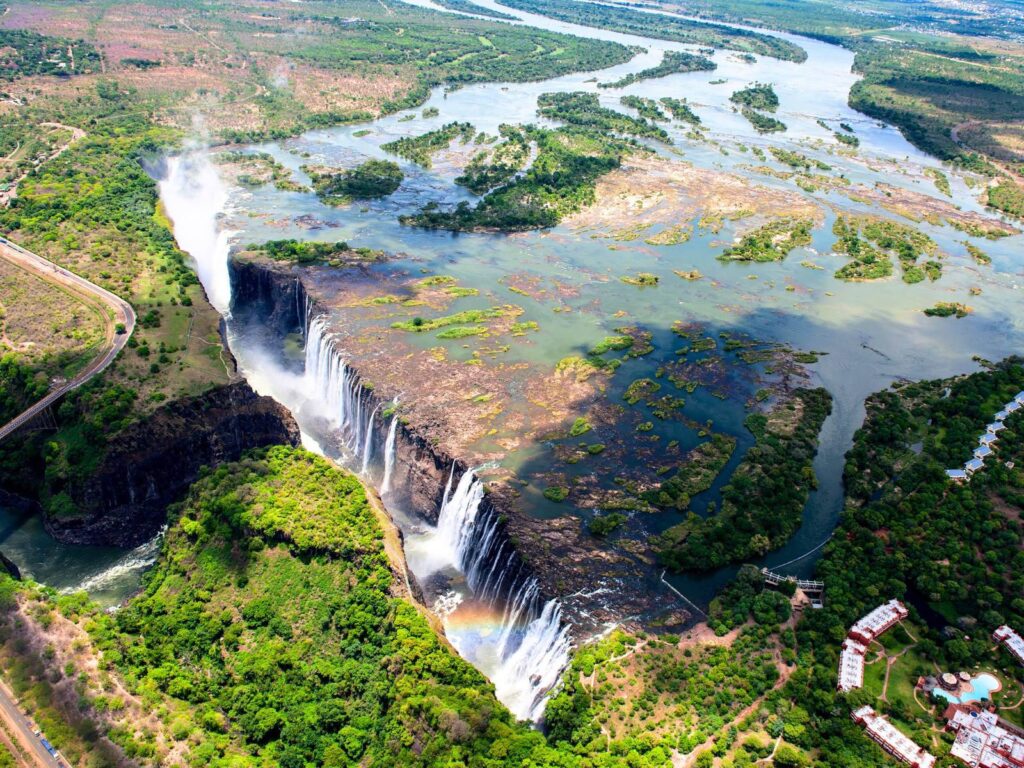
This guide covers everything you need to plan a visit to the Zambian side of Victoria Falls: the park’s two sections, the best viewpoints, when the falls are at their most dramatic, Devil’s Pool and other bucket-list activities, entry fees and visas, how to get there by air or by self-drive, where to stay at every budget, and a practical three-day itinerary.
Mosi-oa-Tunya National Park at a Glance
| Feature | Details |
| Location | Southern Zambia, on the Zambezi River beside the town of Livingstone |
| Size | Approx. 66 km² – one of Zambia’s smallest national parks |
| Managed by | Department of National Parks and Wildlife (DNPW), Zambia |
| UNESCO status | World Heritage Site since 1989, shared with Zimbabwe’s Victoria Falls National Park |
| Falls width | About 1,708 m – the largest single curtain of falling water in the world |
| Maximum drop | About 108 m into the First Gorge |
| Park sections | Victoria Falls (rainforest & viewpoints) and the Wildlife/Game Park section |
| Signature wildlife | Southern white rhino, elephant, giraffe, zebra, buffalo, hippo |
| Nearest airport | Harry Mwanga Nkumbula International Airport (LVI), Livingstone – about 20 minutes away |
| Best for | Falls viewing, Devil’s Pool, rhino walks, adventure sports, short safaris |
About Mosi-oa-Tunya National Park
Mosi-oa-Tunya National Park stretches for roughly 20 km along the northern (Zambian) bank of the Zambezi River, from the falls upstream towards the Songwe Gorge and the riverine woodland west of Livingstone. Despite its small footprint, it protects two very different experiences, and most visitors only see one of them.
The Victoria Falls Section
This is the part everyone comes for: the Eastern Cataract, the Knife-Edge Bridge, the spray-drenched rainforest trails and the path down to the Boiling Pot. The entrance sits just before the Zambia border post on the road from Livingstone, about 11 km from town, with a visitor centre, curio market, toilets and parking.
The Wildlife (Game Park) Section
Upstream, separated from the falls by the town and lodges, lies a fenced game area of mopane and riverine woodland along the Zambezi. It is home to the only white rhinos in the region that visitors can track on foot, together with elephants that move freely across the river, giraffe, zebra, buffalo, impala, warthog and abundant birdlife. It is not a Big Five park – there are no resident lions or leopards – which is precisely what makes guided walking safaris here so accessible.
History and the Name
The Kololo and Tonga people who lived along this stretch of the Zambezi called the falls Mosi-oa-Tunya long before Scottish missionary David Livingstone became the first European to describe them in November 1855, naming them after Queen Victoria. Livingstone viewed the falls from the island on the lip of the cataract that now bears his name. The town of Livingstone grew up nearby in the early 1900s and briefly served as the capital of Northern Rhodesia. The protected area, long known as Victoria Falls National Park, was renamed Mosi-oa-Tunya National Park after Zambian independence, reclaiming the original name. In 1989, UNESCO inscribed the falls and both national parks as a joint transboundary World Heritage Site.
| Did You Know?
At peak flood, more than 500 million litres of water can pour over the falls every minute. The spray can rise over 400 m and is visible from up to 50 km away on a clear day. |
How Victoria Falls Was Formed
Victoria Falls is the result of the Zambezi River cutting through a vast plateau of basalt laid down by lava flows around 180 million years ago. As the basalt cooled, it cracked along lines of weakness that later filled with softer sediment. Over hundreds of thousands of years, the river has eroded these cracks one by one, creating a series of eight dramatic zig-zag gorges below the current falls. Each gorge marks a former position of the waterfall.
Today the falls are slowly cutting back into a new line of weakness near the Devil’s Cataract on the Zimbabwean side – meaning that, in geological time, the ninth gorge is already beginning to form. Standing on the Knife-Edge Bridge, you are looking directly into this living process of erosion.
Exploring the Falls: Key Viewpoints on the Zambian Side
The Zambian trails are shorter than Zimbabwe’s 16-viewpoint rainforest walk, but they put you closer to the water – and in high season, much wetter. Allow two to three hours to see everything at a relaxed pace.
- Knife-Edge Bridge: The highlight of the Zambian side. This narrow footbridge spans a gorge directly opposite the Eastern Cataract and leads to Knife-Edge Point. Between March and May you will be walking through a near-solid wall of spray.
- Eastern Cataract: The section of the falls that lies entirely in Zambia. Seen head-on from the Knife-Edge, it is breathtaking in flood and almost completely dry by October and November, exposing the bare basalt cliff.
- Boiling Pot Trail: A steep, stepped path of about 1 km descends to the edge of the Zambezi in the First Gorge, where the river churns in a giant whirlpool before swinging under the Victoria Falls Bridge. Allow 45–60 minutes return and wear shoes with grip.
- Victoria Falls Bridge view: The upper trail along the Second Gorge offers the classic photograph of the 1905 steel arch bridge framed by spray and rainbows.
- Upper Zambezi lip: A short path leads to the river above the falls, where you can watch the wide, calm Zambezi accelerate towards the edge.
- Lunar rainbow: On the nights around the full moon (when the park opens for special evening viewing in high-water months), moonlight refracted through the spray creates a ghostly silver rainbow – one of the few places in the world where this can be seen reliably.
Wildlife in Mosi-oa-Tunya National Park
The game park section offers a gentle, uncrowded safari that is easy to fit around falls sightseeing. Game drives take one to three hours, and self-drive is permitted on the park’s small network of gravel tracks.
| Species / Group | What to Expect |
| Southern white rhino | The park’s flagship species. Rhinos are monitored around the clock by armed DNPW scouts, and guided walks can bring you within respectful viewing distance. |
| Elephant | Herds cross the Zambezi from Zimbabwe and wander through the park, lodges and even Livingstone’s outskirts. |
| Giraffe & zebra | Easily seen on the open grasslands; giraffe are often among the most photographed animals here. |
| Buffalo & antelope | Buffalo, impala, puku, waterbuck, sable (occasionally), bushbuck and warthog. |
| River life | Hippos and Nile crocodiles along the Zambezi banks, best seen from a sunset cruise. |
| Primates | Vervet monkeys and chacma baboons – the latter are bold around the falls car park. |
| Birds | Over 400 species recorded in the wider area, including African fish eagle, Schalow’s turaco, trumpeter hornbill and the rare Taita falcon, which nests in the gorges below the falls. |
| Spotlight: Walking with Rhinos
Rhino walks are the park’s unique selling point. Small groups set out with a professional guide and an armed DNPW scout who knows where the rhinos are feeding that morning. After a short drive and walk, you can watch these animals quietly on foot – an experience that is difficult or impossible in most other southern African parks. Tip: Book a morning departure (around 06:30) for cooler temperatures and the best light. Walks are usually open to ages 12 and above. |
Top Things to Do in Mosi-oa-Tunya & Livingstone
1. Devil’s Pool and Livingstone Island
The most famous experience on the Zambian side. A short boat trip takes you to Livingstone Island on the very lip of the falls, where a guide leads you into a natural rock pool that sits right at the edge of the 108 m drop. A submerged rock wall holds you back as the Zambezi pours over beside you. Devil’s Pool operates only when water levels are low enough – typically from about mid-August to early January. When the water is higher, the neighbouring Angel’s Pool or a standard Livingstone Island tour runs instead. Tours include breakfast, lunch or high tea options and sell out weeks ahead in peak season.
2. Zambezi Sunset Cruise
A relaxed two- to three-hour cruise on the upper Zambezi above the falls, with drinks and snacks, hippos snorting in the shallows, elephants on the islands and a glowing African sunset. Options range from large double-deck boats to small, upmarket vessels such as the African Queen and Lady Livingstone.
3. White-Water Rafting in the Batoka Gorge
The Zambezi below the falls is widely regarded as one of the world’s great commercial rafting rivers, with Grade IV–V rapids carrying names such as “The Washing Machine” and “Oblivion.” The low-water season (roughly August to December) offers the full run of rapids; high-water trips start further downstream. Expect a steep hike in and out of the gorge.
4. Victoria Falls Bridge Activities
The historic bridge spanning the border hosts a 111 m bungee jump, a bridge swing, a zip line across the gorge and a guided bridge tour that explores the engineering history beneath the deck. You need to pass through Zambian exit formalities (a gate pass, not a full exit stamp) to reach the bridge.
5. Flight of Angels: Helicopter and Microlight Flights
Seeing the full width of the falls and the zig-zag gorges from above is unforgettable. Helicopter flights of 12–25 minutes take off from near the park, while microlight flights – a Zambian-side speciality – put you in an open seat with nothing between you and the view (cameras are not permitted for safety, but wing-mounted photos are offered).
6. Gorge Swing, Abseiling and High Wire
Several operators run adrenaline activities along the Batoka Gorge rim, including the gorge swing, flying fox and abseiling – popular with groups who want a full day of adventure.
7. Canoeing the Upper Zambezi
Half- and full-day guided canoe trips paddle between islands upstream of the falls, with excellent birding and close (but safe) encounters with hippos and elephants.
8. Culture and History in Livingstone
Visit the Livingstone Museum, Zambia’s oldest and largest, with displays on David Livingstone’s letters, local archaeology and Tonga culture. Combine it with a guided visit to Mukuni Village, home of the Leya people, the Railway Museum, or the craft market near the falls entrance.
Indicative Activity Prices (per person, 2026)
| Activity | Duration | Approx. Price (USD) |
| Devil’s Pool / Livingstone Island tour | 1.5–3 hrs | $120 – $220 (depends on meal option) |
| Rhino walking safari | 2.5–3 hrs | $90 – $120 (incl. park fees) |
| Game drive (game park section) | 2–3 hrs | $60 – $95 |
| Zambezi sunset cruise | 2–3 hrs | $75 – $130 |
| White-water rafting (full day) | Full day | $150 – $200 |
| Bungee jump (Victoria Falls Bridge) | ~1 hr | $160 – $180 |
| Helicopter flight | 12–25 min | $185 – $380 |
| Microlight flight | 15–30 min | $190 – $380 |
| Upper Zambezi canoeing | Half day | $120 – $170 |
Prices are indicative and vary by operator, season and inclusions. Always confirm current rates when booking.
Best Time to Visit Victoria Falls from Zambia
There is no bad time to visit, but the experience changes dramatically with the Zambezi’s flow. Rains fall in the upper catchment from November to March, and the flood peaks at the falls around April.
| Months | Water Level | What to Expect |
| January – February | Rising | Green season; falls filling up; afternoon storms; lower lodge rates. |
| March – May | Peak flood | Maximum volume and spray; thunderous but views can be obscured by mist; you will get soaked. Best for helicopter flights. |
| June – July | High, falling | Excellent balance of strong flow and clearer views; cool, dry weather; popular with families. |
| August – September | Moderate | Great all-round period; Devil’s Pool opens; best rafting begins; good game viewing. |
| October – November | Lowest | Eastern Cataract may be dry on the Zambian side; very hot (35°C+); full rafting season; Devil’s Pool open. |
| December | Low, rising | Rains return; Devil’s Pool usually runs until early January. |
| Our Recommendation
For the best of both worlds – a powerful curtain of water that you can actually see, plus access to Devil’s Pool – aim for mid-August to mid-September. For maximum drama, come in April or May and pack a good raincoat. |
How to Get to Mosi-oa-Tunya National Park
By Air
Harry Mwanga Nkumbula International Airport (LVI) in Livingstone is about 20 minutes from the falls. It has direct flights from Johannesburg, Lusaka and Nairobi, and connects to Cape Town on selected days. Many travellers also fly into Victoria Falls Airport (VFA) in Zimbabwe and cross the bridge by road – a transfer of under an hour, including border formalities.
By Road from Lusaka
Livingstone is roughly 480 km from Lusaka along the T1, via Mazabuka and Choma. Allow 6–7 hours of driving. The road is tarred throughout, though potholes and slow-moving trucks are common. Long-distance coaches also run the route daily.
From Botswana and Namibia
The Kazungula Bridge, opened in 2021, links Kasane in Botswana with Zambia and has replaced the old ferry crossing. Livingstone is about 70 km (around an hour) from the bridge, making it easy to combine Victoria Falls with a Chobe safari. From Namibia’s Zambezi Region, travellers cross at Katima Mulilo/Sesheke.
Self-Drive Tips for the Livingstone Region
- A sedan or compact SUV is adequate for Livingstone and the falls, but a 4×4 is recommended if you plan to continue to Kafue, Lower Zambezi or Chobe.
- If you are driving a rental vehicle across borders, carry the vehicle registration book, a letter of authority from the rental company, COMESA Yellow Card or third-party insurance, and pay the Zambian carbon tax and road toll at the border.
- Fill up in Livingstone or Choma; fuel stations are sparse on some rural stretches.
- Avoid driving at night – livestock, pedestrians and unlit vehicles are real hazards.
- Carry US dollars and Zambian kwacha in cash. Card acceptance at park gates is unreliable.
Visas, Entry Requirements and Park Fees
Visas for Zambia
Zambia has significantly relaxed its visa rules in recent years, and citizens of many countries – including the UK, USA, EU member states, Canada, Australia and most SADC nations – can visit visa-free for short tourist stays. Other nationalities can apply for an e-Visa or obtain a visa on arrival. Check the Zambia Department of Immigration website for your nationality before travel, as policies change.
The KAZA Univisa
If you plan to visit both sides of the falls, the KAZA Univisa is excellent value. It costs US$50, is valid for 30 days, and allows unlimited crossings between Zambia and Zimbabwe, plus day trips into Botswana through the Kazungula border. It is available at Livingstone and Victoria Falls airports and the main land borders, subject to availability. Visa-exempt travellers may not need it to enter Zambia, but it can still save money if you need a Zimbabwe visa and will cross several times.
Yellow Fever and Health Documents
A yellow fever vaccination certificate is required if you are arriving from, or have transited through, a country with a risk of yellow fever transmission – which includes Uganda, Kenya, Rwanda and Tanzania. Travellers combining an East African safari with Victoria Falls should carry their certificate.
Indicative Entry Fees, Zambian Side (per person, per day)
| Visitor Category | Victoria Falls Section | Wildlife / Game Park Section |
| International visitors | approx. US$20 | approx. US$15 – $20 |
| SADC residents | approx. US$10 – $15 | approx. US$10 |
| Zambian citizens | Kwacha rate (low) | Kwacha rate (low) |
| Foreign-registered vehicle | – | approx. US$15 – $30 per day |
| Lunar rainbow evening entry | approx. US$25 – $35 | – |
Fees are set by the Department of National Parks and Wildlife and are revised periodically. Published 2026 figures vary between sources, so confirm at the gate or with your operator before travel. Guided activities often include park fees in their price.
Where to Stay: Accommodation by Budget
Livingstone has one of southern Africa’s best ranges of accommodation. Lodges inside the park boundary or along the Zambezi offer the most atmosphere; town properties are cheaper and convenient for restaurants.
Luxury
- The Royal Livingstone Victoria Falls Zambia Hotel by Anantara: Colonial-style elegance inside the park, a short walk from the falls, with zebras grazing on the lawns and the famous sundowner deck on the Zambezi.
- Thorntree River Lodge: An intimate riverside lodge set within the game park section, ideal for combining rhino walks with falls visits.
- Tongabezi Lodge: A pioneering, much-loved lodge upstream, known for romantic river cottages and private access to Livingstone Island tours.
- Sussi & Chuma: Tree-house style chalets on stilts overlooking the Zambezi, inside the park’s western boundary.
Mid-Range
- AVANI Victoria Falls Resort: Family-friendly resort next to the Royal Livingstone with direct walking access to the falls.
- David Livingstone Safari Lodge & Spa: A modern riverfront hotel with its own boat cruises and a large pool.
- Waterberry Zambezi Lodge: Relaxed, eco-minded lodge on the river with excellent food.
Budget and Camping
- Jollyboys Backpackers: Livingstone’s best-known backpacker lodge, with dorms, private rooms and a sociable pool area.
- Livingstone Backpackers: Lively hostel with a climbing wall and activity bookings.
- Maramba River Lodge: Chalets, safari tents and a well-run campsite, popular with self-drivers and rooftop-tent travellers.
Sample 3-Day Mosi-oa-Tunya Itinerary
| Day | Morning | Afternoon | Evening |
| Day 1 | Arrive Livingstone; transfer to lodge | Guided walk of the Victoria Falls section: Knife-Edge Bridge, Eastern Cataract, Boiling Pot | Zambezi sunset cruise |
| Day 2 | Rhino walking safari in the game park section | Devil’s Pool or Livingstone Island tour (or Angel’s Pool in high water) | Dinner in Livingstone; lunar rainbow viewing if near full moon |
| Day 3 | Helicopter or microlight flight over the falls | Livingstone Museum or Mukuni Village; optional day trip to Zimbabwe side | Depart, or continue to Chobe, Kafue or Lower Zambezi |
Adrenaline add-on: Swap Day 3 for a full day of white-water rafting in the Batoka Gorge, or add a fourth day for bungee jumping and the gorge swing.
Safari extension: Victoria Falls combines naturally with Chobe National Park in Botswana (one hour away), Hwange in Zimbabwe, or a longer Zambian circuit to Kafue, Lower Zambezi and South Luangwa.
Zambian Side vs. Zimbabwean Side: Which Should You Choose?
Roughly three-quarters of the falls’ width lies in Zimbabwe, so the Zimbabwean side offers more viewpoints and the classic panoramic views. The Zambian side, however, has its own advantages: you are closer to the water, the Knife-Edge Bridge is an unmatched spray experience, and only Zambia offers Devil’s Pool, rhino walks and microlight flights.
| Factor | Zambia (Mosi-oa-Tunya) | Zimbabwe (Victoria Falls NP) |
| Share of falls | About 25% (Eastern Cataract) | About 75% (Main Falls, Devil’s Cataract) |
| Viewpoints | Fewer, but closer and wetter | 16 viewpoints along the rainforest trail |
| Unique experiences | Devil’s Pool, rhino walks, microlights | Panoramic views, Livingstone statue, Zambezi NP |
| Dry-season views | Eastern Cataract can be dry Oct–Nov | Water flows year-round at Main Falls |
| Nearest town | Livingstone (11 km) | Victoria Falls town (walking distance) |
Our advice: If time allows, see both. With a KAZA Univisa, crossing the bridge is quick, and the two perspectives complement each other perfectly.
Packing List and Safety Tips
What to Pack
- A lightweight raincoat or poncho (essential from February to July; ponchos can be hired at the entrance)
- A waterproof phone pouch or dry bag for cameras
- Sandals or quick-dry shoes with good grip for slippery paths
- Swimwear and a change of clothes for Devil’s Pool
- Sun hat, sunscreen and sunglasses – October and November are very hot
- Neutral-coloured clothing for rhino walks and game drives
- Insect repellent and antimalarials prescribed by your doctor
- Binoculars for birding in the gorges
- Cash in small US dollar notes for fees, tips and markets
Safety Tips
- Stay on marked paths and behind barriers; wet rock near the gorge edges is extremely slippery.
- Never swim in the Zambezi outside guided Devil’s Pool or Angel’s Pool activities – currents, hippos and crocodiles make it dangerous.
- Keep food out of sight at the falls car park; baboons are bold and will grab bags.
- Give elephants plenty of space, including when driving around Livingstone and the lodges at night.
- Malaria is present year-round. Use repellent at dusk and sleep under nets where provided.
- Book adventure activities with established, licensed operators and follow all safety briefings.
Conservation in Mosi-oa-Tunya
Mosi-oa-Tunya is a conservation success story on a small scale. White rhinos, once lost from the area, were reintroduced and now live under continuous armed protection by DNPW wildlife police. Every park fee and guided rhino walk helps fund this monitoring. The park also forms part of the Kavango–Zambezi Transfrontier Conservation Area (KAZA), the world’s largest cross-border conservation landscape, which spans Zambia, Zimbabwe, Botswana, Namibia and Angola and safeguards elephant migration corridors along the Zambezi.
As a visitor, you can help by staying on trails, never feeding wildlife, choosing operators and lodges with credible community and environmental programmes, and buying crafts directly from local artisans at the falls market and in Mukuni Village.
Frequently Asked Questions
What does Mosi-oa-Tunya mean?
It means “The Smoke That Thunders” in the Kololo (Lozi) language – a reference to the towering spray and roar of the falls.
Is Mosi-oa-Tunya National Park the same as Victoria Falls?
The park protects the Zambian side of Victoria Falls, but it also includes a separate wildlife section upstream. The Zimbabwean side is protected by Victoria Falls National Park; together they form a single UNESCO World Heritage Site.
When is Devil’s Pool open?
Devil’s Pool normally opens from around mid-August and runs until early January, depending on water levels. Outside that window, Angel’s Pool or Livingstone Island tours are offered when conditions allow.
Can you see the Big Five in Mosi-oa-Tunya?
No. The park has white rhino, elephant and buffalo, but no resident lions or leopards. For a Big Five safari, combine Victoria Falls with Chobe, Hwange, Kafue or South Luangwa.
How long do I need in Mosi-oa-Tunya?
Two to three days lets you see the falls, do a rhino walk, enjoy a sunset cruise and try one or two adventure activities. One full day covers the main falls viewpoints and a game drive.
Do I need a visa to visit Zambia?
Many nationalities can now visit Zambia visa-free for tourism. Others can get an e-Visa or visa on arrival. If you plan to cross to Zimbabwe, consider the US$50 KAZA Univisa.
Can I visit both sides of the falls in one day?
Yes. With the right visa, you can tour the Zambian side in the morning, cross the Victoria Falls Bridge and explore the Zimbabwean side in the afternoon.
Is it possible to self-drive to Mosi-oa-Tunya?
Yes. Livingstone is a straightforward drive from Lusaka on tarred roads, or a short drive from Kasane in Botswana via the Kazungula Bridge. Self-drive is permitted on the park’s game-viewing tracks.
Is the Zambian side worth visiting in October?
Yes, though the Eastern Cataract may be dry. October offers Devil’s Pool, the best rafting and good wildlife viewing – but cross to Zimbabwe for the strongest water flow.
Plan Your Mosi-oa-Tunya & Victoria Falls Adventure
Mosi-oa-Tunya National Park packs an extraordinary amount into a small space: the full-body thrill of the Knife-Edge Bridge, the impossible view from Devil’s Pool, quiet mornings walking among white rhinos and golden evenings on the Zambezi. Whether you visit as a standalone break, the finale of an East African safari, or the start of a Zambia–Botswana–Zimbabwe circuit, the Smoke That Thunders is a place that lives up to every superlative.
| Ready to Experience the Smoke That Thunders?
Marriott Safaris Africa can tailor your Victoria Falls trip – from airport transfers and lodge bookings to Devil’s Pool reservations, rhino walks and multi-country self-drive or guided safaris across southern and East Africa. Contact our team to start planning. |