Lower Zambezi National Park
The Complete 2026 Safari Guide: Wildlife, Canoe Safaris, Best Time to Visit, Park Fees, Lodges & Itineraries
Where the Zambezi River slides past a wall of escarpment hills, elephants wade between islands, and leopards hunt in the winterthorn shade, Lower Zambezi National Park delivers one of the most complete safari experiences in Africa. It is one of the very few parks on the continent where you can track lions on a morning game drive, paddle a canoe past grazing elephants in the afternoon, and toast the sunset on the river as hippos grunt in the shallows.
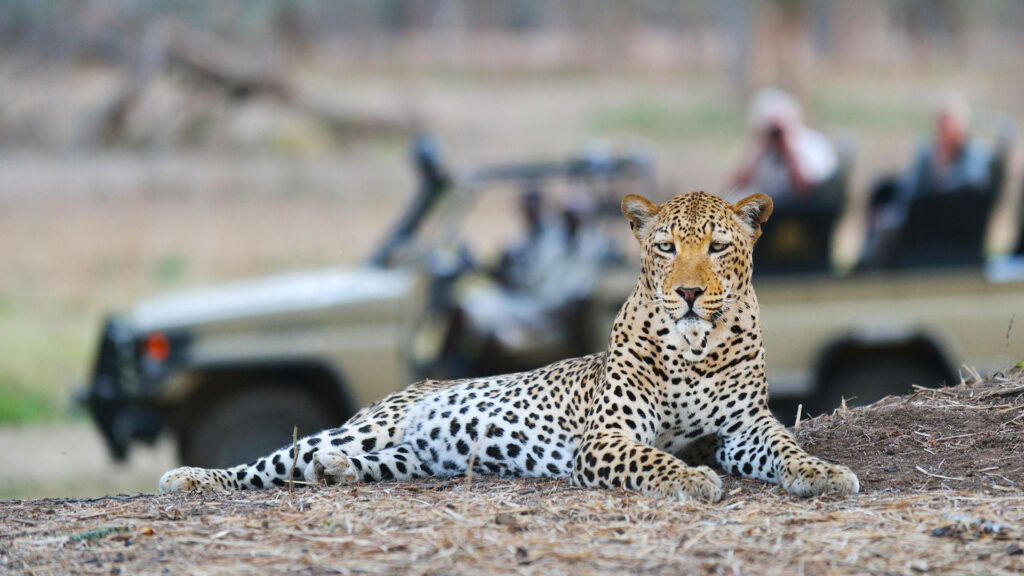
Despite this, the Lower Zambezi remains refreshingly uncrowded. Most of its camps are small, owner-run, and spread far apart along roughly 120 kilometres of river frontage, so sightings are rarely shared with more than one or two other vehicles. This guide covers everything you need to plan a visit in 2027 – 2028: where the park is, what you will see, the activities on offer, when to go, how to get there, what it costs, where to stay, and how to book.
| Lower Zambezi at a Glance
Location: Southeastern Zambia, on the north bank of the Zambezi River, opposite Mana Pools National Park in Zimbabwe Size: Approximately 4,092 km² Established: Gazetted as a national park in 1983 (formerly a private hunting reserve) Best time to visit: June to October (peak wildlife: August to October) Signature experiences: Canoe safaris, boat cruises, walking safaris, tiger fishing, game drives Nearest city: Lusaka — about 30 minutes by light aircraft or 3.5–5 hours by road Public park entry (international): US$25 per person per day (US$30 for self-drivers) |
Why Visit Lower Zambezi National Park?
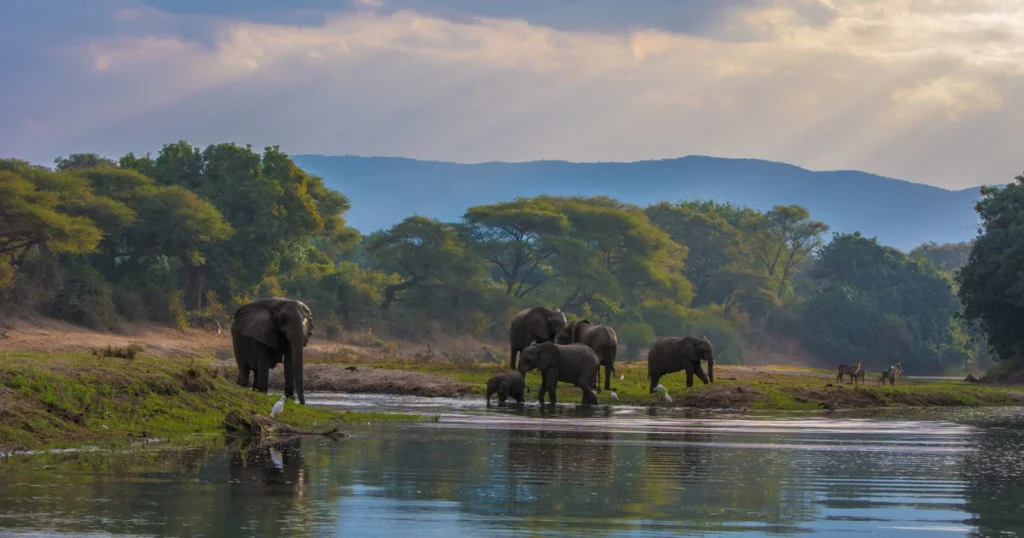
The Lower Zambezi sits in a deep rift valley. To the north, the Zambezi Escarpment rises steeply to more than 1,000 metres; to the south, the broad Zambezi River forms both the park boundary and the international border with Zimbabwe. Between the two lies a narrow, fertile floodplain of acacia woodland, winterthorn (Faidherbia albida) groves, sausage trees, ebony and mahogany — the most game-rich part of the park and the area where nearly all safari activity takes place.
Directly across the water lies Zimbabwe’s Mana Pools National Park, a UNESCO World Heritage Site. Together the two parks form one of the largest wildlife areas in the Zambezi Valley, and animals swim and wade freely between them and the islands in the river.
What makes the Lower Zambezi stand out:
- Water and land in one park: Few parks match its range of activities — drives, walks, canoeing, motorboat cruises and fishing are all available from most camps.
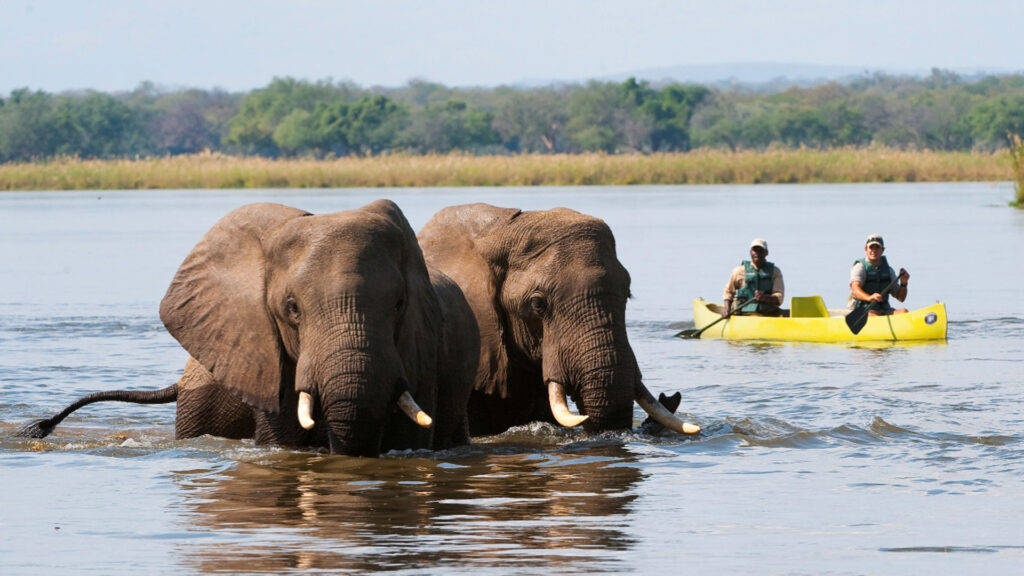
- Exceptional elephant encounters: Herds cross between the mainland and river islands, often swimming in full view of boats and canoes.
- Low visitor numbers: A small number of intimate camps keeps the park exclusive and quiet.
- Dramatic scenery: The blue escarpment backdrop, river channels and golden winter thorn trees make it one of Africa’s most photogenic parks.
- Easy access from Lusaka: A short scheduled or charter flight makes it ideal for short stays and for combining with South Luangwa or Victoria Falls.
A Brief History
Before 1983, the area was a private game reserve used by Zambia’s president, which helped protect it from development. After being declared a national park, it suffered heavy elephant poaching during the 1980s. Since the mid-1990s, the conservation NGO Conservation Lower Zambezi, working with the Department of National Parks and Wildlife (DNPW), lodges and local communities, has supported anti-poaching patrols, community education and human–wildlife conflict programmers. Elephant numbers have recovered strongly, and the park is now regarded as one of Zambia’s great conservation success stories.
Park Layout: The Park and the Chiawa GMA
Visitors often notice that some lodges are “in the park” while others are in the “GMA”. The Chiawa Game Management Area runs along the river west of the park, between the Kafue River confluence and the Chongwe River, which marks the park’s western boundary. The GMA has no fences and holds plenty of wildlife, especially along the riverfront. Many lodges sit here and run activities both in the GMA and inside the park.
| Good to Know: Park vs GMA Lodges
Lodges inside the national park generally offer the densest game viewing and the greatest sense of wilderness, but rates and park levies are higher. GMA lodges are often better value, are quicker to reach by road, and can offer activities such as night drives and walks outside park rules. Expect to drive into the park for the best game drives. |
Wildlife in Lower Zambezi National Park
The valley floor supports a high density of game, especially in the dry season when animals concentrate near the river. While the park does not have giraffe or rhino, it delivers four of the Big Five — elephant, buffalo, lion and leopard — with excellent regularity.
| Species | What to Expect | Best Way to See It |
| African elephant | Large herds; frequent river and island crossings | Canoe, boat cruise, game drive |
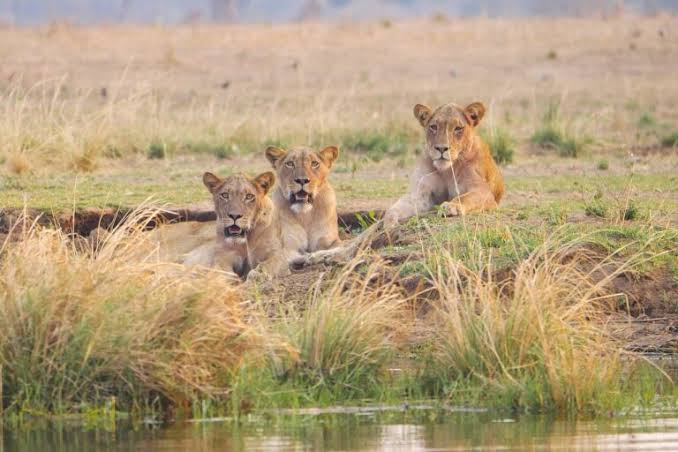
| Lion | Several resident prides on the floodplain | Morning and night game drives |
| Leopard | Very good sighting rates, particularly at night | Night drives |
| African wild dog | Present but wide-ranging; occasional sightings | Game drives (Aug–Oct best) |
| Cape buffalo | Herds on the floodplain; old bulls near water | Game drives, walks |
| Hippopotamus | Abundant in the main river and channels | Boat and canoe safaris |
| Nile crocodile | Common along sandbanks | Boat cruises |
| Antelope | Impala, kudu, waterbuck, eland, bushbuck, common duiker | All activities |
| Smaller predators | Spotted hyena, honey badger, civet, genet, serval | Night drives |
Birdlife
More than 370 bird species have been recorded in the Lower Zambezi, making it a rewarding destination for birders. The river supports African fish eagles (heard calling along nearly every stretch), African skimmers on the sandbanks, Goliath herons, saddle-billed storks and several kingfisher species. From around August to November, colonies of southern carmine bee-eaters nest in the riverbanks — one of the great birding spectacles of the region. Specialists to look for include Pel’s fishing owl, Narina trogon, Meyer’s parrot, trumpeter hornbill and, during the summer months, a wave of migrants from Europe and the rest of Africa.
Top Things to Do in Lower Zambezi National Park
1. Canoe Safaris
Canoeing is the signature activity of the Lower Zambezi. Guided by experienced river guides, you paddle stable two-person Canadian canoes through quiet side channels, where you drift past elephants feeding on reeds, buffalo drinking at the water’s edge, and kingfishers darting overhead. Trips range from half-day paddles to multi-day canoe trails with nights in simple fly camps. No previous experience is needed, though guides set minimum age limits (often 12 to 16 years) for safety.
2. Game Drives (Day and Night)
Open 4×4 game drives explore the floodplain, woodland and lagoons. Morning drives are best for lions and general game, while night drives with a spotlight reveal leopards, hyenas, civets, genets and porcupines. Night drives are one of the highlights of a Zambian safari and are available from most camps.
3. Boat Cruises and Sundowners
Motorboat cruises let you cover longer stretches of the Zambezi and explore islands and channels. They are excellent for photographing elephants swimming, hippo pods, crocodiles and waterbirds. A sundowner cruise, with drinks as the sun sets behind the escarpment, is a classic Lower Zambezi experience.
4. Walking Safaris
Led by a professional guide and an armed DNPW scout, walking safaris reveal the small details of the bush: tracks, dung, medicinal plants and insect life. Walks typically last two to four hours in the cooler early morning.
5. Tiger Fishing
The Zambezi is one of the best rivers in Africa for tigerfish, a hard-fighting predatory fish prized by anglers worldwide. Bream and vundu (a giant catfish) are also caught. Fishing in the area is catch-and-release, and a fishing permit is required. Note that Zambia enforces an annual fishing closed season, typically from December to February, to protect breeding fish.
6. Birdwatching and Photography
Many camps offer specialist photographic boats, hides and vehicles. Combine boat-based photography of bee-eater colonies and fish eagles with game drives for big cats.
7. Community and Conservation Visits
Some lodges arrange visits to Chiawa village or to the Conservation Lower Zambezi education centre, where you can learn about anti-poaching work, community projects and human–wildlife conflict solutions.
| Marriott Safaris Africa Tip
To experience the full range of the Lower Zambezi, plan a minimum of three nights — ideally four. This gives you time to enjoy at least one canoe trip, one night drive, one walk and a sundowner cruise without rushing. |
Best Time to Visit Lower Zambezi National Park
The Lower Zambezi has a distinct dry season and wet season, and the timing of your visit makes a big difference to wildlife viewing and to which camps are open. Most lodges inside the park close during the rains, roughly from mid-November to April.
| Period | Season | Weather | Wildlife & Notes |
| April – May | Early dry / green | Warm days, cooling nights; lush vegetation | Camps begin reopening; scenic, quieter and good value |
| June – July | Cool dry season | Pleasant days (24–28°C), chilly mornings | Very good game viewing; comfortable for walking and canoeing |
| August – October | Peak dry season | Hot, increasingly so in October (35°C+) | Best wildlife concentrations along the river; peak rates; book early |
| November | Shoulder | Very hot, first rains arrive | Excellent game early in the month; some camps close |
| December – March | Green / rainy season | Heavy rain, high humidity | Most camps closed; roads difficult; superb birding |
Our recommendation: For a first safari, visit between June and October. If you prefer cooler weather and still-excellent wildlife, choose June to August. For the most intense game viewing and dramatic predator activity, choose September and October — but prepare for heat.
How to Get to Lower Zambezi National Park
All journeys start in Lusaka, served by Kenneth Kaunda International Airport. Regional connections run through hubs such as Johannesburg, Nairobi, Addis Ababa and Dubai. From Lusaka you can reach the park by air or by road.
By Air (Recommended)
Scheduled light-aircraft flights and private charters connect Lusaka with the park’s airstrips, principally Jeki (for camps in the park’s central and eastern sections) and Royal (for lodges in the Chiawa GMA and western park). The flight takes around 30 to 40 minutes and offers spectacular views over the escarpment. Camp vehicles or boats meet guests on arrival. Strict luggage limits apply — usually around 20 kg per person in soft-sided bags.
By Road and Self-Drive
The road route runs south from Lusaka through Kafue to Chirundu (about 140 km), then east through the Chiawa GMA towards the park’s Chongwe Gate. Depending on your lodge and road conditions, allow 3.5 to 5 hours. The final sections are gravel and sand and require a 4×4 with good clearance. Some lodges also offer road-and-boat transfers, with the last leg on the river.
| Option | Travel Time | Approx. Cost | Best For |
| Scheduled flight Lusaka → Jeki/Royal | 30–40 min | From approx. US$300–500 one way per person | Short stays, comfort, luggage-light travellers |
| Private charter | 30–40 min | Priced per aircraft | Families, groups, tight connections |
| Lodge road transfer | 3.5–5 hrs | Varies by lodge | Budget-conscious travellers, GMA lodges |
| Self-drive 4×4 | 3.5–5 hrs | Vehicle hire + fuel + fees | Experienced drivers, campers |
| Self-Drive Essentials
Travel only in a properly equipped 4×4 with two spare tyres, recovery gear and enough fuel — there are no fuel stations inside the park. Refuel and stock up in Lusaka or Chirundu. Drive only in daylight, respect park gate hours (6am–6pm) and confirm your campsite or lodge booking in advance. Self-drive visitors pay a higher daily entry fee (US$30) plus a vehicle fee (US$15 for foreign-registered vehicles under 3 tons). Many roads become impassable in the rainy season — self-drive is realistic only from about May to November. |
Visas and Entry Requirements
Zambia has extended visa-free entry to citizens of many countries, while others can obtain an e-visa or a visa on arrival. If you plan to combine Zambia with Zimbabwe (for example, Victoria Falls), the KAZA Univisa covers both countries. Requirements change, so always confirm the latest rules for your nationality with the Zambian Department of Immigration or your nearest embassy before you travel. Your passport should be valid for at least six months with blank pages. A yellow fever certificate may be required if you are arriving from a country with risk of yellow fever transmission.
Lower Zambezi National Park Entry Fees (2026)
The Department of National Parks and Wildlife sets the official park fees. The most recent published tariff (listed as 2025 guidance and still in use for planning in 2026) is shown below. A “day” runs from 6am to 6pm.
| Category | Fee per Person per Day |
| International visitors | US$25 |
| Self-drive visitors (residents and non-residents) | US$30 |
| SADC nationals / Zambian residents | US$20 |
| Zambian citizens | K55.60 |
| Children under 5 | Free |
| Children aged 5–13 | 50% of the adult rate |
| Other Charges (Non-Residents) | Fee |
| Foreign-registered vehicle (under 3 tons) | US$15 per day |
| Boating | US$20 per day |
| Canoeing and rafting | US$20 per day |
| Angling | US$30 per day |
| Camping | US$5 per night |
| Why Lodge “Park Fees” Look Higher
Lodges inside the park often quote park fees of around US$85–120 per person per night. This figure usually bundles the national park entry fee with conservation, community and concession levies. It is not an overcharge — but always ask your operator for a written breakdown of what is included before you pay. |
Where to Stay in Lower Zambezi National Park
Accommodation ranges from exclusive tented camps deep inside the park to comfortable riverside lodges and campsites in the Chiawa GMA. Most camps are small (often six to ten rooms), and many are fully inclusive of meals, drinks and activities.
Luxury
- Chiawa Camp: One of the park’s pioneering camps and among Zambia’s most acclaimed, known for outstanding guiding, spacious tents and superb river frontage.
- Old Mondoro: A small, intimate bush camp in the eastern park with an authentic, remote atmosphere and excellent walking.
- Sausage Tree Camp: Contemporary, stylish suites with private butler service and plunge pools on the riverbank.
- Anabezi Camp: Elevated luxury tents overlooking a Zambezi channel in the less-visited eastern section of the park.
Mid-Range
- Royal Zambezi Lodge: An upmarket, well-run riverside lodge near the Royal airstrip, with a spa and convenient access by air or road.
- Chongwe River Camp: Set at the confluence of the Chongwe and Zambezi rivers on the park boundary, popular with families.
- Baines’ River Camp: A colonial-style lodge with spacious rooms and a relaxed riverside setting in the GMA.
Budget and Camping
- Kiambi Safari Lodge: Affordable chalets and a campsite near the Kafue–Zambezi confluence; a good base for fishing and road travellers.
- Mvuu Lodge: Tented chalets and private campsites with en-suite facilities in the GMA, ideal for self-drivers.
- GMA campsites: Several lodges operate riverside campsites — book ahead in the dry season.
| Tier | Typical Rate (per person per night) | Usually Includes |
| Luxury | US$900–2,000+ | All meals, drinks, activities, laundry; often park fees |
| Mid-range | US$400–900 | Meals and most activities; park fees often extra |
| Budget / camping | US$20–250 | Accommodation; activities and meals often charged separately |
Rates are indicative for the 2026 dry season and vary by camp, month and length of stay. Low-season discounts and stay-pay offers are common in May, June and November.
Sample Lower Zambezi Safari Itineraries
4-Day Lower Zambezi Safari
| Day | Activities |
| Day 1 | Morning flight from Lusaka to Jeki or Royal airstrip. Settle into camp, lunch, then an afternoon boat cruise followed by a sundowner on the river and a night drive back to camp. |
| Day 2 | Early morning game drive on the floodplain in search of lions and buffalo. Midday rest. Afternoon canoe safari through quiet side channels among elephants and hippos. |
| Day 3 | Guided walking safari with an armed scout. Optional tiger fishing session or photographic boat trip in the afternoon, then a night drive for leopard. |
| Day 4 | Final sunrise game drive or canoe paddle, brunch, then flight back to Lusaka for onward connections. |
8-Day Zambia Highlights: Lower Zambezi, South Luangwa & Victoria Falls
| Days | Destination | Highlights |
| 1–3 | Lower Zambezi National Park | Canoe safaris, boat cruises, night drives, walking |
| 4–6 | South Luangwa National Park | Walking safaris, leopards, night drives (fly via Lusaka to Mfuwe) |
| 7–8 | Livingstone / Victoria Falls | Guided tour of the Falls, Zambezi sunset cruise, Devil’s Pool (seasonal) |
Combining the Lower Zambezi With Other Destinations
- South Luangwa: Zambia’s most famous park and the birthplace of the walking safari — the classic pairing.
- Victoria Falls: A short flight from Lusaka; perfect for a pre- or post-safari stay.
- Kafue National Park: Vast, wild and good value, ideal for longer itineraries.
- Lake Kariba and Mana Pools (Zimbabwe): For a Zambezi Valley circuit on both sides of the river (border formalities required).
Health, Safety and Packing Tips
Health
- The Lower Zambezi is a malaria area. Consult a travel health clinic about antimalarial medication and use insect repellent, long sleeves and mosquito nets in the evening.
- Tsetse flies occur in parts of the park. Avoid wearing dark blue and black clothing, which attracts them.
- Drink bottled or filtered water, stay well hydrated in the hot months and use high-SPF sunscreen.
- Comprehensive travel insurance with medical evacuation cover is strongly recommended.
Safety in the Bush
- Always follow your guide’s instructions, especially on walks and canoe trips.
- Camps are unfenced — never walk around camp alone after dark; use the escort service provided.
- Stay seated and keep limbs inside vehicles and canoes when near wildlife.
- Never swim in the Zambezi — crocodiles and hippos make it dangerous.
What to Pack
| Category | Essentials |
| Clothing | Neutral khaki, olive or beige layers; long sleeves for evenings; fleece for chilly June–July mornings; wide-brimmed hat |
| Footwear | Comfortable walking shoes or light boots; sandals for camp |
| Gear | Binoculars, camera with zoom lens, spare batteries and memory cards, headlamp, dry bag for canoe trips |
| Health | Antimalarials, insect repellent, sunscreen, personal medication, basic first-aid kit |
| Documents | Passport, visa or e-visa, insurance details, flight tickets, some US dollars cash for tips |
Conservation in the Lower Zambezi
The park’s recovery from the poaching crisis of the 1980s is the result of long-term partnerships between the DNPW, Conservation Lower Zambezi, lodge operators and the communities of Chiawa and surrounding areas. Today, conservation efforts focus on anti-poaching patrols supported by aerial surveillance and detection dogs, environmental education for local schoolchildren, and practical solutions to human–wildlife conflict, such as protecting crops from elephants.
Every visit contributes directly to these efforts through park fees and conservation levies. Choosing lodges with strong community and conservation credentials — and respecting wildlife-viewing guidelines — helps ensure the Lower Zambezi remains wild for future generations.
How to Book Your Lower Zambezi Safari With Marriott Safaris Africa
| Step | What Happens |
| 1. Share your plans | Tell us your travel dates, group size, budget and interests (canoeing, fishing, photography, family travel). |
| 2. Receive a tailored proposal | We design an itinerary with recommended lodges, flights or road transfers and a transparent cost breakdown, including park fees and levies. |
| 3. Refine and confirm | Adjust lodges, activities or extensions such as South Luangwa or Victoria Falls until the trip is perfect. |
| 4. Secure with a deposit | We reserve camps and flights — essential for August to October, when the best camps sell out early. |
| 5. Travel with confidence | Receive final documents, a packing list and 24/7 support from arrival in Lusaka to your final departure. |
Frequently Asked Questions
Is Lower Zambezi National Park worth visiting?
Yes. It combines excellent big-game viewing with a rare variety of water- and land-based activities, superb scenery and low visitor numbers. It is one of Zambia’s top three national parks alongside South Luangwa and Kafue.
How many days do I need in the Lower Zambezi?
Three to four nights is ideal. This allows time for a canoe safari, game drives by day and night, a walking safari and a boat cruise.
Can you see the Big Five in Lower Zambezi?
You can see four of them — elephant, buffalo, lion and leopard. There are no rhinos in the park.
Is canoeing in the Lower Zambezi safe?
Canoe safaris are run by trained, experienced guides who know the river and animal behaviour well. They follow quiet channels and keep safe distances from hippos and crocodiles. Minimum age limits apply.
How much does a Lower Zambezi safari cost?
Costs vary widely. A budget self-drive camping trip can cost under US$150 per person per day, while all-inclusive luxury camps can exceed US$1,500 per person per night, plus flights from Lusaka.
Can I self-drive to Lower Zambezi National Park?
Yes, in a well-equipped 4×4 during the dry season (roughly May to November). Self-drivers pay US$30 per person per day plus a vehicle fee.
When are the camps closed?
Most camps inside the park close from mid-November to April during the rainy season, when many roads become impassable. Some GMA lodges stay open year-round.
What is the difference between Lower Zambezi and Mana Pools?
They face each other across the Zambezi River. Lower Zambezi is on the Zambian side and is known for canoeing, boating and night drives; Mana Pools is on the Zimbabwean side and is famous for walking safaris and its open floodplain woodland.
| Ready to Paddle the Zambezi?
Let Marriott Safaris Africa plan your Lower Zambezi adventure — from hand-picked riverside camps and light-aircraft transfers to seamless combinations with South Luangwa and Victoria Falls. Marriott Safaris Africa — Perfection Anytime. |