
Morning Game Drive in Chobe National Park
There is a moment, just before the sun lifts over the Chobe River, when the whole park seems to hold its breath. The air is cool and still, mist drifts above the floodplain, and the only sounds are the grunt of a hippo, the far-off cry of a fish eagle and the soft crunch of your vehicle’s tyres on Kalahari sand. Then the light arrives, gold and low, and the riverfront comes alive.
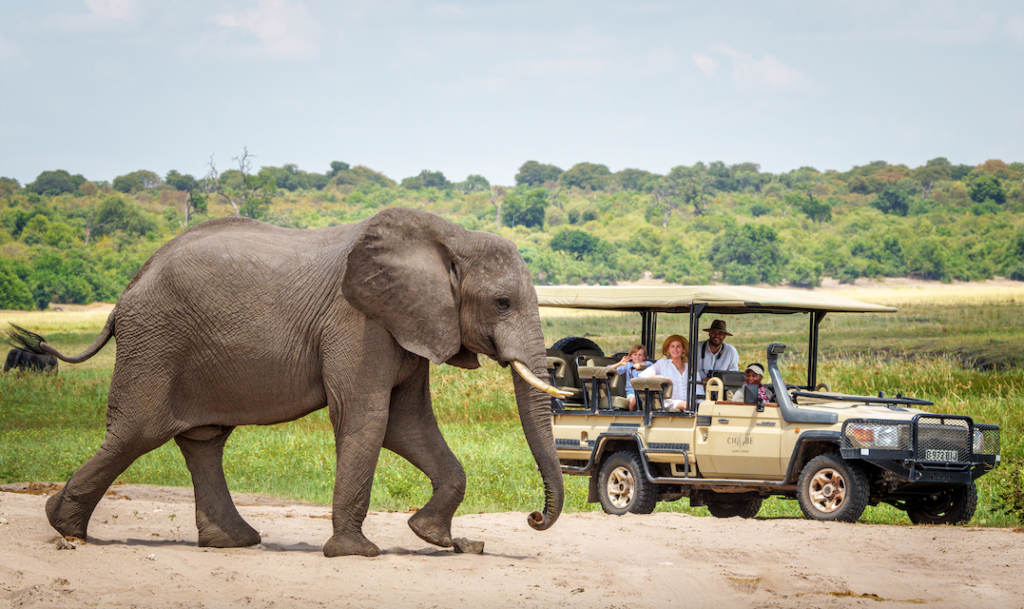
A morning game drive in Chobe National Park is one of the finest wildlife experiences in Southern Africa. Chobe, in northern Botswana, is home to one of the largest concentrations of African elephants on Earth, along with big buffalo herds, lions, leopards, hippos, crocodiles and an extraordinary variety of birds. Afternoon drives and river cruises have their own magic, but early morning is when predators are most active, animals are moving between night-time feeding areas and the river, and the light is at its most beautiful for photography.
This guide covers everything you need to plan a successful dawn safari in Chobe: what a typical morning drive looks like hour by hour, which sections of the park to explore, the wildlife you can expect, the best months to go, costs and park fees, what to wear, photography tips, safari etiquette and answers to the most common questions.
| At a Glance
Location: Northern Botswana; the main riverfront entrance, Sedudu Gate, is just west of Kasane Typical departure: Around 5:30–6:30 am, timed to reach the gate as it opens Duration: Roughly 3 to 4 hours (half-day); full-day drives also available Signature sightings: Elephants, buffalo, lions, hippos, puku, sable antelope, African fish eagles Best season: Dry season, May to October, peaking August to October Vehicle: Open-sided 4×4 safari vehicle — deep sand makes 4×4 essential |
Chobe National Park at a Glance
Established in 1967 as Botswana’s first national park, Chobe covers roughly 11,700 square kilometres of floodplain, woodland, marsh and dry sandveld. It forms part of the Kavango–Zambezi Transfrontier Conservation Area (KAZA), the vast cross-border landscape linking Botswana with Namibia, Zambia, Zimbabwe and Angola. That connectivity is a big reason Chobe supports such huge animal numbers, especially in the dry months when wildlife concentrates along permanent water.
The park is usually described in four main sections, each with a very different feel at dawn:
| Section | Character | Morning Drive Highlights |
| Chobe Riverfront (Serondela) | Floodplains and riverine woodland along the Chobe River, closest to Kasane | Huge elephant and buffalo herds, hippos, crocodiles, puku, lions, prolific birdlife |
| Savuti | Open grassland, the Savuti Marsh and Channel, rocky outcrops | Famous lion prides, hyenas, wild dog sightings, zebra movements in the green season |
| Linyanti | Remote marshes and riverine forest in the north-west | Wild dogs, leopards, sable, roan, elephants, very few vehicles |
| Nogatsaa / Tchinga | Dry woodland and seasonal pans in the interior | Eland, roan, elephants at the pans, a true wilderness feel |
Most visitors take their morning game drive on the Chobe Riverfront, because it is easily reached from lodges in and around Kasane. Travellers staying at camps in Savuti or the Linyanti area enjoy morning drives straight from camp, usually with far fewer vehicles around.
Why Mornings Are the Best Time for a Game Drive
Experienced guides will tell you that the first two hours of daylight are often the most productive of the entire safari day:
- Predators are still active. Lions, leopards, hyenas and wild dogs hunt mostly at night and in the cool hours around dawn. Early on, you have a real chance of finding a pride on a kill, a leopard slipping back into cover, or hyenas trotting home to their dens.
- Animals are on the move. Many herbivores move from night-time feeding grounds toward the river to drink, creating a steady flow of activity along the floodplain.
- Fresh tracks tell the story. Overnight tracks in the sand have not yet been driven over, so guides can read who passed by and follow fresh spoor.
- The light is spectacular. Soft, warm, low-angle light gives the best photographs, and mist over the river adds atmosphere.
- It is cooler. By October, afternoon temperatures can climb toward 40°C. Mornings are far more comfortable for people and wildlife alike.
- Quieter stretches. The riverfront can get busy, but timing your loop well right after the gate opens can give you sightings almost to yourself.
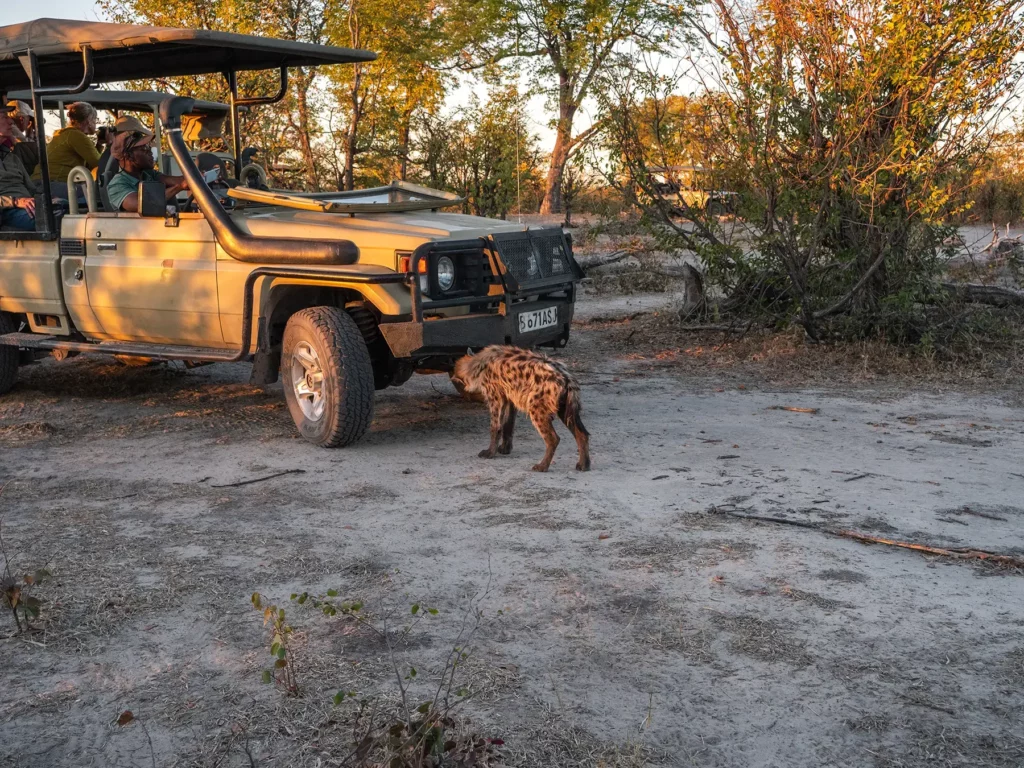
What to Expect: A Morning Game Drive Hour by Hour
Every lodge and operator has its own rhythm, but a typical morning game drive on the Chobe Riverfront from a Kasane lodge looks something like this:
| Time (approx.) | What Happens |
| 5:00 – 5:30 am | Wake-up call, often a gentle knock at the door. Light early breakfast of tea, coffee, rusks, muffins or cereal. |
| 5:45 – 6:15 am | Board the open 4×4 safari vehicle with blankets and ponchos. Short drive to Sedudu Gate, where your guide handles permits and park fees. |
| 6:00 – 7:30 am | Enter the park as the sun rises. Your guide works the riverfront tracks, checking for predators and fresh tracks first. |
| 7:30 – 8:00 am | On many drives, a stop at a designated spot for coffee, hot chocolate and snacks with views over the floodplain. |
| 8:00 – 9:30 am | Continue exploring floodplains and woodland: elephant herds arriving at the water, buffalo, antelope and birdlife. |
| 9:30 – 10:00 am | Exit the park and return to the lodge for a full brunch, then rest through the heat of the day. |
| Good to Know: Gate Times Change with the Seasons
Chobe’s gates open around sunrise and close around sunset — roughly 6:00 am to 6:30 pm in summer, with slightly shorter hours in winter. Departure times shift accordingly. Confirm current gate times with your operator or the Department of Wildlife and National Parks (DWNP) before you travel. |
First Light: Leaving the Lodge
The early start is the part people dread, but it quickly becomes the part they treasure. Wrapped in a blanket in the open vehicle, you watch the sky shift from deep blue to pink on the short road to the gate. Many guides pause just inside the park so guests can simply listen — lions roaring in the distance are not unusual at this hour.
The Riverfront Loop
Once inside, sandy tracks wind through riverine woodland and down onto the open floodplains. Your guide will typically check areas where lions or leopards were seen the previous evening, scan the tree lines, and watch the behaviour of impala, baboons and birds, whose alarm calls often give away a hidden predator. As the morning warms, elephant herds begin arriving at the river in long, unhurried lines.
The Coffee Stop
Many operators include a short break at a designated stopping point overlooking the river. It is a chance to stretch, chat with your guide and watch hippos and birds from a safe distance. Never leave the vehicle unless your guide confirms it is a permitted and safe location.
The Return
By mid-morning, activity slows as the heat builds. Your guide heads back toward the gate, often by a different route to maximise sightings, and you return to the lodge for a hearty brunch and a rest before the afternoon boat cruise or game drive.
Wildlife You Can See on a Chobe Morning Game Drive
Elephants: The Stars of Chobe
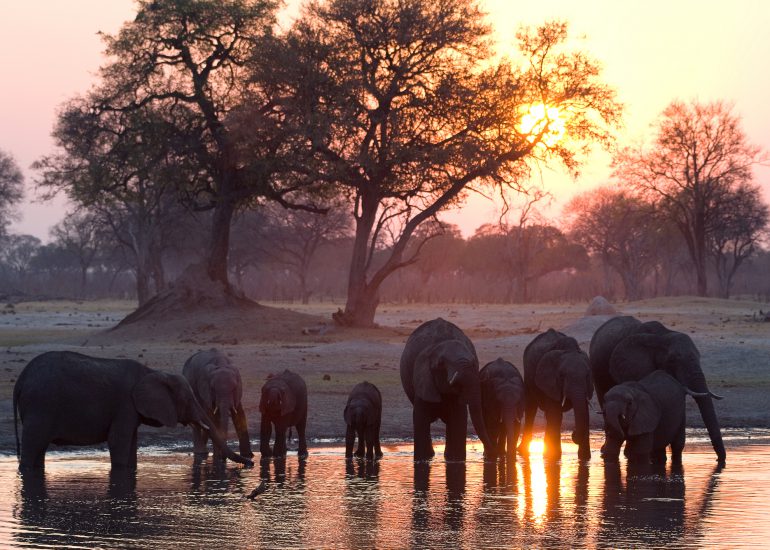
Chobe is famous above all for elephants. In the dry season, tens of thousands gather along the Chobe River, and seeing a breeding herd of dozens of animals — from tiny calves to towering matriarchs — is close to guaranteed on the riverfront between July and October. Mornings are a wonderful time to watch them drink, dust-bathe and swim across the river channels.
Big Cats and Other Predators
Lions are regularly seen on the riverfront and are a speciality of Savuti, where prides are renowned for their size and boldness. Leopards are elusive but live in the riverine woodland, and early morning gives you the best chance of catching one before it retreats into cover. Spotted hyenas, jackals and, with luck, African wild dogs complete the line-up. Cheetahs are occasionally seen in the more open areas, particularly around Savuti.
Antelope and Other Herbivores
The riverfront is one of the few places in Botswana to see the puku, a golden antelope at the edge of its range. You may also see red lechwe, waterbuck, impala, greater kudu, Chobe bushbuck, sable and roan antelope, giraffe, zebra, warthog and large herds of Cape buffalo.
Hippos and Crocodiles
Hippos are often still out of the water grazing at first light, giving you a rare chance to see them on land before they return to the river. Nile crocodiles haul out onto sandbanks as the sun warms them.
Birdlife
With well over 450 bird species recorded, Chobe is a paradise for birders. Mornings bring a chorus of activity: African fish eagles calling from riverside trees, saddle-billed and marabou storks, African skimmers, kingfishers, carmine and white-fronted bee-eaters, herons, egrets and lilac-breasted rollers. The green season (November to April) adds migrants and breeding plumage.
| Animal | Where to Look | Sighting Likelihood |
| Elephant | Riverfront floodplains, river crossings | Very high (dry season) |
| Cape buffalo | Floodplains, riverside grassland | High |
| Hippo | River channels; grazing on the banks at dawn | Very high |
| Lion | Riverfront, Savuti Marsh | Good |
| Leopard | Riverine woodland, thickets | Moderate |
| Puku | Riverfront floodplains | High (riverfront only) |
| Sable antelope | Woodland edges near the river | Moderate |
| Wild dog | Linyanti, Savuti, occasionally riverfront | Low to moderate |
| African fish eagle | Tall trees along the river | Very high |
Best Time of Year for a Morning Game Drive in Chobe
Chobe is a year-round destination, but conditions on a dawn drive change dramatically between seasons.
| Season / Months | Morning Conditions | Game Viewing |
| Early dry (May – June) | Cool to cold dawns, clear skies, vegetation thinning | Very good and improving as inland water dries up |
| Peak dry (July – October) | Cold in July, warming to hot by October; dusty and hazy late in the season | Excellent — peak elephant numbers along the river |
| Green season (November – April) | Warm and humid, with possible early showers | Good; lush scenery, newborn animals, superb birding, fewer visitors and lower rates |
| Our Recommendation
For the classic Chobe experience of massive elephant herds and dependable predator sightings, travel between July and October. For lush landscapes, birding, photography and better value, the green season is outstanding — and dawn drives then are wonderfully fresh after overnight rain. |
Types of Morning Game Drives in Chobe
Shared Lodge Game Drives
Most Kasane lodges run scheduled morning game drives in shared open vehicles, typically seating up to nine guests. This is the most affordable option and a great way to meet fellow travellers.
Private Guided Game Drives
A private vehicle and guide lets you set the pace: stay longer with a leopard, focus on birds or photography, and head in as soon as the gate opens. Ideal for families, honeymooners and serious photographers.
Full-Day Game Drives
A full-day drive starts at dawn and continues deeper into the park with a picnic or bush lunch, letting you explore further along the riverfront toward Serondela and Ngoma. A great choice if your time in Chobe is short.
Camp-Based Drives in Savuti and Linyanti
On a multi-day safari through the park, morning drives start right from camp. In Savuti and Linyanti you can drive for long stretches without seeing another vehicle, which gives the experience a genuine wilderness feel.
Self-Drive Morning Game Drives
Experienced drivers can explore the Chobe Riverfront on a self-drive basis with a properly equipped 4×4 — the deep sand tracks are not suitable for ordinary cars. You pay park and vehicle fees at the gate, must stay on designated tracks and must exit before closing. Lowering tyre pressure helps in deep sand. Self-driving is rewarding, but a local guide’s tracking skills and knowledge of the latest sightings usually lead to far better encounters.
| Option | Best For | Key Advantage | Consideration |
| Shared lodge drive | Budget and solo travellers | Affordable, sociable | Fixed schedule, shared viewing |
| Private guided drive | Families, photographers, couples | Flexible, personalised | Higher cost |
| Full-day drive | Short stays, keen wildlife watchers | Covers more ground | Long, hot day in summer |
| Camp-based (Savuti/Linyanti) | Multi-day safaris | Few vehicles, wilderness | Needs a longer itinerary |
| Self-drive | Experienced 4×4 drivers | Independence | Deep sand, no guide expertise |
Morning Game Drive vs. Afternoon Drive vs. Boat Cruise
Chobe is best enjoyed by combining activities. Here is how they compare:
| Feature | Morning Game Drive | Afternoon Game Drive | Afternoon Boat Cruise |
| Predator activity | High | Moderate, rising toward dusk | Low to moderate |
| Elephant viewing | Excellent | Excellent | Outstanding (swimming, drinking) |
| Light for photos | Soft golden light, mist | Warm evening light | Sunset reflections on water |
| Temperature | Cool to cold | Hot, cooling later | Pleasant on the water |
| Best for | Big cats, tracking, birds | General game viewing | Hippos, crocodiles, waterbirds, sunsets |
The classic Chobe day is a morning game drive followed by an afternoon boat cruise, showing you the park from both land and water for the most complete picture of the riverfront.
How Much Does a Morning Game Drive in Chobe Cost?
Prices vary by operator, season and group size. The activity prices below are indicative estimates to help you budget; park fees are set by the DWNP. Always confirm current rates when booking.
| Item | Indicative Cost | Notes |
| Shared morning game drive (approx. 3 hrs) | USD 50 – 100 per person | Booked through Kasane lodges; check whether park fees are included |
| Private morning game drive | USD 250 – 450 per vehicle | More cost-effective for small groups and families |
| Full-day game drive with lunch | USD 130 – 250 per person | Bush lunch and drinks included on many tours |
| Park entry – international adult | BWP 270 per day (≈ USD 20) | Reduced rate of about BWP 190 applies when visiting with a Botswana-registered operator |
| Park entry – child aged 8–17 | BWP 135 per day | Children under 8 enter free |
| Self-drive vehicle fee | ≈ BWP 115 per vehicle per day | Standard 4×4 or SUV; card accepted at Sedudu Gate |
| Budget Tip
Lodge packages that bundle daily game drives and boat cruises on a full-board basis often work out cheaper than booking activities separately. Ask Marriott Safaris Africa about inclusive Chobe packages that combine accommodation, activities and park fees. |
What to Wear and Pack for a Chobe Morning Game Drive
The biggest surprise for many visitors is how cold early mornings can be in an open vehicle, especially from May to August, when dawn temperatures can fall into single digits Celsius and the wind chill bites. By 10 am it may be warm, so dress in layers you can peel off.
Clothing
- Neutral colours (khaki, olive, beige, brown); avoid bright white and dark blue or black, which can attract biting flies
- A warm fleece or down jacket plus a windproof outer layer
- Beanie, scarf or buff, and gloves for winter mornings
- Long trousers and comfortable closed shoes
- Wide-brimmed hat and sunglasses for when the sun is up
- Light rain jacket in the green season
Essentials
- Binoculars — ideally one pair per person
- Camera with a zoom lens, spare batteries and memory cards
- Sunscreen and lip balm
- Insect repellent — Chobe lies in a malaria area, so consult a travel clinic about prophylaxis
- Reusable water bottle
- Passport or ID, which may be requested at the gate
- A small dust-proof bag for your gear
Photography Tips for a Morning Game Drive
- Set up before you leave. Low dawn light calls for a higher ISO, a wide aperture and a shutter speed fast enough to freeze movement.
- Use a beanbag. It is steadier than a tripod in a vehicle and rests easily on the side rail.
- Shoot into the light for drama. Backlit elephants kicking up dust, or mist over the river, make stunning silhouettes.
- Bring a zoom. A 100–400mm or 150–600mm lens covers most situations; a wide-angle is great for herds and landscapes.
- Work with your guide. Good guides understand light and angles and will position the vehicle without disturbing the animals.
- Ask for the engine off. It eliminates vibration during longer sightings.
- Put the camera down sometimes. Some moments are best enjoyed with your own eyes.
Safari Etiquette and Safety on a Chobe Game Drive
Chobe’s animals are wild, and respecting the rules keeps both you and the wildlife safe:
- Stay seated and keep arms, legs and cameras inside the vehicle.
- Never stand up, shout or make sudden movements near animals, especially elephants and lions.
- Speak quietly at sightings so as not to disturb animals or other guests.
- Never feed animals or leave litter.
- Do not ask your guide to go off-road or too close; off-road driving is not permitted on the riverfront.
- Share sightings fairly with other vehicles.
- Follow your guide’s instructions at all times — they are trained to read animal behaviour.
- Self-drivers should give elephants plenty of space, never drive between a mother and calf, and keep the engine running near agitated animals.
Sample 3-Day Chobe Itinerary with Morning Game Drives
Day 1: Arrival in Kasane
Arrive at Kasane International Airport or transfer from Victoria Falls (around 1.5 hours by road, depending on border formalities). Check into your riverside lodge, enjoy lunch, then head out on an afternoon sunset boat cruise among hippos, crocodiles and drinking elephants.
Day 2: Morning Game Drive and River Activities
Rise early for a morning game drive in Chobe National Park along the riverfront, focusing on predators and elephant herds arriving at the water. Return for brunch and a midday rest. In the afternoon, choose a second game drive or another cruise for a fresh perspective.
Day 3: Final Dawn Drive and Departure
Enjoy one last morning drive — often the most rewarding, as your guide follows up on the previous day’s sightings. Return for breakfast before your transfer to Victoria Falls, the Okavango Delta or your departure flight.
| Extend Your Adventure
Add 2–3 nights in Savuti for lion-rich morning drives, or combine Chobe with the Okavango Delta and Victoria Falls for a classic Botswana–Zimbabwe circuit. Our team can tailor a route to your dates and budget. |
Getting to Chobe for Your Morning Game Drive
- By air: Kasane International Airport receives flights from Johannesburg and regional connections, and lies minutes from Sedudu Gate.
- From Victoria Falls, Zimbabwe: A popular road transfer via the Kazungula border post.
- From Livingstone, Zambia: Cross the Zambezi on the Kazungula Bridge, which opened in 2021 and replaced the old ferry.
- From Maun and the Okavango Delta: Light-aircraft charters to Kasane or Savuti, or a dry-season overland 4×4 route through Moremi and Savuti via Mababe Gate.
Where to Stay for Easy Access to Morning Drives
Staying near Sedudu Gate means a shorter transfer and more time in the park. Kasane offers everything from riverside luxury lodges to mid-range hotels and well-run campsites, while lodges inside the park on the riverfront let you start drives almost from your doorstep. For a remote experience, choose a camp in Savuti or the Linyanti area. Marriott Safaris Africa can recommend luxury, mid-range and budget options to match your safari style.
Frequently Asked Questions
What time does a morning game drive in Chobe start?
Most drives depart between about 5:30 and 6:30 am, timed to reach the gate as it opens. Exact times change with the season.
How long is a morning game drive in Chobe?
A standard drive lasts about three to four hours, returning to your lodge around 9:30–10:00 am. Full-day drives are also available.
Is a morning game drive better than an afternoon drive?
Mornings offer the best chance of active predators, cooler temperatures and beautiful light, while afternoons are excellent for elephants at the river. Ideally, do both — or pair a morning drive with an afternoon boat cruise.
Will I see the Big Five in Chobe?
Chobe offers excellent sightings of elephants, buffalo, lions and leopards, but rhinos are extremely rare here, so the Big Five is not usually completed. The park’s elephant spectacle more than compensates.
How cold does it get on a morning game drive?
From May to August, early mornings in an open vehicle can feel close to freezing with wind chill. Bring warm layers, a hat and gloves; most operators also provide blankets.
Can I do a self-drive morning game drive in Chobe?
Yes, with a well-equipped 4×4 and experience in deep sand. You pay park and vehicle fees at the gate, stay on designated tracks and leave before the gates close.
Are children allowed on morning game drives?
Many operators accept children, though some set minimum ages for shared drives. A private vehicle is usually best for families with young children.
Do I need to book in advance?
Yes, especially from July to October. Booking drives together with your accommodation secures availability and the best guides.
Final Thoughts
A morning game drive in Chobe National Park stays with you long after you leave Botswana: the chill of dawn, the first lion roar, a breeding herd of elephants crossing the river in golden light. Whether you choose a shared drive from Kasane, a private photographic safari or a wilderness drive from a camp in Savuti, heading out at first light rewards you with Chobe at its most alive.
| Plan Your Chobe Safari with Marriott Safaris Africa
From morning game drives and sunset boat cruises to complete Botswana, Victoria Falls and Okavango Delta itineraries, our team designs safaris around your dates, interests and budget. Contact Marriott Safaris Africa today to start planning — Perfection Anytime. |