
Gombe Stream National Park Tanzania: Chimpanzee Trekking Guide
Gombe National Park, or Gombe Stream National Park, is situated in the western Kigoma Region of Tanzania, roughly 10 miles north of Kigoma, the regional headquarters. For safaris in Tanzania, it is essential to incorporate a visit to this park, particularly for chimpanzee trekking. Established in 1968, Gombe National Park is among Tanzania’s smallest national parks, encompassing about 35 square kilometers (14 square miles) of protected territory along the eastern shore of Lake Tanganyika. The remarkable scenery is characterized by steep valleys, with flora varying from grassland to woodland to tropical rainforest..
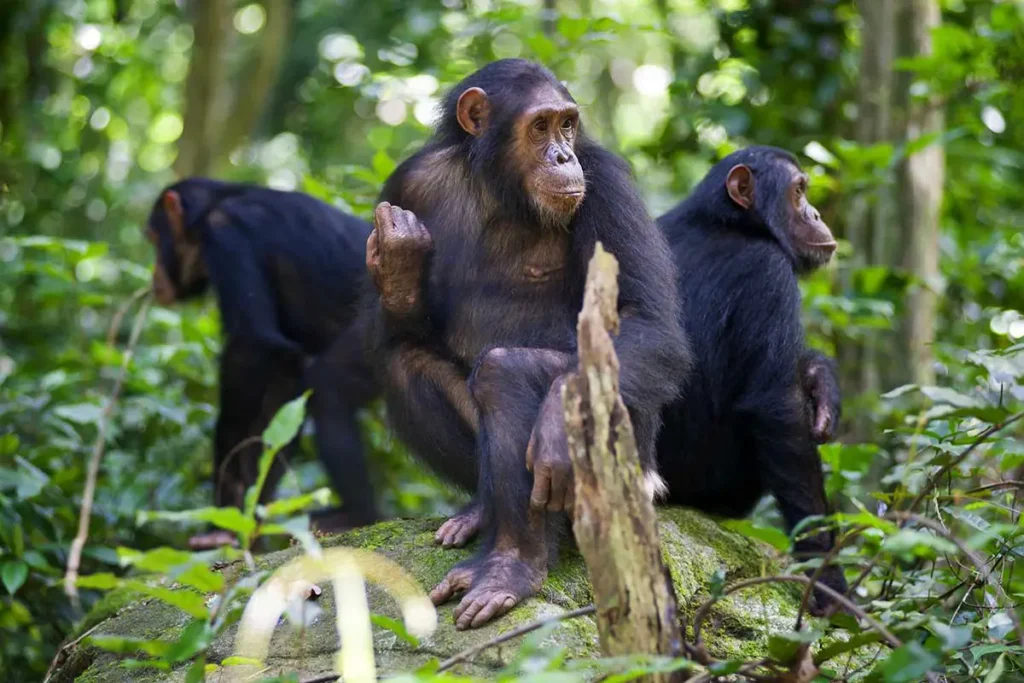
Gombe National Park is exclusively reachable by boat and is renowned for being the location of Jane Goodall’s behavioral studies on chimpanzee populations. The park is home to the Kasekala Chimpanzee population, which has been highlighted in numerous publications and documentaries. In addition to chimpanzees, Gombe hosts beachcomber olive baboons, red colobus monkeys, red-tailed monkeys, blue monkeys, and vervet monkeys, among various others. Hybridization between red-tailed and blue monkeys has also been documented in the region.
The park hosts more than 200 documented bird species, bushpigs, snakes, sporadic hippos, and leopards. Visitors to Gombe National Park may travel into the jungle to observe the chimpanzees. They may swim and snorkel in Lake Tanganyika, which hosts approximately 100 distinct types of vibrant cichlid fish.
Attraction in Gombe Stream National Park.
Wildlife.
Gombe Stream National Park is home to diverse fauna, including beachcomber olive baboons, red colobus monkeys, red-tailed monkeys, blue monkeys, and vervet monkeys, in addition to chimpanzees. Red-tailed monkeys and blue monkeys have been observed to hybridize in the area. Other fauna in the park includes bush pigs, snakes, occasional hippopotami, leopards, and various more.
Chimpanzees.
Chimpanzees are the primary draw of the park, sharing 98% of their genetic material with humans, and no specialized knowledge is necessary to differentiate the distinct vocalizations of pants, hoots, and screams that characterize the superstars, powerbrokers, and supporting figures. One may perceive a glimmer of comprehension when gazing into a chimpanzee’s eyes, which reflect a semblance of recognition across the most minimal of species divides.
Lake Tanganyika.
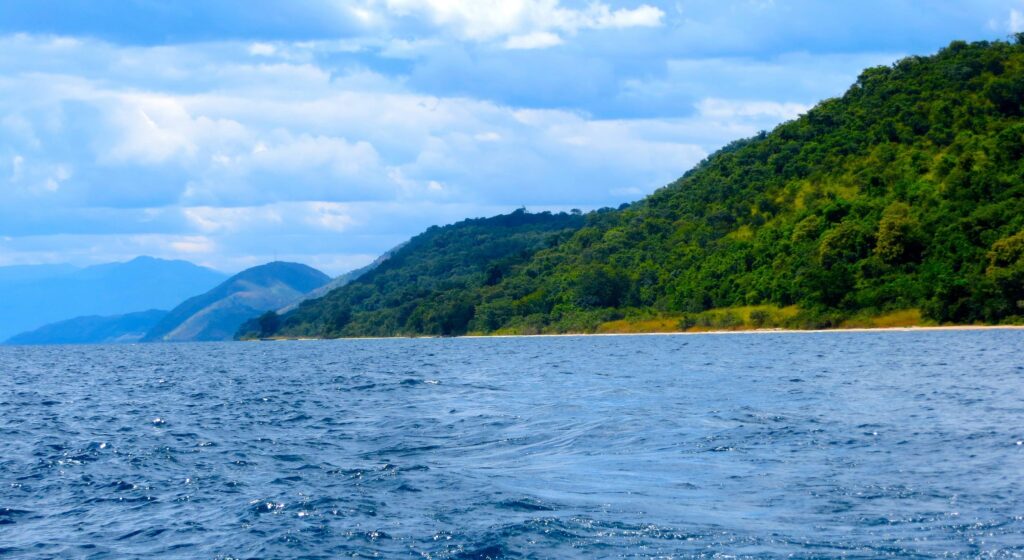
Lake Tanganyika serves as a significant feature inside the park, featuring azure waters that people utilize for swimming and snorkeling, where around 100 species of vibrant cichlid fish inhabit the lake.
Bird species.
Gombe Stream National Park is home to approximately 200 bird species, including the Palmnut culture, Peters twinspot, African fish eagle, crowned eagle, Ross’s turaco, double-toothed barbet, and African broadbill, among others.
Waterfalls.
Moreover, Gombe Stream National Park features an average of two to three waterfalls, with the prominent Kakombe waterfalls located on the steeply forested Rift Valley escarpment. These falls are remarkably beautiful, cascading hundreds of feet down verdant rock faces. After dusk, a brilliant night sky is enhanced by the lanterns of numerous small wooden boats, floating on the lake like an expansive city.
For further information regarding Gombe Stream National Park, please contact us at Marriott Safaris Africa. We will meticulously organize an extraordinary safari that will provide you with unforgettable memories through participation in various activities, including renowned chimpanzee trekking, among others.
Things to do in Gombe National Park
Trekking for Chimpanzees
Chimpanzee trekking constitutes the major tourist activity in Gombe Stream National Park. The park offers an excellent opportunity to see chimpanzees closely, as numerous family groupings are accustomed to human presence. Ascending the elevated, wooded inclines to the primate habitats is undoubtedly the pinnacle of any park visitor’s experience, accompanied by the immediate pant-hoot vocalizations of chimpanzees as one approaches these remarkable animals.
Their unmistakable pant-hoot sound amplifies the anticipation as you near these remarkable creatures who possess up to 98% of human DNA. Eye contact fosters a mutual understanding, akin to shared knowledge of the tenuous boundary separating you. In this primate territory, one may observe various species, including monkeys traversing the forest canopies, baboons, as well as reptiles, bush pigs, and elephants.
Bird Watching
Experience avian observation safaris in Gombe Stream National Park. Gombe National Park features more than 200 documented avian species, encompassing a variety of East African grassland birds and West African woodland species. A birding tour in Gombe provides the opportunity to observe avian species like as the African broadbill, Black saw-wing, Crowned eagle, Double-toothed barbet, Kenya Rufous sparrow, Livingstone’s turaco, Palm-nut vulture, Peter’s Twinspots, and Red-capped robin.
Boat Cruise
The boat excursions offer stunning vistas of the park’s lush terrain and azure waterways. Boat rides are offered on Lake Tanganyika and the park’s rivers, tailored to individual budgets. They are available upon request during the morning and afternoon hours. You will appreciate the zephyr from Lake Tanganyika while gazing at the Great Rift Valley escarpment, surrounded by breathtaking views of avifauna and fauna.
Guided National walks
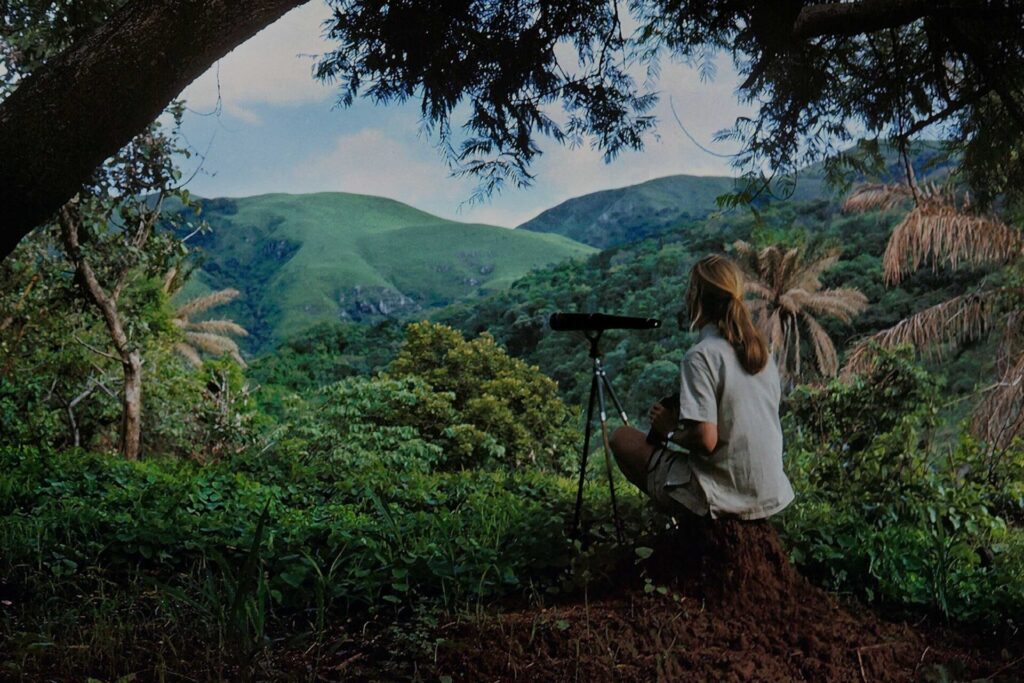
Nature hikes in Gombe National Park are exceptionally striking; the park features steep slopes, rivers, streams, and diverse vegetation, including alpine bamboo, tropical rainforests, and grasslands, providing stunning vistas on guided excursions. During the nature walk, one may also explore an antiquated feeding station of the Goodall Foundation, where Dr. Goodall studied chimpanzee behavior and where Henry Stanley encountered Dr. Livingstone in 1871.
Expedition Hiking Safaris
Hiking safaris in Gombe National Park provide exceptional experiences with the park’s lush flora and picturesque vistas of the surrounding landscape. Hiking is an exhilarating outdoor sport that offers breathtaking vistas while challenging your physical capabilities. Appreciate the densely wooded green hills and tropical forests, which host a diverse array of unique wildlife, including plant species, animals such as chimpanzees, elephants, monkeys, and baboons, as well as various bird species, including trumpeter hornbills, kingfishers, and palm nut vultures, among others.
Fishing
The practice is referred to as catch and release and is conducted for enjoyment. It is achieved when the weather is tranquil. The crew possesses extensive expertise in all facets of fishing. An adequately outfitted sports fishing vessel and a knowledgeable crew will guarantee your utmost satisfaction when angling on Lake Tanganyika.
Size and location of Gombe Stream National Park
The park encompasses an area of 52 square kilometers (20 square miles), rendering it the smallest park in Tanzania.
It is situated 16 kilometers (10 miles) north of the town of Kigoma, along the picturesque coastline of Lake Tanganyika in western Tanzania.
Best time to visit Gombe Stream National Park
During the wet season, which occurs from February to June and from November to mid-December, chimpanzees exhibit little movement, facilitating easier monitoring. Conversely, superior photographs can be captured during the dry season, spanning from July to October and late December.
Directions to Gombe Stream National Park
Scheduled flights link Kigoma to Dar es Salaam and Arusha, while Dar es Salaam is connected to Mwanza by a leisurely rail service. Additionally, there are unkempt, rugged roads leading to Mbeya, Mwanza, and Dar es Salaam, along with a weekly boat service to Mpulungu in Zambia.
Local taxis are available for transportation from Kigoma to Gombe, requiring a three-hour journey, or one may choose motorboats, which take less than an hour.