
Evening Game Drive in Chobe National Park
As the afternoon heat begins to fade over northern Botswana, something remarkable happens along the Chobe River. Herds of elephants – sometimes hundreds at a time – emerge from the dry teak woodland and march down to the water to drink, bathe and play. Buffalo kick up dust on the floodplains, lions stir from their daytime slumber, and the sky over the river turns from gold to deep crimson. This is the magic of an evening game drive in Chobe National Park, and for many travellers it becomes the single most memorable experience of their entire African safari.
This guide covers everything you need to know to plan the perfect afternoon and sunset game drive in Chobe: how the drive works, what time it starts and ends, the animals you are likely to see, the best season to go, how evening drives compare with morning drives and river cruises, what it costs, what to pack, photography tips, park rules, and where to stay. Whether you are joining a shared safari from Kasane, booking a private guided vehicle, or self-driving the riverfront, you will find practical, up-to-date advice below.
| Quick Answer
An evening game drive in Chobe typically runs from about 15:00 to 18:30, starting from Kasane and entering through Sedudu Gate onto the Chobe Riverfront. Expect large elephant herds at the river, buffalo, giraffe, hippos, crocodiles, antelope such as puku and red lechwe, and a good chance of lions. Drives must exit the national park before the gate closes at sunset – true night drives are not permitted inside Chobe National Park itself. |
Chobe National Park at a Glance
| Fact | Details |
| Location | Chobe District, northern Botswana, near the borders of Namibia, Zambia and Zimbabwe |
| Size | Approximately 11,700 km² – Botswana’s third-largest park |
| Established | 1968 – Botswana’s first national park |
| Main gateway town | Kasane (Kasane International Airport, code BBK) |
| Main entry for evening drives | Sedudu Gate, on the Chobe Riverfront just west of Kasane |
| Famous for | One of the largest elephant concentrations on Earth, river sunsets, big buffalo herds |
| Regions | Chobe Riverfront (Serondela), Savuti, Linyanti, Nogatsaa/Tchinga |
| Bird species | 450+ recorded |
| Managed by | Department of Wildlife and National Parks (DWNP), Botswana |
Why Choose an Evening Game Drive in Chobe?
Most safari destinations promote the early morning as the prime time for wildlife viewing, and mornings in Chobe are certainly excellent. But the Chobe Riverfront has a rhythm all of its own that makes the afternoon and evening session exceptional.
1. The great elephant river crossing
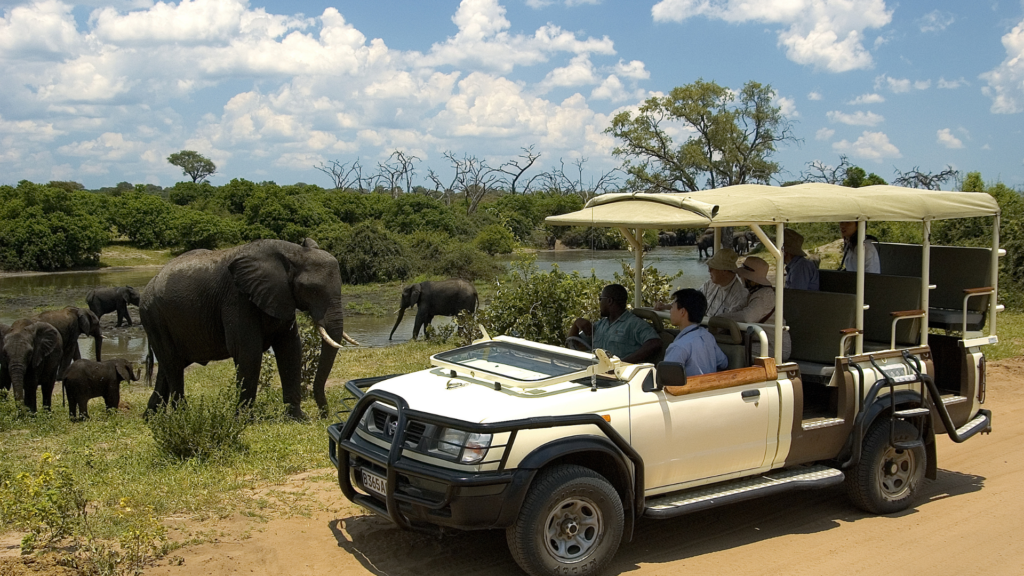
During the dry season, the inland waterholes of the Chobe woodlands dry up, and the river becomes the only reliable source of water for tens of thousands of elephants. They tend to spend the hot middle of the day in the shade of the woodland and then move down to the river in the mid-to-late afternoon. An evening drive is perfectly timed to catch this daily procession – breeding herds with tiny calves, young bulls sparring in the shallows, and family groups swimming across to the islands.
2. Predators become active
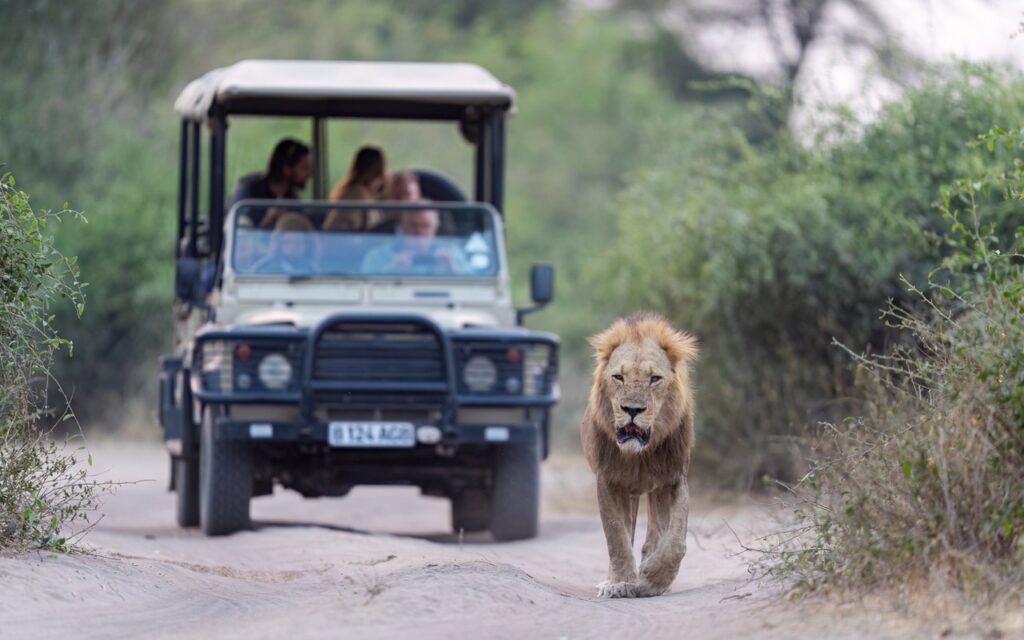
Lions, leopards and hyenas spend much of the day resting. As temperatures drop in the late afternoon, they begin to stretch, groom and move. Late in the drive is when guides often find prides gathering before a hunt, or a leopard descending from a tree along the riverine bush.
3. Golden-hour light and legendary sunsets
The Chobe River runs roughly east–west in front of the riverfront, and the sun sets across the floodplains toward the Caprivi (Zambezi Region) of Namibia. The last hour of light paints elephants, buffalo and acacias in warm gold, producing some of the best wildlife photography conditions in Africa.
4. A relaxed start
If you arrived in Kasane on a morning flight, came across from Victoria Falls, or simply prefer not to wake at 05:00, the evening game drive is the easiest way to fit a quality safari into your day. Many travellers do a morning boat cruise and an evening drive, or vice versa, to experience Chobe from both land and water in one day.
5. Comfortable temperatures in winter
In June, July and August, Chobe mornings can be genuinely cold in an open vehicle (sometimes close to 5°C at dawn). Afternoons are pleasantly warm, making the evening drive the more comfortable option during the southern winter – just bring a fleece for the ride home as the sun drops.
What to Expect: A Typical Evening Game Drive Timeline
Exact times vary with the season and the gate opening hours, but a standard guided evening game drive on the Chobe Riverfront follows a pattern similar to the one below.
| Time | What Happens |
| 14:30 – 15:00 | Pick-up from your lodge or hotel in Kasane in an open-sided 4×4 safari vehicle. Your guide gives a short briefing on safety and what to expect. |
| 15:00 – 15:15 | Short drive (about 5–10 minutes) to Sedudu Gate. Park permits are checked and entry fees settled if not already included. |
| 15:15 – 16:30 | Drive down to the riverfront tracks. Early sightings often include impala, baboons, warthog, kudu, giraffe and the first elephant herds arriving at the water. |
| 16:30 – 17:30 | Peak elephant activity along the floodplains. Buffalo, hippos and crocodiles on the banks. Guides scan for lions and leopards in the riverine thickets. |
| 17:30 – 18:00 | Golden hour. Many guides pause at a scenic viewpoint over the river for photography and, on some tours, a short sundowner stop where permitted. |
| 18:00 – 18:30 | Drive back toward Sedudu Gate to exit before closing time. Return to Kasane as dusk settles. |
| Gate Times Matter
Chobe National Park gates follow DWNP seasonal hours. As a general guide, gates open around 06:00 and close around 18:30 from April to September, and open earlier and close later (around 05:30 to 19:00) from October to March. All vehicles must be out of the park by closing time. Always confirm the current hours with your operator or at the gate, as they can be adjusted. |
The Safari Vehicle
Guided evening drives from Kasane almost always use open-sided or open-roof 4×4 vehicles – typically modified Toyota Land Cruisers – with tiered seating for 6 to 10 guests. Most have a canvas roof for shade but no side panels, giving unobstructed views and excellent photographic angles. Private vehicles can be booked for families, photographers or couples who want flexibility over how long to stay at each sighting.
Your Guide
Chobe guides are licensed by Botswana’s Department of Tourism and often have years of experience reading the riverfront. They communicate by radio with other vehicles to share sightings, explain animal behaviour, identify birds, and position the vehicle for the best viewing and light. Do not hesitate to ask questions – the best guides love sharing their knowledge.
Wildlife You Can See on a Chobe Evening Game Drive
The Chobe Riverfront is one of the most wildlife-dense stretches of land in Southern Africa. The combination of permanent water, lush floodplains and dense woodland supports an extraordinary variety of species.
Elephants – The Undisputed Stars
Chobe is synonymous with elephants. The wider Chobe region holds one of the largest elephant populations in the world, with estimates for northern Botswana commonly running into the tens of thousands – often cited as over 100,000 animals across the broader ecosystem. Chobe’s elephants belong to the Kalahari population, known for being among the largest-bodied elephants on the continent, though with relatively short, brittle tusks. In the dry season, seeing several hundred elephants in a single afternoon is entirely realistic.
The Big Cats and Other Predators
Lions are regularly seen along the riverfront, particularly in the Serondela area further west, and prides have learned to hunt buffalo on the floodplains. Leopards are present in the riverine forest but are more elusive – late afternoon is one of the best times to spot one. Spotted hyenas, black-backed jackals and, occasionally, African wild dogs and cheetahs (more often in Savuti) add to the predator line-up.
Key Species Table
| Animal | Likelihood (Riverfront, Dry Season) | Notes |
| African elephant | Almost guaranteed | Huge herds at the river from mid-afternoon |
| Cape buffalo | Very high | Large herds on the floodplains; prime lion prey |
| Hippopotamus | Very high | Wallowing in the river; often grazing on the banks at dusk |
| Nile crocodile | Very high | Basking on sandbanks and riverbanks |
| Giraffe | High | Browsing in the woodland near the river |
| Impala, kudu, waterbuck | Very high | Common throughout the riverfront |
| Puku | High | A Chobe speciality – rare elsewhere in Botswana |
| Red lechwe | High | Water-loving antelope on the floodplains |
| Sable & roan antelope | Moderate / low | More often seen in the woodland and dry season |
| Lion | Moderate to good | Best chances late afternoon and in the western riverfront |
| Leopard | Low to moderate | Elusive; scan riverine trees and thickets |
| Spotted hyena | Moderate | More active as dusk approaches |
| African wild dog | Low | Sporadic sightings; more common in Linyanti |
| Chobe bushbuck | Moderate | A distinctive local subspecies |
Birdlife on the Evening Drive
With more than 450 recorded species, Chobe is a birding paradise. On an afternoon drive along the river, look out for the African fish eagle (and listen for its famous call), saddle-billed and marabou storks, African openbill, goliath heron, African jacana, pied and malachite kingfishers, and large flocks of white-faced whistling ducks. From roughly September to December, carmine bee-eaters nest in the riverbanks in dazzling colonies, while African skimmers can be seen gliding over the water in the dry season. In the green season (November to April), migrant species arrive and birding is at its peak.
Where Evening Game Drives Take Place in Chobe
Chobe National Park is divided into four main regions. Your evening drive experience depends heavily on which one you visit.
Chobe Riverfront (Serondela) – The Classic Evening Drive
The northernmost section of the park, stretching west from Sedudu Gate near Kasane along the Chobe River, is where the vast majority of evening game drives take place. It is easily accessible from Kasane, has the highest density of wildlife in the dry season, and delivers the iconic elephant-and-sunset scenes Chobe is famous for. Because it is so accessible, it can be busy with vehicles in peak season – an experienced guide will know how to avoid the crowds.
Savuti – Predator Country
Located in the remote south-west of the park, Savuti is renowned for its large lion prides (historically known for hunting elephants), spotted hyenas, and seasonal zebra migration. Evening drives here are quieter and wilder, usually operated from lodges or as part of a mobile camping safari. Savuti is typically reached by light aircraft or a long 4×4 drive from Kasane or Maun.
Linyanti – Wild Dogs and Night Drives
In the north-west, the Linyanti region borders the Linyanti swamps. Much of the area adjoins private concessions where lodges are permitted to offer night drives with spotlights after sunset – something not allowed in the national park itself. Linyanti is excellent for wild dogs, elephants, and a more exclusive safari experience.
Nogatsaa and Tchinga – The Quiet Interior
The central woodland region with seasonal pans is the least visited part of the park. It is best explored on self-drive camping trips and offers solitude, eland and roan antelope sightings, and excellent green-season game around the pans.
| Can I Do a Night Drive in Chobe?
Not inside Chobe National Park. DWNP regulations require all vehicles to be out of the park (or at a designated campsite) by gate closing time, so drives inside the park end around sunset. If you want to see nocturnal species such as genets, civets, porcupines, aardvarks and hunting leopards by spotlight, stay at a lodge in a private concession (for example in the Linyanti or Chobe Enclave areas) or in the adjoining Chobe Forest Reserve where night drives are permitted by the operator. |
Best Time for an Evening Game Drive in Chobe
Chobe is a year-round destination, but the season significantly changes the experience on an evening drive.
| Season | Months | Evening Drive Experience |
| Peak dry season | August – October | The very best game viewing. Elephants congregate at the river in enormous numbers. Hot afternoons (35°C+ in October). Busiest period – book early. |
| Early dry season | May – July | Excellent and rising game numbers. Green landscapes turning golden. Mild, pleasant afternoons; cool evenings. Great value before peak rates. |
| Green / wet season | November – April | Lush scenery, newborn animals, superb birding and dramatic storm skies. Elephants disperse inland, so river numbers drop. Possible afternoon thunderstorms. Lower rates and fewer vehicles. |
| Month | Temperature (approx.) | Rain | Game Viewing |
| January – March | Hot, humid (30–33°C) | Highest | Good (birds, babies) |
| April | Warm (30°C) | Tapering off | Good |
| May – June | Mild days, cool nights | Very low | Very good |
| July | Mild days, cold nights | None | Very good |
| August – September | Warm to hot | None | Excellent |
| October | Very hot (35–40°C) | First rains possible late | Excellent |
| November – December | Hot, storms building | Increasing | Good |
| Our Recommendation
For the classic Chobe evening game drive with huge elephant herds at the river, travel between late June and October. For photographers who love dramatic skies and birders chasing migrants, the green season from December to March is a rewarding and often overlooked \. |
Evening Game Drive vs Morning Drive vs Sunset Boat Cruise
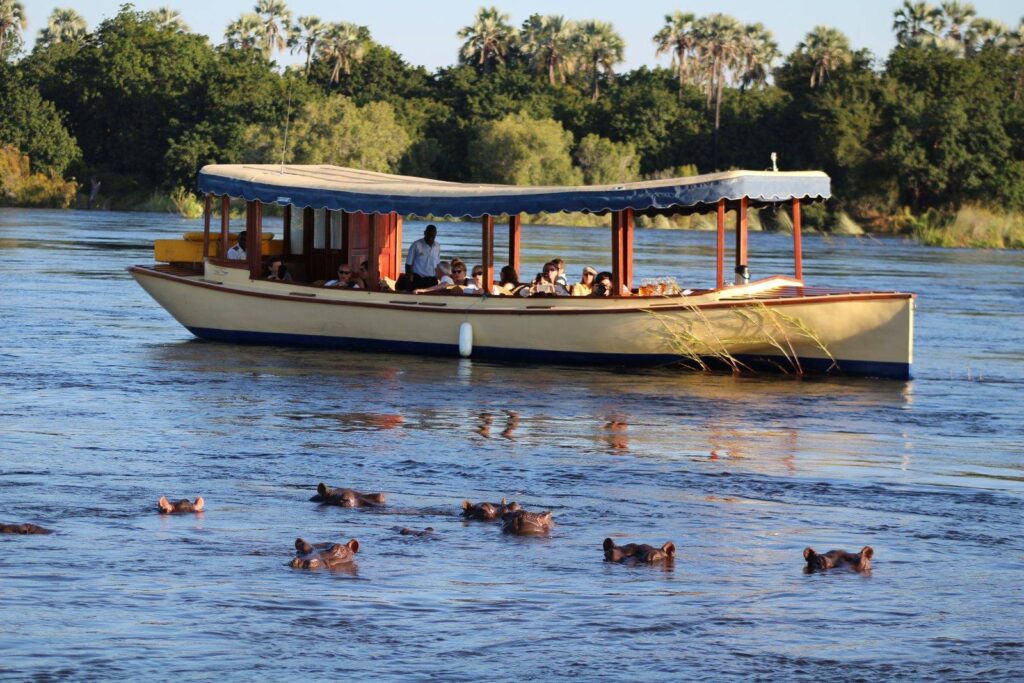
In Kasane you will typically choose between three main activities: a morning game drive, an afternoon/evening game drive, and a Chobe River boat cruise. Each offers something different, and ideally you will do at least two.
| Factor | Evening Game Drive | Morning Game Drive | Sunset Boat Cruise |
| Typical time | 15:00 – 18:30 | 06:00 – 10:00 | 15:00 – 18:00 |
| Elephants at the river | Excellent | Good | Excellent (from water level) |
| Predator sightings | Good (cats becoming active) | Best (fresh tracks, kills) | Limited |
| Hippos & crocodiles | Good | Good | Outstanding |
| Birdlife | Very good | Very good | Outstanding (water birds) |
| Photography light | Golden hour, sunsets | Soft dawn light | Sunset reflections |
| Comfort | Warm, then cooling | Cold in winter | Comfortable, relaxed |
| Best for | Elephant herds, sunsets, late starters | Big cats, serious game viewers | Families, photographers, relaxation |
A popular one-day combination is a morning game drive followed by a sunset boat cruise; equally rewarding is a morning boat cruise followed by an evening game drive, which lets you see the elephants from the water at midday and then from land as they move down to drink. For a deeper look at the river experience, see our separate guide to the Chobe River Boat Cruise.
How Much Does an Evening Game Drive in Chobe Cost?
Prices depend on whether you share a vehicle with other guests, book a private vehicle, or self-drive. The figures below are indicative ranges for planning purposes; confirm current rates at the time of booking.
| Option | Indicative Price | What’s Usually Included |
| Shared evening game drive (Kasane) | approx. USD 50 – 90 per person | Vehicle, licensed guide, drinking water; park fees sometimes extra |
| Private guided evening drive | approx. USD 250 – 450 per vehicle | Exclusive vehicle and guide, flexible pace; park fees usually extra |
| Lodge-inclusive drives | Included in full-board lodge rates | Twice-daily activities, park fees often included |
| Self-drive (own or rental 4×4) | Park and vehicle fees only | Your own vehicle, no guide |
| DWNP park entry (non-resident adult) | approx. BWP 120 per person per day* | Payable at Sedudu Gate or in advance |
| Foreign-registered vehicle fee | approx. BWP 50 – 100 per day* | For self-drivers |
*Botswana park fees are periodically reviewed and may change. Always confirm the latest DWNP tariff before you travel.
| Money-Saving Tips
Combine activities: many Kasane operators offer discounted packages for a game drive plus boat cruise on the same day. Travel in the shoulder months (May, June, November) for lower rates with still-rewarding game viewing. Bundle with Victoria Falls: day trips from Victoria Falls to Chobe often include a cruise, lunch and game drive in one price. |
How to Get to Chobe for an Evening Game Drive
Fly into Kasane
Kasane International Airport (BBK) receives scheduled flights from Johannesburg and Gaborone, plus charter flights from Maun and the Okavango Delta. From the airport it is a short transfer to the lodges along the river, making it easy to land in the morning and join an afternoon drive the same day.
From Victoria Falls (Zimbabwe or Zambia)
Kasane lies about 80 km (roughly 1 to 1.5 hours) from Victoria Falls town in Zimbabwe via the Kazungula border post. From Livingstone in Zambia, the Kazungula Bridge across the Zambezi – opened in 2021 – provides a direct road link into Botswana. Many visitors base themselves at Victoria Falls and visit Chobe on a day trip, though staying overnight in Kasane lets you enjoy the full evening drive without rushing back for border closing times.
By Road Within Botswana
Kasane is reachable on tarred roads from Nata (about 300 km) and from Maun via Nata. Self-drivers coming from Maun through Moremi and Savuti travel on sandy 4×4 tracks that require experience, recovery gear and good planning.
Self-Drive Evening Game Drives in Chobe
Chobe is one of the most accessible national parks in Southern Africa for self-drivers. The riverfront network of tracks from Sedudu Gate can be explored independently in your own or a rented 4×4. If you are considering a self-drive evening game drive, keep the following in mind:
- A high-clearance 4×4 is essential. The riverfront tracks are often deep sand, especially the higher routes; 2WD vehicles are not suitable.
- Know the closing time and plan your exit. Leave yourself at least 30–45 minutes to return to the gate. Late exits can result in fines.
- Deflate tyres to around 1.6–1.8 bar in sandy sections and reinflate before returning to tar.
- Stay on designated tracks. Off-road driving is prohibited in the national park.
- Give elephants space. Breeding herds with young calves can be protective. Never block an elephant’s path to the water, keep the engine running near agitated animals, and back away calmly if one shows signs of stress (ears spread, head shaking, mock charging).
- Respect speed limits (typically 40 km/h in the park) and give way to wildlife.
- Carry water, a charged phone, a map or offline GPS app and a basic recovery kit.
| Guide or Self-Drive?
Self-driving gives you freedom and flexibility, but a professional guide dramatically increases your chances of seeing predators, thanks to their tracking skills and radio network. Many self-drive travellers book at least one guided evening drive early in their stay to learn the riverfront before exploring on their own. |
Photography Tips for Your Chobe Evening Drive
The late afternoon light on the Chobe Riverfront is a photographer’s dream. To make the most of it:
- Bring a telephoto lens. A 100–400 mm or 150–600 mm zoom covers most situations; a wider lens (24–70 mm) is useful for elephant herds and landscapes.
- Use a beanbag rather than a tripod. Rest the lens on the vehicle’s rail or seat back for stability.
- Raise your ISO as the light fades. Modern cameras handle ISO 1600–6400 well; a sharp, slightly grainy image is better than a blurry one.
- Shoot silhouettes at sunset. Expose for the sky and let elephants, giraffes and acacias become dark outlines against the glowing horizon.
- Ask the driver to switch off the engine at sightings to eliminate vibration.
- Look for behaviour, not just portraits: elephants dust-bathing, calves suckling, buffalo crossing the floodplain, birds in flight.
- Protect your gear from dust with a cloth or rain cover, and carry spare batteries and memory cards.
What to Wear and Pack for an Evening Game Drive
| Item | Why You Need It |
| Neutral-coloured clothing (khaki, olive, beige) | Blends with the bush and shows less dust; avoid bright white and dark blue/black (attracts tsetse flies in some areas) |
| Warm fleece or jacket | Temperatures drop quickly after sunset, especially May – August |
| Wide-brimmed hat & sunglasses | Strong afternoon sun in an open vehicle |
| Sunscreen (SPF 30+) & lip balm | Essential year-round |
| Insect repellent | Mosquitoes become active at dusk; Chobe is a malaria area |
| Binoculars | Transforms birding and distant sightings |
| Camera, spare batteries & memory cards | You will take more photos than you expect |
| Refillable water bottle | Stay hydrated, especially in October |
| Light scarf or buff | Protects against dust on sandy tracks |
| Small daypack | Keeps essentials together and off the vehicle floor |
| Health Note
Chobe lies in a malaria-risk area, with higher risk in the wet season (November to April). Speak to a travel health professional about antimalarial medication before your trip, and cover up and use repellent from late afternoon onward. |
Game Drive Etiquette and Safety Rules
Following these simple guidelines keeps you, other visitors and the wildlife safe, and ensures everyone enjoys the experience:
- Stay seated and inside the vehicle at all times unless your guide says otherwise. Animals perceive the vehicle as a single large object; standing up or leaning out breaks that outline.
- Keep your voice low and avoid sudden movements around animals.
- Never feed or call to wildlife.
- Do not litter – take all rubbish back with you, including cigarette ends.
- Follow your guide’s instructions immediately, especially around elephants and predators.
- Be considerate at sightings – share space with other vehicles and do not crowd animals.
- No drones are permitted in Botswana’s national parks without special authorisation.
Where to Stay for Chobe Evening Game Drives
Kasane and the neighbouring village of Kazungula offer the widest choice of accommodation, from riverside campsites to luxury lodges. Most lodges include or can arrange evening game drives.
| Tier | Property Examples | Location & Highlights |
| Luxury | Chobe Game Lodge; Chobe Chilwero; Sanctuary Chobe Chilwero; Chobe Water Villas (Namibia side) | Chobe Game Lodge is the only permanent lodge inside the park on the riverfront, giving immediate access to the best game areas |
| Mid-range | Chobe Safari Lodge; Chobe Marina Lodge; Mowana Safari Resort; Chobe Bush Lodge | Riverside or near-river locations in Kasane with pools, restaurants and activity desks |
| Budget & camping | Thebe River Safaris; Chobe Safari Lodge campsite; Senyati Safari Camp; Ihaha Campsite (inside the park) | Affordable rooms and campsites; Ihaha is a DWNP-designated campsite on the riverfront – book well ahead |
| Remote lodges | Savute Safari Lodge; Savute Elephant Lodge; Linyanti Bush Camp; King’s Pool (Linyanti) | Fly-in or 4×4 access; exclusive game drives, with night drives in private concessions |
Sample Day in Chobe: Making the Most of the Evening Drive
| Time | Activity |
| 06:00 – 09:30 | Optional morning game drive or a lie-in and leisurely breakfast overlooking the river |
| 10:00 – 13:00 | Visit Kasane town, the Big Tree (an ancient baobab), or relax at the lodge pool |
| 13:00 – 14:00 | Lunch at the lodge |
| 14:30 – 18:30 | Evening game drive on the Chobe Riverfront through Sedudu Gate |
| 19:00 onward | Sundowner drinks, dinner under the stars, and stories around the fire |
Combining Chobe With Other Destinations
Chobe fits naturally into wider Southern African itineraries. It pairs well with Victoria Falls (just over an hour away), the Okavango Delta and Moremi Game Reserve (reached by charter flight or 4×4 via Savuti), and the Makgadikgadi Pans. A classic combination is two nights in Chobe, three nights in the Okavango Delta and two nights at Victoria Falls.
How to Book Your Chobe Evening Game Drive
Booking with Marriott Safaris Africa is straightforward:
- Share your travel dates and group size along with your preferred style (shared, private, lodge-based or self-drive).
- Receive a tailored proposal including timings, park fees, transfers and recommended accommodation.
- Confirm with a deposit – especially important for peak-season dates (July to October) when vehicles and lodges fill quickly.
- Get your pre-departure pack with packing advice, pick-up details and border information if you are travelling from Zambia or Zimbabwe.
- Enjoy your safari with 24/7 support throughout your trip.
Frequently Asked Questions
What time does the evening game drive in Chobe start?
Most evening game drives start between 14:30 and 15:30, with pick-up from Kasane lodges, and return around 18:00 to 18:45 depending on the seasonal gate closing time.
How long is an evening game drive in Chobe?
A typical evening drive lasts about three to three and a half hours, including the short transfer to and from Sedudu Gate.
Is the evening game drive better than the morning drive?
Both are excellent. Evening drives are best for elephant herds at the river and sunset photography, while morning drives often offer the best predator activity. If you have time, do bothAre night game drives allowed in Chobe National Park?
No. Vehicles must leave the park by gate closing time. Night drives are only possible in private concessions and reserves outside the national park boundaries, such as parts of Linyanti and the Chobe Enclave area.
Will I definitely see elephants?
During the dry season (roughly May to October), elephant sightings on the riverfront are virtually guaranteed. In the wet season, herds disperse inland, but you will still usually see some elephants.
Can I see the Big Five in Chobe?
Elephant, buffalo, lion and leopard are all present. Rhinos are extremely rare in Chobe, so for the full Big Five you would need to combine Chobe with a destination such as the Okavango Delta’s rhino areas or Khama Rhino Sanctuary.
Is an evening game drive suitable for children?
Yes, most operators welcome children, though some private lodges set minimum age limits (often 6 to 12 years) for game drives. A private vehicle is ideal for families with young children.
Can I do an evening game drive as a day trip from Victoria Falls?
It is possible, but most Victoria Falls day trips include a morning drive and midday cruise so guests can cross the border back before closing. To enjoy a full evening drive and sunset, staying overnight in Kasane is recommended.
Do I need a visa to visit Chobe?
Many nationalities can enter Botswana visa-free for short stays, but requirements vary. Check the latest Botswana immigration rules for your passport before travelling, and note that Zimbabwe and Zambia have separate visa rules if you are coming from Victoria Falls.
What should I wear on the evening drive?
Neutral-coloured, comfortable clothes, a hat, sunglasses and a warm layer for the return journey after sunset, particularly between May and August.
Final Thoughts
An evening game drive in Chobe National Park is more than just a safari activity – it is a front-row seat to one of nature’s great daily spectacles. Watching hundreds of elephants descend to the Chobe River as the sun sinks over the floodplains is a memory that stays with travellers for a lifetime. With good timing, the right season and an experienced guide, your afternoon on the Chobe Riverfront can be the highlight of your entire African journey.
| Ready to Experience Chobe at Sunset?
Let Marriott Safaris Africa plan your Chobe evening game drive, river cruise and onward safari through Botswana, Victoria Falls and beyond. Contact our team today for a tailored itinerary – Perfection Anytime. |