Momella Lakes Arusha National Park – Flamingos, Canoe Safaris & Wildlife
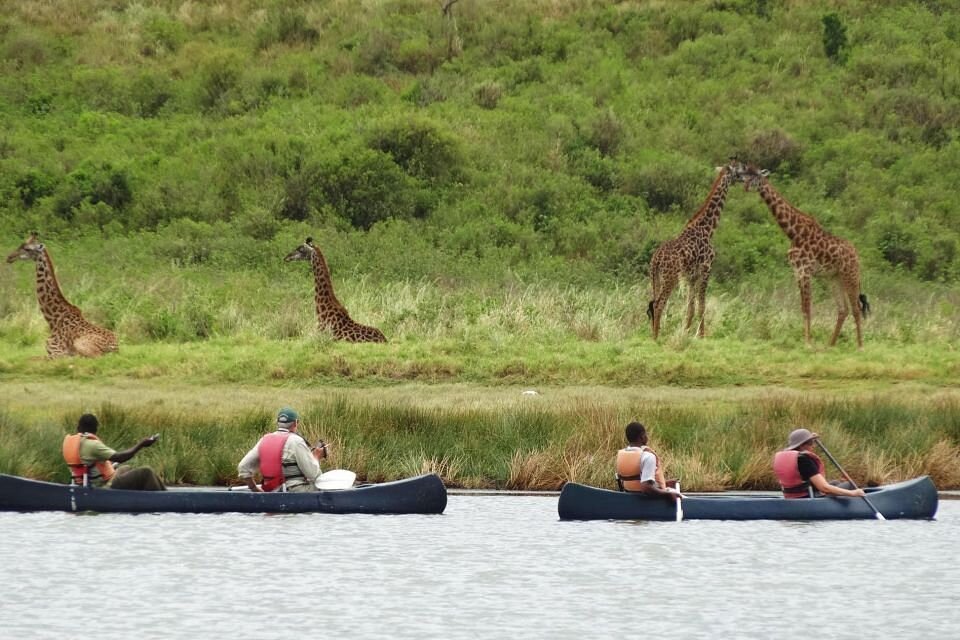
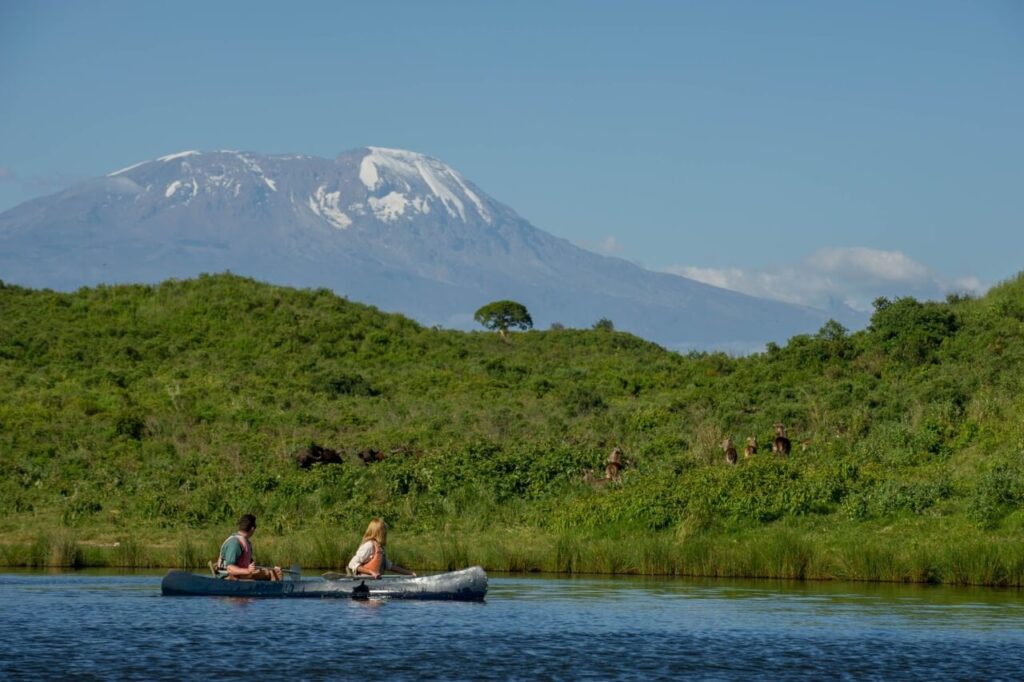
Lake Momella is situated within Arusha National Park, offering a diverse array of avian species and surrounding ecosystems to see. The Momella Lakes are seven shallow bodies of water situated within Arusha National Park: Big Momela, Small Momela, Kusare, El Kekhotoito, Rishateni, Lekandiro, and Tulusia. The lakes are alkaline and originated from the volcanic debris produced by the eruption of Mount Meru over 250,000 years ago. You will have a tranquil and picturesque canoeing excursion along the shorelines of Momella Lake. This 2 to 2.5-hour canoe tour offers the opportunity to observe bushbuck, giraffes, buffaloes, hippos, and a multitude of aquatic birds inhabiting the vicinity of the river.
Geography and Formation
The Momella Lakes sit at an elevation of approximately 1,500 metres (4,921 feet) above sea level on the eastern side of Arusha National Park, in the Arusha Region of Tanzania. The seven individual lakes — Big Momella, Small Momella, Kusini, Tulusia, Lekandiro, Rishateni, and El Kekhotoito — each possess their own distinct character, colouration, and ecological personality. Despite lying in close proximity to one another, the lakes differ markedly in mineral composition because they are fed by different underground springs carrying varying concentrations of salts and alkaline minerals.
These lakes are the remnants of ancient volcanic activity associated with the Meru Volcano complex. Over millennia, volcanic materials, rainwater runoff from Mount Meru’s slopes, and underground springs have shaped their unique alkaline chemistry. The high mineral content gives several of the lakes a striking jade-green or blue-grey hue, while others shimmer in shades of amber and dusty rose at different times of day, creating a painter’s palette of colour across the landscape.
Ecology and Biodiversity
The Momella Lakes form one of the most productive wetland ecosystems in northern Tanzania, supporting an extraordinarily rich diversity of life. The alkaline waters are rich in cyanobacteria, diatoms, and microscopic algae that form the foundation of the food web. These microorganisms, in turn, attract dense congregations of waterbirds, making the lakes one of the finest birdwatching destinations on the continent.
The surrounding landscape — a mosaic of highland forest, open grassland, acacia woodland, and papyrus-fringed wetlands — supports a correspondingly diverse range of mammals, reptiles, and invertebrates. The transition between these habitats creates rich ecotones where species richness is especially high, offering visitors the chance to observe an impressive variety of wildlife within a relatively compact area.
Wildlife of the Lakes
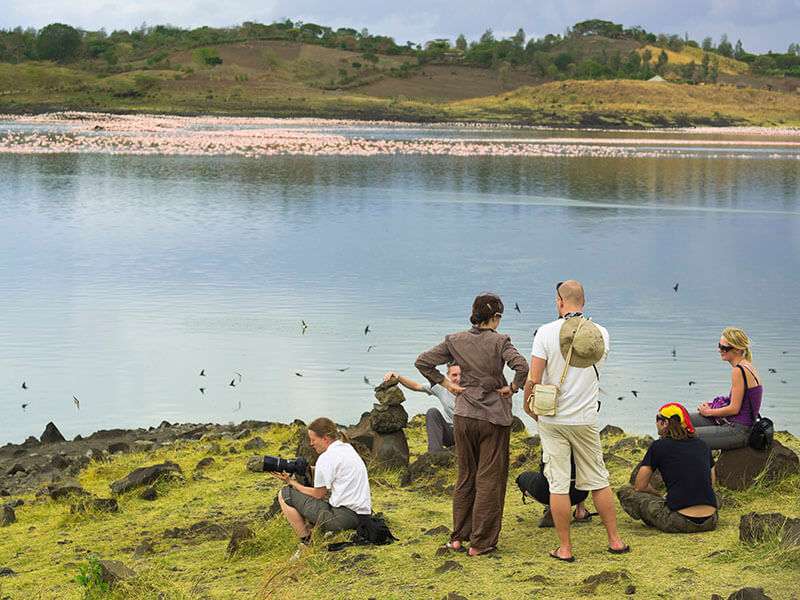
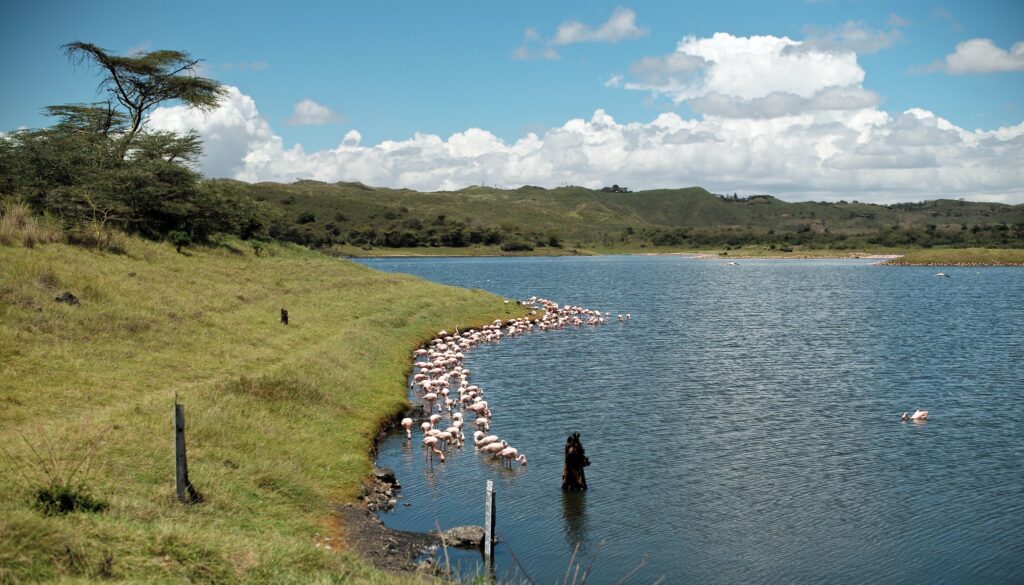
Perhaps the most iconic residents of the Momella Lakes are the flamingos. Both greater flamingos (Phoenicopterus roseus) and lesser flamingos (Phoeniconaias minor) congregate at the lakes in large, sometimes spectacular, flocks. The lesser flamingo, in particular, is drawn by the blue-green algae that thrives in the alkaline waters, and when conditions are right, the shallows of Big Momella and Small Momella can turn a vivid pink with thousands of these elegant birds.
The lakes are also home to a thriving population of hippopotamuses. Surprisingly, these massive animals move between the different lakes overnight, travelling several kilometres in the darkness. A curious and well-documented fact about the Momella hippos is that they have an unusually light-grey colouration compared to hippos elsewhere — a variation that has long intrigued scientists and is thought to be the result of the unique mineral-rich waters in which they spend their days.
Beyond flamingos and hippos, the lakes and their surroundings host an impressive roster of wildlife: African buffaloes, olive baboons, vervet monkeys, waterbucks, giraffes, warthogs, and the occasional spotted hyena. Crocodiles bask along the muddy edges of some lakes, while monitor lizards patrol the reed beds. The Momella area also supports good populations of leopard, though these secretive cats are rarely seen by day.
Birdwatching Paradise
With over 400 bird species recorded in Arusha National Park — many concentrated around the Momella Lakes — this is one of Tanzania’s premier birdwatching destinations. In addition to flamingos, the lakes attract pelicans, herons, egrets, storks, spoonbills, ibises, cormorants, ducks, geese, and an array of waders and shorebirds. The surrounding woodlands harbour Narina trogon, African emerald cuckoo, silvery-cheeked hornbill, and numerous sunbirds and starlings. The highland forest on Mount Meru’s slopes provides habitat for the endemic and sought-after Meru Martin.
Conservation and Protection
The Momella Lakes fall within the boundaries of Arusha National Park, which was established in 1960 and covers approximately 552 square kilometres. The park is managed by the Tanzania National Parks Authority (TANAPA), which works to protect the lakes and their surroundings from threats such as invasive species, illegal grazing, and water extraction. Conservation efforts at the lakes are part of a broader programme to protect northern Tanzania’s highland ecosystems, which are increasingly under pressure from the expanding human population of the Arusha Region.
Best Time to Visit
The Momella Lakes can be visited year-round, but the best time depends on what you wish to experience. The dry seasons — from late June to October and from late December to February — offer the finest wildlife viewing, as animals congregate around the water and the vegetation is less dense. Birdwatching, however, peaks during the wet season months of November and April, when migratory species swell the resident population and the lakes are at their most productive. The short rains of November and December can bring dramatic skies and lush green landscapes that make for superb photography.
Getting There
The Momella Lakes are located approximately 25 kilometres from Arusha town, accessible via the main road that leads through the village of Usa River and on into the park via the Momella Gate. The journey from Arusha town takes between 45 minutes and one hour by road, depending on traffic and road conditions. The nearest major airport is Kilimanjaro International Airport (JRO), situated approximately 50 kilometres from Arusha, with connections to Dar es Salaam, Nairobi, and a number of international destinations.
Things to do in Momella Lakes
Introduction
The Momella Lakes area offers an exceptionally diverse range of activities that cater to wildlife enthusiasts, adventure seekers, nature photographers, and those simply looking to slow down and soak in the beauty of an extraordinary African landscape. Unlike the more famous Serengeti or Ngorongoro Crater, the Momella Lakes have a more intimate, unhurried quality — an invitation to experience East Africa’s wild places without the crowds. Below is a comprehensive guide to the activities available at and around the lakes.
1. Game Drives
Game drives remain the most popular way to explore the Momella Lakes area. Arusha National Park offers some excellent year-round game viewing, and the network of tracks that winds between the lakes, through acacia woodlands, and up into the forested slopes of Mount Meru provides a varied and rewarding safari experience. During a typical game drive, visitors can expect to encounter large herds of African buffalo, giraffe grazing among the yellow-barked acacias, families of warthog trotting with their tails raised like antennae, and numerous antelope species including waterbuck, bushbuck, and klipspringer.
Game drives at Momella are particularly rewarding in the early morning, when the light is golden, the air cool, and the animals most active. Professional guides with detailed knowledge of the park and its wildlife enhance the experience immeasurably. TANAPA-authorised vehicles with open roofs or pop-up tops allow for unobstructed views and photography.
2. Walking Safaris
Arusha National Park is one of only a handful of Tanzania’s national parks where walking safaris are permitted, and the Momella Lakes area is among the finest settings in which to take them. Accompanied by an armed TANAPA ranger and an experienced guide, small groups of visitors explore the landscape on foot, following game trails between the lakes and through the acacia grasslands. Walking at ground level transforms the safari experience: you become aware of the minutiae of the African bush — the tracks and signs of passing animals, the calls of insects, the scent of vegetation — in a way that simply cannot be replicated from a vehicle.
Walking safaris around the Momella Lakes offer the chance to approach hippos carefully and observe their behaviour from a respectful distance, to track the spoor of nocturnal predators, and to observe smaller creatures — chameleons, agama lizards, dung beetles, and colourful butterflies — that a game drive would miss. Maximum group sizes are kept small for safety and to minimise disturbance to wildlife.
3. Birdwatching
With over 400 recorded bird species, the Momella Lakes area is a birdwatcher’s paradise. Dedicated birding walks and drives can be arranged with specialist ornithological guides who are able to identify species by sight and call and to locate elusive forest species in the montane woodlands above the lakes. The lakes themselves reward patient observation: in addition to flamingos, visitors frequently encounter African fish eagles, goliath herons, great white pelicans, African spoonbills, yellow-billed storks, black-headed herons, and a variety of ducks and waders.
For tick-list birders, the Momella area offers several sought-after species, including the Abyssinian ground hornbill, bar-tailed trogon, Hartlaub’s turaco, and the spectacular crowned eagle. Dawn is the peak time for birdwatching, when the chorus of birdsong is at its most intense and species are actively foraging. Bringing a quality pair of binoculars and a regional field guide — such as Stevenson and Fanshawe’s Birds of East Africa — will greatly enhance the experience.
4. Photography
Few destinations in East Africa offer the photographic possibilities of the Momella Lakes. The combination of flamingo-pink shallows, jade-green waters, grazing buffalo, lumbering hippos, and the majestic cone of Mount Meru reflected in the still water at dawn creates a seemingly inexhaustible array of compositions. Wildlife photography, landscape photography, and macro photography of insects and plants are all rewarding pursuits in this environment.
The light at Momella is particularly extraordinary at the golden hours of dawn and dusk, when the low sun illuminates the lakes from the side, adding depth and drama to every image. Photographers seeking flamingo shots should position themselves downwind of the flocks and approach slowly to avoid flushing the birds. Long telephoto lenses (400mm and above) are recommended for wildlife work, while wide-angle lenses capture the sweeping panoramas.
5. Picnicking and Relaxation
Several designated picnic sites are located around the Momella Lakes, allowing visitors to pause, unpack a lunch, and simply absorb the atmosphere of this remarkable place. The sound of hippos grunting in the shallows, the distant call of a fish eagle, the sight of a herd of buffalo moving slowly across the far shore — these are the quiet pleasures of an afternoon at Momella. Many visitors find that simply sitting by the water for an hour is one of the most memorable parts of their Tanzania experience.
6. Cultural Visits
The Momella area has a rich human history. The name ‘Momella’ itself derives from the Meru people, an indigenous community whose homeland has surrounded the mountain and lakes for centuries. Cultural tours to nearby Meru villages can be arranged, offering insight into traditional farming practices, beekeeping, and the customs and stories of a people who have lived alongside these lakes for generations. The Momella homestead itself — a farmhouse constructed by the German settler Fritz Jaeger in the early twentieth century and later made famous by the 1964 film Hatari!, starring John Wayne — is a point of historical interest within the park.
7. Night Game Drives and Stargazing
After dark, the Momella Lakes take on a completely different character. TANAPA permits night game drives in certain areas of the park, offering the opportunity to spot nocturnal species such as bush babies, genets, civets, and the occasional leopard or serval. The skies above Momella, far from the light pollution of Arusha, offer spectacular stargazing on clear nights. The Milky Way stretches in a luminous arc overhead, and the Southern Cross, Orion, and other constellations are visible with exceptional clarity.
Canoeing at Momella
Among the many activities available at the Momella Lakes, canoeing stands out as perhaps the most intimate and exhilarating way to experience these remarkable waters. Gliding silently across the surface of the lakes in a canoe, at water level, surrounded by flamingos, hippos, and the reflected peaks of Mount Meru, is an experience that places you inside the landscape rather than merely observing it from without. Canoeing at Momella was introduced as part of Arusha National Park’s ecotourism programme and has become one of the park’s most sought-after activities.
The Canoeing Experience
Canoeing is conducted on Big Momella Lake (Ziwa Kubwa la Momella), the largest and most scenic of the seven lakes. The lake covers an area of approximately 1.5 square kilometres and is shallow enough — rarely exceeding two metres in depth — for safe canoeing, yet large enough to offer a genuine sense of wilderness. The alkaline waters are a striking jade-green colour, coloured by the cyanobacteria that thrive in the mineral-rich environment.
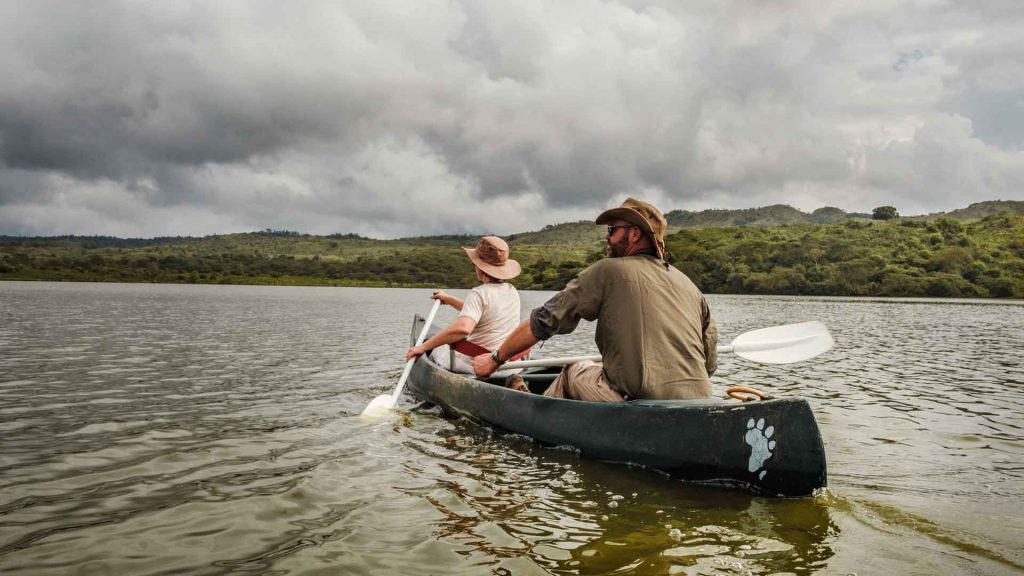
Canoe trips are guided by experienced TANAPA rangers who are thoroughly familiar with the lake, its wildlife, and safety procedures. Groups are kept intentionally small — typically no more than four to six canoes — to minimise disturbance to wildlife and to maintain the sense of quiet immersion in nature. The pace is unhurried, and guides are adept at positioning canoes to optimise wildlife encounters and photographic opportunities.
Wildlife Encounters on the Water
Canoeing at Big Momella Lake offers wildlife encounters of extraordinary closeness and intimacy. Hippos are the lake’s most formidable residents, and the park’s experienced ranger-guides are skilled at reading hippo behaviour and maintaining safe distances. The hippos at Momella are accustomed to canoes and typically tolerate their presence calmly, though visitors are always briefed on safety protocols and the importance of following the guide’s instructions at all times.
Flamingos are the lake’s most visually spectacular residents. Both greater and lesser flamingos wade in the shallows, and a canoe allows you to approach within a comfortable distance — close enough to observe the extraordinary filtering mechanisms of their bills and the vivid pink of their plumage, yet far enough to avoid flushing them from the water. The sight of a flock of several hundred flamingos reflected in the still green water, with Mount Meru rising in the background, is one of East Africa’s most iconic images.
African fish eagles are a near-constant presence over the lake, and witnessing one plunge from the sky to snatch a fish from the surface is a highlight of any canoeing outing. Pelicans fish cooperatively in organised groups, herding fish into shallow water before scooping them up in their capacious pouches. Herons of several species stand motionless at the water’s edge. Kingfishers dart between perches. The diversity of birdlife encountered from a canoe at Momella is simply remarkable.
Safety and Guidelines
Safety is the paramount consideration on any canoe outing at Momella, and TANAPA has developed a robust set of guidelines to ensure that all canoeing takes place without risk to visitors or wildlife. All participants are required to wear life jackets for the duration of the trip. The number of participants per canoe is strictly limited, and all canoes are inspected before departure. Guides are trained in water safety, first aid, and wildlife behaviour.
Visitors are briefed before departure on essential safety protocols: how to behave in the presence of hippos, what to do if a canoe capsizes, and the importance of following the guide’s instructions without hesitation. It is strictly forbidden to dangle hands or feet in the water. Standing up in canoes is not permitted. Photography is encouraged but must not compromise safety or cause undue disturbance to wildlife.
Practical Information
Duration
Canoeing trips at Momella typically last between 1.5 and 3 hours, depending on the programme chosen. Half-day and full-day canoeing experiences can be arranged through the park or through authorised tour operators based in Arusha.
What to Bring
- Sunscreen, sun hat, and sunglasses (the equatorial sun reflected off water is intense)
- Lightweight, quick-drying clothing in muted, natural colours
- Insect repellent (particularly important in the wet season)
- A waterproof bag or dry bag for cameras, phones, and valuables
- Binoculars for birdwatching
- A water bottle — staying hydrated is essential
- Closed-toe shoes or water sandals
Booking
Canoeing at Momella can be booked through TANAPA directly at the Momella Gate, or arranged in advance through any of the many licensed tour operators in Arusha. It is advisable to book in advance during the peak tourist seasons of July-October and January-February, as demand for canoe outings is high and spaces are limited to maintain the quality of the experience.
Cost
Park entry fees apply to all visitors to Arusha National Park, and an additional activity fee is charged for canoeing. Fees are subject to change and current rates should be confirmed directly with TANAPA or your tour operator. For foreign visitors, fees are denominated in US dollars.
Environmental Commitment
The canoeing programme at Momella has been designed from the outset with environmental sustainability in mind. All canoes are non-motorised, eliminating the noise and pollution associated with motorised watercraft. Group sizes are strictly limited to reduce disturbance to nesting and feeding birds. Guides are instructed to avoid known hippo resting areas during certain times of day, and the programme is regularly reviewed to ensure that it does not negatively impact the ecology of the lake. Visitor fees contribute directly to the conservation management of Arusha National Park.
Canoe Safaris on the Lakes