
How to Get to Arusha National Park
How to Get to Arusha National Park : The park is accessible via two entrances, namely Arusha National Park Gate and Momella Gate. The primary entrance to the park is around 25 kilometers from Arusha town, rendering it easily reachable by road. The travel from Kilimanjaro International Airport to the main gate takes approximately forty minutes, whereas the journey from Arusha requires an hour. The park’s diminutive size allows for exploration within a half-day visit. A full-day excursion with a picnic lunch offers a more relaxed and pleasurable safari experience in the park.
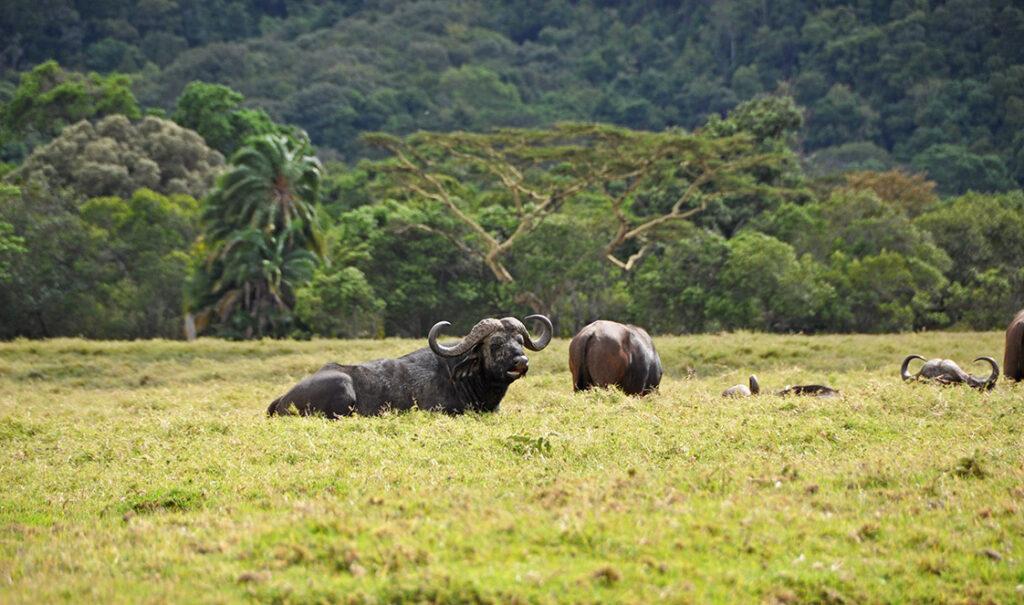
Arusha National Park in Tanzania is situated near the town of Arusha. The park was created to include Mount Meru, the second-highest summit following Mount Kilimanjaro. Mount Meru has an elevation of 4,566 meters above sea level. Founded in 1960, the park encompasses 137 square kilometers and is managed by the Tanzania National Parks Authority (TANAPA). The recent eruption of Mount Meru generated the remarkable vistas and terrains seen in the park. Arusha National Park is located within 60 kilometers from Mount Kilimanjaro, which forms the park’s eastern backdrop. The distance from Kilimanjaro International Airport to Arusha National Park is 35 kilometers, whereas the distance from Arusha National Park to Kilimanjaro International Airport is 58 kilometers. The park is a brief drive away, offering numerous accommodation choices, including luxurious hotels, affordable lodgings, and hostels. Arusha National Park is distinctive because to its largest population of giraffes. Arusha National Park’s notable attractions are the black and white colobus monkeys and the ancient fig trees, alongside the pristine waters of the streams that traverse the mountains.
1. By Road
The easiest way to reach Arusha National Park is by road.
- Distance from Arusha: about 25 km (40 minutes)
- Main access gate: Momella Gate
- The road is well-maintained and suitable for safari vehicles
Most visitors travel by:
- Private safari vehicles
- Guided tour vehicles
- Self-drive 4×4 cars
Because of its proximity to the city, Arusha National Park is often included in one-day safari itineraries.
2. From Kilimanjaro International Airport
Kilimanjaro International Airport is the main international gateway for northern Tanzania safaris.
- Distance to the park: about 60 km
- Travel time: around 1–1.5 hours by car
Visitors arriving at the airport can easily arrange:
- Private transfers
- Safari pickups
- Car rentals
3. From Other Safari Destinations
Arusha National Park is usually the starting point of the Northern Safari Circuit.
Approximate driving times:
- Tarangire National Park – 2.5 to 3 hours
- Lake Manyara National Park – 2 hours
- Ngorongoro Crater – 3.5 to 4 hours
Many safari itineraries start in Arusha and then continue to these parks.
Mount Meru
Mount Meru is a stratovolcano situated 70 kilometers west of Mount Kilimanjaro. It has an elevation of 14,968 feet, or 4,562 meters. When conditions are favorable, Mount Kilimanjaro, Africa’s highest peak, is distinctly seen. The latest eruption occurred in 1910, specifically between October and December. In 1904, Fritz Jáger was the inaugural individual to reach its summit. The Momela path, providing trekking access to the top, traverses the Momella gate on the eastern side. It serves as the centerpiece of the park and the primary attraction for tourists visiting Arusha. The topography of Mount Meru is exceptional, with fertile soil that supports a forest and harbors several wildlife species. The park’s savannah and forest regions host numerous animal species, including blue and black primates, black and white colobus monkeys, rarely seen leopards, and a diverse array of birds.
The four-day trek on Mount Meru commences at Momella Gate and concludes at Miriakamba Hut, requiring four to six hours. The subsequent day’s trek lasts three to five hours, commencing from the Miriakamba Hut and concluding at the Saddle Hut. The climbers commence at Saddle Hut, ascend to the summit, and subsequently return to Miriakamba Hut. The trek commences on the concluding day from Miriakamba Hut and culminates at Momella Gate. The expense of ascending Mount Meru in Tanzania is quite affordable, benefiting budget-conscious travelers seeking trekking opportunities in the region. The optimal months for trekking Mount Meru are June to October during the dry season, along with January.
Momella Lakes
Arusha National Park is home to the seven small lakes known as Momela Lakes. The lakes are designated as Big Momela, Little Momela, Kusare, Risheteni, Lekandiro, Tulusia, and El Kekhotoito. Momela Village, the gateway to the region, is located in the Meru District of the Arusha region in Tanzania. All the lakes exhibit alkaline characteristics due to the volcanic debris produced by the eruption of Mount Meru. Animals cannot consume alkaline water; yet, zebras are frequently observed grazing near the lakes. The lakes in the eastern area of Arusha National Park are its primary attractions.
Wildlife
In comparison to other national parks in Tanzania’s northern circuit, this park is smaller, resulting in less land and consequently reduced species. The park is rewarding despite its limited size due to the extensive variety of creatures it houses, including elephants, blue monkeys, black and white colobus monkeys, warthogs, giraffes, zebras, cape buffaloes, leopards, and occasionally spotted leopards.
Bird Watching
Arusha National Park hosts around 400 species of birds, making its woodland areas an excellent venue for birdwatching. The easily identifiable Narina and bar-tailed trogons are the park’s main attractions. They are more prominent in Arusha National Park than along any other tourist route. The park hosts a diverse array of avian species, including the African fish eagle, African olive pigeon, bearded vulture, black saw-wing, Egyptian geese, small grebe, and cinnamon. The species include the great crested grebe, narina trogon, bar-tailed trogon, southern pochard, tawny eagle, Verreaux’s eagle, silvery-cheeked hornbill, scaly francolin, red-fronted parrot, peregrine falcon, and Hartlaub’s turaco.
Ngurdoto Crater
This volcanic crater is situated in the Meru District of Tanzania, in proximity to Arusha. The Ngurdoto Crater has a depth of 100 meters and a maximum width of 3.6 kilometers. The crater contains a swamp at its base, encircled by a forest. The Ngurdoto Crater, located in Arusha National Park, is the crater of an extinct volcano. It is also known as “Little Ngorongoro” because, akin to Ngorongoro, it has developed into a form of “reserve within the reserve” over time.
The Arusha Region is home to the 3.6 km wide and 100 m deep Ngurdoto Crater, a volcanic crater. It is covered in thick jungle and has a basin-like shape with very steep cliffs. Numerous animal species, like as buffalo, warthogs, elephants, monkeys, baboons, leopards, and spotted hyenas, can be found on the marshy grassland that covers the crater bottom.
When is the Best time to Visit Arusha National Park
The short wet season is the best time to visit Arusha National Park since it minimizes rainfall and lets you get up close and personal with the animals, especially near the water holes. The best months to go are June through October. The park is also at its coldest during this time of year, and there are significantly less insects. Because there is less water available and the park’s plant cover is slightly thinner during this season, the animals congregate near freshwater sources. This not only helps tourists get stunning animal photos for an unforgettable safari experience, but it also makes it simpler for them to ascertain the animals’ likely positions during day trips.