
Kilimanjaro National Park
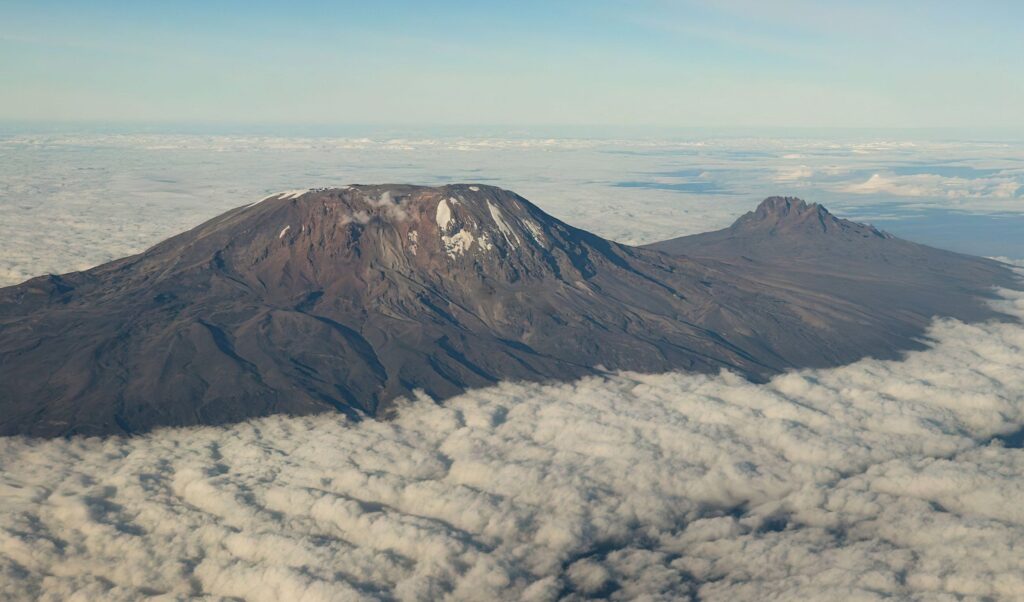
Mount Kilimanjaro National Park epitomizes the splendor of East Africa. This park encompasses Africa’s tallest peak — Mount Kilimanjaro, a well renowned destination with significant prominence. Mount Kilimanjaro, comprising its three volcanic cones—Mawenzi, Kibo, and Shira—is a dormant volcano located in Tanzania. It is one of the seven peaks and the highest freestanding mountain in the world.
It is frequented by numerous tourists who visit Tanzania each year and is an essential destination for every intrepid traveler. The climbing experience is physically demanding, exhausting, and perilous; nonetheless, reaching Uhuru Peak is an achievement that will instill lasting pride, making every effort worthwhile. The mountain ascends almost 4,900 meters from its base to an impressive 5,895 meters above sea level.
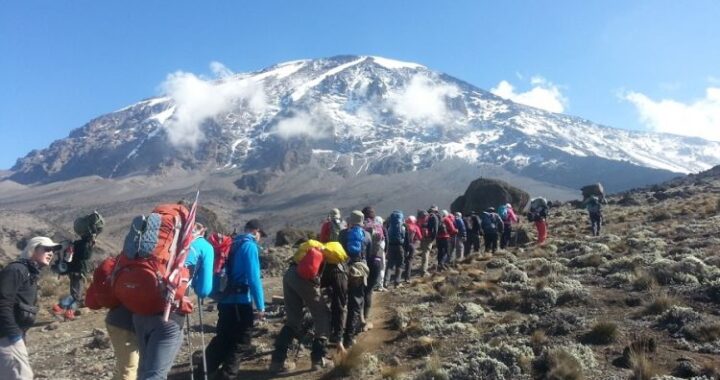
Kilimanjaro National Park in Tanzania is located near Moshi and is readily accessible by air or road from Arusha. It encompasses over 650 square kilometers and is presently governed by TANAPA. In addition to the audacious hiking expeditions held annually, Mount Kilimanjaro National Park serves as an excellent wildlife observation locale, featuring a diverse array of creatures.
Various wildlife species inhabit Kilimanjaro National Park, including the Cape Buffalo, which primarily resides in alpine forests, grasslands, and moorlands intermittently. African bush elephants are observed between the Tarakia and Namwai Rivers, however they occasionally traverse higher elevations.
Grey duikers, tree hyraxes, and different rodents are prevalent above the timberline, while leopards, blue monkeys, and other species inhabit the montane woods. This safari park is among the premier safari sites in Africa, a reality that will be evident upon your visit. This travel gateway provides all the necessary information to organize a secure and exceptional holiday in Mount Kilimanjaro National Park. Individuals contemplating an ascent of Kilimanjaro can discover comprehensive information pertaining to climbing prices, safety recommendations, climbing routes, and additional relevant details.
Where is Mount Kilimanjaro National Park located
This national park is situated in Tanzania, south of the Kenyan border. It is located northeast of Arusha National Park, and individuals in Arusha town may clearly observe the mountain from the comfort of their hotels or lodges while enjoying a cup of tea. Kilimanjaro National Park encompasses 1,688 square kilometers and is situated at coordinates 2°50’–3°10’S latitude and 37°10’–37°40’E longitude.
Mount Kilimanjaro, the primary feature of this national park, is strategically situated and can be readily accessed via various routes, allowing hikers to select their preferred path based on the difficulty of the walk. Kilimanjaro National Park is accessible by road and air. One may choose to arrive via Kilimanjaro International Airport, a prominent gateway to one of Tanzania’s largest national parks.
The climbing routes for Mount Kilimanjaro are accessible, allowing trekkers to choose from many pathways classed by difficulty level. Six routes have received complete approval for ascending to Uhuru Peak, the highest point in Africa.
The mountain features multiple walking routes, notably the Lemosho Route, a 70-kilometer trail that traverses the Londorossi Gate. This path is one of the most effective for clients, having achieved significant success in reaching the summit. The Umbwe Route is considered one of the most challenging routes.
Success on this route is challenging due to the limited acclimatization period. The Shira Route approaches the mountain from the west, in proximity to the Lemosho Route. This path is utilized by a limited number of hikers, as it has been supplanted by a more accessible alternative, namely the Lemosho Route.
The Rongai Route is one of the trekking paths on Kilimanjaro and is considered one of the most challenging due to limited acclimatization time. The Marangu trail, also referred to as the “Coca Cola” trail, is the oldest trekking path on Kilimanjaro.
It is an economical choice for hiking and features a permanent dormitory of sleeping cabins for hikers. The Machame Way is the longest path to ascend the mountain. Although lengthy, it is regarded as a superior choice by trekkers because to its enhanced acclimatization period.
It is sometimes referred to as the “Whiskey Route.” Given the available paths, ensure you prepare by conducting trekking drills and familiarize yourself with pertinent information regarding Mount Kilimanjaro.
Essential Hiking Equipment for Ascending Mount Kilimanjaro: Preparation for ascending Mount Kilimanjaro is crucial, since neglecting vital items may result in an unpleasant experience or even failure to complete the ascent.
In contrast to previous safaris that involve overnight stays in lodges, this expedition requires camping, making camping equipment indispensable. Additional necessities for trekking Mount Kilimanjaro are a hooded raincoat, a synthetic jacket, a soft shell jacket, both long and short-sleeved shirts, waterproof trousers, hiking pants, thermal undergarments, and a sports bra for women, among others.
The requisite headgear comprises a brimmed hat and a knitted cap for warmth, among other items. Additional necessities comprise waterproof gloves, boots, woolen socks, gym gloves, sunglasses, a waterproof backpack, a lightweight towel, sleeping bags, and others. To facilitate your trekking experience, you may opt to employ a porter or multiple porters to assist in transporting your heavy luggage. These individuals have ascended this mountain multiple times and would find it effortless to transport your belongings.
Best Time to Visit Mount Kilimanjaro:
Mount Kilimanjaro is situated near the Equator, resulting in the surrounding regions experiencing distinct dry and wet seasons. Hiking Mount Kilimanjaro poses significant risks during inclement weather, particularly in the wet seasons, due to treacherous routes characterized by slipperiness, snow, mud, and other hazardous conditions that may endanger one’s safety.
Consequently, the Dry season is the optimal period for hiking Mount Kilimanjaro. The optimal dry months for hiking are December to March and late June to September. Consequently, ensure that you schedule your Mount Kilimanjaro Hiking Safari within these months.
animal Species in Mount Kilimanjaro National Park: As a national park, it hosts a variety of animal species that may captivate travelers on safari across the Kilimanjaro Plains and those intending to trek the majestic peak. Among the wildlife species are the Cape buffaloes that inhabit the mountainous woodland encircling the National Park.
Another striking animal is the African Elephant, observed in large herds migrating between the Namwai and Tarankia rivers. The montane forest is home to primate species such as blue monkeys, western black-and-white colobus, and bush babies, as well as other fauna like leopards, giraffes, bats, and antelopes. Hiking at Mount Kilimanjaro National Park offers an extraordinary opportunity to observe many wildlife species.
Attractions at Kilimanjaro National Park
The park features Mount Kilimanjaro, Chala Crater Lake, Kibo Peaks, Shira Plateau, Olpopongi, and other stunning landscapes. Mountain climbing is the park’s most favored tourist activity. Visitors can engage in nature treks, observe mammals and birds, trek, camp, and visit the Maasai people. Here are several activities to engage in throughout Tanzania, particularly in Kilimanjaro National Park, while your safari.
Birds
Kilimanjaro National Park hosts about 150 avian species, predominantly woodland birds, which is advantageous for ornithologists. The park hosts both resident and migratory avian species from across the globe, including Asia. Kilimanjaro National Park is home to various avian species, including the black-shouldered kite, long-tailed trogon, Gabar goshawk, blue-naped mouse birds, grey hornbill, African fish eagle, white-cheeked barbet, African pygmy kingfisher, red-capped robin chit, and white-necked raven.
Hiking
The predominant activity in Kilimanjaro National Park is ascending Africa’s tallest freestanding peak. Numerous tourists travel to the country exclusively for this purpose. Kilimanjaro’s highest peak, Kibo, rises to 5,895 meters and is perpetually snow-capped, offering spectacular vistas of the adjacent town, other mountain summits like Shira, and the verdant landscape.
The majority of the days ascending Kilimanjaro are not arduous because to the gentle gradients; rather, the primary challenge lies in acclimatizing to the altitude.
Kilimanjaro features nearly seven ascent routes to the summit and two descent paths; each route is distinct, with varying levels of difficulty, differing probabilities of summit success, and diverse scenic rewards, including opportunities for wildlife observation en route to the peak. The extended routes to Mount Kilimanjaro’s Uhuru Peak require five to nine days for ascent and descent to the endpoint.
Wildlife Watching
Kilimanjaro National Park encompasses many habitats and climatic zones that support various wildlife, which may be observable during hikes to specific locations. The predominant reason for visitors to Kilimanjaro National Park is to ascend the mountain, rendering game watching a secondary concern. Kilimanjaro hosts numerous intriguing and frequently atypical species; nevertheless, for an opportunity to observe large African mammals such as the Big Five, we advise embarking on a Tanzania safari in one of the other prominent national parks, such as Ngorongoro or Serengeti. There exist vast herds, numerous predators, and the Great Wildlife Migration in that region.
The Kilimanjaro National Park, particularly on its fertile lower slopes, hosts a plethora of spectacular fauna and avifauna. The Kilimanjaro National Park is home to elephants, Cape buffaloes, black rhinos, giraffes, leopards, servals, hyenas, baboons, monkeys, antelopes, aardvarks, mongooses, porcupines, honey badgers, tree hyraxes, bush babies, and various other wildlife.
Bicycling
The Kilimanjaro bike journey is a distinctive method to explore Kilimanjaro National Park and ascend Mount Kilimanjaro. The Kilema track is the exclusive route to ascend by mountain bike. This exercise enhances physical fitness and encourages recreational engagement with the natural environment while minimizing effect, so enriching visitors’ experiences.
It is recommended that only experienced bikers and guides engage in this activity. Traverse the agricultural areas of the Chagga tribe while appreciating the stunning surroundings. Be aware that cycling to the summit entails extra costs and requires mountain bikes.
Walking Safaris
In contrast to mountain climbing, nature-guided trips do not aim to attain the top. This is a straightforward approach for enhancing proximity to nature. The lower elevations of Mount Kilimanjaro are favored for nature excursions.
The walk enables intimate encounters with even the most minute aspects of nature. While strolling, tourists may observe black and white monkeys, colobus monkeys, olive baboons, many butterfly species, insects, avian species, and an array of other intriguing critters.
Walking the Shira Plateau.
The Shira Plateau, located several kilometers west of Kibo, is situated along one of the pathways to Mount Kilimanjaro. Caldera designates this beautiful plateau. You will traverse the remnants of a volcano that erupted more than 500,000 years ago while navigating the plateau. This area is renowned among wildlife enthusiasts due to its exceptionally diverse animals. In this region, you may leisurely search for elephants, buffalo, elands, and lions; nevertheless, be mindful that the environment is dense, necessitating cautious observation.
Visit Chala Crater Lake
Chala Crater Lake is situated beneath Mount Kilimanjaro, adjacent to the Kenyan-Tanzanian border, within a crater formed by volcanic activity on the mountain. The lake’s clear waters may appear turquoise blue, midnight blue, or a stunning emerald, contingent upon the season of your visit.
Exploring the vicinity of the lake and descending the crater walls provides an excellent opportunity to observe the endangered Chala tilapia, a species exclusive to this location. Additional amenities are available, although they will be very isolated during the off-peak season. Swimming is permitted in this Crater Lake, despite the absence of on-duty lifeguards.
Explore Olpopongi
Another remarkable activity to engage in on your safari in Kilimanjaro National Park. Experience the pinnacle of culture at Olpopongi, renowned for providing one of Africa’s most genuine Maasai encounters. One may also explore the kraals, where these early settlers resided for an extended period, gain insight into Maasai familial customs and traditions, taste indigenous cuisine, and engage in dialogue with the Maasai regarding their history.
Additional activities in Kilimanjaro National Park encompass camping, which immerses you in nature and enables you to appreciate the stunning bush or forest of Africa’s tallest peak, offering an unforgettable experience.
Picnicking:
Designated picnic areas in Mount Kilimanjaro National Park encompass Jiwe la Mbula, Daraja Refu, Wona, Final Water, among others. These locations offer indelible memories and maximize your outdoor enjoyment. Tourists may consume their picnic lunch at any of these sites.
Filming, exploring the waterfalls, and engaging with the locals for a cultural experience are integral components of Kilimanjaro National Park.
Accommodation Around Kilimanjaro National Park
Accommodations in Kilimanjaro National Park can be classified into two categories: those for hikers on Mount Kilimanjaro and those for individuals before and after the ascent of the summit.
While ascending Mount Kilimanjaro,
Unless you are traversing the Marangu route, which offers accommodations in huts for climbers, you will be need to sleep in a tent. All hikers on the remaining seven Kilimanjaro routes must camp in tents. Camping in the mountains constitutes an integral aspect of the trip, with your tent serving as a personal refuge for relaxation and recuperation following a lengthy day on the trail. If you prefer not to camp while ascending Mount Kilimanjaro, the optimal alternative is the Marangu route, which provides some of the finest huts equipped with all necessary amenities for a comfortable night while summiting Uhuru Peak.
The Marangu route is the sole way offering hut accommodations for overnight stays along the trip to Kilimanjaro, Africa’s highest summit. The Mandara and Kibo huts each include 60 bunk beds, and the Horombo huts accommodate 120 bunk beds. The dormitory accommodations along the Marangu road consist of 4 to 20 bunk beds per room.
The private room is unavailable for rental; still, bed assignments are allocated on a first-come, first-served basis. Consequently, be ready to accommodate unfamiliar individuals in your sleeping quarters. While the Marangu Route may be completed in 5 days, climbers should allocate an additional day for acclimatization. The drawback is that the route may get significantly congested, particularly during the high tourist season. The subsequent lodgings consist of huts along the Marangu path.
MANDARA HUT (2,700 METERS ABOVE SEA LEVEL)
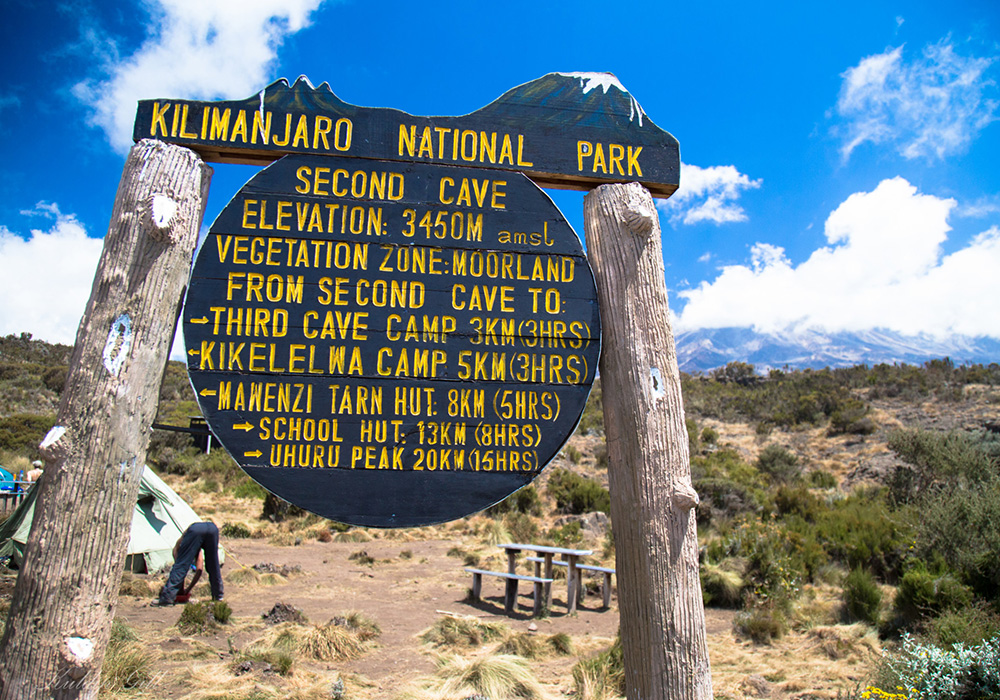
On Day 1, the Mandara Hut Campsite is situated along the Marangu Route. The expedition commences at an elevation of 1,879 meters and concludes at 2,700 meters. The hike from the Marangu Route to the Mandara Hut Campsite requires 4 hours.
HOROMBO HUT (3,720 METERS ABOVE SEA LEVEL)
On Day 2, the Horombo Hut Campsite is situated along the Marangu Trail. The expedition commences at an elevation of 2,700 meters and concludes at 3,720 meters. The trek from Mandara Hut Campsite to Horombo Hut Campsite requires approximately 6 hours.
Kibo Hut (4,700 meters)
On Day 4, the Kibo Hut Campsite is situated along the Marangu Trail. The expedition commences at 3,720 meters and concludes at 4,700 meters. The trek from Horombo Hut Campsite to Kibo Hut Campsite requires approximately 6 hours.
Visitors trekking Mount Kilimanjaro using routes other than Marangu may utilize tents at various camping sites en route to the summit.
Accommodations prior to and subsequent to summiting Mount Kilimanjaro
Kilimanjaro National Park is located near Moshi, the principal town in the Kilimanjaro region, while Arusha, situated 2 to 3 hours distant and offering numerous accommodations, is also in proximity. Ample hotel options are available around Mount Kilimanjaro to cater to diverse interests, budgets, and types of trips, including opulent wilderness lodges and cozy tented camps.
Our Mount Kilimanjaro accommodations will inspire you and simplify the planning of your Tanzania safari, whether you seek lodging prior to ascending the mountain or a tranquil safari lodge for exploration.
Kilimanjaro View Lodge, Dual Mountain View Lodge, Kimana Omega Safari Lodge, The W Hotel, Teule Guest House, Kaliwa Lodge, Kilemakyalo Mt. Lodge, among others, are accommodations situated near Kilimanjaro National Park, ideal for respite before or after your visit or ascent of Kilimanjaro. An additional option is to go several kilometers to Arusha, where you will likely discover a greater selection of hotels to enjoy before or after your safari to Mount Kilimanjaro.
Best time to Visit Kilimanjaro National Park
Tourists may access Kilimanjaro National Park year-round; however, the optimal period for climbing Kilimanjaro is during the dry season, which occurs from June to October and from late December to early March, immediately following the short rains and preceding the long rains. Avoid November and March-April if feasible, as these months constitute the rainy season, rendering forest paths slippery and approaches to the peak, especially the Western Breach, snow-covered.
ECOSYSTEM OF KILIMANJARO NATIONAL PARK
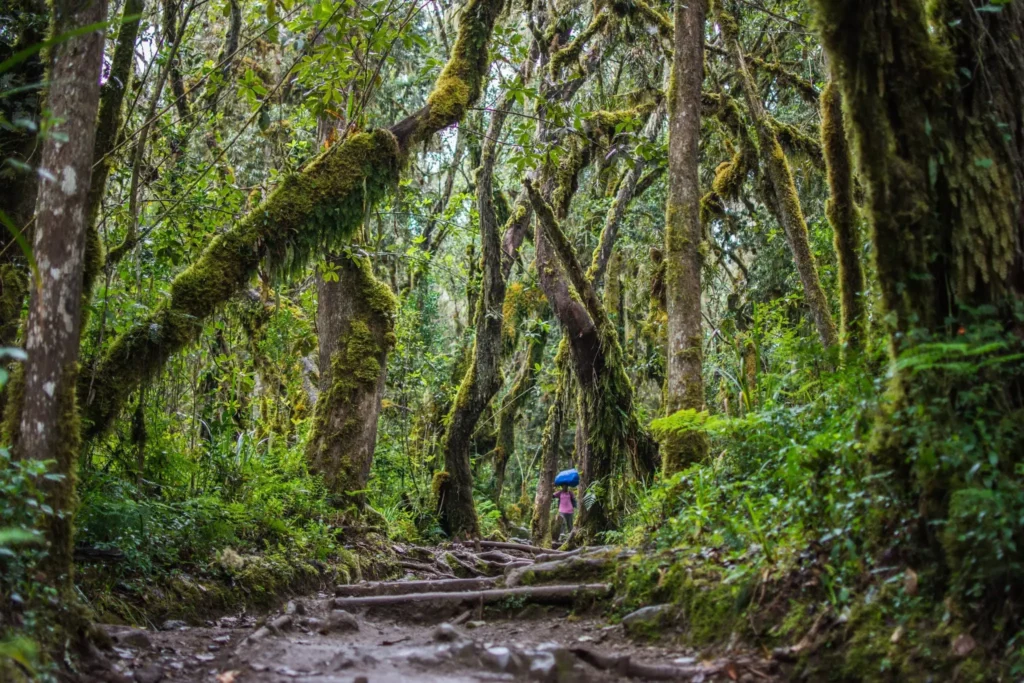
Mount Kilimanjaro encompasses five unique natural climatic zones: the Cultivation Zone, Forest Zone, Heather-Moorland Zone, Alpine Desert Zone, and Arctic Summit Zone. As you ascend Africa’s highest summit, you will traverse each of these zones. The fauna, avifauna, and flora of Kilimanjaro National Park exhibit considerable diversity.
The journey from the equator to the North Pole parallels the five distinct temperature zones of Kilimanjaro, which transition from tropical rainforest to icy tundra at the peak. Each temperate zone possesses unique characteristics regarding vegetation and fauna.
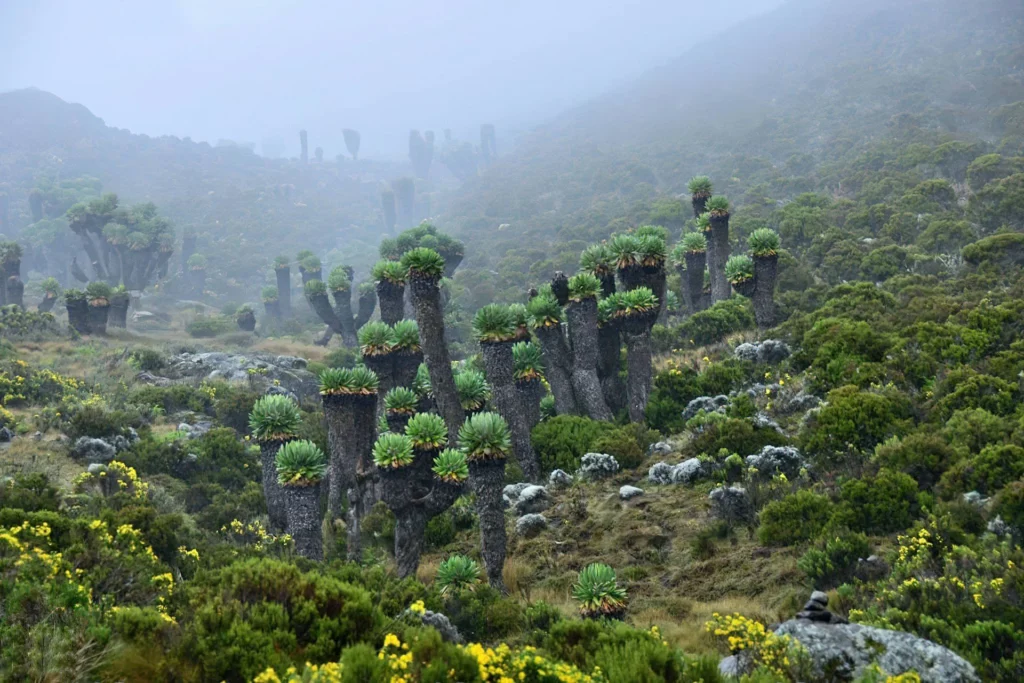
The substantial lobelia (Lobelia deckenii) and the large groundsel are two notable species that thrive in the moorlands. Elephants, buffalo, and eland inhabit the forests of the southern slopes and adjacent regions. Black and white colobus monkeys, blue monkeys, bushbucks, and duikers represent the lesser species inhabiting the woodlands. The forests harbor a varied array of avian species, including the endangered Abbot’s starling.
LOCATION OF KILIMANJARO
Mount Kilimanjaro is the tallest peak in Africa, reaching an elevation of 5,895 meters above sea level. Kilimanjaro is a mountain located in Tanzania, adjacent to the Kenyan border, and is encompassed inside Kilimanjaro National Park. Kilimanjaro lies approximately 140 miles (225 kilometers) south of Nairobi, Kenya, and about 100 miles (160 kilometers) east of the East African Rift System.
THE WEATHER AND CLIMATE OF KILIMANJARO
The bush lands and rainforests encircling Mt. Kilimanjaro experience an annual temperature range of 70 to 80 degrees Fahrenheit (21 to 27 degrees Celsius). The park’s proximity to the equator results in minimal temperature variation throughout the year, often ranging from 70 to 80 degrees. The warmest months occur from January to March.
As one ascends the mountain, the temperatures undergo a significant alteration. The temperature fluctuates significantly at the summit of the mountain. Its considerable elevation causes temperatures to mimic those of an arctic climate. At this elevation, temperatures may plummet to -20 degrees Fahrenheit (-29 degrees Celsius) at night. The region’s diversity precludes the classification of its climate as uniform.
The months from November to December and March to May are the most precipitation-heavy, with an average rainfall of 13.8 inches. From June to October, the precipitation is little, reaching as low as 0.6 inches. Nevertheless, the volume of precipitation diminishes consistently throughout the year. This is due to the park’s attributes and its proximity to the equator.
The humidity consistently remains elevated, never decreasing to 57 percent, while occasionally rising to 77 percent. The spring and summer months have the most humidity, whereas the fall and winter months display the lowest levels.
The elevated humidity and precipitation, which result in moisture adhering to the atmosphere, contribute to significant fog in this region, particularly within the rainforests. From May to October, the region is predominantly influenced by northeastern trade winds, whereas southeastern trade winds exert a negligible effect from November to March. Ensuring elevated precipitation during spring and reduced precipitation in summer, autumn, and winter.
What is Kilimanjaro renowned for?
Mount Kilimanjaro is the highest free-standing peak globally and the tallest mountain in Africa. Kilimanjaro comprises three volcanic cones: Mawenzi, Shira, and Kibo. Mawenzi and Shira are extinct volcanoes, although Kibo, the tallest peak, is dormant and has the potential to erupt again in the future.
Kilimanjaro is recognized for hosting a diverse array of essential wildlife inhabiting the surrounding forest throughout the ascent to the top. Kilimanjaro offers fresh, clean air from its forests and pure water from the mountain to the local residents and other Tanzanian citizens.
Directions to Kilimanjaro National Park
Kilimanjaro is readily accessible via both aerial and terrestrial means. Travel to Kilimanjaro International Airport to visit Kilimanjaro (JRO). Mount Kilimanjaro National Park is situated few kilometers south of the airport. Several airlines operate direct flights to Kilimanjaro International Airport, including
Turkish Airlines operates direct flights from Istanbul to Kilimanjaro International Airport. Precision Air offers direct flights from Nairobi to Kilimanjaro Airport; Kenya Airways provides direct flights from Nairobi to Kilimanjaro Airport; KLM operates direct flights from Amsterdam to Kilimanjaro Airport; Qatar Airways flies from Doha to Kilimanjaro International Airport; Condor Air offers direct flights from Frankfurt to Kilimanjaro Airport; Ethiopian Airlines operates flights from Addis Ababa to Kilimanjaro International Airport; and RwandAir flies from Kigali to Kilimanjaro International Airport.
If direct flights from your country to Kilimanjaro International Airport are unavailable, you may consider flying to Dar es Salaam, Tanzania’s largest city, or to Abeid Aman Karume International Airport in Zanzibar. Accessing Kilimanjaro is straightforward by domestic aircraft, which operate around the clock. An alternative is to fly to a neighboring country of Tanzania, such as Kenya’s Jomo Kenyatta International Airport, Rwanda’s Kigali International Airport, or Uganda’s Entebbe International Airport, and subsequently connect to Tanzania’s Kilimanjaro International Airport.
The History of Kilimanjaro National Park
Kilimanjaro National Park possesses a rich historical background in Tanzania, originating from the colonial period. The peak functioned as a reference point for Arab and Chinese merchants. The mountain, characterized as a snow island in the sky, is first mentioned in the works of Ptolemy, a Graeco-Roman polymath of the first century AD, who was a historian, writer, astronomer, geographer, and mathematician. Chinese scholars did not reference it until around seven centuries ago.
In 1849, missionary Johann Rebmann presented a narrative that was largely met with skepticism. The German Protectorate of Kilimanjaro was created in 1885. In 1889, Hans Meyer, a German geographer, and Ludwig Purtscheller, an Austrian mountaineer, became the first individuals to ascend to the peak of Kilimanjaro. At that time, it was designated as “Germany’s highest peak.”
Kilimanjaro has become as a favored hiking locale for both residents and tourists. Mount Kilimanjaro and its adjacent forests were established as a game reserve by the German colonial administration until it was transferred to British control as a Protectorate under the League of Nations, remaining so until Tanzania’s independence in 1961.
Kilimanjaro was designated as a forest reserve in 1921, after to the eruption of Mount Kilimanjaro. In 1973, the mountain and its six surrounding forest corridors were designated as a national park to protect its distinctive environment. In 1987, the park was designated a UNESCO World Heritage site, and in 2005, it was expanded to encompass the entire tropical forest previously included in the Kilimanjaro Forest Reserve, which hosts certain species found exclusively on Mt. Kilimanjaro.
The indigenous Chagga community continues to cultivate the lower hills. The blue monkey is one of the several species inhabiting the region around the mountain. Since that time, the primary attractions of Kilimanjaro National Park have included Mount Kilimanjaro, the highest mountain in Africa, together with the park’s adjacent forests and unique wildlife species.
Since 1973, when Kilimanjaro was designated a national park and a UNESCO World Heritage Site, the Tanzanian government, in conjunction with international conservation organizations, has diligently endeavored to preserve and protect the mountain and its surrounding forest to uphold its origin, reputation, and identity.
Notwithstanding conservation efforts, National Geographic reports that researchers and conservationists anticipate the glaciers of Mount Kilimanjaro may vanish by 2030, while some more optimistic scientists estimate the Furtwangler Glacier could endure until 2060. Nonetheless, both dates fall comfortably within the lifespans of numerous readers.
Kilimanjaro translates to “mountain of whiteness” or “shining mountain,” as per the majority of linguists and etymologists examining the etymology of regional terms. The name is believed to be a fusion of two terms from different tribe languages: “Kilima,” which signifies mountain in Swahili, and “Njaro,” which denotes gleaming or whiteness in Chagga.
FORMATION OF MOUNT KILIMANJARO
The three summits of Mount Kilimanjaro were formed millions of years ago through volcanic eruptions. Shira, an extinct and eroded volcanic cone, contrasts with Mawenzi and Kibo, which fused during consecutive eruptions. Kibo, featuring the renowned Uhuru summit at approximately 6000 meters above sea level, is currently the highest.
Mount Kilimanjaro comprises three volcanic cones formed from significant continental rifting. Volcanic activity is believed to have commenced approximately 1 million years ago when molten lava erupted through fissures in the lithosphere resulting from crustal weakening. The lava first exhibited low viscosity and spread outward, creating a gently sloping base.
Subsequent eruptions emitted denser, more viscous lava, ultimately creating the Shira volcanic cone. The Shira cone collapsed into a large caldera after volcanic activity ceased, resulting in the formation of the Shira Ridge. Subsequent to eruptions, Kilimanjaro’s two primary volcanic cones, Mawenzi and the presently dormant Kibo, together with lesser parasitic cones, were created.
ECOSYSTEM OF KILIMANJARO NATIONAL PARK
Mount Kilimanjaro encompasses five unique natural climatic zones: the Cultivation Zone, Forest Zone, Heather-Moorland Zone, Alpine Desert Zone, and Arctic Summit Zone. As you ascend Africa’s highest summit, you will traverse each of these zones.
The fauna, avifauna, and flora of Kilimanjaro National Park exhibit considerable diversity. Traversing from the equator to the North Pole has been likened to the five distinct climate zones of Kilimanjaro, which vary from tropical rainforest to icy tundra at the peak. Each temperate zone possesses unique characteristics regarding vegetation and fauna.
The substantial lobelia (Lobelia deckenii) and the large groundsel are two notable species that thrive in the moorlands. Elephants, buffalo, and eland inhabit the forests of the southern slopes and adjacent regions. Black and white colobus monkeys, blue monkeys, bushbucks, and duikers are among the smaller species inhabiting the woodlands. The forests harbor a varied array of avian species, including the endangered Abbot’s starling.
LOCATION OF KILIMANJARO
Mount Kilimanjaro is the tallest peak in Africa, reaching an elevation of 5,895 meters above sea level. Kilimanjaro is a mountain located in Tanzania, adjacent to the Kenyan border, and is encompassed inside Kilimanjaro National Park. Kilimanjaro lies approximately 140 miles (225 kilometers) south of Nairobi, Kenya, and about 100 miles (160 kilometers) east of the East African Rift System.
THE WEATHER AND CLIMATE OF KILIMANJARO
The bush lands and rainforests encircling Mt. Kilimanjaro experience an annual temperature range of 70 to 80 degrees Fahrenheit (21 to 27 degrees Celsius). The park’s proximity to the equator results in minimal temperature variation throughout the year, often ranging from 70 to 80 degrees. The warmest months occur from January to March.
As one ascends the mountain, the temperatures undergo a significant alteration. The temperature fluctuates significantly at the mountain’s summit. Its considerable elevation results in temperatures akin to those of an arctic environment. At this altitude, temperatures may plummet to -20 degrees Fahrenheit (-29 degrees Celsius) at night. The region’s diversity precludes the classification of its climate as uniform.
The months from November to December and March to May are the most precipitation-laden, with an average rainfall of 13.8 inches. From June to October, the precipitation is little, reaching as low as 0.6 inches. Nonetheless, the volume of precipitation diminishes consistently throughout the year. This is due to the park’s attributes and its proximity to the equator.
The humidity consistently remains elevated, seldom decreasing to 57 percent and occasionally rising to 77 percent. The spring and summer months have the most humidity, whereas the fall and winter months display the lowest levels. The elevated humidity and precipitation, which result in moisture adhering to the air, contribute to significant fog in this region, particularly within the rainforests.
From May to October, the region is predominantly influenced by northeastern trade winds, whereas southeastern trade winds exert a negligible effect from November to March. Ensuring elevated precipitation during spring and reduced precipitation in summer, autumn, and winter.
FACILITIES FOR VISITORS IN KILIMANJARO NATIONAL PARK
The National Park was established for tourism purposes and attracts around 10,800 visitors annually. Individuals without climbing experience can ascend the peak, and the tour is gaining popularity. All individuals ascending the peak must be accompanied by a guide, preferably from a professional tour operator, and adhere to mountain sickness protocols.
Although six routes ascend the peak, 91 percent of hikers utilize the Marangu Trail. Climbers will encounter three cottages along this trail: Mandara, Horombo, and Kibo. Tour operators provide sustenance, accommodation, and porters. A mountain rescue team is located at the park headquarters and at each chalet. The Marangu trail features a lodge, a hostel, a shop, and equipment rental services.