
Jozani Chwaka Bay National Park: Zanzibar’s Red Colobus Monkey Sanctuary
The sole national park in Tanzania’s island of F is Jozani Chwaka Bay National Park. The Jozani Forest, located around 35 kilometers southeast of the southern stone town, is part of the national park. The forest, which is located between Uzi Bay and Chwaka Bay in the north, formerly covered a large portion of central Zanzibar. The region frequently floods during the rainy season, creating a distinctive swamp forest with big trees, palms, ferns, and a high water table that give the woodland a cool, tropical atmosphere. There is a mangrove forest thicket and a dry coral rag forest on the high terrain on either side.
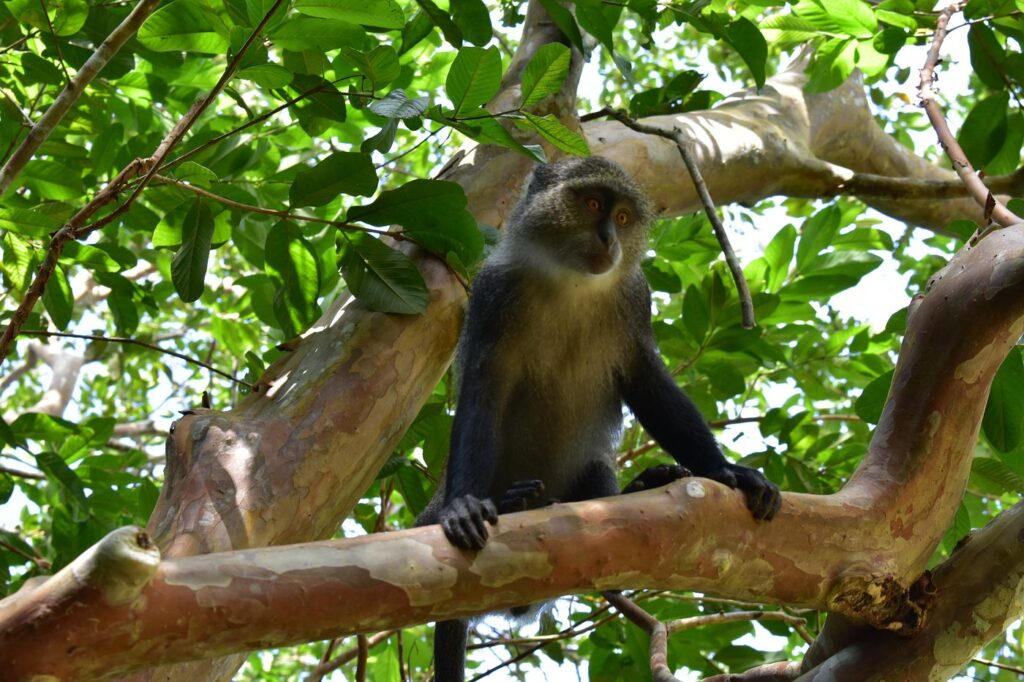
Jozani Bay National Park was gazette as a national park in 1984 after being first designated as a forest reserve in 1960. The Jozani forest, which is home to over 100 tree species, 291 plant species, and a variety of mammal species such kirks red colobus monkeys, aders duiker, African civet, elephants, and sykes monkeys, was once the primary hunting ground for the Zanzibar leopard. One of the greatest places to go bird watching is Jozani Forest, which is home to a variety of bird species, such as the mangrove kingfisher and the African goshawk.
Things to do in Jozani Chwaka Bay National Park
Watching wildlife
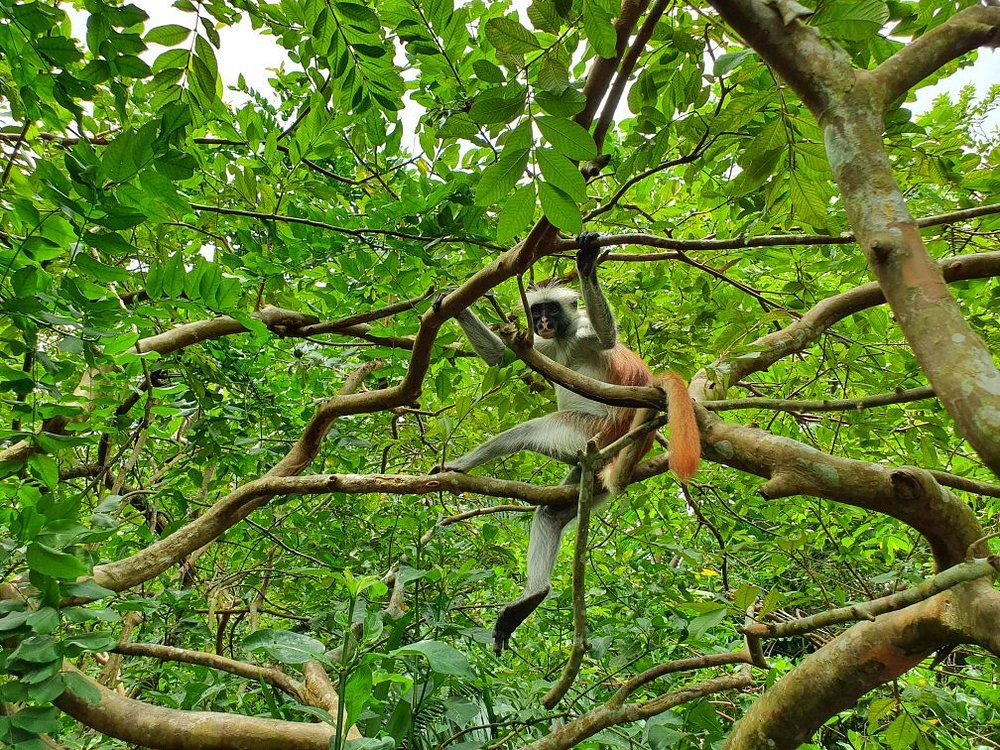
During your safari at Jozani Chwaka Bay National Park, you shouldn’t miss this fascinating activity. If you’re lucky, you’ll have the chance to see some of the park’s wildlife during the wildlife viewing activity, including aders duikers, bush pigs, elephants, red colobus monkeys, sykes monkeys, colorful bird species, bush babies, and tree hyraxes. In addition, you will be able to snap amazing photos that will last a lifetime, observe the stunning sunset, and observe various plant and tree species. Think about taking binoculars or a camera with a zoom lens to enhance your viewing experiences. The monkeys and their fascinating activities can be observed up close thanks to this gadget. They also offer the chance to take amazing close-up pictures of these fascinating animals.
Observing birds
With more than 135 bird species, Jozani Chwaka Bay National Park is a birdwatcher’s heaven. On a birdwatching tour, visitors can spend hours strolling along the park’s trails and seeing a wide range of birds, including the black-bellied starling, crown hornbill, African paradise flycatcher, mangrove kingfisher, forest batis, dark-backed weaver, crown hornbill, black-bellied starling, little greenbul, and eastern olive sunbird, among others.
Nature walks with a guide
A guided nature walk is one of the best ways to take in the park’s natural beauty. These treks, which are led by knowledgeable experts, provide guests the chance to discover the park’s mangrove forest’s hidden treasures and see a variety of wildlife, such as bushbabies, red colobus monkeys, and other bird species. Visitors are brought closer to Zanzibar’s biodiversity and natural beauty by the tranquil ambiance and the sights and sounds of nature, creating an experience that will never be forgotten.
Tracking Red Colobus Monkeys
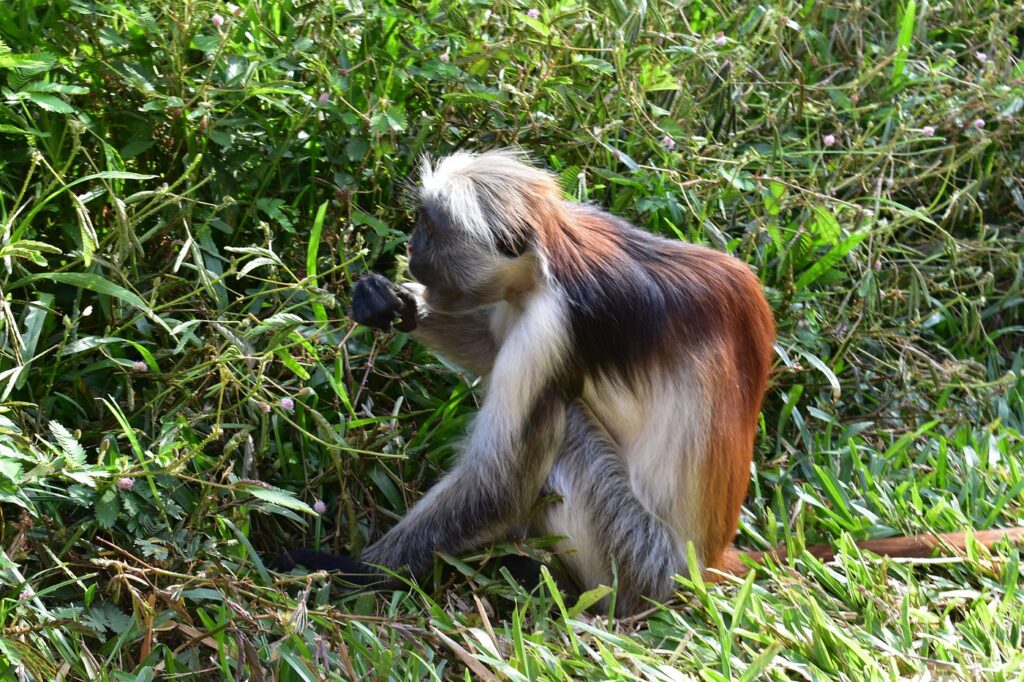
Tracking the rare red colobus monkeys is one of the delights of Jozani Chwaka Bay National Park. Only found in Zanzibar, these gregarious and lively primates are regarded as a very endangered species. Early in the morning, when the monkeys are most active, guided tours begin, giving guests a great opportunity to see their acrobatic performances and hear their unique sounds. A skilled guide from the park will lead you into the forest to look for these amazing animals and give you intriguing information about their diet, habits, and conservation initiatives. Seeing these amazing animals in their native habitat provides unforgettable first-hand experiences and highlights how crucial it is to preserve these lively animals and their surroundings.
Diving and snorkeling
Jozani Chwaka Bay National Park is a well-liked location for diving and snorkeling since it has some of Zanzibar’s most amazing coral reefs. You will get the opportunity to explore the vibrant underwater world and see a variety of marine species, including octopuses, seahorses, and tropical fish, during your diving and snorkeling excursions.
Boat excursions
Boat tours through the mangrove forest and along the shore are another well-liked park activity. These tours provide guests the opportunity to experience the park from several angles, take in the distinctive mangrove ecology, and see animals like dolphins, flamingos, and crocodiles.
Cultural tours
Jozani Chwaka Bay National Park boasts a rich cultural legacy in addition to its natural beauty. In addition to visiting neighboring villages to learn about traditional crafts and customs, visitors can take guided cultural excursions to learn about the local communities that reside in and around the park.
Photographing nature
For those who enjoy wildlife photography, Jozani Chwaka Bay National Park provides an exquisite setting. The park offers countless chances to take stunning pictures because of its diverse ecosystems, which range from serene mangrove swamps to lush tropical forests. Red colobus monkeys’ joyful activities, the vibrant colors of indigenous plants, and the complex textures of mangrove roots provide for interesting subjects. Photographers can also concentrate on the variety of wildlife, since some species offer striking focal points. The park’s diverse terrain makes for dramatic compositional contrasts, particularly at sunrise and dusk.
Best time to visit Jozani Chwaka Bay National Park
The dry season, which often lasts from June to October, is the ideal time to visit Jozani Chwaka Bay National Park. This is the best time of year for outdoor activities like nature hikes and wildlife watching because of the cold temperatures and little rains they bring. The park will be crowded with tourists from all over the world during the dry season, which also happens to be Zanzibar’s busiest travel time.
The shoulder seasons of November through December and February through May are also excellent times to visit the park if you want to avoid the crowds. You can have a more tranquil and personal experience with nature during this time of year because the weather is still pretty dry and you are likely to run into tourists. Remember that there can be some rain during these times, so it’s a good idea to have appropriate rain clothing.
How to Get to National Park Jozani Chwaka Bay
Jozani Chwaka Bay National Park is reachable from Paje town via bus and road. If you intend to go by air, you can reach Jozani Chwaka Bay National Park by connecting your trip to Zanzibar. To find the best transportation choices, it is advisable to consult with local tour providers.
Where to Stay in Jozani Chwaka Bay National Park During a Safari
Numerous lodging choices may be found in and around Jozani Chwaka Bay National Park. Accommodations at Jozani Chwaka Bay National Park include tented campgrounds and opulent lodges. Menai Bay Beach Bungalows, Dhow Inn, Zanzibar Bay Resort, Kisiwa on the Beach, Beach View Chwaka Resort, Mermaids Cove Resort and Spa, Filawo Beach Zanzibar, Cristal Resort, and Fun Beach Resort are a few of the lodging options in this area.
For information and questions regarding the Complete Guide to Jozani Chwaka Bay National Park, get in touch with our reliable tour operators. We also provide the greatest tour packages for your Tanzanian safari when you book with our tour and travel companies, like Marriott Safaris Africa.